| Title |
Herman Bernstein, Interviews with Jews in Utah, Accn 998 |
| Alternative Title |
Accn 998, Interviews with Jews in Utah, Herman Bernstein |
| Description |
Transcript (19 pages) of interview by Joyce Kelen with Herman Bernstein on June 16, 1982 for the Interviews with Jews in Utah Project. |
| Creator |
Bernstein, Herman, 1912-2000 |
| Contributor |
Kelen, Joyce A., 1949-; Oral History Institute |
| Publisher |
Digitized by J. Willard Marriott Library, University of Utah |
| Date |
1982-06-16 |
| Date Digital |
2015-07-06 |
| Access Rights |
I acknowledge and agree that all information I obtain as a result of accessing any oral history provided by the University of Utah's Marriott Library shall be used only for historical or scholarly or academic research purposes, and not for commercial purposes. I understand that any other use of the materials is not authorized by the University of Utah and may exceed the scope of permission granted to the University of Utah by the interviewer or interviewee. I may request permission for other uses, in writing to Special Collections at the Marriott Library, which the University of Utah may choose grant, in its sole discretion. I agree to defend, indemnify and hold the University of Utah and its Marriott Library harmless for and against any actions or claims that relate to my improper use of materials provided by the University of Utah. |
| Spatial Coverage |
Salt Lake City, Salt Lake County, Utah, United States, http://sws.geonames.org/5780993 ; Poland, http://sws.geonames.org/798544 |
| Subject |
Jews, American--Utah--Interviews; Bernstein, Herman, 1912-2000--Interviews; Antisemitism--United States; Salt Lake City (Utah); Jews--Social life and customs |
| Abstract |
Interviewed by Joyce Kelen, Herman Bernstein (b. 1912) talks about anti-Semitism during his childhood, conditions during the Great Depression, and his parents's life in Utah after emigration from Poland. He recalls his father's involvement with Shaary Tzedick and his kosher childhood home. He also talks about World War II, the early Jewish Community Center, interfaith marriages, his involvement in both B'nai Israel and Montefiore, and the move of the younger generation away from the Jewish religion. 19 pages. |
| Type |
Text |
| Genre |
oral histories (literary works) |
| Format |
application/pdf |
| Extent |
19 pages |
| Language |
eng |
| Rights |
 |
| Is Part of |
Interviews with Jews in Utah collection, 1982-1988, http://archiveswest.orbiscascade.org/ark:/80444/xv70657/ |
| Scanning Technician |
Niko Amaya; Halima Noor |
| Conversion Specifications |
Original scanned with Kirtas 2400 and saved as 400 ppi uncompressed TIFF. PDF generated by Adobe Acrobat Pro X for CONTENTdm display |
| ARK |
ark:/87278/s6nc7w0m |
| Topic |
Jews, American; Jews--Social life and customs; Antisemitism; Utah--Salt Lake City |
| Setname |
uum_iju |
| ID |
903816 |
| Reference URL |
https://collections.lib.utah.edu/ark:/87278/s6nc7w0m |
| Title |
Page 11 |
| Format |
application/pdf |
| Setname |
uum_iju |
| ID |
903806 |
| OCR Text |
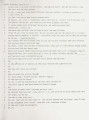
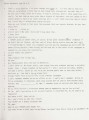
Show HermanBernstein june 16 p.lO It was a struggle. J What was your father ill from. H Parkinson disease. J He was having a hard time. H He couldn't work. All three of~~ in fact, my oldest brother was married and he moved in with A~s family-- he couldn't afford a separte apt. And helped support the family as I did with the little mney I was making at tAe-eaRk Walker BAnk. Andof course, my other brother Sam-they all pooled togehter. And it was an existence. That's about all it was. Those were tough times. J You've seen your life really incrase--after the depression, it did get better foryou. H Oh, sure. J Were yyoungerpeople moving in here, diff. people with diff. problems-has that been a problem for you. H No. Not at all. Just like--how long have you been here. J We've been here 8 years .... H I went to a Btnai Brith meeting one night for newcomers and it was amazing the number of young married who came --who moved out here from the East because they felt this was a b etter community to raise a family and they wanted to get away from the larger communities. I think that's what's brought a lot of people in here. J You did't feel that though-when you were nving here, you were very content, you didn't want to be anywhere else. H Oh, n~ever have. We've made a nice living here. Have a happy marriage life. J You can see why other ~ople want to move here. H Ahuh. I think it's a great community to live in. J Have you seen the jewish community changing over the years? Anychanges? H In what way. J Thre isn't the kosher butcher now -- H There's not that many families who keep kosher but it is a~ailale for those who want it. It's different for all of us because in going back a eeij~t- a number of gars, you knew everybody in the community. We go to the temple now and go to the synagogue now and there' very few people that we dont--there all newcomers. Many newcomers. I should say that we don't know. And they're young. they're younger people of course. They live their lives and we live ours. J In a way things were easier then, in some ways 3even though financially harder. You knw where you stood with people. H Yeah, yeah, ahuh. J did that keep you together. H Oh defintely, I think so. what would you hope to leave to your childr~. what would you want them to know about the |
| Reference URL |
https://collections.lib.utah.edu/ark:/87278/s6nc7w0m/903806 |