| Title |
Interviews with Japanese in Utah: Okada brothers |
| Alternative Title |
Toru and Jim Okada: interview of August 18, 1984 |
| Creator |
Okada, Toru, 1919- ; Okada, Tetsu, 1926-2010; Okada, Kenge; Okada, Junior, 1929-1994 |
| Contributor |
Fuller, Sandra T., 1945- ; Kelen, Leslie G., 1949- |
| Publisher |
Digitized by J. Willard Marriott Library, University of Utah |
| Date |
1984-08-18 |
| Date Digital |
2014-05-07 |
| Access Rights |
I acknowledge and agree that all information I obtain as a result of accessing any oral history provided by the University of Utah's Marriott Library shall be used only for historical or scholarly or academic research purposes, and not for commercial purposes. I understand that any other use of the materials is not authorized by the University of Utah and may exceed the scope of permission granted to the University of Utah by the interviewer or interviewee. I may request permission for other uses, in writing to Special Collections at the Marriott Library, which the University of Utah may choose grant, in its sole discretion. I agree to defend, indemnify and hold the University of Utah and its Marriott Library harmless for and against any actions or claims that relate to my improper use of materials provided by the University of Utah. |
| Spatial Coverage |
Honeyville, Box Elder County, Utah, United States, http://sws.geonames.org/5776087/ ; Deweyville, Box Elder County, Utah, United States, http://sws.geonames.org/5773850/ ; Tremonton, Box Elder County, Utah, United States, http://sws.geonames.org/5783768/ ; Hawaii, United States, http://sws.geonames.org/5855797/ ; California, United States, http://sws.geonames.org/5332921/ |
| Subject |
Okada, Toru, 1919- --Interviews; Okada, Tetsu, 1926-2010--Interviews; Okada, Kenge, 1922- --Interviews;; Okada, Junior, 1929-1994--Interviews; Japanese Americans--Utah--Interviews; Japanese American farmers; Utah--Ethnic relations; World War, 1939-1945--Participation, Japanese American; Buddhists--Utah; Arranged marriages |
| Description |
Transcript (typescript, 118 pages) of an interview by Sandra Fuller and Leslie Kelen with brothers Toru ("Beb"), Tetsu, Kenge and "Junior" Okada, Japanese-Americans living in Utah in 1984. In the transcript, Toru is called "1man," Kenge is "2Man," Junior is "3Man," and Tetsu is "4man." An unidentified woman, probably a wife, joined the conversation.The Okado brothers (b. 1919 to 1929) talk about the families of their mother and father in Japan, relocation to Hawaii, coming to Utah and raising sugar beets, and land ownership policies in the U. S. Other topics covered include picture brides, the Depression, civilian life during World War II, farming, and Japanese American organizations |
| Type |
Text |
| Genre |
oral histories (literary works) |
| Format |
application/pdf |
| Language |
eng |
| Rights |
 |
| Relation |
http://archiveswest.orbiscascade.org/ark:/80444/xv45901 |
| Scanning Technician |
Matt Wilkinson |
| Conversion Specifications |
Original scanned with Kirtas 2400 and saved as 400 ppi uncompressed TIFF. PDF generated by Adobe Acrobat Pro 9 for CONTENTdm display |
| ARK |
ark:/87278/s6x93v1x |
| Topic |
Japanese Americans; Japanese American farmers |
| Relation is Part of |
Mitsugi M. Kasai Memorial Japanese American Archive |
| Setname |
uum_ijau |
| ID |
901478 |
| Reference URL |
https://collections.lib.utah.edu/ark:/87278/s6x93v1x |
| Title |
Page 31 |
| Format |
application/pdf |
| Setname |
uum_ijau |
| ID |
901391 |
| OCR Text |
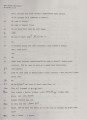
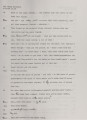
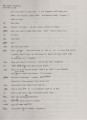
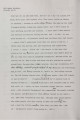
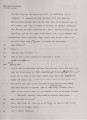
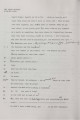
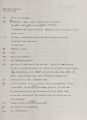
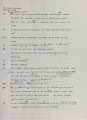
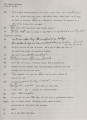
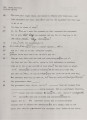
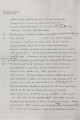
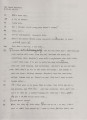
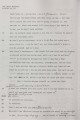
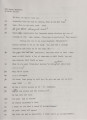
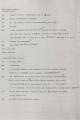
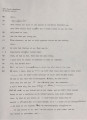
Show OHI Okada Brothers 8-18-84 s2:31 Sowe was all in the same boat. And so - so - ah - of course,you know 1 we're just like anybody else. They never called us Okadas or anything - because we w~Ae... a.lwo/.s knP~as the Japs up the road [lauhgs],Andthat stigma was always there. But I don't think we felt anything untilfue war started. I know that's when mostof the friction started was during the war. And - it was - it was more becuase of - of hysteria thanit was anything else. And people --people didn't understand fully what was going on.And so, I think after the war was over and everything had calmed down, a little, I think - Ithink the - the people in the area that stuck up for us1 ~heyfelt good and thepeople that didn't ~ick up ~r us, they felt kind of ashamedaf themselves. Becuase after the reality set in. And so that was about the mly problem we everhad around here. Becuase when tht~r started, they had a petition o,v f.ku... ,.J4ht:J. ·tN-elle-rl~ ?~-'"(!hs£1/U /o a.vy' O/[entals and everything. And;in fact, the gishop started it, didn't he. The bishop started 1 it. The LDS bishop started that. ANdAguess maybe- what 60% signed it and 40 didn't? [laughs]·~~ae;.{~~ we'll sellour . land to whoever wewant to •.. [laughsJ We,we had a few evacuees come in here. And stuff. So- AndiD, we were fortunate though that we- worked )l~e with- with probably thepowersof the communitYA• The people thathad the wealth. And~ worked for them aMi they helped us out quite a bit. Sowe were fortunatein that way. Becuase they could supress /bru.o the other people that were trying to make the troubl~ see. And - even the little commlity like this, you have the - the ah- thewnopoly kindof thing going on. And -- |
| Reference URL |
https://collections.lib.utah.edu/ark:/87278/s6x93v1x/901391 |