| Title |
Interviews with Japanese in Utah: MItsugi Kasai |
| Alternative Title |
MItsugi Kasai: interview on August 30, 1984 |
| Creator |
Kasai, Mitsugi, 1918-2013 |
| Contributor |
Kelen, Leslie G., 1949- |
| Publisher |
Digitized by J. Willard Marriott Library, University of Utah |
| Date |
1984-08-30 |
| Date Digital |
2014-05-07 |
| Access Rights |
I acknowledge and agree that all information I obtain as a result of accessing any oral history provided by the University of Utah's Marriott Library shall be used only for historical or scholarly or academic research purposes, and not for commercial purposes. I understand that any other use of the materials is not authorized by the University of Utah and may exceed the scope of permission granted to the University of Utah by the interviewer or interviewee. I may request permission for other uses, in writing to Special Collections at the Marriott Library, which the University of Utah may choose grant, in its sole discretion. I agree to defend, indemnify and hold the University of Utah and its Marriott Library harmless for and against any actions or claims that relate to my improper use of materials provided by the University of Utah. |
| Spatial Coverage |
Utah, United States, http://sws.geonames.org/5549030/ ; South Korea, http://sws.geonames.org/1835841/ ; Japan, http://sws.geonames.org/1861060/ |
| Subject |
Kasai, Mitsugi, 1918-2013--Interviews; Japanese Americans--Utah--Interviews; Japanese American soldiers; United States--Armed Forces--Japanese Americans; Military intelligence; Utah--Ethnic relations |
| Description |
Transcript (typescript, 164 pages) of an interview with Mitsugi Kasai, a Japanese-American living in Utah in 1984. Mr. Kasai (b. 1918) recalls his early life on an Idaho farm during the Great Depression. He also reminisces about his life-long career in military intelligence, including being stationed in post-war Japan and wartime Korea |
| Type |
Text |
| Genre |
oral histories (literary works) |
| Format |
application/pdf |
| Language |
eng |
| Rights |
 |
| Relation |
http://archiveswest.orbiscascade.org/ark:/80444/xv45901 |
| Scanning Technician |
Matt Wilkinson |
| Conversion Specifications |
Original scanned with Kirtas 2400 and saved as 400 ppi uncompressed TIFF. PDF generated by Adobe Acrobat Pro 9 for CONTENTdm display |
| ARK |
ark:/87278/s6321crx |
| Topic |
Japanese Americans; Japanese American soldiers; Military intelligence |
| Relation is Part of |
Mitsugi M. Kasai Memorial Japanese American Archive |
| Setname |
uum_ijau |
| ID |
900802 |
| Reference URL |
https://collections.lib.utah.edu/ark:/87278/s6321crx |
| Title |
Page 51 |
| Format |
application/pdf |
| Setname |
uum_ijau |
| ID |
900687 |
| OCR Text |
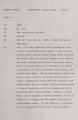
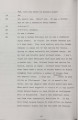
Show LK MK LK MK LK MK What were you getting at with that? Of course, him being captain, they would respect the rank, being a captain is higher than a first lieutenant so it gave him a better opportunity to contact the prisoners of war and get better results than I would. Because of rank. And that was alright because I couldn't, I had a lot of things ~o take care of, being the chief of the detachment because when Woodrow Chin had left I was a Warrant Officer outranked Alfie LeMay so I was actually chief although our •.. Your ranks •.. ... right. With Captain LeMay and me a First Lietutenant. Did this cause some problems? No, it didn't cause any problems. In fact, like I said, after awhile he, Alfie LeMay wouldn't go out and do this routine things that had to be done. He just wouldn't do it so I made him responsible primarily for Camp 8. Let him handle Camp 8. Of course, I supervised his activities too because being the chief I'd be responsible if anything went wrong, it would come back to me. But I left him in charge of Camp 8 so to speak. That was the camp, the more important camp than Camp 3 and well, I won't say, important from the standpoint that all the PW didn't want to return to Mainland China although Camp 3 50 |
| Reference URL |
https://collections.lib.utah.edu/ark:/87278/s6321crx/900687 |