| OCR Text |
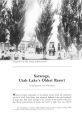
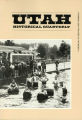
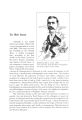
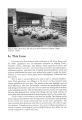
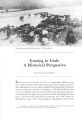
Show < A ^ ^ . Utah cattle at a ford of the Virgin River. USHS collections. Grazing in Utah: A Historical Perspective BY CHARLES S. PETERSON X H E HISTORY OF GRAZING IN UTAH is recognizably different from other regions and has left lasting social and natural imprints. Factors that influenced this at the outset included broad geographic influences and the timing and character of settlement. Although Utah is in some ways a transitional region between the Northwest and the Southwest, it was isolated by the great canyons of the Colorado from Hispanic influences, and cattle and sheep did not penetrate into Utah during the Spanish era. Later, when Texas longhorns and Spanish merinos were Dr. Peterson is a Fellow of the Utah State Historical Society. A version of this paper was presented at the 38th annual meeting of the Society for Range Management. Grazing in Utah 301 trailed north, the physical barriers forced cattle and sheep drives to flank Utah and diverted the movement of ranching customs that extended from Texas to other regions of the West.^ By contrast, States-bred animals and husbandry practices from the Midwest and Northeast had an important effect upon early Utah. Utah lay across the main road of the great central overland migration. The earliest Mormon pioneers brought States cattle and sheep with them in their exodus from the Midwest. Furthermore, it was only a short time until the Mormon core area (the settled valleys along the Wasatch Front) became part of the overland road, and new infusions of States livestock were dropped off by gold rushers and immigrants.^ Thus, Utah became an outpost of the Midwest and Northeast more than of the Southwest as far as bloodlines and its first stockgrowing culture went. This set it apart from those parts of the West where stock-growing cultures were the heritage of what historians Walter Prescott Webb and Ernest Staples Osgood have called "the Texas Invasion. "^ Eastern influences notwithstanding, land utilization and management practices evolved rapidly. Construction time and material for fencing were lacking, and town herd grounds and community herding practices quickly became common. At first, range land was abundant and little effort was made to establish claims to it, but this period passed 1 This essay brings several earlier studies by the author into a summary history of livestock in Utah. See Peterson, "Albert F. Potter's Wasatch Survey, 1902: A Beginning for Public Management of Natural Resources in Utah," Utah Historical Quarterly 39 (1971): 238-53; "Small Holding Land Patterns in Utah and the Problem of Forest Watershed Management," Forest History 17 (July 1973): 4-14; "San Juan in Controversy: American Livestock Frontier vs. Mormon Cattle Pool" in Charles Redd Monographs in Western History, No. 3, ed. Thomas G. Alexander (Provo, Ut.: Brigham Young University, 1974), pp. 30-45; "The 'Americanization' of Utah's Agriculture," Utah Historical Quarterly 42 (1974): 108-25; "Cowboys and Cattle Trails: A Centennial View of Emery County," in Emery County: Reflections on Its Past and Future, ed. Allan Kent Powell (Salt Lake City: Utah State Historical Society, 1979), pp. 64-79; "Utah Grazing and the Contributions of the Wasatch-Cache National Forest," with Linda E. Speth, in "A History of the Wasatch-Cache National Forest" (Logan, Ut.: Utah State University, 1980), pp. 174-223; and "San Juan: A Hundred Years ofCatde, Sheep, and Dry Farms," in Sanjuan County, Utah: People, Resources, and History, ed. Allan Kent Powell (Salt Lake City: Utah State Historical Society, 1983), pp. 171-204. Other statements dealing with the livestock industry include Utah Historical Quarterly 32 (1964) with nine articles on cattlemen and cattle. Articles dealing with sheep appear incidentally in widely scattered works. Clair C. Anderson, ed., "History of Grazing in Utah," is a WPA Writers Project study. Manuscript copies are at the Utah State University Library and at the Utah State Historical Society. Of general utility are two agricultural bulletins, William Peterson et al., "Cattle Ranching in Utah . . . 1925," Utah Agricultural Experiment Station Bulletin, No. 203 (Logan, Ut., 1927); and A. C. Esplin et al., "Sheep Ranching in Utah . . . 1925," Utah Agricultural Experiment Station Bulletin, No. 204 (Logan, Ut., 1928). ^Donald Meinig, "The Mormon Culture Region," Annals of the American Association of Geographers 55 (1965): 10-16. Andrew Love Neff, History of Utah, 1847-1869, ed. L. H. Creer (Salt Lake City, 1940), pp. 164, 267-76, 763-72; also Norman F. Furniss, The Mormon Conflict, 1850-1859 (New Haven: Yale University Press, 1960), pp. 121 and 172; and Ernest Staples Osgood, The Day of the Cattleman (Chicago: Phoenix Books, 1957), pp. 1-23. 3 Osgood, The Day of the Cattleman, pp. 24-58; Walter Prescott Webb, The Great Plains (Boston: Ginn and Company, 1931), pp. 205-69. 302 Utah Historical Quarterly quickly. In 1853 Col. Edward Steptoe, who had been dispatched to Utah, took action to establish military grazing reserves. Thus challenged. Mormons tried to improve their claims upon certain prime grazing areas, including range Steptoe wanted. Although totally without jurisdiction over the public domain, the territorial legislature granted vast herd grounds to prominent Mormon leaders and groups. Most of these grants were never translated into actual titles, but at least two were proved up on. Brigham Young was allotted the whole of Cache Valley (some sixty miles long and fifteen wide), and Heber C. Kimball, his counselor, much of Parley's Park, east of Salt Lake City.* Later, after the United States Land Office had opened in Utah, Young acquired title to almost 10,000 acres at his Elk Horn Ranch in the south bottoms of Cache Vafley and the names Kimball Ranch and Kimball Junction still attest to Kimbafl's lasting influence in Parley's Park.^ Mormon herds multiplied quickly and new infusions continued, and before 1860 Utah had become a grazing country of some importance. Men with imagination and drive, like Salt Lake City's William Jennings, profited mightily. More typical was Alexander Toponce, a small-time but freewheeling merchant/freighter. Setting out from Salt Lake City in the fall of 1867, he collected debts owed him and traded for 6,000 "catde, big and little," which he drove to the Comstock mines in Nevada and sold for $300,000. Simflarly, a cattle buyer named Ben Hey wood gathered herds of as many as 10,000 "north of the lake" and trafled "them slowly across the country" to Omaha in days prior to the railroad.^ Utah was in no sense a ranch country in the prerailroad era, however. Indeed, its first livestock era was well established before ranches spread to most of the West. In the sense we have come to know them, there were no ranches in Utah in 1870. Far from being an offshoot of the Spanish ranching culture, Utah's grazing practices and institutions were shaped by the Mormon penchant for cooperation and group life. *Neff, History of Utah, pp. 180-84; Hosea Stout, On the Mormon Frontier: The Diary of Hosea Stout, 1844-1861, 2 vols., ed. Juanita Brooks (Salt Lake City: University of Utah Press and Utah State Historical Society, 1964), 2:507-8, 547-686; and for a related grazing issue see Charles S. Peterson, "A Historical Analysis of Territorial Government in Utah under Alfred Gumming, 1857-1862" (Masters thesis, Brigham Young University, 1958), pp. 170-75. 5 Ronald O. Barney discusses Young's Cache Valley grant and the procedure by which he gained title to it in "Mormon-U.S. Government Interaction over Land Policies," typescript in writer's possession. 6H. H. Bancroft, History of Utah, 1540-1886 (San Francisco, 1889), pp. 764-65; Alexander Toponce, Reminiscences of Alexander Toponce, Written by Himself, new ed., (Norman: University of Oklahoma Press, 1971), pp. 126-32; and John D. Thornley Interview by C. C. Anderson, February 25, 1941, in "History of Grazing," Coll. 8, Box 4, Folder 4. Grazing in Utah 303 Most Saints lived in towns from which they worked small general farms. Almost all kept a few head of cattle and sheep. When these were not fed on the farm, they were grazed in town pools or co-op herds. The disparity between farm stock and range stock was blurred, a point underscored by the fact that Utah's first use of mountain ranges was by community sheep herds and by summer dairies staffed by women or entire families. Although cooperation was common in the cattle industry throughout the West, Mormon pools differed in the great number of farm-based owners and the small number of animals owned by each person.^ The livestock pools were not notable for the number of animals assembled. Yet, on occasion, when natural and social circumstances were right, large herds were brought together. For example, at Brigham City, where abundant range lay west towards Nevada, the co-op sheep herd numbered 50,000 head by 1880. An important part of the town's annual cycle was an autumn inventory of what may have been hundreds of small flocks. Mountain dairies could also take on considerable size, with some running as many as 250 cows and one on the divide between Salt Lake and Cache valleys collecting 750 head from farmers in both valleys and employing twenty-five milkmaids.^ By the late 1870s a distinctive Mormon village livestock system had developed throughout the central mountain valleys of Utah. Elsewhere buffalo were killed and Indians subdued in the years after the Civil War, opening ranges for longhorns driven from Texas and a ranching culture based on Hispanic traditions. As noted earlier, this so-called Texas Invasion initially had little impact on Utah's grazing, but after 1880 both internal and external conditions functioned to superimpose ranching patterns upon the well-established customs of the viUage-based grazing system.^ To some degree this change was reflected in growing livestock numbers. The upswing began first in cattle, which in 1885 numbered about 200,000. This number increased to 356,600 in 1895. Thereafter, with great pressure from sheep and with adverse weather and market conditions, cattle numbers barely held their own until 1905. Appar- 7 See Peterson, "Imprint of Agricultural Systems on the Utah Landscape," in Richard H. Jackson, ed.. The Mormon Role in the Settlement of the West (Provo, Ut.: Brigham Young University, 1978), pp. 92-94; and Thomas E. Moore Interview by E. A. Correll, September 13, 1940, "History of Grazing," Coll. 8, Box 4, Folder 4. 8 "History of Grazing," chap. 1, p. 26; and Paul Willie, "Early Development of Dairying in Cache Valley," typescript in possession of author; also Joel E. Ricks and Everett L. Cooley, The History of a Valley: Cache Valley, Utah-Idaho (Logan: Deseret News Publishing Company, 1956), pp. 211-18. 9 Osgood, The Day of the Cattleman, pp. 1-58. 304 Utah Historical Quarterly MOVEMENT OF UTAH SHEEP AND CATTLE Core Settlement Area Cattle from Core Settlements, 1875-85 Texas Cattle Invasion after 1880 A R I Z O N A Cartography by Steven R. Thomas, University of Utah, DIGIT Lab Counting sheep in Wasatch National Forest, 1914. U.S. Forest Service photograph, USHS collections. ently encouraged by Forest Service policy that partially offset the advantages sheep had gained, cattle increased to about 412,334 in 1910 and by the end of the World War I reached a high of 505,578.^° After slow beginnings prior to 1880, sheep numbers increased explosively. By 1885 the territory supported one million head and by 1890 about 1,500,000. By the turn of the century the tally had skyrocketed to 3,818,000. In the decade that followed, with drought, slow markets, and Forest Service policy prompting the trend, numbers declined almost as rapidly to about 2,740,000, after which sheep populations held steady at about 2.5 miUion for more than fifteen years 11 10These data are compiled from the agricultural censuses for 1890, 1900, 1909 and 1910, 1920, and 1925. 11 Most census counts include only shearable sheep and therefore discount the year's lambs. The census of 1900, however, reported all sheep. Figures presented there indicated the lamb crop amounted 306 Utah Historical Quarterly To understand better what these figures meant we may examine the cattle industry. First, it should be noted that the number of people involved in village-based ranging operations greatly increased. For a brief period prosperity prevailed. Families got rich, towns grew, and the country filled up. Located strategically, Nephi styled itself a "Little Chicago," Spanish Fork flourished as a cow town, and Mount Pleasant began to see itself as "the Queen City." The pressure of the filling country made itself felt, and the last remote spots of Great Basin Utah were grabbed up. Conditions were complicated in 1879-80 with a feed-short winter of unprecedented severity.^^ In the years after 1875 Indian and geographic barriers collapsed and livestock literaUy streamed from the overcrowded Great Basin settlements. In effect the Great Basin played the same role in stocking the Colorado Plateau parts of Utah that Texas did in stocking the ranges of Wyoming and Montana. This was especially true in southeastern Utah. First came the Green brothers who trailed into the Moab area in 1875 where they were killed by Indians. Then came town builders like the Taylors of Moab and aggressive loners like the McCartys, Coloradans like "Spud" Hudson of the Monticello area, and finally big stockmen like Preston Nutter from the Arizona Strip. Buying cattle for less than $ 10 a head in the overstocked Mormon settlements, they headed east and south, fattening cattle on virgin ranges and seUing for fantastic profits in the burgeoning mining country of Colorado. ^^ It is difficult to know how many cattle were trailed from the Great Basin into eastern Utah, but it is certain they numbered in the hundreds of thousands. In the process, the Old Spanish Trail and other routes across the Wasatch Plateau and the canyonlands became ave-to almost exactly one-third of the total number of sheep enumerated. Although I recognize it is not an altogether satisfactory formula, I have added a factor of one-third to the number of sheep counted in the other census years, each of which states specifically that the count excluded lambs under one year. See U.S., Bureau of the Census, Twelfth Census of the United States: Agriculture, part I (Washington, D.C., 1890), p. 487. Sheep numbers were compiled from the agricultural censuses for 1890 to 1925. A different profile for both sheep and cattle emerges from statistics compiled by the Salt Lake office of the Grazing Service in 1939. Using Bureau of Agricultural Economy data, the Grazing Service shows cattle numbers peaking in 1895 at something over 400,000 head, after which a rapid decline occurred, dropping to approximately 350,000 by 1900 and to 125,000 in 1905. Thereafter, cattle numbers climbed slowly until 1920-25 when a new peak of about 500,000 was reached. According to the Bureau of Agricultural Economy, sheep numbered only 60,000 in 1885 but exploded to two million in 1890 and peaked at 2,600,000 in 1905. Sheep numbers then plummeted by nearly 1 million head in five years and continued the downward trend until 1920 when numbers increased again to 3 million in 1930. i2Stena Scorup, A. J. Scorup: Utah Cattleman (n.p., n.d.), p. 8; and W. H. Lever, History of Sanpete and Emery Counties, Utah (Salt Lake City, 1898), p. 203. 13 Charles S. Peterson, Look to the Mountains: Southeastern Utah and the LaSal National Forest (Provo, Ut.: Brigham Young University, 1975), pp. 89-106. Fall 1948 roundup of steers on Preston Nutter's summer range in Carbon County. Inset: Preston Nutter hands saddling up. USHS collections. nues of the cattle trade similar in romance to the Chisholm Trail. Indeed, the Texas trails paled by comparison as far as drought, sparse feed, and canyon barriers were concerned. The Colorado River crossing was doubtless among the most formidable obstacles. Costs in terms of discomfort and time were high, and men always worked against the pressure of other herds, short feed, and wandering stock. Lehi Jones's crossing at Hite Crossing in December 1887 gives a good feel for the experience: We were there for five days. . . . In the morning there was much ice on the river. . . . We would strip down and get onto our horses and take a bunch and crowd them into the water. . . . The men were on horses in water and ice up over their waists. Three of [them] worked at a time driving and crowding the cattle, attempting to force them to swim the river. One man kept a fire going with willows and they rotated in order to keep from freezing to death. The last afternoon an old crumpled-horned cow suddenly took it into her head to cross the 308 Utah Historical Quarterly river, and a number of animals followed her. She had a large calf with her, so the men tied the calf on the opposite side of the river and forced the cow back again. Each time she crossed to get her calf, many cattle followed.i* Others found suitable range in the canyon country short of the river. This first wave of settlement was a "men only" proposition- actually a population of boys. While their fathers returned to the settlements, the boys stayed on, an untamed and independent crew of perhaps a hundred, some of whom got back to civilization no oftener than once in three years.^^ Shedding a fair light on this cowboy epoch is the experience of the Bennion family between 1875 and 1878. Upon migrating to Utah they established themselves "over Jordan" on the west side of Salt Lake Valley. As their families grew and ranges filled up, they moved progressively westward untU by the late 1860s they ranged cattle, some their own, many cooperatively owned, over an immense territory extending from Salt Lake City west to Fish Springs near the Nevada border, to Fillmore on the south and the Wasatch Plateau on the east. With feed supplies failing, they gathered more than 2,000 cattle in 1875 and drove them over the Wasatch Plateau into the canyonlands west of the Colorado River. There they left them in charge of two teenage boys, Israel Bennion and Tom Simpers. In the summer they ran on the east slopes of the Wasatch Plateau. Winter quarters were located on Ferron Creek from which stock ranged south and east to the Green River. ^6 In many respects life for the boys was idyllic. Fish Lake and adjacent streams were full offish. In the fall they scooped thousands of trout from the creeks, buflt willow drying racks, and smoked fish and venison. With supplies packed from Salina they headed for winter grazing grounds. No more than forty air miles, the trip crossed an "upside-down nightmare of sandstone" that required far better cowboying than the two lads could give.^^ Once on Ferron Creek they quickly became acquainted with others who had also assembled there. Cattle were left pretty much on i*Evelyn and York Jones, Lehi Willard Jones . . . 1854-1947 (Salt Lake City, 1972), pp. 100-101. i^Glynn Bennion, "A Pioneer Cattle Venture of the Bennion Family," Utah Historical Quarterly 34 (1966): 315-25; Bennion, "An Autumn Idyll," manuscript in possession of writer; and Peterson, "Cowboys and Catde Trails: A Centennial View of Emery County," in Powell, Emery County, pp. 79-96. leibid. I'lbid. Grazing in Utah 309 their own and the cowboys devoted the winter to "just plain having fun." They often gathered at one camp for a week or more before moving to the next and another extended visit. For boys like Israel Bennion, whose every waking moment had been "devoted to the work and responsibility of an adult," it was a kind of freedom and undisciplined camaraderie that goes far to explain cowboying's appeal.^^ For three years the wilderness of Castle Valley was life for young Bennion and Simpers. Toward the end their hair had grown to a length of two feet and was braided, if cared for at all, and when cut was handled by the simple expedient of laying the braid over a log and hacking it off with a knife. But it couldn't last long. For one thing the management of the two boys was woefully inept. They branded some 700 calves each year, but when they collected their stock late in 1878 they tallied only 1,700 head, indicating that each year they had lost upwards of 700 animals. Also the livestock frontier was changing, and as they crossed the rim of the Basin to get supplies in the fafl of 1878 they met a party of settlers. Pausing to get their first scissored haircuts in more than three years, the boys and the Bennion stock soon left Castle VaUey. The Bennions lost heavily on the enterprise, but for others canyonlands grazing was a success and the livestock business became a major element in the region's early heritage.^^ Before turning our attention from the movement of cattle from the Utah core, reference should be made to the role of Utah cows in Arizona's early development. Beginning with the Mormon migration to the Little Colorado in 1876 large numbers of cattle were trailed south over what came to be known as the Honeymoon Trail. Utah cows became the prime currency with which a dozen town sites were bought from previous claimants. Although many Arizona Mormons engaged in livestock enterprises, most were village based and relatively smaU. At Fort Moroni, on the south slopes of the San Francisco Mountains, however, John W. Young ran what historian Earle Forrest has termed Arizona's first giant cattle ranch, which he stocked with 30,000 cattle, the foundations of which were trailed south from Great Basin Utah. Although polygamy and other troubles had forced Young out of the San Francisco Mountains area by 1885, he continued to have interests in various Grand Canyon and Kaibab cattle companies.^^ 18 Ibid. i9Ibid. 20 Earle R. Forrest, Arizona's Dark and Bloody Grouwaf (Caldwell, Ida.: Caxton Printers Ltd., 1952), p. 326; and Charles S. Peterson, Take Up Your Mission: Mormon Colonizing along the Little Colorado River, 1870-1900 (Tucson: University of Arizona Press, 1973), p. 166. 310 Utah Historical Quarterly Meantime, in the early 1880s the Texas Invasion finally breeched the canyonlands and social barriers that for a decade and more had kept the larger livestock frontier at bay. Major points of access were the corners of the territory. In the northeast a defiant half-outlaw, small-rancher spin-off of Wyoming's corporate ranches penetrated Utah through Brown's Hole and the Uinta Basin, making a congenial milieu for the rise of Utah's Butch Cassidy and the Wild Bunch lore.^^ Into the northwest came Charles Crocker, Jr. Occupying Central Pacific Raflroad grant lands, his 35,000 cattle were the easternmost wing of the California expansion that brought the herds of the giant Miller Lux outfit into northeastern Nevada and southwestern Idaho.^^ Far to the south, Arizona interests expanded as John W. Young retracted, ultimately taking over most of the Grand Canyon and Kaibab country and extending into the Arizona Strip, crowding Mormon interests before them.2^ But perhaps the classic example of the Texas Invasion's impact was in southeastern Utah. Virtually unknown until the great surveys of the 1870s called attention to it, southeastern Utah was penetrated first by miners, then by small ranchers drifting ahead of the larger frontier, and finally by large ranching companies. To hold the country for the Mormons, the Hole-in-the-Rockers dug in at Bluff on the Sanjuan River after 1880. They built diversion dams and waterwheels, shoveled sand from washed-in ditches, worked in Colorado for subsistence, quarreled among themselves, and watched the river carry off their tiny farms. But in the beginning they ran few livestock. Between 1882 and 1887 the big cattle outfits and bitter competition came to San Juan's ranges. Preston Nutter rode into the country north of the Colorado River. The Pittsburgh Company bought out the small ranchers at La Sal. The Carlisles, Englishmen with connections in New Mexico, Kansas, and Texas, did the same on the north Blues. Farther south the LC Company from the Texas panhandle established itself, while another Texas outfit, the ELK, moved into the canyons west of Bluff.2"* 21 William Tennent, "The John Jarvie Ranch: A Case Study in Historic Site Development and Interpretation" (Masters thesis, Utah State University, 1980), pp. 1-39; Charles Kelly, The Outlaw Trail: The Story of Butch Cassidy (New York: Devin-Adair Company, 1938). 22"History of Grazing," chap. 1, pp. 25-28. 23 Some feel for this process is found in Jones, Lehi Willard Jones, pp. 115-20, 140, and 175; and Rowland W. Rider, Sixshooters and Sagebrush: Cowboy Stories of the Southwest (Provo: Brigham Young University Press, 1979). 2* For detailed treatment of the Sanjuan case see Peterson, "Sanjuan in Controversy," and Look to the Mountains, pp. 79-106. Grazing in Utah 311 Al Scorup, ''the Mormon Cowboy, " near age eighty. USHS collections. The Bluff Mormons shifted their emphasis after 1885 from farming to cooperative livestock management. Organizing a livestock pool, they met the big outfits head on, adopting competitive tactics that soon earned them the name of Bluff Tigers. In the long run, drought, poor markets, and overstocking worked to the advantage of the Bluff pool, and by 1918 it, or Mormon successor outfits, had taken over most of the big ranches in southeastern Utah.^^ In important aspects the clash was economic. But it was also cultural, and a give and take of ranching customs took place that ultimately left a livestock industry that bore the identifying marks of both the "native" Utah and the Texas cultures. Some sense of this exchange may be had by looking briefly at the chief mythic figure of the grazing industry-the cowboy.^^ Town dwellers by preference and church calling, the Bluff stockmen did not regard themselves as cowboys. They managed stock cooperatively to support community life. Herders were hired and line riders assigned cooperatively, but few lived with cattle year round or gave themselves to the outfit with the complete loyalty of old-line Texans. As a type, cowboys were feared by Sanjuan Mormons, who avoided them socially and denounced their life-style and values. Indeed, so sharp a line was drawn that a "Mormon cowboy" was almost unheard of. For example, Albert Scorup, who had lived in caves for months at a time punching cows in the roughest canyons in America, was greeted at Bluff in 1891 by a dozen or more cowboy-shy girls who had come to see 25 Ibid. 26lbid. 312 Utah Historical Quarterly this loner who styled himself as ''the Mormon Cowboy." Although other San Juan Mormons were often desperate for work, there is no evidence they punched cows or worked for the big outfits which consistently hired long riders from Texas.^^ Not surprisingly. Mormon standoffishness and the aggressive tactics of the Bluff pool produced a reaction. At the cowboy level the response was direct and personal. Young and full of life, cowboys invaded the Mormon towns socially. As a local folksong put it, they drank at Monticeflo's Blue Goose Saloon, traded with Mons's store (the town's only mercantile institution), and "danced at night with the Mormon girls. "^^ Occasionally there was gunplay. Much of it was drunken but dangerous fun; however, on at least one occasion they shot up a school and on another killed two people at a dance. More important was the fact that a dozen or so outside cowboys married Mormon girls. Frequently these men stayed in the country where they became the relaxed channels through which Texas and Mormon customs evolved. ^^ With the breakup of the big outfits, San Juan's grazing institutions continued to change. Viflage life remained important. Regional and educational centers were in Utah. Stalwarts of the Hole-in-the- Rock group gave themselves to livestock as well as to church and family. Like their stockworking counterparts from the general frontier, they adapted ranching ways that originated in Texas to local conditions and values. The product was a set of practices unique in many ways to southeastern Utah that stifl needs to be examined in detafl.^" A closer look at the human and institutional development of grazing's development in Utah may be had by examining the growth of the sheep industry after 1890. Although there was considerable interstate movement, the sheep industry, like the catde industry, was in many respects a local or internal development. To understand growth patterns it is especially useful to examine the eleven central and northern Utah counties in which the Wasatch and Cache national forests were organized after 1902. In 1890 some 718,618 sheep, or 47 percent of the territory's total, were owned in that region. A decade later the number had risen to 2,126,545, or nearly 56 percent. In the quarter-century 27Ibid; and Peterson, "Sanjuan: A Hundred Years of Catde, Sheep, and Dry Farms," p. 176; David Lavender, One Man's West (New York: Doubleday and Company, 1943), p. 192; and Scorup, J. A. Scorup, pp. 26-27, 30. 28Fred W. Keller, "Blue Mountain," copy in writer's possession. 29Peterson, "Sanjuan: A Hundred Years of Cattle, Sheep, and Dry Farms," p. 178. 30Ibid, pp. 200-201; and Peterson, "Sanjuan in Controversy," pp. 62-63. Utah sheep on their way from the mountains to winter range on the desert. USHS collections. that followed, the trend in declining sheep numbers in the Wasatch- Cache counties ran far ahead of the state as a whole. By 1925, for example, when the state's total was 2,355,038 sheep, the eleven counties accounted for only 786,518, or 34 percent. Fluctuation was most dramatic in Salt Lake County, which rose from 124,471 head in 1890 to 558,243 in 1900, when it was second only to Sanpete County with 600,000 sheep. During the next quarter-century sheep numbers in Salt Lake County fell to 158,871, or to less than 7 percent of a state total that itself had fallen by 1.5 miUion head.^^ A significant point is that in 1900 sheep were crowding cattle from many Utah ranges. The state's location at the "crossroads of the 31 See Bureau of Agricultural Economy compilation prepared by the Salt Lake office of the Grazing Service. "History of Grazing," chap. 1, table no. 2. 314 Utah Historical Quarterly West" had some bearing on this, and hundreds of thousands of sheep trailed to and from neighboring states. Another factor contributing to the pressure sheep put on Utah's ranges lay in the fact that desert ranges were more abundant than mountain. In an era when range rights were held only by customary usage, this led to maximum stocking on the winter ranges and heavy overstocking on high altitude summer ranges and a grazing situation in which it seemed that livestock often lived on nothing but "fresh air and mountain scenery."^^ Under these conditions of declining resources, sheep competed somewhat more efficiently than cattle. By now long past their pioneer period, certain Wasatch Front farming towns played an important role in the rapid growth of the sheep industry. With more young people than farm opportunities would accommodate and with favorable access to range, they became sheep towns serving, in effect, as the hinges upon which the summer winter rhythms turned as sheep trailed from desert to mountain and back.^^ An occupational profile of Draper, in the south end of Salt Lake Valley for 1900, helps to illustrate this point. Of the town's 257 employed people, 39 were sheepmen and sheepherders. Of these, 17 were young men who lived in their father's homes and worked for wages as herders. Some of the 20 who listed themselves as stockgrowers owned farm property, but more did not. The sheep owners who had no farm property were all relatively young, suggesting that they had worked up from herders to become owners and that they were almost certainly dependent upon the public domain for grazing land. Other Wasatch Front towns where this same process was underway included Spanish Fork, American Fork, Lehi, Riverton, Woods Cross (the home of the Deseret Land and Livestock Company), Layton, Brigham City, Hyrum, Franklin, and Preston.^* Typical of those who became sheepmen was Andrew Peterson of 32U.S., Department of Agriculture, Sheep Migration in the Intermountain Area, by H. R. Hockmuth, E. R. Franklin, and M. Clawson, Circular No. 624 (1942); and Diary of Albert F. Potter's Wasatch Survey, July 1 to November 22, 1902, Wasatch-Cache National Forest Historical Files, Region IV Papers, RG-95, National Archives, Washington, D.C. 33 A good source for this development are the diaries of the Bennion family, which number into the thousands of pages, located in the library of the Utah State Historical Society. Especially useful are the statements of Glynn Bennion. Most of what he had to say was written in the 1930s but remains unpublished. Manuscripts entitled "Let's Stop Kidding Ourselves," "The Dude in the Ascendancy," and "You Can't Eat All the Grass," are found in the "History of Grazing," Coll. 9, Box 2. One entitled "An Autumn Idyll" is in the possession of the writer, and one was published as "A Pioneer Cattle Venture of the Bennion Family." 3*U.S., Bureau of the Census, Manuscript Population Schedule for Draper Precinct and other Wasatch Front precincts for 1900. Grazing in Utah 315 Lehi. His father had migrated from Sweden in the 1860s and was comfortably fixed as a farmer but had few resources to help his sons. As a consequence, Andrew ran sheep. Ranging nearby in Cedar Valley and American Fork Canyon, he took his young brothers out of school to herd for him, and for a few years did well enough. Also reflecting the importance of family in shaping livestock enterprise were Hyrum and Wilford Hatch, who, with the help of a brother who had married into the Thatcher Brothers Bank of Logan, built sheep herds of 7,000 or 8,000 by 1900. They summered in the mountains along the Utah- Idaho border and wintered on public lands near Bancroft, Idaho, or in the Cache Valley fields where sheep from as far distant as Iron County were fed hay.^^ Another example was E. J. Jeremy who controlled substantial land in East Canyon by the 1890s and with boys hired from Salt Lake Valley's farming communities made properties along the Jordan River bottoms the axis for a sheep operation numbering about 10,000 head. He wintered on the West Desert, trailed his own sheep, along with upwards of 300,000 others, from the neighborhood of Vernon, sheared near Grantsville, lambed just west of the present Salt Lake City International Airport, and in a tragi-comedy of dust, grazed lawns, sheep manure, and frayed nerves strung his herds out in an all-day trek through Salt Lake City.^^ Jeremy, the Hatches, and Andrew Peterson, like many others, made their homes in the core communities, the hinge upon which their sheep operations swung east and west as they moved from winter to summer ranges. For some, farm pastures became a vital pivot. Others with no farm base followed the same seasonal rhythm but grazed year round on the public domain. Few lived on isolated ranches with no ties to any town. Another point that may be illustrated by Jeremy's operation is that his ten-day race from Skull Valley to the head of the Duchesne River was part of a keen competition. Violence rarely threatened, but camps were located early to hold grass, and shortcuts were taken or trails hewn for miles through timber to regain grazing advantages. There was a keener edge to competition in neighboring Idaho, where 35 Peterson's father's role in Lehi is referred to in Hamilton Gardner, History of Lehi (Salt Lake City, 1913), as is the development of the sheep industry, pp. 187, 199; and Diary of Albert F. Potter's Wasatch Survey, which refers to the Hatch Brothers operation. For feeding oprations see J . C. Dowdle Journal, 1844-1908, Utah State University Library, entries for 1900-1901. 360ral Biography of Harry Lunn, 1974, taken by Craig Fuller, pp. 31-52, 61-72, and 83-112, typescripts, Utah State University Library, and in the possession of the writer. 316 Utah Historical Quarterly the powerful Kollin and Finch partnership preempted a "fine spacious range" which "range-hungry nomads" invaded in desperation. Kollin and Finch protected their interests by a simple but effective expedient. They grazed a herd of bucks in the approaches to their range, leaving herders with instructions to drive the bucks headlong into invading herds, which were almost always ewes and lambs. If the threat of mixing herds failed to turn invaders, the prospect of a lambing season badly out of kilter did.^^ Kollin and Finch also raised purebred Shropshires. Different only in their preference for Rambouillets were a number of purebred breeders in Utah. Prominent were W. S. Hansen of Coflinston and John H. Seeley of Mount Pleasant, who, between them, dominated Rambouil-let breeding in Utah and perhaps the United States. As a merchandising technique they developed world-famous ram sales in Salt Lake City. Seeley, particularly, came to have great influence. His neighbor, David Candland, long a key member of the State Land Board, was not loathe to influence land decisions in his favor, and Senators Reed Smoot and George Sutherland were his confidants. That Seeley also followed enlightened grazing practices is suggested by the fact that the Forest Service borrowed his "principal employee," W. C. Clos, "an encyclopedia on range management," to help formulate its grazing policy after 1905.^^ From the foregoing it is apparent that in important respects the growth of the sheep industry was a matter of internal development. It was both an economic and a social strategy through which an entire generation of Utahns found opportunity as the limits of Great Basin agriculture foreclosed on them. Together with the growth of Utah's cattle frontier, Utah sheep also contributed to one of the worst overgrazing problems in the entire West. Future problems were hinted at already in the late 1860s when Apostle Orson Hyde of Sanpete County told Mormon listeners that I find the longer we live in these valleys that the range is becoming more and more destitute of grass; the grass is not only eaten up by the great amount of stock that feed upon it, but they tramp it out by 37 F r a n k C. Robertson, A Ram in the Thicket: The Story of a Roaming Homestead Family on the Mormon Frontier (New York: Hastings House Publishers, 1959), pp. 252-54. 38 For a careful account of the role Hansen and Seeley played see M. G. Seeley, ' 'A History of the Rambouillet Breed of Sheep in Utah" (Master's thesis, Utah State University, 1956); on the contributions of Clos see Paul H. Robert, Hoof Prints on Forest Ranges: The Early Years of National Forest Range Administration (San Antonio: Naylor Company Publishers, 1966), p. 42. Grazing in Utah 317 the very roots; and where grass once grew luxuriantly, there is now nothing but the desert weed, and hardly a spear of grass is to be seen.^^ Near Ogden, observers blamed short grass on the "poisonous" breath of sheep, and by the late 1880s the famous or infamous Mountain Meadows had undergone a transition from a verdant meadow to a gully-cut sagebrush plateau.*° By the first decade of this century Manti and other Sanpete Valley towns were suffering regular floods, and mountain ranges above them were washing away. By 1930 the Wasatch Front towns themselves were under dire threat as cloudbursts hurtled unchecked down watersheds and canyons from which ground cover had been stripped. In few parts of the West were problems of erosion so severe.*^ It had long been recognized that erosion was a problem of overgrazing and fragile natural conditions, but it required long-range management experience and careful analysis to understand that human and institutional adaptations peculiar to Utah made a critical difference. To illustrate, brief reference may be made to the relationship between ownership patterns and early Forest Service grazing policy. The tendency to have a large number of small owners that had characterized Utah's pioneer era persisted wefl into the mid-twentieth century. This can be understood by looking at the unparalleled number of grazing permits issued by the Forest Service. For example, in 1918 permits were issued for 200,000 cattle and 800,000 sheep belonging to 7,582 separate cattle grazers and to 1,406 sheepmen, making average permit allowances of 24 cattle and 570 sheep. By contrast, Arizona, with public lands similar in extent and character, had a total of 603, or less than 10 percent as many licensees.*^ 390rsonHyde, "Instructions,"yourna/o/Z)zj-fOMr.yf5 (Liverpool, 1867), 11:148-51; and Wayne D. Rasmussen, Agriculture in the United States: A Documentary History, 4 vols. (New York: Random House, 1975), 2:1551-52. ^''Salt Lake Daily Telegram, May 14, 1869; and Walter P. Cottom, Our Renewable Wild Lands: A Challenge (Salt Lake City: University of Utah Press, 1961), pp. 55-73 and 97-122. *i Suggesting that overgrazing caused serious flooding along the Wasatch Range are: A. G. Nord, "Historical Information Concerning the Willard Watershed Rehabilitation," in "History of Cache National Forest," compileld by R. B. Roberts, 3 binders, 1, Logan Ranger District: J . H. Paul and F. S. Baker, The Floods of 1923 in Northern Utah, Bulletin of the University of Utah, No. 15 (1925), pp. 3-20; Reed W. Bailey, C. O. Forsling, and R. J. Becraft, Floods and Accelerated Erosion in Northern Utah, USDA, Misc. Pub. No. 196 (1934); R. V. R. Reynolds, Grazing and Floods: A Study of Conditions in the Manti National Forest, Utah, USDA, Forest Service Bulletin No. 91 (1911); C. L. Forsling, "Erosion on Uncultivated Lands in the Intermountain Region," Scientific Monthly 34 (1932): 311-21; Torrential Floods in Northern Utah, 1930, Report of Special Flood Commission Appointed by Governor Goerge H. Dern, Utah Agricultural Experiment Station Cir. No. 92 (1931). Discounting the role of livestock are: A. C. Esplin, "You Can't Denude a Desert," The Westerner (1947), n.p.; and Ralf R. Wooley, Cloudburst Floods in Utah 1850-1938, u s e s . Water Supply Paper No. 994 (1946). *2Data compiled by K. L. Steward, Region IV, Grazing Files, Utah State Historical Society; and in "History of Grazing," chap. 1, p. 9. 318 Utah Historical Quarterly Among Utah's high permit forests was the Cache with 1,424 cattle permits and 146 for sheep in 1918. Even more striking were the 1,915 cattle permits and 629 sheep permits issued in the World War I years on the Manti Forest. A few years before, this situation had caused real consternation when the Manti supervisor repeatedly requested more permit request forms. Finally the acting commissioner of the General Land Office himself took the matter in hand, writing that something was radically wrong about the numerous requests for these blanks. For the small number of stock allowed in the reserve it is simply unprecedented, and it does not seem possible that the demand for them is legitimate. . . . You have already had 600 catde application blanks. I venture the prediction that you will not have 200 applications. . . . But 100,000 sheep are allowed in the reserve. I venture the prediction that you will have 75 sheep applications to forward, yet you have had 325 sheep grazing application blanks. And then clinching the whole thing the commissioner concluded: the total number of cattle applications approved for 44 reserves in 1903 was but 4,121, covering 529,973 head. You have already been sent more than one seventh of that number with but 15,000 head of stock. *3 Ultimately, well over 1,000 cattle and 600 sheep permits were issued. To complete the picture it must be understood that Utah's farm viflage stockmen were a class favored by both forest policy and forest personnel. They lived on locally owned land adjacent to the forests, thus qualifying as particularly dependent upon the forests. In addition, the small number of animals they owned came in well below the maximum limit cutoff prescribed by forest policy, so virtually afl qualified for permits. Many of the foresters were brothers and sons of the operators and applied even such rules as did pertain loosely. Already badly overstocked with local animals when they were designated, Utah's national forests were even less able than forests in other states to resolve overgrazing problems.'*^ Finally, during the New Deal years drought and hard times resulted in conditions so critical that tens of thousands of Utah farmers and stock owners defaulted on taxes, interest, and other debts. In some *3 W. A. Richards, Commissioner, and J . H. Fimple to A. W.Jensen, October 27, December 10 and 29, 1903, Historical Files, Manti-LaSal National Forest. *4 Peterson, "Small Holding Land Patterns in Utah and the Problem of Forest Watershed Management," treats this question in depth. Grazing in Utah 319 areas most of the privately held land had reverted to the counties, and throughout the state, land, including grazing land, reached afl-time lows in value. In this situation it was possible for the Forest Service and other agencies to acquire critical watersheds and through federal programs restore them, thus belatedly dealing with a major problem that had historical and social roots as wefl as natural.*^ A grazing culture indigenous to the humid East and Midwest had been transplanted to one of the West's most arid and hostile environments. It was modified in response to these new conditions and for a time worked wefl. Then with the advent of the Texas Invasion after 1880 a more general ranging system was superimposed upon the old, resulting in added pressure to the natural resources as well as adaptations in ranching customs that are peculiarly Utahn. The core viUages lent themselves to the seasonal rhythms of summer and winter grazing, aflowing sheep especially to overuse ranges. Finafly, it took longer for range managers to bring a grazing system based on small ownership into line with prudent resource utilization than systems used elsewhere in the West. In sum then, Utah's is one of the oldest livestock cultures in the West. It borrowed efficiently and effectively from other stockgrowing systems and, adapting to the peculiarities of its natural resources, produced a grazing system that was notably different. The state's grazing industry used its resources heavily and at times paid dearly. Although only a small number of people are now involved in the grazing enterprise, the population at large has a surprisingly deep but unfortunately largely uninformed affinity for the traditions that livestock enterprise bequeathed the state. There is great danger of Utah's particular cultural past being consumed by the mythic memory of the larger frontier past. Thus, in terms of the lessons it teaches for quality of life as well as for what it tells us about the technicalities of resource utilization, the different past of one state is important. *5Cottam, Our Renewable Wild Lands: A Challenge, pp. 1-53; and Peterson and Speth, "Watershed Management for Summer Flood Control, 1920-1960" in "A History of the Wasatch-Cache National Forest," pp. 224-43. |