| OCR Text |
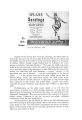
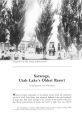
Show Utah's Gamble with Pari-mutuel Betting in the Early Twentieth Century BY BRUCE N. WESTERGREN Harness and regular horse races were sometimes included on the same day's card early in the century. These trotters were photographed by Bill Shipler at the Utah State Fairgrounds track on October 1, 1907. USHS collections. H O R S E RACING IS PERHAPS ONE OF THE MOST ANCIENT SPORTS; popular in Europe during the Middle Ages, its history extends at least Mr. W^estergren is a research historian in Provo, Utah. He expresses his appreciation to Dr. Thomas G. Alexander of Brigham Young University for his encouragement and editorial assistance. 6 Utah Historical Quarterly as far as the Roman Empire.^ Spanish conquistadors, French traders, and British settlers brought horse racing to North America during the sixteenth and seventeenth centuries. In the eighteenth and nineteenth centuries the sport accompanied American pioneers on their west-w^ ard trek across the continent.^ During the late nineteenth and early tw^entieth centuries horse racing not only grew^ and spread in range and popularity, it also vs^ent through some important changes in organization and administration. Instead of one-heat matches between local favorites the sport became more organized and formal. In place of competitions through town streets or open meadowland, backers across the country financed the construction of a number of large, permanent oval tracks, built according to an agreed-upon pattern and standardized length and capable of fielding a number of horses for a single race. Uniform contest rules were established during this time as well. With the sport's increasing standardization and formality there emerged a professional class of track officials and employees. Starters, judges, jockeys, and stable hands, once chosen from among the local townspeople, now became full-time professionals, trained and certified by professional occupational associations according to established requirements. Each racing official sought to ensure the highest level of integrity in each match, to protect the public from unscrupulous bookmakers and bunco artists, and to make sure that spectators saw competition of the highest order. In spite of these efforts to guarantee honest competition, social reformers of the early twentieth century repeatedly attacked the professional standards of the racing associations and the morality of the sport as a whole.^ These crusaders saw horse racing as the very epitome of the evils of gambling and its devastating impact on society. Stung by these criticisms, the professional racing associations sought to maintain strict discipline among their members and enforce sanctions against the wayward. This self-enforcement, along with the publicity it received, demonstrated the groups' abilities to police themselves and helped save racing from complete extinction under 1 Teresa McLean, The English at Play in the Middle Ages (Berkshire, England: Kensal Press, n.d.), pp. 18-23. 2Stephen Longstreet, Win or Lose (Indianapolis: Bobbs-Merrill Co., 1977), pp. 29-30, 34-35, 186-187; John M. Findlay, People of Chance (New York: Oxford University Press, 1986), pp. 20-24, 36-39. 3 For a general history of the Progressive reform movement during this period see Robert H. Weibe, The Search for Order, 1877-1920 (New York: Hill and Wang, 1967); and Robert M. Crunden, Ministers of Reform (New York: Basic Books, Inc., 1982; Urbana: University of Illinois Press, 1984). Pari-mutuel Betting 7 government probes and oppressive legislation introduced by Progressive elements in the early IQOOs."* In many ways racing developments in Utah paralleled those on the national scene.^ Horse racing enjoyed a large following in Utah both before and after statehood. Local races were fairly common occurrences during Utah's territorial period. By 1909, however, professionals were organizing and supervising races in various parts of the state on a regular basis, adopting the same standard rules and procedures used elsewhere in the country. These meets, which usually ran from late May through the end of September or early October, were held principally at three tracks - the Utah State Fairgrounds at Salt Lake City, the Lagoon track near Farmington in Davis County, and the Buena Vista track at the Weber County Fairgrounds outside of Ogden^ - although races were held on a regular basis in other counties during this period, usually at the county fairgrounds in conjunction with the county fair. In spite of the Progressive movement's penchant for lobbying for state control of questionable enterprises, by 1910 Utah still had no state agency authorized by law to regulate and monitor horse racing and the bookmaking that inevitably accompanied it. Bookmakers, in fact, were hired and licensed by the tracks themselves to handle most of the betting.^ The perception of dishonesty associated with racing activities, particularly the use of bookies by the tracks to handle wagering, generated a great deal of opposition to the sport among reform elements in the state as it had elsewhere across the country. From 1910 through 1913 two of the major Salt Lake City newspapers, the Salt Lake Herald and the Deseret News, published a lengthy series of editorials describing *See Melvin L. Adelman, A Sporting Time (Urbana: University of Illinois Press, 1986), pp. 27-89; and Bryan Field, "Horse Racing," in Sports' Golden Age, ed. Allison Danzig and Peter Brandwein (New York: Harper & Brothers, 1948), pp. 86-110. 5 The author is grateful to the Charles Redd Foundation for sponsoring this study of Utah racing and to the staff of the Utah State Archives for their help in locating state documents related to the Horse Racing Commission. 6See "Interest in Ogden Race Horse Meeting" and "Seven Stakes for Horsemen," Salt Lake Tribune, May 15, 1910, p. 23; "Big Entry List is Assured for Races," SLT, May 17, 1910, p. 10; "Fixing Race Track for the Gallopers," SLT, May 19, 1910, p. 10; "Prominent Horseman Arrives with News," SLT, May 20, 1910, p. 12; and "Horsemen Coming to Salt Lake City," ^ZT, May 29, 1910, p. 26. Crowds going to the opening of the Ogden track were so large that the Denver & Rio Grande Railroad and Oregon Short Line arranged for special trains to run between Salt Lake and Ogden for those wishing to attend the races in Weber County. ("Horses Begin to Arrive for Races," SLT, May 20, 1910, p. 12; "Large Crowd Attends Races," SLT, May 26, 1910, pp. 10, 11; and "Horse Races Feature Event at Junction City," SLT, May 30, 1910, p. 9.) An antiracing editorial in the Salt Lake Herald on June 2, 1909, put the number of spectators at the races in Ogden on Memorial Day at 7,000 and the number of bookies handling the wagers at fifteen. '"Interest in Ogden Race Horse Meeting," Salt Lake Tribune, May 15, 1910, p. 23; and "Horsemen Coming to Salt Lake City," SLT, May 29, 1910, p. 26. 8 Utah Historical Quarterly the misery and mischief they believed were caused by horse racing. Each argued in favor of banning racing from the state. The reasons listed included the *'fixing" of races by dishonest horse owners and jockeys who "fleeced the public" rather than providing good, honest sport; the loss of spectators' money in wagering at the track, depriving honest local merchants of sales and profits; the rise in crime that generally accompanied racing meets; and the moral impact of horse race gambling on individuals and families.^ The first legislative success against horse racing in Utah came on February 17, 1913, when Gov. WiUiam Spry signed an antiracing bill into law. Introduced by Charles R. Mabey, the bifl had passed the legislature after a month of acrimonious debate.^ The 1913 ban was eventually overturned in the 1925 session of the legislature. The challenge started on February 19, 1925, when Rep. Charles Redd from San Juan County introduced a biU in the House to reestablish horse racing in the state. In an effort to avoid the excesses of a decade earlier, Redd's bill called for the organization of a state horse racing commission, gave it the authority to regulate the sport in the state, and also legalized the pari-mutuel system of race track betting. ^^ The proposal met favorable reception in both the House and Senate. The House passed the bifl on March 7, 1925, by a vote of 41 »''^v\\ oiGambling," Deseret News, ]unc A, 1909, p. 4; "It Does Not Pay," DA^, June 23, 1909, p. 4; "Kill the Kriebel Bill" and "Why This Delay?" DN, February 1, 1913, p. 4; "The Argument for Gambling," DN, February 3, 1913, p. 4. The Salt Lake Herald-Republican accused some members of the Utah House of Representatives who had supported legislation favoring a more moderate stance on horse race betting of being in league with the state's horse racing interests and accepting bribes in exchange for favorable laws. ("Davis County Men and Women to Act against Gambling," SLH-R, February 2, 1913; and "House Passes Bill against Pool-Selling," Salt Lake Tribune, February 6, 1913, pp. 1, 8.) None of these allegations were ever proved. 9The House passed the bill on February 5, 1913, by a vote of 44-0; and the Senate on February 7, 1913, by a vote of 17-1. ("House Passes Bill against Pool-selling," Salt Lake Tribune, February 6, 1913, pp. 1, 8; "Anti-Pool Selling Bill Passes Senate," SLT, February 8, 1913, p. 9; "Race Betting Bill Signed by Spry," SLT, February 18, 1913, p. 9.) In final form, the Utah law made various types of bookmaking and horse race related forms of gambling a felony punishable by a fine up to $2,000 or imprisonment not exceeding one year. (Chapter 9, Laws of Utah, 1913.) io House Journal (1925), p. 290; "House and Senate Sessions in Brief," Salt Lake Tribune, February 20, 1925, p. 11. According to the Deseret News, there were at least two previous attempts to reestablish racing in the state, one in the 1921 session and the other in the 1923 session. ("Budget Bill Due to Reach House Monday," DN, March 9, 1925, section 2, p. 1.) Although no contemporary record can be found of the attempt in 1921, in 1923 Representative George J. Constantine, Grand County, introduced a bill similar to Redd's. The measure was reported favorably out of committee on February 26, but it was killed by the House on March 8. {House Journal [1923], pp. 297, 381-382, 552.) Redd himself was a lifelong enthusiast of the sport. One of his cousins, John Redd, recalled that when Charles Redd was a youth in Bluff, Utah, he had a pony named Ted that he used to ride around town, trying to find someone to race against him. According to John Redd's recollections, Charles Redd was almost unbeatable on that horse. (Oral history interview with John Redd by Gregory Maynard, July 27, 1973, pp. 1-2. Transcript, Archives and Manuscripts, Harold B. Library, Brigham Young University, Provo, Ut.) Pari-mutuel Betting 9 to 4, with ten members absent.^^ Senate action quickly followed, with the bill winning approval on March 11 by a vote of 12 to 5, with three members absent.^^ Gov. George Dern signed the bifl on March 14, 1925, and the law went into effect May 12, 1925.^^ Those who voted for the 1925 measure did so because they believed that horse racing had become a clean and respectable sport; that competition in the races would encourage breeders to sire faster, stronger horses; that racing would bring new sources of revenue into the state, and that the sport would give local businesses a shot in the arm. Those who opposed the measure used many of the arguments of a decade earlier. They believed race track gambling was immoral and a menace to the community. The sport was again referred to as the "most vicious form of gambling" that would bring back the undesirable riffraff that had forced elimination of the sport in 1913.^* a House Journal (1925), p. 514; "Bill to Allow Racing at State Fair Is Passed by Lower Legislative Body," Salt Lake Tribune, March 8, 1925, p. 10; "Budget Bill Due to Reach House Monday," Deseret News, March 9, 1925, section 2, p. 1. '2 "Horse Racing Bill Passes in Senate and Goes to Dern," Deseret News, March 12, 1925, p. 5; "Race Bill Is Now up to Dern," Salt Lake Tribune, March 12, 1925, p. 14. 13 "Dern Approves Eighteen Bills," Salt Lake Tribune, March 15, 1925, p. 18. i*See "Horse Racing Bill Passes in Senate and Goes to Dern," Deseret News, March 12, 1925, p. 5; "Race Bill Now Is up to Dern," Salt Lake Tribune, March 12, 1925, p. 14; and "Horse Racing to Open in S.L. Last of May," DN, April 7, 1925, section 2, p. 1. Advertisement in the Salt Lake Telegram ran for several days in early July 1925. ^ ' .HORSE R ACIN UTAH AGRICULTL't. WILLIAM I' SUMMER MEET, JULY 2-AUGUST 1 Running Horse Races Today Ptalt State Fs .*••• €^.'. 'ownds I 7 Running Horse- ' ' First R i Purses from $400 to $25W f. 400 lhornu«ht-r-4 h,.r«r» riJtVn h-. , ... . EARLY FEATURE RACKS JULY 4 INDEPi *ai*l«Mtstfj.€! S-^j.Tfrrr LTAI! 10 Utah Historical Quarterly After its passage the state moved quickly to implement the new law. Redd had recommended three candidates for the racing commission: Brigham F. Grant, J. Will Knight, and John C. Lynch.^^ The governor, however, chose a somewhat different slate, naming Brigham F, Grant - then general manager of the Deseret News and a brother of LDS church president Heber J. Grant - as chairman; Gage B. Rodman; and James H. Waters as secretary,^^ The new law not only created the commission and defined its powers, it also carried stipulations concerning the licensing and scheduling of meets. These conditions limited racing in any one county to two meets per calendar year, neither of which could last for more than thirty racing days from date of commencement, and outlawed all private betting and bookmaking on and off the track. In its place the statute substituted pari-mutuel or cooperative betting. ^^ The pari-mutuel system had several advantages over bookmaking. First, the odds in a race could not be fixed ahead of time by a bookie, horse owner, or jockey. Under the pari-mutuel system the odds were based on the total money collected from wagers placed at the track. As a result, the bettors were really wagering among themselves rather than against a bookie with fixed, arbitrary odds. Under the pari-mutuel system, after a percentage had been paid to the state, to the track owners - to cover their operating expenses- and to the winner of the race, the remaining cash pool created from the wagers placed on the race was divided among those who held winning tickets. The more money bet, the larger the cash pool for the race and the more favorable the odds and the payoff from the contest.^^ Bets were placed by depositing money into a machine that issued the bettor a validated ticket with the description of the wager on it and *5 "Bill to Allow Racing at State Fair Is Passed by Lower Legislative House," Salt Lake Tribune, March 8, 1925, p. 10. '6"Horse Racing to Open in S. L. Last of May," Deseret News, April 7, 1925, p. 7. Copies of the original letters of appointment are found in Correspondence, State Departments - Racing Commission, Utah State, 1925-1928. Correspondence, George H. Dern Papers, Utah State Archives, Salt Lake City. Each commissioner was appointed for a two-year term. 17For text of the Redd Act see Chapter 77, Laws of Utah, 1925. The use of the pari-mutuel system was not new in the state. Utah had used this method at least twice before 1913, both times unsuccessfully. However, this system of betting had saved the sport of horse racing in other states, including Kentucky, and Redd believed it was worth another try here. (See "Two Bills against Horse Race Wagers," Salt Lake Tribune, January 25, 1913, p. 3; "Race Meets Depend on Fate of Bills," SLT, January 27, 1913, p. 8. For the Kentucky experience, see Jack Sallee, "Iron Bookmakers Save Racing Game," SLT, February 9, 1913, sporting section, pp. 1, 2.) 18 M. A. Merrill, "Betting Board Is Explained," Salt Lake Tribune, June 28, 1925, p. 21; "Horse Racing to Start Today," SLT, July 2, 1925, p. 24; and "Lizette Creates Sensation in Splendid Run at Races," SLT, July 3, 1925, p. 11. For a detailed discussion of the math involved in calculating the cash returned to winning betters, see Fred S. Buck, Horse Race Betting, rev. ed. (New York: Arco Publishing Company, 1971), pp. 96-107. Pari-mutuel Betting 11 Racing officials pictured in the Salt Lake Telegram, July 2, 1925, included W. J. Parker, vice-president, Utah Racing Association; C. V. Henderson, paddock judge; Lester Dean, starter; M. P. Morrison, judge; William Patrick Kyne, general manager, Utah Agricultural and Racing Association; C. W. Primrose, judge; H. C. Clark, steward; J. H. Waters, secretary of the URA and judge. 12 Utah Historical Quarterly which served as the claim ticket for a winning bet. The minimum wager was $2.00, but the machine dispensed tickets in larger sums for the big spenders. The machines recorded the number of tickets sold on each horse and kept a running total for the field as a whole. The machines sold three types of tickets that allowed a bettor to back a horse to "straight" or "win," "place," or "show" (first, second, and third places, respectively). This ticket system was universally used at all tracks where the pari-mutuel system was functioning. The rules placed no limit on the number of tickets a bettor could buy. He might put money down on every horse in the race if he chose. However, payoff came only if the participant held a ticket for a horse that finished in one of the first three positions. Support for the 1925 measure came from several quarters. Editorial opinion, unlike the comments of a decade earlier, viewed the new law quite favorably;^^ even the Mormon-owned Deseret News assumed a moderate stance on the issue.^° One notable exception, however, was an editorial by Edward H. Anderson that appeared in the August 1925 issue of the LDS church's most important magazine, the Improvement Era. Anderson blasted the Redd Act as a "grave, not to say criminal, moral mistake," and recommended righting the wrong by voting out the entire legislature in the next election.^^ '9See "The 'Sport of Kings,' " Salt Lake Tribune, March 18, 1925, p. 6; "Horse Racing in Utah," ^Zr, June 28, 1925, section 2, p. 2; and "Racing Season Here," ^Z-T, July 2, 1925, p. 6. 20See "The Sixteenth Legislature," Deseret News, March 13, 1925, p. 4; "Legislature Devotes Greatest Efforts to Clarifying Statutes," DN, March 13, 1925, section 2, p. 1; and "Horse Racing," DN, May 22, 1925, p. 4. In the May 22 article, the Z)A'^ extolled the positive aspects of legalized horse racing: "The all-important thing in the revival of horse racing in Utah after careful supervision of a special commission, is to encourage the breeding of better horses. To many . . . there is nothing finer . . . than a superior, well bred horse. . . . "Not only will the new law encourage the raising of fine horses for the race track and the exhibition ring, but all breeds and classes of horses in the state will be improved. . . . This will be a great asset to the state from an economic as well as other points of view, and its beneficial results will reach to every phase of the livestock industry. Particularly will this be true if races are held in connection with county fairs and local horses are bred to participate in them. . . . "The law has been so carefully framed that the welfare of the people and the community as a whole will be safeguarded, and those evils which in the past have attended horse racing in some localities will be kept to a minimum. . . . The people of the state should give their hearty co-operation and assistance in establishing and maintaining this high standard. If they will do this, then good and not evil will come out of this revival of the 'sport of kings.' It is possible that the complete turnaround in the newspaper's attitude toward horse racing was due to the appointment of Brigham F. Grant, Heber J. Grant's brother and general manager of the Deseret News, as first chairman of the commission. It is also possible that Redd had the potential opposition of the LDS church in mind when he recommended Grant. While the evidence necessary to decide the point is lacking. Grant's presence on the commission did seem to reduce tensions between the state and the church and allowed the commissioners the room they needed to do their job. 21 Edward H. Anderson, "Betting on Horse Races," Improvement Era 28 (August 1925):1001-2. Anderson is listed in the magazine as co-editor with Heber J . Grant; the extent of Grant's participation Pari-mutuel Betting 13 Businessmen in towns where race tracks were located strongly supported the new law. Believing that racing in Utah would become as popular as it had been fifteen years earlier, merchants actively supported efforts to bring the sport to their communities. The Ogden Chamber of Commerce, for instance, appointed a committee to work with the new State Racing Commission to obtain a permit for the city.^^ Hotel operators in Salt Lake City, optimistic about the benefits the resumption of racing would bring them, circulated petitions of support for the sport.^^ Indirect evidence for the popularity of horse racing can be seen in the number of applications the commission received for racing licenses from all over the state. Many applications were filed between the day the law was signed by Dern in March and the day the commission officially opened for business on May 12.^^^ Almost all of the applications were approved after the commission met with the petitioners in an informal hearing. One exception, though, was the in writing the monthly editorials is not known. It seems likely, however, in light of subsequent events, that Anderson acted as the managing editor with responsibility for the actual day-to-day operations of the periodical. Grant probably acted in an advisory capacity and did not actually screen or approve articles before publication. He may not have even known the content of Anderson's comments until the August issue was off the press. 22 " O g d e n Chamber Plans to Ask for Race M e e t , " Deseret News, April 7, 1925, p . 6. It was originally anticipated that the races could be held at an old track west of the city, near the old Globe mills. Although deteriorated from years of disuse, the Chamber felt the facility could be refurbished in time to hold meets that summer. When a permit was finally obtained from the state, it was decided instead to hold the races at the county fairgrounds track east of town. 23 George O. Relf, manager of the Hotel Utah in Salt Lake City, for example, once estimated that the elimination of horse racing in 1913 cost him 2,000 customers, compared with his 1912 figures, that he believed would have come as race spectators registered at his hotel. ("Race Meets Depend on Fate of Bills," Salt Lake Tribune, January 27, 1913, p. 8.) Desire for increased business during the racing season motivated businessmen to support the bill. Six operators of major hotels in the Salt Lake City area showed their support of a racing license for the Utah State Fair Association for contests at the fairgrounds through September 1925 in a letter to the commission dated April 16, 1925. (Fred J. Leonard, et al., to the Utah State Racing Commission, April 16, 1925. Administrative Correspondence, Utah State Racing Commission Papers, Utah State Archives, Salt Lake City.) Additional revenue also played a pivotal role in the decision of the Farmington City Council, expressed to the commission in a memo dated May 7, 1925, endorsing the plans of Leo Dandurand and his associates to hold meets at Lagoon during the summer of 1925. 2* In an informal meeting of the commission held April 21, 1925, those present included the Executive Committee and Grand Stand Committee from the Utah State Fair Association, who wanted a license for racing at the fairgrounds; agents for Leo Dandurand and a Montreal syndicate, a Mr. Dewer, Mr. Boyle, Mr. Irvine, and Mr. Decker, requesting a license for racing at Lagoon; Mr. W. J . Parker, a representative from Weber County, requesting a license for races in Ogden; delegates from Spanish Fork and Provo, who wanted to hold races in Provo; and a representative from Cache County who wanted permission to hold races during their county fair. (Minutes of the Utah State Racing Commission, April 21, 1925. Administrative Correspondence, Utah State Racing Commission papers, Utah State Archives, Salt Lake City, Utah.) In a meeting held later that same day, the Commission voted unanimously to grant a permit to the Utah State Fair Association to race at the state fairgrounds but refused to issue a license to Lagoon and Weber County at that time. However, the Commission told those two applicants that if they applied for racing in 1926, their requests would be granted. (Minute book of the Utah State Racing Commission, p. 2 [April 21, 1925]; pp. 3-8 [May 11, 1925]. Utah State Racing Commission Papers). A meeting held May 19, 1925, however, overturned the decision about Lagoon, and a license for the 1925 season was granted. (Minute Book of the Utah State Racing Commission, p. 12, May 19, 1925, Utah State Racing Commission Papers.) Thrills and Color Feature Opening Day of Races These Salt Lake Telegram photographs of opening day, July 2, 1925, show Lorene Holmes presenting a floral horseshoe to Lizette, winner of the inaugural handicap. Looking on are Heber J. Grant, George H. Dern, B. F. Grant, and J. H. Waters. In upper right, Davie L. Mills, winner, with Blair Mitchell up. application of George O. Relf, manager of the Hotel Utah. Under questioning by James H. Waters, Relf, for no apparent reason, called Waters a "Dirty Damn Liar" and was ejected from the meeting.^^ Although many local horses were entered in the races at the state fairgrounds and Lagoon, sponsorship of the meets at these locations fell into the hands of two out-of-state syndicates. The Utah Agricultural and Racing Association^^ and the Utah Horse Breeding and 25 "Application of George O. Relf," Administrative Correspondence, Utah State Racing Commission Papers; Minute Book of the Utah State Racing Commission, p. 11, May 13, 1925. 26The Utah Agricultural and Racing Association was incorporated in Utah on June 18, 1925, with corporate headquarters in Salt Lake City; it was occasionally referred to as the Utah State Racing Association ("Race Men Rush Work at Track," Salt Lake Tribune, June 24, 1925, p. 15; "Horse Racing to Start Today," SLT, July 2, 1925, p. 24; Minute Book of the Utah State Racing Commission, pp. 14-15, June 24,'1925. Fred Dahnken and William P. Kyne, both of San Francisco, controlled the majority of the outstanding common stock, each owning 250 shares. The remaining stockholders and their shares were W. J . Parker, Ogden, Utah (15 shares); Harry Nolan, Denver, Colorado (1 share); and Sol Tichner, San Francisco (1 share). Corporate officers at this time were Harry Nolan, president and direc- Pari-mutuel Betting 15 Racing Association^^ were incorporated in the state of Utah but were completely owned and controlled from outside the state. Although these companies had a virtual monopoly on racing at the state fairgrounds and the Lagoon track, local racing interests never filed a complaint. Ultimately, the backing of the out-of-state interests worked to Utah's advantage, since they brought in a large amount of outside capital. This additional influx of money did a great deal to improve the local economies of Salt Lake City and Davis County. Attendance at the opening race of the season, held at the state fairgrounds on July 2, 1925 - the first run under the auspices of the Redd Act - confirmed the optimistic outlook. Seating at the fairgrounds track was filled almost to capacity, with crowd estimates running between 3,500 and 10,000. Local newspapers pronounced the event a complete success.^^ The same articles also noted the attendance of President Heber J. Grant, other LDS church authorities. Gov. George H. Dern, and Salt Lake City Mayor C. Clarence Neslen and their parties.^^ Financially, the races were also extremely successful. An audit of the commission's financial records conducted by the state auditor's office in February 1927 covered the first year and a half of the commission's existence, from May 12, 1925, through the end of the calendar year 1926. The report estimated that horse racing had brought the state additional revenue totaling $129,646.05.^° tor; W. J. Parker, vice-president and director; and William P. Kyne, secretary-treasurer and director. The company's main purpose was "racing, breeding and improving the breed horses, and conducting races and contests of speed," and, to that end, owning, controlling, leasing, and dealing in livestock, real estate, and securities. ("Articles of Incorporation of Utah Agricultural and Racing Association," Articles of Incorporation, Secretary of State's Office, Utah State Archives.) The organization, as part of its license agreement with the State Racing Commission and the Utah State Fair Association, spent well over $50,000 in repairing the horse track at the fairgrounds and building new grandstands. 27The Utah Horse Breeding and Racing Association was incorporated in Utah in 1925, with corporate headquarters in Salt Lake City. It had an authorized capital stock of $50,000. As part of its agreement with the Utah State Racing Commission, it spent over $40,000 rebuilding and equipping the horse track at Lagoon for racing. The association maintained a monopoly on racing at Lagoon throughout the existence of the Redd Act. (Minute Book of the Utah State Racing Commission, p. 21, February 20, 1926.) The majority stockholder was Leo Dandurand, a Chicago resident. Information on other stockholders and the number of shares owned is not available. 28"Rebuilt Track, New Stand to Greet Patrons," Deseret News, July 2, 1925, p. 21; "Lizette Creates Sensation in Splendid Run at Races," Salt Lake Tribune, July 3, 1925, p. 11. 29The story in the Salt Lake Tribune the next day featured a photograph of Heber J. Grant and Governor Dern in a box seat near the track. 30 Leon D. Garrett, "Report of Audit: Utah State Racing Commission, 1925-1926," p. 5. Audits and Financial Reports, Utah State Racing Commission Papers. This figure included $115,018.15 paid to the State Fair Association for the meets it sponsored at the fairgrounds and the income it derived from issuing racing permits of its own after receiving its license from the commission. The commission itself showed a profit of $14,627.90 for this period. September 5, 1925, view by Bill Shipler of the Utah State Fairgrounds race track and grandstand. USHS collecitons. Because of the revenues brought in, broad community support, and large spectator turnouts, the races seemed destined to become a permanent part of Utah's sport scene. Trouble, however, was gathering on the horizon. Increasing public concern over the moral impact of the sport, eventual loss of support from the business community, and, most important, charges of corruption against the state racing commissioners eventually led to a second legislative ban in 1927. The assault against racing began September 16, 1925, when the Utah State Fair Association and the State Racing Commission filed a suit against the Salt Lake City Commission in Third District Court in Salt Lake City. The dispute concerned passage of a city ordinance that declared pari-mutuel betting a form of gambling and therefore banned within the city limits. This had a direct impact on horse racing, since the state fairgrounds were inside the corporate limits of Salt Lake City.^^ The district court found for the defendants, but the 31 "Racing System Case Is Opened," Salt Lake Tribune, September 16, 1925, p. 22. City Attorney Will H. Folland, representing the defendants, argued that the state's racing law was invalid for three reasons: horse racing was a game of chance, not skill, and was therefore gambling; the wording in the title of the law itself covered more than one subject, rendering the act illegal; and it was special legisla- Pari-mutuel Betting 17 plaintiffs appealed to the Utah State Supreme Court. The higher court reversed the lower court's decision, ruling that horse racing was not a game of chance and that it therefore did not constitute gambling. Their decision, announced August 6, 1926, put an end to the judicial attack on horse racing in Utah.^^ A few months later, however, Redd himself dealt what eventually became the deathblow to the sport by announcing during his reelection campaign in late 1926 that he would seek repeal of the law during the 1927 session of the legislature.^^ He later reaffirmed this position in a letter to D. W. Parratt, secretary of the Utah Education Association, and he also accused the State Racing Commission of failure to enforce the statute properly.^^ Redd had been given information by George O. Relf and a few others that William P. Kyne had paid members of the commission between $25,000 and $50,000 to secure the racing concession at the state fairgrounds, that there had been an illegal telegraph wire installed at the track to send race results to the West Coast before they were officially announced, that commission officials were benefitting heavily from bookmaking, and that the commissioners had also been employed and paid by Kyne as track officials to supervise the races.^^ On January 13, 1927, Redd made good on his promise, introducing HB 4, a proposal to abolish both horse racing and the pari-mutuel system of gambling.^^ The bill was referred to the House Livestock Committee, which Redd once again chaired, for hearings and recommendation. tion, which favored the racing interests over the rest of the state's population, giving the racers control over the operation of the pari-mutuel machines. Counsel for the plaintiffs, H. L. Mulliner, maintained that horse racing was a game of skill, not chance, and therefore was not gambling; that, based on a number of authorities, related subjects may be contained in the same act; and that the pari-mutuel machines were open to anyone who wished to place a wager on the race, and were not restricted to a privileged few. ("Argument to End Today in Suit on Racing," Deseret News, September 17, 1925, section 2, p. 1.) 32 "Gaming Part of Race Law Upheld," Deseret News, August 8, 1926, section 2, p. 1; and "The Supreme Court on Horse Racing," Salt Lake Telegram, August 6, 1926, p. 5. For the complete text of the State Supreme Court's decision see Utah State Fair Association et at. v. Green et at., 68 Utah 251 (1926). 33 "Racing Law's Repeal Asked," Salt Lake Tribune, January 14, 1927, p. 13. 3+"Author of Racing Law to Ask Repeal by Legislature," Deseret News, December 15, 1926, section 2, p. 1. 35 "House Kills Racing Law; Danger Scented in Call for Vote by Track Friends," Deseret News, February 10, 1927, p. 1; "Accused Holds Charges False," Salt Lake Tribune, February 13, 1927, p. 22. See also "Racing Probe Started; Redd First Witness," SLT, February 25, 1927, pp. 1, 13, 17; and "Racing Board Probe Is Opened; Three Take Stand," DN, February 25, 1927, pp. 1, 2. ^^ House Journal (1927), p. 78; "Redd Asks Repeal of Utah Racing Law," Deseret News, January 13, 1927, p. 1; and "Racing Law's Repeal Asked," Salt Lake Tribune, January 14, 1927, p. 13. It is interesting to note that while the News made the story its banner headline for that day, the Tribune buried the item halfway back. 18 Utah Historical Quarterly During three days of public hearings, from January 19 through January 21, the hearing room was jammed with spectators,^^ and a wide variety of testimony was presented. On the first day of hearings, W. H. Folland, Salt Lake City attorney, claimed that crime in Salt Lake City had increased substantially since passage of the Redd Act and stressed the increased law enforcement burden that had resulted. ^^ Others who appeared in favor of total repeal included D. W. Parratt, secretary of the UEA, and the Reverend William T, Scott, representing the Salt Lake Ministerial Association. Both argued the horrible moral costs they believed racing had on society, particularly on children. Businessmen who appeared before the Redd committee were almost evenly divided on the issue. Some, such as W. T. Denn, a local jeweler, and H. R. Vowles of the Paris Department Store, were unalterably opposed to racing because it both hurt business and destroyed families. Others, such as Fred Baliff, a local manufacturer, and O. D. Coughlin of Walker Brothers Dry Goods Company, on the other hand, favored the continuation of racing but suggested limiting the meets to fewer days. Still others, such as Wayne Decker of the Decker Jewelry Company, were very much in favor of continuing the sport as it was, believing it would eventually add millions of dollars to the wealth of the state.^^ The most vigorous defenders of the sport were two members of the State Fair Board, H. L. Mulliner and E. S. Holmes, who pointed to the increased revenues brought into the state. 37 "Races Increase Crime Declares City Prosecutor," Deseret News, January 19, 1927, section 2, p. 1; "Hearing on Racing Bill Draws Many Spectators," Salt Lake Tribune, January 20, 1927, p. 11; "People Divided on Effects of Horse Race Law," Z)A'^, January 20, 1927, section 2, p. 1; "Divergent Views Given on Horse Racing Measure," iSLT, January 21, 1927, p. 11; "Asks Consideration for Race Track Investors," DN, January 21, 1927, section 2, p. 1. 38Folland's claims had little merit. Statistics compiled by the Salt Lake City Police Department for 1925 and 1926, presented below, showed an overall drop in every category, except two. Category Burglaries Petty larceny Holdups Pickpocket Bunco Grand larceny ("Crime Figures for S. L. Given," Salt Lake Tribune, December 26, 1926, p. 22.) 39 Business opposition to the sport had become widespread. A Salt Lake City Chamber of Commerce poll found its members opposed to racing by a margin of 2 to 1, and the Salt Lake Commercial Club unanimously voted to send a petition to the legislature supporting repeal. ("Races Increase Crime Declares City Prosecutor," Deseret News, January 19, 1927, section 2, p. 1; "Seek Repeal of Racing Law," DN, February 8, 1927, p. 2.) 1925 857 965 171 81 10 46 1926 784 826 122 34 25 65 % Change - 8.5 - 14.0 - 29.0 - 58.0 + 150.0 + 41.0 Pari-mutuel Betting 19 Editorial support for the sport also deteriorated. The Deseret News, for example, retreating from its more supportive 1925 stand, published a number of editorials demanding repeal of the law by the legislature.*° These articles cited moral and economic arguments for banning the sport. Redd's repeal proposal was finally reported out of committee on January 24 but not with unanimous backing. Three members of the committee - Redd, N, F. BuUen, and J. G. Pace - filed a majority report favoring the bill, while two members - H. H. Crouch and W. A. Crane - filed a minority report opposing repeal.'^^ The minority report was finally adopted after a great deal of debate, and HB 4 was then placed on the calendar for final consideration. Redd's racing bill was not the only proposal under consideration; however, his was the only measure to advocate total repeal. Four other proposals made in the House would have amended the racing law, but each would have allowed racing to remain, correcting only what were seen to be some of the more objectionable practices.'^^ The closest contender to Redd's repeal bill was introduced by William J. Holther on January 17, 1927.*^ His measure would have limited racing in the state to one twenty-five day meet each year to be held in conjunction with the Utah State Fair. The proposal was sent to the Committee on Corporations for consideration. The Holther measure came out of committee on January 22, but, like Redd's bill, without unanimous support.** Four of the committee members signed a majority report favoring the bill but recommending amendments. Two members of the committee filed a minority report opposing the bill, and one member, Mrs. H. S. Tanner of Salt Lake City, refused to sign either report. In the heated debate and political maneuvering that followed on the House floor, *o"Horse Racing Must Go," Deseret News, January 14, 1927, p. 4; "Kill Horse Racing," DN, January 21, 1927, p. 4; "Does Utah Want Horse Race Gambling?" DN, February 5, 1927, p. 1; "Wake Up!" DN, February 5, 1927, p. 4; "Kill Horse Race Gambling," DN, February 7, 1927, p. 1; "Repeal the Racing Law!" DA^, Februarys, 1927, p. 1; "Finish the J o b ! " DA^, February 9, 1927, p. 1; "A Triumph for Right," DN, February i l , 1927, p. 4. The News even went so far as to run a full-page editorial using an advertising format to get its message across. ("Kill Horse Racing!" DN, February 5, 1927, p. 3.) *^ House Journal (1927), p. 100; "Horse Racing Act Produces House Storm," Salt Lake Tribune, January 25, 1927, pp. 1, 9. *2"Bill to Retain Racing Devised," Salt Lake Tribune, January 17, 1927, p. 3; "Racing Act Now in Committee," SLT, January 19, 1927, p. 8; "Divergent Views Given on Horse Racing Measure," 5Lr, January 21, 1927, p. 11; and "Solons Fight for Decisions on Racing Bill," ^LT, January 22, 1927, pp. 1, 10. *3 "House Waits for Pact Repealing Bill," Deseret News, January 18, 1927, p. 3. **"Solons Fight for Decisions on Racing Bill," Salt Lake Tribune, January 22, 1927, pp. 1, 10. 20 Utah Historical Quarterly both reports were killed, and the bill went to the calendar without recommendation. Holther's bill came up for final consideration on January 25, 1927. After another stormy debate and fierce maneuvering, the proposal to amend the Redd Act lost by one vote.*^ However, proponents of the bill managed to muster the necessary twenty-eight votes to get the bill up for reconsideration again the next day.*^ In the maneuvering that followed, both the Holther and Redd biUs were referred back to the Livestock Committee for further consideration in the hope that some sort of a compromise could be worked out.*^ Both proposals came out of committee again on February 2, but this time with no recommendation for either one.*^ Final consideration for the Holther measure came on February 8 after another heated debate. During arguments over the bill both Redd and Elias S. Woodruff, a representative from Salt Lake City, made further charges against both the State Racing Commission and the State Fair Board, accusing various members of accepting bribes and racketeering. The Holther bill went down to final defeat by a vote of 24 in favor, 28 opposed.*^ KiU41orse Racing! Why compromise with an evil? Why temporize with law amendments that mean nothing? Kill the Racing Law Now The Vulture InTit* hona racina to remain in Utali, and gambling •Uya witn it Invite the vulture of ganUinfl to remain in Utah and who lufferi? Ezparianca everywlitre give* answer to the cpieetioiis The jtnmg aalaried worker. Hii wife. Hi* children. Bu*ine** hou*e*'that pay high taxes to the upkeep of the state. Home maker*. The whole economic structure. StaJots and young people generally PnbHc moral*. Whereever gamhlina amts it is the universal experience that collections by business Brms are bad. Race track bettors do not budget, and bSl* due hre loa frequently not met. Race track bettor* are poor risk* for people doing an installment bonne**. Thi* i* an indi*putable fact, and every business man and every house wife in Utah must exert his or her iaflaence to see that the vulture of gamb. ling ii wiped uutfnnm pw^tiee in Utah, and tlie " tiatat war B-iecWIHillilllMr end i* to somd the-deatb k aw of bone Radng.^ The Vulture's Brood Keep out the vulture's brood: Vice, ihame, failure, misery, poverty and crime, in Utah by defeating any effort to continue legalized race track gambling in this state. Men and women of the legislature, the people of Utah are looking to you to bury this vice so deep that it win never raise its murky head again. Utah has as much wholesome sport as any state in the Union. No person of sober judgment win declare that it needs this unwholesome amusement. Salt Lake or any other city in Utah does not need or want anyof the "floating population." that always follows the races, in every section where race track betting is permitted. There is no reason why Utah, whose moral example has been the admiration of the United States, should become a legal haven for race track touts, bookmakers and gamblers and all the grimy underworld of the sport. Nearly every state in the Union has barred them. f And besides all this, there is the corruption and ruination of some of our own boys and girls. B It must not be! People of Utoh, get in toutJi with yourrepresen-tative »DitheLegislatureat once. Delay is danger-oui, do it now. Let them know what you want them to do with this evil that menaces our fair state. Make your protest strong. Let it ring fike thunder ^ JKfpwHjrilearsiy. Rep^^tfuB Racing Law. Kill Race Track Gam bling. •5 "House Refuses Amendments to Utah Racing Law," Deseret News, January 26, 1927, p. 3. The final vote was 27 ayes to 25 nays. Twenty-eight votes were necessary to secure passage. *6"Both Race Bills Recommitted as House Votes Nay," Deseret News, January 27, 1927, p. 3. •^'Ibid.; "Utah Assembly Work Is Slowed by Committees," DN, January 28, 1927, p. 3. *8 "Horse Race Bills Put at Head of House Calendar," Deseret News, February 2, 1927, p. 3. *9 " H o u s e Rejects Racing Compromise; Fight to Amend Horse Track Law Fails 28 to 24," Deseret News, February 9, 1927, pp. 1, 3; "Death Dealt Racing Bill in Lower House," Salt Lake Tribune, February 9, 1927, pp. 1, 10. Full-page call to repeal the 1925 horse racing act appeared in the Deseret News February 5, 1927. Pari-mutuel Betting 21 On February 10 the Redd bill repealing horse racing finally came up for final consideration. After another lengthy debate and further maneuvering, the measure at long last passed the House by a vote of 34 yeas, 20 nays, and 1 absent.^° Action in the Senate was quick in coming. The bill was introduced into the Senate the same day it was passed in the House, referred to the Committee on Revenue and Taxation, and reported out of committee favorably within an hour.^^ Final action came on February 17, when the repeal bill was passed by a vote of 16 yeas to 2 nays, with 1 absent.^2 Governor Dern signed the act into law on February 24, 1927.53 Although the law had now been repealed, the issue was not yet setded: there remained the charges Redd had made against the State Racing Commission and members of the State Fair Board. Beginning on February 12 Governor Dern, James H. Waters, Brigham F. Grant, William P. Kyne, and the executive committee of the Utah State Fair Association all began demanding a full, open, and honest investigation into the allegations made by Redd and others in the press and on the floor of the House.^'^ On February 14 the House acceded and the Speaker appointed a five-man committee to head the probe.^^ Hearings began in the evening of February 24 at the Chamber of Commerce building in Salt Lake City. Among the first three witnesses called were Charles Redd, George O. Relf, and Brigham F. Grant. It soon became apparent that Redd had acted on nothing better than second-hand information given to him by Relf; he had no personal knowledge of wrongdoing on the part of any of the commissioners or of any member of the State ^'^ House Journal (1927), p. 191; "House Kills Racing Law; Danger Scented in Call for Vote by Track Friends," Deseret News, February 10, 1927, p. 1; "Senate Committee Votes to End Racing; Upper House to Strike Act off Books Forecast," DN, February 11, 1927, p. 1. ^i Senate Journal (1927), p. 249; "Senate Committee Votes to End Racing; Upper House to Strike Act off Books Forecast," Deseret News, February 11, 1927, p. 1. ^^ Senate Journal (1927), p. 314. 53 "Governor Dern Gives Rebuke; Delay in Racing Probe Is Cause," Salt Lake Tribune, February 25, 1927, pp. 1, 17; "Governor Signs Racing Repeal Bill; Dern Again Asks Probe as He Puts End to Gambling," Deseret News, February 24, 1927, p. 1; section 1, p. 2. 5* "Accused Holds Charges False," Salt Lake Tribune, February 13, 1927, p. 22; "Dern Asks Probe of Race Board Attack; Extra Message to House Seeks Truth of Charge," Deseret News, February 14, 1927, pp. 1, 3; House Journal (1927), pp. 213-14. Dern, feeling the House was dragging its heels in the matter, repeated his request on February 24. ("Governor Dern Signs Racing Repeal Bill; Dern Again Asks Probe as He Puts End to Gambling," DTV, February 24, 1927, p. 1; section 2, p. 1; House Journal (1927), pp. 325-27; and "Governor Dern Gives Rebuke; Delay in Racing Probe Is Cause," SLT, February 25, 1927, pp. 1, 17.) 55 "Probe of Racing Board Ordered by Lower House, Deseret News, February 15, 1927, p. 2. The committee consisted of H. H. Crouch, chairman; L . J . Holther; George H. Ryan; A. W. Hansen; and Byron D. Anderson. 22 Utah Historical Quarterly Fair Board. The only testimony offered by Relf was a belief that he had been double-crossed by the Racing Commission in applying for a racing permit at the state fairgrounds; he had no first-hand information to support any of his allegations.^^ On March 10 the committee made a formal preliminary report to the House. It concluded that although members of the Racing Commission were indeed in the employ of the Kyne syndicate as track officials in addition to their employment by the state - unethical, but not necessarily illegal - there was no evidence to substantiate any of the allegations Redd had made concerning bookmaking and bribery. However, the committee had not yet had the opportunity to question Kyne, who was too ill to travel from California to Utah to testify, and James H. Waters, who was hospitalized and under strict doctor's orders not to be disturbed. Since they did not wish to issue a final report until they had interviewed these two key witnesses,^'^ the House voted to continue the probe and allow Waters and Kyne to testify.^^ The opportunity to obtain Waters's testimony never came. He died shortly after the preliminary report was issued, and the investigating committee felt it appropriate to close the books on the entire matter.5^ The bribery and bookmaking charges had been disproved, but the ethical question of the commissioners' employment at the track was never fully resolved. With the repeal on the books and the hearings concluded after Waters's death, the matter was permanently dropped. The horse racing issue reveals some interesting aspects of the relationship between the LDS church and Utah state government during this period. First, church leaders did not attempt to lobby actively for passage of either the Mabey bill in 1913 or Redd's repeal bill in 1927, although the Salt Lake Tribune and the Salt Lake Herald- Republican both accused the church of such efforts.^^ In fact, both 56 "Racing Probe Started; Redd First Witness," Salt Lake Tribune, February 25, 1927, pp. 1, 13, 17; "Racing Board Probe Is Opened; Three Take Stand," Deseret News, February 25, 1927, pp. 1, 2. ^T House Journal (1927), pp. 565-70. 58"House Votes to Continue Probe of Racing Board," Deseret News, March 11, 1927, p. 2. 59Special Committee to Governor George H. Dern, April 2, 1927, Correspondence, State Departments - Racing Commission, Utah State, 1925-1928; Correspondence, George H. Dern Papers. 60 "Unjustifiable Influences," Salt Lake Tribune, February 8, 1913, p. 6; and "Horse Racing Act Produces House Storm," SLT, January 25, 1927, pp. 1, 9. In 1913 the Tribune accused the First Presidency of the LDS church and the general board of the LDS Deseret Sunday School Union of attempting to establish and direct an organized lobbying effort with members of the church throughout the state against bills that would not completely ban horse racing from the state. In 1927 the Salt Lake Herald- Republican accused the First Presidency of sending officially called lobbyists to the legislature to ensure passage of the repeal. Neither allegation was ever proved. It is interesting to contrast the relative political detachment of Mormon church leadership in the 1920s with Brigham Young's firm, guiding hand in directing the affairs of Utah Territory. Although Pari-mutuel Betting 23 Mormon and non-Mormon legislators vigorously denied that the church had ever contacted them on any matter related to the horse racing issue and bitterly resented charges made by the press of collusion with church authorities. The only apparent efforts the LDS church made to secure abolition of the sport were the editorials that ran in the Deseret News. This issue also illustrates varying attitudes within the LDS church generally and a lack of an organized, monolithic crusade against the sport. At no time during the heated debates on abolition in 1913 or 1927 did the First Presidency take the opportunity to issue an official statement that would have spelled out the church's stand and requested compliance from faithful Mormons living in Utah, nor was this issue discussed at any general conference of the church held in either period. Instead, we find Brigham F. Grant, a brother of President Heber J. Grant and general manager of the church's major organ, the Deseret News, serving as the first chairman of the State Racing Commission, and President Grant attending the opening meet of 1925 with Governor Dern and other notables. Remarks made by LDS members of the state legislature in 1927 further accentuate these attitudes. In explaining their vote for or against Redd's repeal bill, a number of representatives stated that although they were members of the Mormon church, which had adopted antigambling attitudes years earlier, they felt their greatest responsibility was to the people of Utah as a whole, not just one segment of it. Religious considerations took second place.^^ In their collective opinion the supposed corruption of the horse racing commission, the loss of support from the business community, and what were seen as the detrimental effects of pari-mutuel betting on the morals of the community more than justified the abolition of the sport. Young delegated a great deal of authority to others, he had a vision of his own about the purpose and ultimate destiny of the territory. He firmly believed the Lord's hand had led the Mormons to the Utah valleys and that the Great Basin region was designated by God to serve as an asylum for the righteous from the evils of the world. Consequently, he believed that, as the prophet of the Lord, he must be constantly involved in territorial politics in order to accomplish the Lord's designs. The difficulties of the late nineteenth and early twentieth centuries, however, showed LDS leaders that it was futile to try to maintain an isolationist policy. The arrival of the railroad in 1869 and the mining boom in the late 1800s brought thousands of non-Mormon immigrants, many seeking their fortunes in the mines and others who came to settle, building farms and ranches. Whether church leaders liked it or not, Utah was hooked into the vast commercial network of the United States. Given this situation, it was desirable for the church to move into the mainstream as much as possible, while at the same time using new technology to adapt its message for presentation to a truly national audience. For this reason, church leaders in the early twentieth century adopted a hands-off policy when it came to politics, except for matters the First Presidency considered grave moral issues. (See Leonard J. Arr-ington, Brigham Young: American Moses [New York: Alfred A. Knopf, 1985], pp. 223-49; and Thomas G. Alexander, Mormonism in Transition [Urbana: University of Illinois Press, 1986], pp. 16-59.) 61 "Horse Racing Act Produces House Storm," Salt Lake Tribune, January 25, 1927, pp. 1, 9. |