| OCR Text |
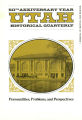
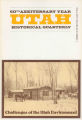
Show > 00 O g OS UTAH HISTORICAL QUARTERLY EDITORIAL STAFF MEI.VIN T. SMITH, Editor STANFORD J. LAYTON, Managing Editor MIRIAM B. MURPHY, Associate Editor JANET G. BUTLER, Assistant Editor ADVISORY BOARD OF EDITORS THOMAS G. ALEXANDER, Provo, 1980 MRS. INEZ S. COOPER, Cedar City, 1978 S. GEORGE ELLSWORTH, Logan, 1978 GLEN M. LEONARD, Bountiful, 1979 DAVID E. MILLER, Salt Lake City, 1979 LAMAR PETERSEN, Salt Lake City, 1980 RICHARD W. SADLER, Ogden, 1979 HAROLD SCHINDLER, Salt Lake City, 1978 GENE A. SESSIONS, Bountiful, 1980 Utah Historical Quarterly was established in 1928 to publish articles, documents, and reviews contributing to knowledge of Utah's history. The Quarterly is published by the Utah State Historical Society, 307 West Second South, Salt Lake City, Utah 84101. Phone (801) 533-5755 (membership), 533-6024 (publications). Members of the Society receive the Quarterly, Beehive History, and the bimonthly Newsletter upon payment of the annual dues; for details see inside back cover. Single copies, $2.00. Materials for publication should be submitted in duplicate accompanied by return postage and should be typed double-space with footnotes at the end. Additional information on requirements is available from the managing editor. The Society assumes no responsibility for statements of fact or opinion by contributors. The Quarterly is indexed in Book Review Index to Social Science Periodicals, America: History and Life, and Abstracts of Popular Culture. Second class postage is paid at Salt Lake City, Utah. ISSN 0042-143X HISTORICAL QUARTERLY FALL 1978 / V O L U M E 46 / NUMBER 4 IN THIS ISSUE •. 335 PESTIFEROUS IRONCLADS: THE GRASSHOPPER PROBLEM IN PIONEER UTAH DAVIS BITTON and LINDA P. WILCOX 336 SANPETE COUNTY BETWEEN THE WARS: AN OVERVIEW OF A RURAL ECONOMY IN TRANSITION JOHN S. H. SMITH 356 ONE HUNDRED YEARS OF UTAH CLIMATE . DON R. MURPHY 369 THE FINEST OF FABRICS: MORMON WOMEN AND THE SILK INDUSTRY IN EARLY UTAH . . . CHRIS RIGBY ARRINGTON 376 DIAMONDS IN THE DUST: JOHN W. CARLSON'S ALFALFA SEED RESEARCH VIRGINIA C. PARKER 397 BOOK REVIEWS 415 BOOK NOTICES 422 IN MEMORIAM DAVID E. MILLER, 1909-78 MELVIN T. SMITH 425 T. EDGAR LYON, 1903-78 DAVIS BITTON 425 INDEX 427 THE COVER The Green River area, settled in 1878 by Thomas Farrer and Matthew Hartman, is noteworthy for the produce grown there, as well as for the coal deposits which have become increasingly important. This homesite in the town was photographed by George Edward Anderson, famous for his scenes of Utah life. The five-by-seven glass negative is in the Utah State Historical Society collections, a gift of Mrs. L. H. Vincent. © Copyright 1978 Utah State Historical Society RAY R. CANNING and BEVERLY BEETON, eds. The Genteel Gentile: Letters of Elizabeth Cumming, 1857-1858 . . . . A. RUSSELL MORTENSEN 415 PAUL BAILEY. Holy Smoke: A Dissertation on the Utah War . . WILLIAM P. MACKINNON 416 THOMAS G. ALEXANDER. A Clash of Interests: Interior Department and Mountain West, 1863-96 . F. ALAN COOMBS 418 Books reviewed LAWRENCE H. LARSEN. The Urban West at the End of the Frontier . . . . DEAN L. MAY 419 RAFE GIBBS. Beckoning the Bold: Story of the Dawning of Idaho H. LEIGH GITTINS. Idaho's Gold Road RONALD H. LIMBAUGH 421 In this issue When the Mormons brought permanent white settlement to the Great Basin in 1847, little was known of the region's farming potential. Intensive agriculture had not been undertaken there before, no weather data had been aggregated, and John Wesley Powell's Report on the Lands of the Arid Region was still more than twenty years in the future. Clearly, it would be a time for trial and error, for innovation and accommodation, for unexpected disappointments and heroic triumphs as the new settlers did battle with the elements in their quest for a quality life. It is a remarkable story, one that has come to loom large in Utah's literature, legend, and lore. Yet, strangely, many of the details have not been probed by historians and the dynamics are not fully understood. In response to the challenge of that lingering hiatus comes this issue. The first article examines the grasshopper problem in pioneer Utah. It confirms traditional notions in several particulars, differs from them in others, and represents as comprehensive a treatment as is likely to be done. From there the focus shifts sharply to the twentieth century and a radically different problem in Utah agriculture, one in which the invisible and often inexplicable factors of a complex national economy have replaced winged pests as the farmers' bane. Weather, always central to farming successes and failures, is scrutinized in the third selection; findings of that hundred-year survey are not only interesting by themselves but will also find value as a research reference for historians in the future. The final two selections return to the question of human persistence, audacity, and vision as ingredients in the ongoing drama of man versus environment. To the perceptive reader they will suggest a number of intriguing generalizations, each serving to enlarge slightly his range of experience and depth of understanding. |