| OCR Text |
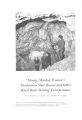
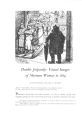
Show "Strong Minded Women": Desdemona Stott Beeson and Other Hard Rock Mining Entrepreneurs BY LAURENCE P. JAMES AND SANDRA C. TAYLOR Above: In the man's world of mining, Desdemona Stott Beeson, second from right, was entirely at home. Photograph shows a new stope on the East Crescent Vein, Park City Consolidated Mines Company, 1934. Mining Entrepreneurs 137 JL HROUGHOUT HISTORY MINING has been a male profession, an exclusive masculine bastion. Folk songs and legends relate the tales of those women who did populate the miners' world, those relegated to the subordinate positions of dance hall girls, camp followers, prostitutes, and, very occasionally, wives. Women were not to be found as miners, certainly not in nineteenth-century America, which placed women on a pedestal; not even slaves or immigrant women were used in such work. The strong taboos against women going underground in mines prevail to the present day; laws are still on the books in many states, including Utah, to prohibit this great perversion of the natural order of things. From the first discovery of ore in Utah in 1863 until around the turn of the century, women as miners, locators, or entrepreneurs, wore almost nonexistent. By the end of the century a few women had entered the mining world; and in the first decades of the twentieth century some unusual women wore to be found working as prospectors, locators of mining claims, and also as entrepreneurs, technicians whose knowledge of mining engineering or ability to handle financial operations gained them a special status as "female mining men." This paper presents a detailed look at one woman professional-Desdemona Stott Beeson- and glimpses of the careers of several other women and offers some analysis of why they were able to succeed in the masculine world of mining in Utah. Not only wore the miners of Utah male, they w ere also usually non- Mormons from outside the state. Brigham Young, in warning the Saints away from the pursuit of precious metals, had sought to keep both sexes from the temptations of the mining camps. The camps themselves were diverse communities of Catholics, Protestants, Masons, and atheists, as befitted the polyglot ethnic mixture that came to work the mines. Relatively few Mormons sought this kind of work. The technical people came from other Great Basin camps or still further afield. Copper experts from Michigan mixed with gold speculators from Cripple Creek and California, and typically moved on after a few years. The wives and girlfriends who accompanied them stayed in Salt Lake City or the nearby towns. Prospecting and locating a mining claim on some potentially valuable ore body was a relatively easy, though risky way to possible wealth. Dr. James is a consulting geologist in Denver, Colorado, and Salt Lake City, Utah. Dr. Taylor is associate professor of history and assistant dean of liberal education at the University of Utah. The authors would greatly appreciate hearing from anyone with further information on historic women in western mining. 138 Utah Historical Quarterly The locator was usually not involved in rock excavation or mine management but only in seeking out a likely prospect. The records of many Utah counties show women as locators. One of the more persistent was Leatha Millard Amott. She arrived in Gold Hill on the desert near the Nevada border in 1907, and in the succeeding six decades she came to know7 the region well. Eventually she married an independent miner and prospector, Art Amott, and became involved with the operation of small mines and prospects in the Gold Hill and Dry Canyon districts.1 The pattern she set is one that most women who became entrepreneurs also followed: eventual partnership with a male, a spouse whose presence "legitimized" the female who intruded on the man's world. The "mining men" generally served as intermediaries betwoen the initial discoverers and owners of mining property and the financiers who had the capital required to actually produce metals. Some operated small mines, hoping to develop large bonanzas, while others sought new-discoveries. Some were trained in geology or mining engineering at colleges or universities, while others learned their considerable technical skills through a lifetime of practical experience. Most such entrepreneurs were closely involved in the planning and supervision of mine operations, although usually they did not mine the rock themselves. The hand labor necessary to get the ore to the surface was left to the semiskilled, assisted only by a mule until mechanized equipment was introduced between 1900 and 1930. Mining engineering, according to Clark Spence, was definitely a "man's world, into which but a fewr of the gentler sex intruded." 2 Although most observers no doubt agreed with one Denver male who wrote that "a lady mining engineer is a revolutionary and anarchical departure from established precedent,"3 by the end of the century there were a few in the nation. Only three female mining engineers wore listed in the 1900 U.S. Census, though some women apparently worked as assayers, metallurgists, or chemists.4 A few women graduated from the better known mining schools, and some did work in the profession. However, none appears to have worked in Utah as an 1 Nell Murbarger, Ghosts of the Glory Trail: Intimate Glimpses into the Past and Present of 275 Western Ghosttowns (Palm Desert, Calif.: Desert Magazine Press, 1956), p. 188. James interview with Art Amott, Gold Hill, Utah, July 6, 1963. "Clark C. Spence, Mining Engineers and the American West (New Haven. Conn.: Yale University Press, 1970). The one exception in the literature was two women working in placer mines near Grants Pass, Oregon. One worked with her father and brother, the other with her husband, in the operation of hydraulic mines. Salt Lake Mining Review, May 15, 1904, p. 21. :: Ibid., p. 6. See also Charles H. Shinn, Mining Camps, a Study in American Frontier Government (1885; reprint ed., New York: Alfred A. Knopf, 1948), and Rodman W. Paul. Mining Frontiers of the Far West, 1848-1880 (New York: Holt, Rinehart, and Winston, 1963). 4 U.S., Bureau of the Census, Occupations at the Twelfth Census (Washington, D.C: Government Printing Office, 1902), p. 7. Mining Entrepreneurs 139 engineer. Such jobs wore generally to be found with large companies where women had virtually no chance for employment in such nontradi-tional roles. The few7 women who did labor as engineers worked in small operations, usually in company with their husbands. Training and marital status, along with extraordinary ambition, ability, and luck, wore the prerequisites for success. Only a few7 exceptional women achieved it. At the outset of Utah's mining history some women did indeed try to gain access.3 In 1864, one year after Gen. Patrick E. Connor and soldiers of the U.S. Army had discovered ore near Bingham, official records documented the location of the "Woman's Lode Mining Claim": We the undersigned "Strong Minded Woman [women?]," do hereby determine and make manifest our intention and right to take up Feet' ore [sic] anything Else in our names, and to Work the Same independent of any other man. We do therefore take up and claim in our own Right '200 Two Hundred feet Each . . . at this Notice and Running in a N.E. direction 1000 One Thousand feet and in S.W. direction from the same 1000 One Thousand feet with all its dips, Spurs, and Angles, and Variations and Whatever other Rights and priveledges [sic] the laws or guns of this district give to Lodes so taken up.6 The general's wife headed the list of those signing the notice. All the names wore prefixed by "Mrs." and followed by the husband's army rank. The author who recorded this episode could not restrain himself from editorializing: "What would cause nine women to declare that they were 'strong minded' and would work the claim 'independent of any other man' is open to conjecture."7 At any rate no further record could be found of the activities of the "strong minded women." One can only speculate as to their motives: did the general mining excitement attract them, were they bored by life in a quiet military outpost, or wore they acting in some way for their husbands? Within a few years Connor and his soldiers were transferred. The general later returned and lost a fortune in several Utah mines. Mining of silver, lead, and gold flourished for a few years, then declined slowly until the early years of the twontieth century. Records of the late nineteenth century mining operations are sparse, but apparently no more women were involved in the profession until the early decades of the twentieth century. 5 William Fox, "Patrick Edward Connor, 'Father' of Utah Mining" (M.A. thesis, Brigham Young University, 1966), pp. 73-74. 6 Ibid. See the "West Mountain Mining Destrict, Book A" (1862-64 mining records), cited by Fox. 7 Ibid., p. 96. 140 Utah Historical Quarterly Desdemona Stott Beeson, who was to become the foremost Utah woman in mining, was born August 2, 1897, in the silver boom town of Eureka. The rapidly growing mining camp had attracted her parents, Bradford N. C. Stott and his wife, Emma, to move to Utah from the Midwest. Stott entered law practice in Eureka and used the profits from his thriving profession to erect the Stott Building and to speculate heavily in mines and mining stocks.8 The Stott children, Desdemona and her two brothers, grew7 up in a town built between mine headframes. As a young girl Desdemona w7as fascinated by the mines, and the manager of the Gemini shaft, almost adjacent to her home, let her ride the cage down with the shift. Her older brother worked in the mines, and once took her into the Iron Blossom No. 3 to show her a giant, newly discovered cavity full of native silver. The sight of so much beautiful wire silver ore made a life-long impression. In later years she recalled that she and her brother wore sent out with a gun to frighten off claim-jumpers when her father, hard-hit by the depression of 1907, could not afford to do the annual assessment work required to hold his claims. The children stood guard in the snow on New Year's Eve until midnight when their father could post the new notices. By the time Desdemona was a teenager the mines were off-limits, and her continued fascination with the underground world could only be whetted surreptitiously. Once she dated a young foreman who, at her request, let her spend evenings with him deep in the noted Mammoth Mine.9 Access to higher education was no problem for the Stotts' daughter. Her mother had studied botany in Indiana, and Desdemona wont to the University of Utah. She w7anted to study medicine, a choice her parents objected to, so she took her degree in psychology. Among the classes she attended were courses in geology, drawing, and the liberal arts. Although the classes wore exciting, she found college life in Salt Lake City more restrictive than being the relatively privileged daughter of a noted citizen of a small town. Fifty years later she recalled her irritation at being chastised by Dean Lucy Van Cott for going downtown alone and without a hat! During her junior year she agreed to move to the nearby mining camp of Alta for a few months. Her newly married brother s W. S. Downs, ed., Who's Who in Engineering, 5th ed. (New York: Lewis Historical Publishing Co., 1941), p. 1720. Also, James interview with D. S. Beeson, December 15, 1975. 11 Beeson interview, December 15, 1975. Conditions in Eureka are described in Beth Kay- Harris, The Towns of Tintic (Denver: Sage Books, 1958). Further information came from James interviews with D. S. Beeson and J. J. Beeson, September 23, 1964. Mining Entrepreneurs 141 George wanted someone to cook for him, a chore his wife could not manage in the family tent, so Desdemona obliged.10 Alta, a silver mining camp near the crest of the Wasatch Mountains, was in the midst of a mining boom in 1916. George's position as a mining engineer gave Desdemona some access to the ever-fascinating mines. Underground at Alta she met Joseph J. Beeson, a Stanford-educated geologist. He had been hired to find the faulted-off part of the famous Emma Mine ore body. The British operators of the Emma Mine had abandoned the search for the lost ore and the mine in the 1890s, and the workings below the tunnel were filled with water. Joe worked out the surface geology and spotted four holes for a recent technical innovation, the diamond core drill, that he hoped would hit the lost ore body.11 Joe and Desdemona wore married in Salt Lake City a year later, with the blessings of the whole Alta mining camp, and they set up housekeeping in a twolve-by-fourteen-foot tent.1" Joe's future at Alta was made more secure w7hen the fourth drill hole struck the ore body, only twenty-eight feet from the spot where the British had given up. Alta and Joe Beeson made headlines. As winter set in, the Emma company gave the young couple a room in the boardinghouse right over the compressor installation. Small mines could not afford frills, and the Beesons stoically endured other similar quarters in the next few decades. Desdemona might well have followed her generation's typical life pattern of wife and mother. She had some education plus a lively interest in a mining career, but with a successful husband she might have been a "mining man" only vicariously had not fate intervened. In 1917, when the United States entered World War I, Joe enlisted and was sent to Europe as an army engineer. Soon after, the Emma Mining Company wont bankrupt due to excessive stock promotion. After Desdemona had a miscarriage she decided to return to school at Stanford University to learn technical skills to prepare for future family operations.15 At this point in her life she moved into nontraditional paths. 10 Beeson interview, December 16, 1975. 11 F. O Calkins and B. S. Butler, Geology and Ore Deposits of the Cottonwood-American Fork Area, Utah (Washington. D . C : Government Printing Office, 1943), frequently cite J. J. Beeson's work. The Emma ore body had been mined until it ended against a fault or offset of the rock formations. The direction of offset and the location of the displaced ore had led to much unsuccessful shaft sinking and tunneling by the British operators. '"Beeson interviews, December 16, 1975, and September 23. 1964. The miners planned a traditional shivaree, a day-long march through camp shouting and beating on cookhouse pots, for the Beesons' return, but Joe bought them off with beer and ice cream. Beeson interviews, September 23, 1964, and December 15, 1975. 13 Beeson interview, December 15, 1975. Her declared major at Stanford was education. She attended classes there as a graduate student, 1917-19, but was not awarded a degree. Letter to S. C. Taylor, November 28, 1977. 142 Utah Historical Quarterly Stanford presented her with new challenges. Regulations demanded that she live in the dormitory with the freshmen girls, since she was unaccompanied by her spouse-a clear indication of the prevailing view7 of the "place" of women. Although the course work in mining engineering presented Desdemona with few7 difficulties, she found the attitude of her professors toward a female student much harder to cope with. She was unable to convince Professor Austin F. Rogers that her knowledge of mineralogy, acquired as a young woman in Eureka and Alta as well as in his laboratory, warranted more than a C grade even though she earned A grades on his examinations. He had never given a woman higher than a C, he responded to her complaint, and he had no intention of changing.14 His attitude certainly was not atypical of the times. However, Desdemona had a better relationship with most professors, who respected her for her experience. She recalled later that she w7as one of the few7 students in a class on ore deposits who had ever been in an underground mine. When her husband returned from the army a year and a half later, Desdemona left her studies in mining engineering and geology and joined him at his profession. They wont back to Bingham, Utah, and the two began a lifelong partnership as independent mining entrepreneurs. Joe studied the geology and Desdemona researched old courthouse records. When she found some claims delinquent in taxes, they filed on adjacent land and went into partnership with Joe's wealthy in-law7, James Hogle. While waiting for the title to be cleared through a tax sale, Desdemona gave birth to her first child and Joe supported the family through geologic consulting. After the title was cleared, years of hard work on the Bingham Prospect began, with meager results at first. For fifty dollars a month Desdemona kept the books and ran the mine whenever Joe took a consulting job to keep the family eating. However, great woalth slipped from their grasp. Hogle held control of the property when two leasers finally located a rich ore body, and he brought in Desdemona's brother George to run the mine. Blood ties did not bring agreement over management policies, however, and Desdemona was ordered off the property. But Hogle rehired her since she was good at keeping books. It was a recurring irritation to her when one miner even objected to having his paycheck signed by a woman!1,1 "Ibid., September 8, 1966. 15 Ibid., November 1974. Information on the discovery of the Bingham Prospect came from James interviews with T. P. Billings, January 2, 1969, and R. L. Christie. February 14, 1976. See also J. J. Beeson, "Projective Geology and the Search for New Ore Deposits," Mining Congress Journal 34, no. 7 (1948): 44-49. Salt Lake County courthouse records indicate the Beesons were legal partners on this and subsequent ventures. Mining Entrepreneurs 143 s jL \ Desdemona w7as a determined worker despite personal obstacles. She put in so many hours at the Bingham Prospect that she was hospitalized with sunstroke, the first of several long hospitalizations; how7- ever, no one could keep her from working strenuously. But times wore hard, and wdien a large Boston firm made an offer on the Bingham Prospect, Hogle and the Beesons agreed to sell. The corporation vice-president, an acquaintance of hers, came to the hospital to collect her signature. He had negotiated a 25 percent reduction in the price w7ith Joe and the others. Desdemona was outraged but had to give in. She w7as, after all, only one of several owners. The 5 percent of the proceeds of the sale of the Bingham Prospect that the courts finally granted the Beesons appeared a substantial sum, although it w7as a considerable reduction from their original interest. The money was needed to finance Joe's Park City Consolidated venture. Here again the Beesons operated as a team; Desdemona helped stake the claims, carrying four-by-four posts while she was pregnant. Since outside capital was again needed, the Beesons brought in John Hayes Hammond and associates. An inclined shaft was sunk and rich silver ore was struck, but again the financiers put in their own manager and received most of the profits. The mining business was a peripatetic one. The Beesons wore next associated with a losing venture in Cerro Gordo, Inyo County, California, which swallowed up most of the Park City money.16 The next move was to Jarbidge, in northeast Nevada. Joe again supplemented the family income with consulting, and when he was away Desdemona ran the operation. On one occasion there was a labor dispute and the miners went on strike. They wanted to be paid from the time they left the board- Joseph J. Beeson, ca. 1917, at the Emma Mine, Alta. He and Desdemona lived nearby. Courtesy J. J. and D. S. Beeson. 18 C. W. Merriam, Geology of the Cerro Gordo Mining District, California, U.S. Geological Survey Professional Paper No. 408 (Washington, D.C.: Government Printing Office, 1963). This contains several references to J. J. Beeson. The Park City Consolidated venture was initially organized and financed by the Beesons, Utah Gov. George H. Dern, James H. Devine, and Morris R. Evans. Salt Lake Mining Review, August 30, 1930. 144 Utah Historical Quarterly Cardiff lease, 1965, where Desdemona S. Beeson last engineered and managed silver mining operations. Mine office and change room, foreground; Wasatch drain tunnel right rear. Snowbird resort now occupies site. L. P. James photograph. inghouse in the morning until they returned from work at a tunnel high on the mountain. Since this differed from Utah practice, Desdemona hurriedly drove one hundred miles to Elko to check Nevada law7, then returned and nailed the relevant statute to the boardinghouse door. She informed the men that if they did not want to work under her conditions she would pay them off. Her determination and poise won the day and the strike ended.17 A woman doing a professional job, replacing her husband when he was away, could command the respect of the miners and win her point. Her practical knowledge of the mining industry coupled with her husband's skill in mining operations was usually a successful combination. The miners generally respected Desdemona Beeson, although her professional colleagues sometimes did not. She was occasionally refused permission to visit underground mines when she traveled with her husband, even though she was a professional, not a tourist. Mining customs could not be ignored, but when she was at work her authority w7as not easily disputed. When a diamond drill crew- made some careless errors in procedure she gave them a scathing lecture on the unacceptability of such sloppy workmanship. She once fired a husky workman for using a shovel to catch the drill sludge. When he balked at leaving, she yelled 17 Beeson interview, December 16, 1975. Mining Entrepreneurs 145 at him, "You get out of here or I'll wrap that shovel around your neck!" He quickly left.18 In the late 1930s Joe was offered a position with the Office of Price Administration governing appropriations for lead-zinc mines. Desdemona accompanied him to Washington, but found it difficult in late depression times to secure a job on her own. She did some consulting for coal companies and then was able to secure the first of several government positions when the outbreak of World War II caused the government to change its attitude toward hiring women. She spent most of the war working for the Foreign Economic Administration, monitoring world metal production and demand and purchasing foreign metals including uranium. At the war's end she, like most women employed in war industries, found her services no longer necessary. She could stay on, she was informed, but her rank would be reduced from professional to secretarial. Even though her pay would have remained the same, her pride was hurt. Desdemona, cushioned by her husband's continued employment, quit.19 After six years in Washington the Beesons returned to Salt Lake and Desdemona went to work for Thayer Lindsley, a noted Canadian entrepreneur. She began compiling data on Nevada and presenting it to Lindsley in Toronto. But soon Joe had new7 ideas. Prosperity had returned and with it a new demand for metals. Desdemona gave up her independent career and joined Joe in a partnership, Beeson Exploration. They leased an old mine near St. George and opened a rich little ore body. Then the dangers always inherent in the mining business caught up with them. While she was checking out a section of the mine a huge mass of rock gave way, striking Desdemona and breaking her neck. She had to spend months in the hospital, since she was badly injured. As she said later, "It didn't cure me. I was back working in a neck brace."20 Tragedy seemed to pursue the family. In the next few years, their eldest son, a test pilot, was killed in the crash of an army B-29. Their son-in-law7, William Burgin, a geologist with Bear Creek Mining, w7as killed in the crash of a commercial airliner in Wyoming.21 ,N ibid. 19 Ibid, and James interview with D. S. Beeson, March 17, 1976. ""James interview with J. J. Beeson, September 8, 1966. See also Salt Lake Tribune, July 10, 1976. The quotation is from a speech Desdemona wrote to deliver to the Utah Geological Association in 1975. " Information on Burgin's work can be found in J. B. Bush, D. R. Cook, T. S. Lovering. and H. T. Morris, "The Chief Oxide-Burgin Area Discoveries, East Tintic District, Utah: A Case History, Part I I , " Economic Geology 55 (1960) : 1509 ff. 146 Utah Historical Quarterly Desdemona and Joseph Beeson, 1964. Courtesy D. S. Beeson. Nevertheless, the Beesons, well into middle age by this time, remained as deeply committed as ever to the mining profession. They returned to the Wasatch in the late 1950s, when Joe w7as hired to direct the connection of the Wasatch Drain Tunnel with the w7ater-filled workings of the Cardiff Mine. The Cardiff had once been the biggest mine in the Alta district, and Joe and Desdemona had been to the bottom level in the 1920s, before the mine was closed and filled with water. After the connection was made, the Beesons and Charles A. Steen, the uranium magnate, obtained a lease to mine ore below the tunnel level. It was a difficult venture that required the sinking of an incline shaft at the end of two miles of tunnel. Big electric pumps and underground power lines were installed. Ice-cold water cascaded constantly onto the employees, who wore rubber suits and long underwear. Desdemona later recalled that operation as her most difficult engineering job. When the pumps broke down they had to be hauled out on cables, sent to Salt Lake for repairs, and reinstalled before the mine filled with water. They mined good ore from the incline but not enough for Steen, who decided to pull out, despite Desdemona's chiding him for being afraid of "a little water." The Beesons continued the operation at the tunnel level until 1967.22 One winter Desdemona slipped on some ice at the tunnel portal and broke her ankle. The doctor insisted that she not go underground again, but she still went regularly into the mine, in cast and neck brace, to keep up with the operations. She also continued to handle ore sales and other paper work. But times had changed. The operation barely broken even, and the Beesons were finally forced out by a different sort of entrepreneur-the men who built the Snowbird ski resort, an operation incompatible w7ith an underground mine. The Beesons, their last dream ended, retired to an assortment of medical afflictions. Joe and Desdemona, despite heart troubles, still enthusiastically attended Salt Lake City geological meet- Mining Entrepreneurs 147 ings. They were elected honorary life members of the Utah Geological Association. Desdemona concluded their acceptance speech: "Together we have added new7 money to the state, had a good payroll, and thoroughly enjoyed being hard rock miners."" In a conversation in 1975 Desdemona commented on the women's movement with some wonderment. Women, to her. wore born liberated; "liberation" w7as a strange term. Marriage and family were worthy goals, and since she had successfully combined them with a career she could not see why other women might not. Could not any other woman have done the same?24 Desdemona Beeson died of cancer on July 8, 1976. At the Unitarian funeral (which she had planned) were many professional associates. One former employee, a husky, middle-aged mine foreman, commented that there wore no mining people like the Beesons any more. "They wore great to work for and they always took care of you.""5 Desdemona had indeed been a trailblazer for the many women who now7 work in various aspects of Utah's mining industry. Another Utah woman successful in the operation of small mines was Lena Larsen. Her interest in mining apparently developed as she worked at the boardinghouse of the Hidden Treasure Mine in Dry Canyon, above Ophir. There she observed how fortunate miners or prospectors could "strike it rich." She opened her own boardinghouse and became involved in mining ventures.20 Moving to Salt Lake City, she acquired several lead-silver claim groups, notably the Muerbrook and Southport mines near Stockton. Betwoen 1912 and 1915 she employed about five men at the Muerbrook, supervised by H. B. Westover. Weekly production sometimes reached as much as one railroad car of ore worth thirty to forty dollars a ton. The prospect appeared good enough to interest two young graduate engineers in leasing part of the property.2, Lena's biggest venture in the mining business was also intriguing. Through her friendship with old Mack Gisborn, she acquired the once-rich Mono Mine. Gisborn had made and lost several fortunes when he "Engineering and Mining Journal. September 1961: Salt Lake Tribune. April 5. 1961. and July 28, 1961. See also L. P. James's forthcoming work. Geology and Mineral Resources of the Big Cottonwood District. Utah, to be published by the Utah Geological Survey. "'Beeson interview, December 16, 1975. The quotation is from the speech for the Utah Geological Association, 1975. 2i Ibid. * Salt Lake Tribune, July 10, 1976: James interview with Dan Jacobson, July 1976. "! James interview with L. W. Hoskins, May 27, 1976, and August 28, 1977. "; Salt Lake Mining Review, May 30, 1912. p. 33; May 15, 1914, p. 32. 148 Utah Historical Quarterly Mono, left, and Hidden Treasure, right, area of the rugged Dry Canyon district, Tooele County, 1972. Lena Larsen first worked in a boardinghouse here and later owned and prospected mining properties in this steep-walled gulch. L. P. James photographs. met Lena in Dry Canyon. She agreed to provide him with room and board at her boardinghouse, and a daily allowance of whiskey, in exchange for which he sold her fifty-eight claims in the district, including his interest in the Mono Mine, for $5,000.28 Lena's family life remains obscure. She was married to Otto Larsen, but he was not involved in her mining activities.29 Whatever her personal life, mining men respected Lena Larsen as a crafty financial manager who was strong-willed enough to halt work on a venture requiring some of her land until her terms were met. She also had no hesitation about entering that sacred male bastion, the saloon, for a drink. A Dry Canyon mining operator once remarked to George Lawrence, Salt Lake mining attorney, that Lena had been studying law- and was probably 28 Tooele County, Utah, "Mining Book 3F," p. 534, and "Mining Location Book L," Tooele County Courthouse, Tooele; Hoskins interview: WPA Writers Program, Utah, a Guide to the State (1941; reprint ed., New York: Hastings House, 1954), p. 394; W. H. Weed, ed., The Mines Handbook (New York, 1918), p. 1434; J. Gilluly, Geology and Ore Deposits of the Stockton and Fairfield Quadrangles, Utah, U.S. Geological Survey Professional Paper No. 173 (Washington, D . C : Government Printing Office. 1932). pp. 120-21, 193; Salt Lake Mining Review. September 15, 1901, p. 25, December 15, 1901, p. 24. 29 R. L. Polk and Co., Salt Lake City Directory, 1908-35; Tooele County, Utah, "Mining Book 3G," p. 270. An Otto J. Larsen, a millman for Utah Copper, resided at Garfield until 1910, the year her husband died. Otto N. Larsen, apparently a son, filed proof of assessment in 1919 on her behalf at the Tooele County Courthouse. Mining Entrepreneurs 149 seeking admittance to the Utah State Bar. Lawrence was not surprised, and ventured the opinion that she had been admitted to "just about every other bar in the mining regions." " A more dispassionate opinion in the Salt Lake Alining Review referred to her as "one of the best knowoi lady mine operators of the state" and later as "one of the few successful mining women of the west."31 Lena Larsen was an operator, a character, and an institution in Tooele County, though the big bonanza always eluded her. Mining records hint at the presence of a few other women in mining ventures. A Mrs. Mary J. Stew7art, proprietress of the Stewart Hotel and Boarding House at 231 South State, Salt Lake City, owned and managed a small mine in one of the most rugged areas of Utah. Her mine was situated nearly ten thousand feet high in the Silver Lake section of the American Fork Mining District in the Wasatch. Each summer she hired men to work it, but the short season and the long pack trail into the property made development costly and slow. She took a partner, J. E. Teeter, in 1914, and he supervised the installation of a new gasoline-powered air compressor and drill. But the Stewart mine never proved out, and it probably failed to pay the considerable expenses of its backers.32 Mrs. Stewart herself remains a shadowy figure. Apparently she w7as a divorcee, with no technical training. She was the proprietress of several hotels and rooming houses, and her interest in mines is uncharacteristic. She died or left the area in 1919. These Utah women were largely unsuccessful in winning lasting fortunes from the earth, but so were the vast majority of mining men. Joe and Desdemona Beeson succeeded in finding and mining ore in several of their properties. Theirs appears to have been a true partnership; Joe provided the more theoretical and scientific bases for finding ore while Desdemona was, as she put it, "the practical nuts and bolts" of the operation, working as manager, bookkeeper, and mining engineer together with her husband in the rugged world of underground mines. As a point of comparison, two other western women who joined the ranks of successful "mining men," Elizabeth Pellet of Rico, Colorado,33 30 Hoskins interview. Utah Bar Association records do not list her as an attorney. See also E. H. Snyder to S. E. Craig, ca. 1934, Combined Metals Reduction Company, Bauer, Utah. ::1 Salt Lake Mining Review, January 15. 1915, p. 72 : January 15. 1916, p. 74. 32 Ibid., December 30, 1914, et seq.: R. L. Polk and Co.. Salt Lake City Directory, 1908- 20, shows she had previously been proprietress of the Belmont Hotel and rooms at 102 East Second South. 33 Elizabeth Eyre and Alexander Klein, That Pellet Woman (New York: Stein and Day, 1965). 150 Utah Historical Quarterly Two unidentified "strong minded women" in a mine at Alta look very familiar with the business end of a shovel. Utah State Historical Society collections. and Josie Pearl of Nevada,31 had much in common with Desdemona Beeson. Both Pellet and Pearl were married to mining engineers. They worked on mining properties with their spouses but also played important roles in property development themselves. Both became highly involved in entrepreneurial ventures, which they continued after their husbands' deaths. Probably a more typical story of the role an educated woman played in the mining industry is that of Lou Henry, who graduated in geology at Stanford and intended to teach it until she met and married Herbert Hoover. She accompanied him around the world on his mining ventures and raised a family. She also managed to translate with him De Re Metallic a, a Latin fourteenth-century classic on mining, that is still in use today as a valuable historical work.30 Women in Utah mining in the past one hundred years wore not atypical of the women in the profession in the West generally. They wore few, they were non-Mormon, they worked long and hard under difficult conditions, and they, like the men, generally failed to find the "great bonanza." Only Desdemona Beeson was really successful; she saw-nothing unusual in having become a "mining man" who happened also to be a wife and mother. All these women contributed to the development of mineral resources in Utah. History has perhaps overlooked them in favor of the more colorful dance hall girls, but their contribution is an important one as we search out and fill in the roles women played in the history of Utah.:iC "'Ernie Pyle, Home Country (New York: William Sloane and Associates, 1947); Nell Murbarger, Sovereigns of the Sage: 'True Stories of the People and Places in the Great Sagebrush Kingdom of the Western United States (Palm Desert, Calif.: Desert Magazine Press. 1958), pp. 1-8: Alma Schulmerich. Josie Pearl (Salt Lake City: Deseret Book Company, 1963). "'"Herbert Hoover, The Memoirs of Herbert Hoover, Vol. 1, Years of Adventure, 1874- 1920 (New York: MacMillan and Co., 1951), pp. 118, 123. Other women in geology are cited by Lois Arnold in "Symposium on Women and Careers in Geoscience," abstracts with programs, 1976 annual meeting of the Geological Society of America. :;,; Recent widespread employment of women in the mining industry is discussed in Eiigi-neering and Mining Journal, February 1975, pp. 63-67. |