| OCR Text |
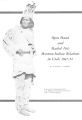
Show 1 *- \ , * * 1 \y^ *t ft*- * y\l< 0^£/z Hand and Mailed Fist: wmon-lndian Relations in Utah, 1847-52 BY HOWARD A. CHRISTY Paiute Indian photographed by J. K. Hillers} Smithsonian Institution, Office of Anthropology. %T Mormon-Indian Relations 217 W HEN HISTORIANS DISCUSS MORMON policy toward the Indians they usually mention attitudes of fairness, benevolence, and conciliation exemplified in the phrase coined by Brigham Young: "It is cheaper to feed them than fight them." Virtually all the prominent Utah scholars have pointed out such a policy, emphasizing or at least implying its essentially beneficent nature. A typical treatment is that of Juanita Brooks who wrote: "When the natives gathered around to watch the new-comers . . . they were treated with kindness and tolerance. Brigham Young early made the pronouncement that became a basic Mormon tenet, Tt is cheaper to feed the Indians than fight them.' m Though the existence of this policy is not questioned, the interpretation of its essential beneficence flies in the face of evidence that is, at the least, ambiguous. Hostility and bloodshed, as much as benevolence and conciliation, characterized Mormon-Indian relations in Utah before 1852. The policy actually carried out, though couched in terms of beneficence, had as one of its major elements, in addition to assistance, stern punishment when deemed appropriate or necessary. The best evidence indicates that Brigham Young's first mention of his now famous statement was in July 1851 following a number of punitive campaigns carried out between March 1849 and June 1851. By then, experience had demonstrated that it was indeed cheaper to feed the Indians than fight them. I Though the Mormons did not arrive in Utah until July 1847, they established their initial policy toward the Indians before the first group left their Winter Quarters in Nebraska and Iowa. It was a practical policy centered on two aspects: separation and fairness. Brigham Young established the basic approach as early as 1846 when he presented his position to the high council at a special meeting. He remarked that it was his impression that the committee should not enter into any specific agreement with the Indians but endeavor to create a friendly feeling and have a meeting at a future time: "We should not invite the Indians to our camp," said the president on August 15, "we can go and see them." Young continued: Mr. Christy is the historical editor at Brigham Young University Press. 1 Juanita Brooks, "Indian Relations on the Mormon Frontier," Utah Historical Quarterly 12 (1944) : 1-48. Also see Hubert Howe Bancroft, History of Utah (Salt Lake City: Bookcraft, 1964), p. 471; Andrew Love Neff, History of Utah: 1847 to 1869, ed. Leland Hargrave Creer (Salt Lake City: Deseret News Press, 1946), p. 368; Orson H. Whitney, History of Utah, 4 vols. (Salt Lake City, 1892), 1:425; and S. George Ellsworth, Utah's Heritage (Salt Lake City and Santa Barbara, Calif.: Peregrine Smith Inc., 1972), p. 162. 218 Utah Historical Quarterly We want the privilege of staying on their land this winter, cutting timber, building houses, perhaps leaving some families and crops; suggest that we might do them good, repairing their guns, and learning them how, and teaching their children and if they want pay for occupancy of their lands, we will pay them.2 There were many contacts with Indians in the vicinity of Winter Quarters. Though friendship generally prevailed, Indians stole a considerable number of horses and cattle.3 Each loss was considered serious, as the Mormons were in a desperate condition following their premature expulsion from Illinois. Horses and oxen were essential for the westward trek. Yet, the prophet strongly counseled against killing Indians for theft. Young's clerks reported in his manuscript history that in March 1847 just before heading west he told the Council that if any of the brethren shot an Omaha Indian for stealing, they must deliver the murderer to Old Elk to be dealt with, as the Indians shall decide, as that was the only way to save the lives of the women and children. I felt that it was wrong to indulge in feelings of hostility and bloodshed toward the Indians, the descendents of Israel, who might kill a cow, an ox or even a horse; to them the deer, the buffalo, the cherry and plum tree, or strawberry bed were free. It was their mode of living to kill and eat. If the Omahas would persist in robbing and stealing, after being warned not to do so, whip them. I realize there were men among us who would steal, who knew better, whose traditions and earliest teachings were all against it. Yet such would find fellowship with those who would shoot an Indian for stealing.4 Mormon leaders obtained valuable information regarding the Ute Indians at Fort Bridger three weeks before the advance party of settlers reached the Great Basin. James Bridger warned the party that "the Utah tribe of Indians [centered in Utah Valley] are a bad people; if they catch a man alone they are sure to rob and abuse him, if they don't kill him.'" Young's concern was described in a letter written by Willard Richards and George A. Smith, both Mormon leaders. Young "felt inclined for the 2 "Journal History of the Church," August 15, 1846, Archives Division, Historical Department, Church of Jesus Christ of Latter-day Saints, Salt Lake City (hereinafter cited as JH). Young later had occasion to deny that he may have actually promised payment to nearby Indians for use of their lands. Responding to a letter from Indian agent Maj. John Miller reporting that an Ottoe chief had demanded money the Mormons had promised for use of his tribe's land, Young stated: "we do not owe them any thing for the land, we never agreed to pay them any thing, the government of the United States stopped us here and if there is any thing due to the Indians it is due from the General Government, not from us." See George W. Wear to Young, May 7, 1848, and Young to Miller, May 8, 1848, Brigham Young Collection, LDS Archives, Microfilm reel 92, box 57, folder 5 (hereafter cited as BYO). a JH, February 13 and 24, and December 6, 1847. 4 Brigham Young Manuscript History, 1847:74, LDS Archives (hereafter cited as HBY). 5JH, June 28, 1847. Mormon-Indian Relations 219 present not to crowd the Utes until we have a better chance to get acquainted with them. . . . The Utes may feel a little tenacious about their choice lands on the Utah Lake, and [we] had better keep further north towards Salt Lake. . . ."6 Within a few days of the Mormons' arrival in the Great Basin, small groups of Shoshonis and Utes came to trade horses for guns. The situation soon became complicated when the Shoshonis claimed that the Utes were trading on Shoshoni land and interfering with their rights. They also desired to sell land to the Mormons for ammunition.7 Concerned that trouble might ensue, Heber C. Kimball, speaking for Brigham Young who was ill, responded the next day by establishing a strict policy of separation. He exhorted the Mormons to build their houses together in the form of a stockade and to cease trading their guns and ammunition. Kimball then established a far-reaching policy regarding land ownership. Rather than contracting with the Indians for purchase of land, or paying for the use of the land-policy proposed by Brigham Young in 1846 in Iowa-Kimball declared that the Indians did not own the land in the first place. He discouraged the idea of paying the Indians for the lands, for if the Shoshonis should be thus considered, the Utes and other tribes would claim pay also. "The land belongs to our Father in Heaven, and we calculate to plow and plant it; and no man shall have the power to sell his inheritance for he cannot remove it; it belongs to the Lord."8 The Indian position, as if in response to the above, was reported three weeks later at a special conference. They claimed "all the land was their own" and that they "were in the habit of taking a share of the grain for their use of the land."9 There is no indication that such a proposition was ever seriously considered in Utah. On August 26, 1847, Young and most of the church leadership left the Great Basin to return to Winter Quarters for the purpose of bringing more settlers west the following season. They left to those remaining an epistle that in part reiterated the policy of strict separation and added, "if you wish to trade with them, go to their camp and deal with them honestly."10 The remainder of 1847 and most of 1848 was a period of generally peaceful relations with the Indians, though in March 1848 a forty-five- Mbid., July 21, 1847. ' Ibid., July 31, 1847. s Ibid., August 1, 1847. "Ibid., August 22, 1847. in Epistle of the Quorum of the Twelve Apostles as recorded in JH, September 9, 1847. 220 Utah Historical Quarterly man posse was sent in pursuit of Indians "about Utah Lake" who had stolen seventeen cattle and one horse. Contact was made east of LItah Lake but no fighting broke out. The Indian chief whipped the "two principal thieves" and "all promised to do better." The high council at Great Salt Lake City reported that the marshal of the posse "was sent out with discretionary power and plenty of force," an indication that the Mormon settlers were stiffening in their attitude toward the stealing of stock and that further such "depredations" might be dealt with harshly.11 During the remainder of 1848 survival was the Mormons' primary concern, and the new settlers expended most of their energies on bringing in a food crop for the expanding settlement as soon as possible.12 Exploring parties scouted adjacent areas, but the settlement remained confined to greater Salt Lake Valley. Still, the local Indians, especially the Utes, were confused and angered by this attempt at a permanent white settlement in their domain. Hostile action was restrained, however, possibly due to the location of the settlement in the buffer zone between the Shoshonis and Utes.13 By early 1849, however, relations between the Mormons and the Utes had begun to deteriorate. Responding to reports of many horses being stolen and cattle being killed by renegades, Brigham Young dispatched a company of militia, under Col. John Scott, with orders (according to Hosea Stout's account) "to take such measures as would put a final end to their depredations in future."14 Scott, with his detachment of thirty-five men, entered Utah Valley on March 3 and was informed of the location of the renegade band by a local Ute Indian named Little Chief. The detachment then proceeded to surround the band and, on March 5, laid siege. The Indians answered a challenge to surrender with a shower of arrows and a two-hour battle ensued. All four warriors were killed, but there were no militia casualties. Scott's detachment returned to Great Salt Lake Valley the next day, followed by the "squaws and 11 J H , March 1, 5 and 6, 1848. 12 Brigham Young returned to Utah with another large contingent of settlers in the summer of 1848. 1:! See Edward W. Tullidge, "History of Provo," Tullidge's Quarterly Magazine 3 (1884) : 241; Paul Bailey, Walkara, Hawk of the Mountains (Los Angeles: Westernlore Press, 1954), pp. 49-50; and Paul Bailey, The Claws of the Hawk (Los Angeles: Westernlore Press, 1966), pp. 131-39. "Hosea Stout Diary, 8 vols., 4:48, typescript, Lee Library, Brigham Young University, Provo, Utah. The stock was taken from herds in Tooele Valley and southern Great Salt Lake Valley by a renegade band of Ute Indians who had declared their hostility toward the white settlers some time before. The band was led by three brothers, "Roman Nose," "Blueshirt," and one other (possibly "Cone"). Reportedly they had been driven out of Utah Valley by their chief because they refused to stop stealing cattle from the Mormons. See Oliver B. Huntington Diary, pp. 52-53, Lee Library. Mormon-Indian Relations 221 children of the slain."15 The action, carried out with determination and dispatch, was apparently in contravention of Brigham Young's previously proposed policy that Indians would not, or should not, be killed for stealing. Though the militia killed all the men of the renegade band, they failed to "put a final end to . . . depredations in future." In fact, their actions may have had an opposite effect. Even the Indians who had recommended that the renegades be killed and who had led the militia to the renegade camp bemoaned the ruthlessness with which the action was carried out. Little Chief "howled, cried, . . . screamed and smote his breast in the greatest agony" and "blamed and cursed the whites, and said it would not be good medicine for two or three to come there alone as they had done before."36 Just five days later the Mormon leadership voted to send out a small colony to settle in the midst of the Utes in Utah Valley. The settlers, led by John S. Higbee and numbering about 150 persons, set out on March 18.17 They were stopped en route by the Ute Indians. As no effort had been made to treat with the Indians before the colony was dispatched, the Indians demanded to know the intent of the settlers before they were allowed to proceed. Dimick B. Huntington, interpreter for the colony, parleyed with the Indians and promised that though their intent was to establish a permanent settlement, the settlers would not drive the Indians from their lands or take away their rights.18 Nevertheless, as early as April 17, President Young had some indication that the Utes were planning an attack on the settlement.19 Young warned the colony the next day "to look out for the Indians, not to make them any presents, but, if they would be friendly, to teach them to raise grain and to quit stealing."2" In May he remarked that old Indians will not "enter into the new and everlasting covenant" or gain knowledge, "but they will die and be damned." He admonished the people to "stay at home and mind your own business and the Indians will do the same. " F o r accounts of the March 5, 1849 skirmish, see JH, February 27 and 28, and March 10, 1849; Stout Diary, 4:48-56; and Huntington Diary, pp. 53-55. lfl Huntington Diary, p. 55. 17 Tullidge, "History of Provo," p. 233. l s Provo- Pioneer Mormon City, comp. Writers Program, Work Projects Administration (Portland Ore : Binfords and Mort, 1942), p. 45. A treaty with the Utah Valley Utes was proposed 'as early as March 1848 for at least fishing rights, but there is no evidence that it was carried out. See JH, March 6, 1848. 19 TH April 17 1849 In Bailey, Walkara, Hawk of the Mountains, pp. 66-67, the author tells of Walkara's wrath upon seeing the new Utah Valley settlement. Had it not been for the lack of warriors-and the lack of support from Chief Sowiette-Walkara may have attacked the settlement then and there. 2"JH, April 19, 1849. 222 Utah Historical Quarterly And if they come and are not friendly, put them where they can't harm us. . . ."21 As a precaution, Young directed that a letter of friendship be sent to the Ute war chief Walkara on May 14, and a few days later he again warned the Utah Valley settlers-this time instructing them to finish their fort quickly-to strictly control the number of Indians to be allowed in the fort at any one time, and to beware of deception. Later, he enlarged upon his previously stated policy of separation by urging the settlers not to be so familiar with the Indians, because, he said, "it makes them bold, impudent, and saucy, and will become a source of trouble and expense to you. Keep them at a respectful distance all the time, and they will respect you the more for it."22 On June 13, Brigham Young, his two counselors, and an interpreter met in council with Walkara and twelve of his warriors. During the discussion Young and Walkara expressed friendship. Walkara, having temporarily mellowed, indicated his antagonism toward the Utah Lake Utes and invited the Mormons to settle in his lands to the south of Utah Valley. Young responded affirmatively and went on to propose that the Mormons could help the Indians grow crops, develop herds, and learn to read.23 Despite growing concern over Indians, expansion was a primary theme during the summer of 1849 and the following October church general conference. A new settlement in San Pitch (Sanpete) Valley, south of Utah Valley, was announced and an appeal went out to members worldwide: "We want men. Brethren, come from the States, from the nations, come! and help us to build and grow until we can say enough-the valleys of Ephraim are full."24 The San Pitch company, numbering 224 people led by Isaac Morley, departed Salt Lake City on October 28.25 Later in the year a party under the leadership of Parley P. Pratt embarked on an extensive exploration of the valleys further south. On October 15, Isaac Higbee, who had replaced John S. Higbee as leader of the Utah Valley colony, wrote that Indians had been trouble- 21 Ibid., May 7, 1849. 22 Ibid., May 14, 19 and 28, 1849. 23 Ibid., June 13, 1849. In Bailey, Walkara, Hank of the Mountains, pp. 19-21, the author indicates that residual hostility by Walkara toward the Utah Lake Utes (Timpany Utes) was because Timpany Utes had killed Walkara's father. Walkara and his brother Arapeen avenged their father's murder and fled south, eventually settling in Sanpete Valley. 21 Second Epistle of the First Presidency of the LDS church as reported in JH, October 12, 1849. 25 JH, October 28 and November 22, 1849. At a public meeting, President Young was quoted as having called young men to San Pitch Valley ". . . and to take possession of all good valleys." Mormon-Indian Relations 223 some for several weeks. Three men were shot at, two animals were killed, and some corn was stolen. The Indians were reported as "very saucy, annoying and provoking, threatening to kill the men and the women.'" President Young answered with a letter repeating his previous counsel to build up their fort, attend to their own affairs, and to leave the Indians alone. He went on to scold them for mixing "promiscuously" with the Indians.27 II Events came with a rush in 1850 and forced total reversal of the policy of fairness. Ironically, the reversal was precipitated by three Mormon settlers. In early January the three men accosted "Old Bishop," a member of one of the Indian bands living in Utah Valley, reportedly for stealing a shirt. The men shot him, cut his stomach open, filled it with rocks, and dumped the body into the Provo River. They returned to the settlement and openly boasted of their exploit.28 Indians soon found Old Bishop's body and furiously called for revenge. Their hostile communications to the settlers, and increased killing and stealing of cattle, led to alarm. One of the Utah Valley settlers, Alexander Williams, wrote to Brigham Young requesting that action be taken to quell the increasingly troublesome Indians. Young responded on January 9 and once again x Ibid., October 15, 1849; and HBY, October 15, 1849. 27 Ibid., October 18, 1849. Young stated: "Let any man, or company of men be familiar with the Indians and they will be more familiar; and the more familiar, you will find the less influence you will have with them. If you would have dominion over them, for their good which is the duty of the Elders, you must not treat them as your equals. You cannot exalt them by this process. If they are your equals, you cannot raise them up to you." 2 SJH, January 31, 1850; HBY, 1850:17-18. The HBY account reads: "Statement made by Elder James Bean (June 12, 1854). "Early in January 1850 Jerome Zobriski, Richard A. Ivie, and John Rufus Stoddard were Koing out from the fort'in Utah Valley, professedly to hunt cattle; shortly they met an Indian who was wearing a shirt which R. A. Ivie claimed, alleging that it had been stolen from him and demanded it; the Indian refused to give it up, saying he had bought it; whereupon they tried to take it from him forcibly, he struggling all the time against them to defend himselt drew his bow, when John R. Stoddard shot him through the head killing him instantly; they then draeered his corpse to the Provo River and sunk it near the Box Elder Island. "The Indians became suspicious, instituted a search and found the body; then they commenced depredations by stealing horses and cattle. The Indian shot by Stoddard was known among the whites as "Old Bishop" on account of his appearance and gestures which somewhat resembled Bishop Whitney's. , , _. , F,, "The settlers in Utah Ft. then made a law to keep all Indians out ot the tort. Old Llk who was sick with the measles came in for some medicine went to Sister Hunt's house where Alexander Williams saw him and took him by the nape of the neck and kicked him out ot the fort That same evening the Indians stole three cows out ^of Mrs. Hunt's yard and continued stealing, which was the commencement of Indian difficulties ''James Bean heard Ivie relate the occurrence. Zobriski and Stoddard have boasted of it. "Elder Tames Goff subsequently stated that the murder of the Indian was talked of at the time by many of the settlers, and that it was asserted that the men who killed the Indian ripped his bowels open and filled them with stones preparatory to sinking his body Other accounts give the date of the murder as early as August 1849. If true the increase of hostility reported by Isaac Higbee in October 1849 would thereby be explained. See p. 222. 224 Utah Historical Quarterly reiterated his policy. He warned that if they killed Indians for stealing they would have to "answer for it."29 Leaders of the Utah Valley settlement were not persuaded. Determined to take action, Isaac Higbee traveled to Salt Lake City to petition personally for authority to launch a punitive expedition. On January 31 he attended a meeting with President Young, his counselors, the Quorum of the Twelve, and militia commander Daniel H. Wells. Apostle Parley P. Pratt, who had recently returned from his southern exploration, argued that the only alternatives were abandoning Utah Valley (with the resultant break in communications with settlements further south), defending the Utah Valley settlement, or leaving the Utah Valley settlers to their destruction. He recommended "it best to kill the Indians." Higbee responded that "every man and boy [in Utah Valley] held up their hand to kill them off. . . ." The record does not indicate that Higbee made any mention of the murder of Old Bishop-the incident that had precipitated the dilemma. Willard Richards added to the above by declaring "my voice is for war, and exterminate them." Young, convinced of the need for action, and persuaded by the unanimous recommendation of all those present, ordered a selective extermination campaign to be carried out against the Utah Valley Indians. He ordered that all the men were to be killed-women and children to be saved if they "behave themselves" -and military orders were immediately drafted to that effect by General Wells. Wells's "Special Order No. 2," dated January 31 and addressed to Capt. George D. Grant, commander of the militia company sent from Great Salt Lake City, reads in part: You are hereby ordered . . . to cooperate with the inhabitants of said [Utah] Valley in quelling and staying the operations of all hostile Indians and otherwise act, as the circumstances may require, exterminating such, as do not separate themselves from their hostile clans, and sue for peace. The next day Young met with Capt. Howard Stansbury, head of a unit of U.S. Army Topographic Engineers carrying out land surveys in Utah, who encouraged an attack on the Utah Valley Indians and offered his fullest support. On February 2, 1850, Young addressed the general assembly and announced his decision.3" 29 Ibid., January 29, 1850. Young proposed: "Why should men have a disposition to kill a destitute, naked Indian, who may steal a shirt or a horse and think it no harm, when they never think of meting out a like retribution to a white man who steals, although he has been taught better from infancy?" 10 An account of the dialogue of the January 31 meeting can be found in BYC, Microfilm reel 80, box 47, folder 6. Brigham Young is quoted as stating: "I say go [and] kill them. . . . Tell Dimick Huntington to go and kill them-also Barney Ward-let the women and children live if they behave themselves. . . . We have no peace until the men [are] killed off-never treat the Indian as your equal." Wells's Special Order No. 2 can be found in the Utah State Archives, Mormon-Indian Relations 225 The campaign was carried out with zeal. On February 8, 1850, a voluntary force made up of militia from Salt Lake City and Utah Valley, supported by cannon, surrounded and laid seige to a group of about seventy Indians under Big Elk (Old Elk) who were dug in at a nearby location on the Provo River. After two days of heavy fighting the Indians withdrew, leaving eight dead, including one woman whose legs were severed by cannon shot. One militiaman was also killed in the battle. The Indian wounded and sick retreated up Rock Canyon and the main body fled in the direction of the Spanish Fork River.31 General Wells then departed for Utah Valley on February 10 and personally directed a relentless pursuit. Unit commanders were instructed to "take no hostile prisoners" and "let none escape but do the work up clean." One party entered Rock Canyon, finding eight or nine Indians, including Big Elk, dead of wounds, disease, or exposure. Wells and a two-company force of 110 men pursued the main body of Indians who were withdrawing south.32 What happened next is recorded in General Wells's field dispatch to Brigham Young written on the night of February 13. Wells reported that a force of "15 or 20" warriors, with their families, surrendered to a militia unit under Captain Grant on the lake shore west of Table Mountain (near Payson). The Indians, stated Wells, came rather through fear than otherwise and seemed determined but to give up refusing to smoke the pipe of peace we shall deal with them in a most summary manner as soon as another day favors us with light. . . . Then, in a postscript appended the next morning, Wells wrote: "Please to make some suggestion in relation to the disposal of some 15 or 20 squaws and children who probably belonged to some 11 warriors who met their fate in a small skirmish this morning." Apparently General Wells had seen to it that his orders were carried out not to take hostile prisoners nor to let any escape.33 State Capitol, Salt Lake City, Utah Territorial Militia Correspondence, 1849-1863, ST-27, Microfilm reel 1, Document No. 5 (hereafter cited as State Archives). General Wells wrote in his narrative, written some years later, that he left for Utah Valley (ten days later) with orders "not to leave the valley until every Indian was out." See "Daniel H. Wells Narrative," Utah Historical Quarterly 6 (1933) : 126. On February 14, 1850, Brigham Young instructed: "If the Indians sue for peace, grant it to them, according to your discretion and judgment in the case. If they continue hostile pursue them until you use them up - Let it be peace with them or extermination." See State Archives, ST-27, Young to Wells, February 14, 1850, Microfilm reel 3, Document No. 1,312. 1,1 Accounts of the first two days of battle can be found in Provo: Pioneer Mormon City, pp. 52-59; Tullidge, "History of Provo," pp. 237-39; and HBY, 1850, 23-25. ;'2 Special Orders No 10 February 9, 1850, State Archives, ST-27, Microfilm reel 1, Document No 16: and Lt. George W. Howland to Brigham Young, February 15, 1850, Ibid., reel 3, Document No. 1,311. Also see Provo: Pioneer Mormon City, p. 58; and Tullidge, History of Provo," pp. 239-40. 33 Wells to Brigham Young, February 13-14, 1850, State Archives, ST-27, Microfilm reel 3, Document No. 1,309. For some interesting secondary accounts, see John W. Gunnison, The 226 Utah Historical Quarterly After the killings, Dr. James Blake, a U.S. Army surgeon, with the assistance of two militiamen, decapitated the bodies, ostensibly for future research.34 Units dispatched later in the day of February 14 spotted and fired upon five Indians thought to be scouts, killing three. Three more warriors were killed in their camp on Peteetneet Creek on February 15. Another Indian (probably a woman) was killed in Rock Canyon by militiamen on February 17. The following day, General Wells and the main militia force, in response to instructions from Brigham Young, started back to Great Salt Lake City, taking Indian women and children prisoners with them. An eleven-man detachment of the Great Salt Lake City force remained to assist the local (Utah Valley) militia in further pursuit and to escort other prisoners-and wounded militia-northward when they were able to travel. The campaign came to a close a few days later when militia responded to a report of Indian fires being spotted nearby. The force came upon twenty-four Indians, who were reported to be "very hostile." No fighting broke out, however, the forces being equal, and all repaired to the fort where a truce was negotiated.35 Brigham Young's decision to launch an extermination campaign was seemingly in total contradiction of his position stated only three weeks before. The reason for this reversal--and his reluctance to do so-is suggested by his statement at a meeting held with his counselors and the Twelve on February 10, 1850: I am sent now to confiscate all their property-and then put them in the heat of battle and kill them-if men had taken a different course there- there would not have been any trouble-I have told them the cause of their difficulties-shooting with the Indians-gambling-and running horses with them. . . . He went on to indicate his fear that the loss of the Utah Valley might lead to ultimate loss of the entire Utah settlement. They must either quit the ground or we must-we are to maintain that ground or vacate this-we were cold [told] three years ago-if we don't Mormons, or Latter-day Saints, in the Valley of the Great Salt Lake . . . (Philadelphia, 1852), p. 147 ; and Provo: Pioneer Mormon City, pp. 58-59. 34 See typescripts of the autobiographies of Epsy Jane Williams Pace and Abner Blackburn, Lee Library, for accounts of the mutilations, although the Provo: Pioneer Mormon City quotation of the original documents (pp. 58-59) is probably more accurate. Dr. Blake accompanied the militia from Salt Lake City with the permission of Capt. Howard Stansbury, commanding officer of the U.S. Army Topographic Engineers company then in Utah surveying routes for the transcontinental railroad. 35 State Archives, ST-27; Microfilm reel 1, Document Nos. 36, 39, 44, and 45; Microfilm reel 3, Document No. 1,312. Another woman in Rock Canyon was reported as having fallen to her death from a precipice in an attempt to escape. Ibid. Also see Tullidge, "History of Provo," pp. 235-40; Provo: Pioneer Mormon City, pp. 52-59; Conway B. Sonne, The World Of Wakara (San Antonio: Naylor Co., 1962), pp. 85-98; and Wells, "Daniel H. Wells Narrative," p. 126. Mormon-Indian Relations 227 kill those Lake Utes, they will kill us-every man told us the same-they all bore testimony the Lake Utes lived by plunder and robbing-if we yield in this instance-we have to yield this land.36 Captain Stansbury also recorded that "the President was at first extremely averse to the adoption of harsh measures. . . .37 In 1854, when Young heard of the Old Bishop murder for the first time, he inserted the account in his manuscript history with the following comment: "These facts, which were hid at the time, explained to me why my feelings were opposed to going to war with the Indians; to which I never consented until Brother Higbee reported that all the settlers in Utah were of one mind in relation to it."38 I l l After the Utah Valley expedition it became customary for reports of depredation to be followed by militia action-and more killings. Whereas policy towards the Indians had been geared initially to benefit both sides, it had, by February 1850, deteriorated to a policy favoring only the new settlers. The best land was to be taken up as fast as possible without payment, the Indians were to be strictly excluded, and stealing by Indians was often to bring swift punishment. The peace hoped for as a result of the Utah Valley expedition was not to be, contrary to most contemporary and historical treatments of the period. Hatred on the part of at least some of the survivors was intense. On April 29, Alpheus Baker, returning alone from Sanpete Valley, was murdered by two Utes-the first Mormon settler to be murdered by Indians in the Great Basin. A posse rounded up and brought in nineteen suspects. One of them, Patsowett, was summarily tried by a local court at Manti, Utah, convicted, and executed.39 In May 1850, Walkara invited Brigham Young to attend the annual Indian trade gathering in Utah Valley. Young went with a Mormon trade delegation and met in council with several chiefs. Hope of a good :,fl BYC, Microfilm reel 80, box 47, folder 6. :'7 Howard Stansbury, Exploration and Survey of the Valley of the Great Salt Lake of Utah . . . (Philadelphia, 1852), p. 148. :,SHBY, 1850:18. See footnote 28. :ra JH, April 19 and 20, 1850; and Hosea Stout Diary, 4:93-94. In a letter from Dimick B. Huntington to Brigham Young, on April 19, 1850, Huntington reported that Patsowett's brother had been killed previously. Ibid. A letter from Isaac Higbee and Peter W. Conover to Daniel H. Wells, dated April 28, 1850, reads in part: "I understand that Patsowett is in your city, or was last Monday. He and his brother have been killing cattle since the war with the Indians and threatening to kill every white man he can. We have been searching for him to kill him, but have not found him yet. But we found his brother and killed him. We wish you would search for him, and, if he can be found in your valley, to kill him before he can do any more mischief." Quoted in Juanita Brooks, ed., On the Mormon Frontier: The Diary of Hosea Stout, 1844-1861, 2 vols. (Salt Lake City: University of Utah Press, Utah State Historical Society, 1964), 2:368. 228 Utah Historical Quarterly peace was dashed, however, when a band of Shoshonis raided a Ute camp and stole several horses. Walkara planned a retaliation raid and asked for Mormon militia support. His request was justifiably denied, and Walkara, incensed at both the Shoshonis and the Mormons, rode off with his warriors to do battle with his Indian adversaries. Upon his return after effecting bloody retaliation on the Shoshoni raiders, Walkara and his band made a gruesome demonstration in front of the settlement fort at Manti, then decided to move north and attack the Provo settlement. Rebuffed by another chief, Sowiette, Walkara called off the attack and withdrew.40 In the late summer of 1850 the killing of an Indian for stealing once more caused trouble. This time it was in Shoshoni country (near Ogden) and retaliation was immediate and vicious. A Mormon farmer, Urban Van Stewart, caught Terikee, a Shoshoni chief, in his corn patch and killed him. The Shoshonis were enraged. They murdered a nearby millwright named Campbell and threatened to massacre all the settlers and burn their property if Stewart was not delivered up to them for punishment by nine o'clock the next morning. Alerted, a large militia force under Gen. Horace S. Eldredge rode out from Great Salt Lake City with orders to quell the disturbance but to do it peacefully if possible. Brigham Young and Daniel Wells were aware of the hitherto friendly relations with the Shoshonis and apparently had been informed that Stewart's act may well have been unwarranted. At the approach of Eldredge's force, the Indians broke and fled and the incident terminated without futher bloodshed.41 Still, as if convinced that their policy toward the Indians had been unsuccessful, the First Presidency of the Mormon church sought to rid themselves of the problem by having the Indians removed completely beyond the boundaries of the territory. On November 20, 1850, the day after receiving information by mail that Congress had voted to organize the territory of Utah,42 the LDS First Presidency wrote a letter to John M. Bernhisel, agent for church and state of Deseret interests in Washington, D.C. Brigham Young explained later that the letter's purpose was to endeavor to effect the extinguishment of the Indian title and the removal to, and location of the Indians at, some favorable point on the 4"See JH, May 14, 18, 20 and 31, and June 27, 1850; Tullidge, "History of Provo." pp. 240-41 ; Bailey, The Claws of the Hawk, pp. 253-60; Sonne, The World of Wakara, pp. 108-15; and "Reminiscences of the Early Days of Manti," Utah Historical Quarterly 6 (1933) : 117-18. 41 See JH, September 16, 17, 1850: HBY, 1850: 85-86; Tullidge's Histories 2 (Salt Lake City, 1889): 15-16; and State Archives, ST-27, Microfilm reel 1, Document Nos. 64-88. 42 Hosea Stout Diary, p. 126. Mormon-Indian Relations 229 eastern slope of the Sierra Nevada where forests, game and streams are plenty; or to the Wind River chain of mountains, where fish, and game abound; or on the Snake River: at neither of which points white men dwell. The progress of civilization, the safety of the mails and the welfare of the Indians themselves called for the adoption of this policy.43 On December 2, 1850, just two weeks after the letter to Bernhisel was written, Brigham Young addressed the General Assembly of the state of Deseret to inform them of the creation of Utah Territory. He spoke of the Indians. Without reference to the request for removal that had been dispatched only days before, he commented on the serious cultural gap that existed and implied that the gap might be impossible to bridge. All the Indians with whom we have had difficulties, are detached or broken off bands from the main tribes; with them, our peaceful relations have never been interrupted. We have spared no time or expense in endeavoring to conciliate the Indians, and learn them to leave off their habits of pilfering and plundering and work like other people. But habits of civilization seem not to be in accordance with their physical formation; many that have tried it, pine away, and unless returned to their former habits of living, die in a very short time. Could they be induced to live peacefully and keep herds of cattle, then conditions would very materially be ameliorated, and gradually induce a return to the habits of civilization.44 The Bernhisel letter was never specifically acted upon; title to Indian lands in Utah was never extinguished completely.4'' As no documented 43 HBY, 1850: 108. The strongly worded letter reads in part: "It is our wish that the Indian title should be extinguished, and the Indians removed from our Territory Utah and that for the best of reasons, because they are doing no good here to themselves or anybody else. The buffalo had entirely vacated this portion of the country before our arrival; the elk, deer, antelope and bear, and all eatable game are very scarce, and there is little left here (abating the white population) save the naked rocks and soil, naked Indians and wolves; the first two we can use to good advantage, the last two are annoying and destructive to property and peace, by night and by day, and while we are trying to shoot, trap and poison the wolves on one hand, the Indians come in and drive off, butcher our cattle, and steal our corn on the other, which leaves us little time between the wolves and Indians to fence and cultivate our farms: and if government will buy out and transplant the Indians, we will endeavor to subdue the wolves, which have destroyed our cattle, horses, sheep and poultry by hundreds and thousands. . . . ". . . Do we wish the Indians any evil? No we would do them good, for they are human beings, though most awfully degraded. We would have taught them to plow and sow, and reap and thresh, but they prefer idleness and theft. Is it desirable that the barren soil of the mountain valleys should be converted into fruitful fields? Let the Indians be removed. Is it desirable that the way should be opened up for a rapid increase of population into our new State or Territory, also to California or Oregon? Let the Indians be removed, we can then devote more time to agriculture and raise more grain and feed the starving millions desirous of coming hither. "For the prosperity of civilization, for the safety of our mail routes, for the good of the Indians, let them be removed." See BYC, Microfilm reel 31, box 12, folder 14. 44 HBY 1850:121. 43 Several attempts were made to extinguish the Indian title by treaty purchase as legal ownership of occupied lands could not be accomplished otherwise, nor could much financial 230 Utah Historical Quarterly response by Bernhisel can be found, it is assumed that he opted to respond in person upon his return to Great Salt Lake City in the spring of 1851, and that he counseled against any formal action. The significance of the letter is that it reflects the attitude of the Mormon leaders at the time and indicates that they despaired of a solution that might be mutually beneficial. Complete removal seemed the only way out. IV Hostilities continued in 1851-again in Utah Valley and later in Tooele Valley, west of Utah Lake. On January 17, 1851, a Mormon settler named Stewart killed an Indian whom he had reportedly mistaken "for a wolf in the grass." Stewart successfully mollified the dead Indian's family by giving them an ox, 300 pounds of flour, and "making a feast for the Indians."46 Three weeks later, the militia reponded to the report of the theft of fifty cattle and horses in Tooele Valley by dispatching a twenty-man party to that vicinity. The party returned without making contact due to deep snow.47 Indians continued to drive off stock in Tooele Valley, and another party was sent in pursuit in April. This group, under the command of Orrin Porter Rockwell, captured thirty Indians. In an escape attempt, one white, Lorenzo D. Custer, and five Indians were killed. The remainder of the natives made good their escape, except four who were recaptured and probably slain.48 In June, the theft of another sixty head of cattle again led to a mobilization of militia. General Wells issued orders on June 13 to Maj. George D. Grant, Capt. Peter W. Conover, and Capt. William McBride to raise forces totaling ninety men for the purpose of trapping the Indian cattle thieves in the mountains between Tooele and Utah valleys. Instructions to Conover indicated the necessity to "chastise them in the most summary manner"; and those to Grant-and subsequently to McBride- were "to down them . . . and if possible let no hostile Indians escape. . . . " The next day, however, the orders to Grant and Conover were rescinded, and only the twenty-man force under Captain McBride assistance otherwise be gained from federal funds to assist the Indians-also a concern. See Leland Hargrave Creer, Utah and the Nation (Seattle: University of Washington Press, 1929), pp. 180-91. 46 JH, January 17, 1851. On the same day, two Indians, a man and a boy, were captured for crippling a yoke of oxen (one of the oxen was killed) in Iron County to the south. "An exchange was made satisfactory, by taking the boy for the ox which was crippled." 47 Ibid., February 11, 1851. , sIbid., April 22, 1851; Stout Diary, 4:155; and Tullidge, Tullidge's Histories, 2:83-84. Tullidge reports that the prisoners were later killed by Rockwell's party who: "deemed it unwise to turn the thieves in their power loose to commit more depredations and perhaps shed the blood of some useful citizen and they were sacrificed to the natural instincts of self-defense." Mormon-Indian Relations 231 went out. Having trailed the Indians to their camp, McBride held up and sent back a request for reinforcements. On June 20, reinforcements under Capt. William F. Kimball headed for Tooele with orders to "endeavor to rout the Indians and recover the stolen property." McBride and Kimball, supported by local militia, moved against the Indian camp, severely wounding two warriors in a fire fight on June 24, then killing nine in an assault on the camp on June 25. The militia returned to Great Salt Lake City on June 27 and claimed eleven Indians killed. There were no militia casualties.49 Though the attack was carried out with zeal on the part of Captain McBride, General Wells had begun to reverse himself regarding the extermination strategy. In his June 14 rescinding orders to Major Grant he rhetorically stated: If we pursue the same course that people generally do against the Indians we may expect to expend more time and money in running after Indians than all the loss sustained by them. . . . Wells stated essentially the same to Captain Conover, adding that "all might be saved by proper care and watchfulness and the lives of the Indians spared."50 A turning point had been reached. The June 1851 Tooele expedition was the last extermination effort against Indians in Utah, though militia actions against thieving Indians continued in 1852, and sporadically in later years. Additionally, the rhetoric inserted into General Wells's orders of June 14 may well have been the basis for the "cheaper to feed them than fight them" statement of policy to come. Brigham Young elaborated on the thoughts expressed by Wells just three weeks later in a letter to Lorin Farr in Ogden. In response to Farr's report of a militia action against Shoshonis for stealing horses, Young stated: "do not the people all know that it is cheaper by far, yes hundreds and thousands of dollars cheaper to pay such losses, than raise an expedition . . . to fight Indians."51 Whether or not the territorial leadership had forsworn extermination as strategy in 1851, local militia actions were carried out in 1852, 49 JH June 10, 13, 20, 25 and 27, 1851; State Archives, ST-27; Microfilm reel 1, Document Nos 120-22, 126; Microfilm reel 3, Document Nos. 1,326-27; Stout Diary, 4:160; Peter Gottfredson, Indian Depredations in Utah (Salt Lake City: Skelton Publishing Co., 1919) pp. 39-40; and Tullidge, Tullidge's Histories, 2:84. 50 State Archives, ST-27, Microfilm reel 1, Document Nos. 123-24. On June 20, Captain McBride pointedly requested arsenic be sent for the purpose of poisoning the water supply at the Indian camp. Ibid., Microfilm reel 3, Document No. 1,328. 51 Farr to Young, July 10, 1851, J H ; and Young to Farr, July 11, 1851, BYC, Microfilm reel 31, box 12, folder 15. Farr reported that one Indian was killed in an initial contact. Later, a militia force made a search into Cache Valley, but made no contact. 232 Utah Historical Quarterly again in the vicinity of Tooele. Some of the militiamen, however, opposed ruthless killing of the Indians that had continued raiding their herds. Jacob Hamblin, a Tooele militia lieutenant, recounted that he brought a number of prisoners into Tooele after assuring them that they would not be injured: On my arrival home, my superior officer ignored the promise of safety I had given the Indians, and decided to have them shot. I told him I did not care to live after I had seen the Indians whose safety I had guaranteed, murdered, and as it made but little difference with me, if there were any shot I should be the first. At the time I placed myself in front of the Indians. This ended the matter and they were set at liberty.52 Juanita Brooks, in her biography of Dudley Leavitt, mentions a similar incident where Leavitt brought in a prisoner to Tooele and refused to allow his being shot. Brooks reports that the Indian's fate was decided by Brigham Young, who was contacted by letter (or dispatch). Young "told them to feed the Indian and let him go." V Apparently some sort of practical policy had evolved after the Mormon settlers arrived in Utah that was a combination of separation (based on the need for security), fair dealing, and assistance-tempered by a determination to take ruthless action whenever the Indians refused to accept the quantity of largess offered. Brigham Young strongly indicated the practical nature of such a policy in an address to the Utah Territorial Legislature in December 1854 when he stated: "I have uniformly pursued a friendly course toward them, feeling convinced that independent of the question of exercising humanity towards so degraded and ignorant a race of people, it was manifestly more economical and less expensive, to feed and clothe, than fight them."54 Earlier that year Young spelled out what appears to have been actual policy in a letter to Colonel Thomas Kane: We have ever pursued this policy toward them to feed and clothe them and then if they presumed upon forbearance to become ugly saucy and 52 James A. Little, Jacob Hamblin: A Narrative of His Personal Experience as a Frontiersman, Missionary to the Indians and Explorer, 2d ed. (Salt Lake City: Deseret News, 1909). p. 29. (First edition published in 1881.) See also an account of one of the militia actions carried out in March, 1852, in State Archives, ST-27, Microfilm reel 3, Document No. 1,332. 5:i Juanita Brooks, On the Ragged Edge: The Life and Times of Dudley Leavitt (Salt Lake City: Utah State Historical Society, 1973), pp. 46-47. 54 B. H. Roberts, A Comprehensive History of the Church of Jesus Christ of Latter-day Saints, 6 vols. (Salt Lake City: Deseret News Press, 1930), 4:51. Mormon-Indian Relations 233 hostile beyond endurance to chastise them. Yet we have never lost sight of this policy to conciliate them as soon as possible.5"' Unfortunately, for a period of time the element of "chastisement" received the major emphasis. Beginning in 1851, stimulated by establishment of the Utah Territorial Indian Agency by Congress in February 1851 and the subsequent proclamation of that superintendency by Governor Young in July 1851, some considerable efforts were inaugurated to aid the Indians. "Indian farmers" were called by Young in the fall and winter of 1851. Two "Indian farms" were also designated in late 1851 to go into operation under those called by spring 1852. Throughout 1853 a policy of conciliation was zealously carried out during the Walker War. Following the war, other farms were established, as well as several Indian missions, from 1854 to 1857. However, commendable as these later efforts were, in most respects they came too late. The Indians, especially the Utes, declined rapidly as a result of extreme poverty brought on by usurpation of their lands, selective extermination, disease, and starvation. Five observations seem warranted. First, conflict over who would control the limited usable land was inevitable. The Mormons poured into the valleys of the Wasatch oasis and displaced the Indians from their choicest lands. Having no idea how massive the Mormon immigration would be, the Indians put up only slight resistance to early expansion; they even invited settlements in the southern valleys in 1849, believing that there was room for all and that both groups could benefit by the other's presence. Not only were the Indians displaced, but the extensive conversion of the grassland to grain fields ruined their native food supply. Angered at the loss of their lands, rapidly becoming impoverished, having no other place to go, and refusing to take up the white man's farming methods, the natives increasingly relied on theft for survival. Their stealing and expressions of hostility led to bloody reprisal on the part of the Mormons, who felt that the land rightly belonged to those who would develop it. Second, there was an awesome cultural gap between the two peoples. The Mormons perceived slovenly, naked Indians of small stature living primitively in rude huts made of brush, eating roots and crickets. They perceived other Indians of a higher cut who brutually exploited their lesser brethren, sold them as slaves, and brazenly carried out the vilest 55 BYC, Microfilm reel 32, box 13, folder 73. 234 Utah Historical Quarterly sort of atrocities, seemingly without conscience.56 The Mormons had some minor success at converting but almost no success at acculturating their new associates. The Indians, on the other hand, looked upon the agrarian life-style of the Mormons with almost total disdain. Most were proud of their gatherer-hunter-warrior way of life and had no desire to settle down on small plots of land and grow grain or tend cattle. The Utes under Walkara were famous and wealthy (by their standards) when the Mormons arrived in 1847. Throughout the 1840s they made massive raids in California and brought away thousands of horses. Walkara was hailed throughout the West as a great Indian chief.57 Reluctance to being reduced to the status of farmers and herders is understandable. Third, and closely related to the cultural conflict, the Mormons were convinced of the inferiority of the Indian race. There was little desire to allow assimilation. Though a considerable number of Indian children were brought into Mormon homes and raised to maturity, the general policy was strict separation based on a desire for security and a belief that the Indians would never rise to the level of the white man if treated as equals. This policy of separation was similar to the general American experience. Robert F. Berkhofer closes his book Salvation and the Savage on a point that could as well be made with regard to the Mormons: "In many cases the failure of the aborigines to achieve [the] goal of Christian civilization was due to civilized Christians not accepting them on equal terms, for American society traditionally discriminated against non-Caucasian peoples."58 Fourth, there was little real compassion on either side. Mormons and Indians alike, inured to suffering and struggle and bent upon survival, had little tolerance for those who stood in the way. Feelings of benevolence- expressed by spokesmen of both groups from time to time-were often eclipsed by less forgiving men. M See Catherine S. Fowler and Don D. Fowler. "Notes on the History of Southern Paiutes and Western Shoshonis," Utah Historical Quarterly 39 (1971): 96-113; Julian H. Steward. "Basin-Plateau Aboriginal Sociopolitical Groups." Smithsonian Institution, Bureau of American Ethnology Bulletin 120 (Washington, D . C : Government Printing Office, 1938), pp. 1-264; and Brooks, "Indian Relations on the Mormon Frontier," pp. 1-48. Brigham Young, in his report to the commissioner of Indian Affairs dated August 13, 1851, describes the Snake (Shoshoni) Indians: " . . . t h e Snake diggers . . . who can scarce be said to have any habitation, clothing, arms, or anything else which is generally supposed would contribute to a person's comfort, or even be necessary for one's simple existence. In my first acquaintance with them, they appeared inoffensive, in fact utterly incompetent, and unable to be otherwise, of small stature which appeared to be the result of suffering with cold and hunger, and filthiness. they presented the lowest, most degraded and loathsome specimen of human existence that I ever beheld." 57 Bailey, Walkara, Hawk of the Mountains, pp. 29-45; and Sonne, The World of Wakara, pp. 16-43. 5S Robert F. Berkhofer, Jr., Salvation and the Savage: An Analysis of Protestant Missions, and American Indian Response, 1787-1862 (Lexington: University of Kentucky Press, 1965), p. 159. Mormon-Indian Relations 235 Fifth, the Mormons put no viable programs into effect before 1852 to support a policy of benevolence. The policy was never more than ad hoc, relying mostly upon the good will of individuals. Whatever individual generosity and kindness that existed was overwhelmed by other attitudes-and the regrettable strategy of selective extermination. The significant tragedy of the Mormon-Indian experience before 1852 is that it was not unique. In spite of the Mormon's much-quoted feelings of benevolence, they performed typically. The Mormon experience, like that stated by Roy Harvey Pearce in his book The Savages of America, showed that "practice did not support theory. Indians were not civilized, but destroyed."'" 59 Roy Harvey Pearce, The Savages of America: A Study of the Indian and the Idea of Civilization (Baltimore: Johns Hopkins Press, 1953), p. 4. |