| OCR Text |
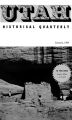
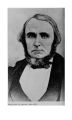
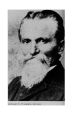
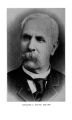
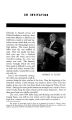
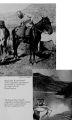
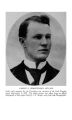
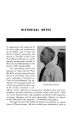
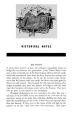
Show HISTORICAL NOTES JIM SHARP It seems there must be at least one authentic, sympathetic person to bridge the way between two generations. James Palmer Sharp is the man in this centennial year of the Pony Express who has relived, rerode, retold and remembered more about the Pony Express than perhaps any other authority on the subject. To be sure he was born some twenty years after the famous rides were made, but those who> participated in them were still around. They haunted the old trails and stations, they judged horseflesh, they went into politics and religion widi die same vigor they had given the famous coyote yell on the Express. They were ever set apart as very special in any community. Woodpile philosophers are rare nowadays, but when Jim was a lad back in the late 1880's, it was not unusual to see a few men of vast experience sitting on the cedar logs, whittling, shuffling die chips, and generally straightening out the world. If they were past vigorous labor, they just listened. If they were in the prime of life and had put die country on its feet-they had views and convictions. They knew 190 UTAH HISTORICAL QUARTERLY horseflesh, and dry thirst, and floods. They knew what it was to be lost on die desert where nothing spoiled the view. And they knew die same fear in the mountains where one could not see beyond a stone's throw. They knew men who fought bears singlehandedly and women who had built their own cabins and then delivered their own children. In Vernon, Tooele County, Jim, a likely, observant boy, listened to these men and did not forget a word. Some of diese men had lived on a horse, and their language and thinking showed diat they were experts. As farmers, ranchers, or cowboys, they had a professional vocabulary all their own. Jim heard nouns and adjectives to which no modern city boy is ever exposed. "Seeing daylight" described the distance a man was lifted from a saddle by a broncho about to be gentled. No real cowboy ever "pulled leather" - that grip on the saddle to steady oneself. This was also' called "choking die biscuit." A "critter" was any man or beast. A "jerk water" was a small town - one only got a drink there and went on. "Muck-a-much" was Indian for grub or food. "Cayuse" was an Indian pony. A "bunch" could mean a small herd of horses or a group of men. To "bite the dust" was what happened to a greenhorn when he had "choked the biscuit" and had met his match. Jim Sharp heard such words as hitch, hobble, honda, chuck, rustler, close seat, outlaw, slick ear, lasso, forty-five, critter. He learned to talk this lingo with ease. Perhaps one phrase that intrigued Jim Sharp most and influenced him deeply for most of his eighty years of active life was picked up from diese woodpile philosophers. That was: "Mounting Pony Express." This action consisted of the rider grabbing the horn of the saddle, starting his horse on a gallop, bounding two or three times by his side, and leaping over the cantle into the saddle - one of the most daring time-savers ever devised by the pony boys as they changed steeds at each way station. Jim, as a little boy, listened to these tall tales, and believed diem. JAMES P. SHARP HISTORICAL NOTES 191 We are indebted to this most unusual, practical historian for the identification of many of the stations of the Pony Express that time, man, and the elements have done their best to eliminate. Through him, this centennial year, we salute and remember those real yet mythical boys who rode die ponies and carried the mail. ILENE KINGSBURY THE YEAR OF T H E CENSUS This being the year of the national census, we will all be contacted by a census taker to add our statistics to the national figure. Utahans first went through this process just 109 years ago. In preparation for the establishment of territorial government, an enumeration of inhabitants was ordered by Governor Brigham Young in the following words: To Mr. Thomas Bullock Sir. Whereas by an act of Congress, creating the Territory of Utah, approved September 9 1850, in the 4th section thereof, it is, among other things, directed that the Governor, previous to the first election, shall cause a census or enumeration of the "Inhabitants of the several Counties and districts of the"Territory to be taken"; Now in pursuance of said enactment, I hereby authorize and direct you and such Assistants, as you may see fit to employ in said duty, after you (and they shall have first taken an oath or affirmation, faithfully to perform your duty in the premises), to proceed to take an accurate enumeration of all the Inhabitants of the Territory of Utah, Indians excepted, and make a true return of such enumeration, into my office, on or before the Fourth day of July next. In your return, you will have in view the following districts, and designate particularly, in which of said districts, said inhabitants reside, viz: 1st Great Salt Lake County; 2nd County of Davis; 3rd Weber County; 4th Utah County; 5th San Pete County; 6th Iron County; 7th Tooele County; and 8th Green river Precinct. The first day of April 1851, will be the date to which your enumeration and return, will have reference. For your services, you will receive such compensation, as the Territorial Legislature, at its first Session may allow. Brigham Young Governor, Utah Territory Great Salt Lake City Utah Territory March 28th, 1851 192 UTAH HISTORICAL QUARTERLY After being sworn into office (March 28, 1851), Thomas Bullock proceeded with the census and reported the results. Return of the number of Inhabitants in Utah Territory on 1st April 1851. 1st Great Salt Lake County 2nd Davis County 3rd Weber County 4th Utah County 5th San Pete County 6th Iron County 7th Tooele County 8th Green River Precinct Recapitulatio n. Total Males 3 119 596 691 1 125 197 191 85 22 6,026 Gi Females 3 036 532 452 880 168 169 67 24 5,328 Total 6155 1 128 1 143 2 005 365 360 152 46 11,354 eat Salt Lake City Utah Territory June 26, 1851. I hereby certify that the foregoing enumeration, of the Inhabitants of the Territory of Utah, is correct; so far as I have taken it Thomas Bullock. It will be interesting to note the growth that has taken place in the great commonwealth of Utah during the last 109 years. UTAH STATE HISTORICAL SOCIETY BOARD OF (Terms Expiring April 1, 1961) JUANITA BROOKS, St. George LELAND H. CREER, Salt Lake City NICHOLAS c. MORGAN, SR., Salt Lake City JOEL E. RICKS, Logan RUSSEL B. SWENSEN, Provo (Ex-Officio Member) LAMONT F. TORONTO, Salt Lake City (Honorary life Member) LEVI EDGAR YOUNG, Salt Lake City TRUSTEES (Terms Expiring April 1, 1963) j . STERLING ANDERSON, Grantsville RICHARD E. GILLIES, Cedar City j . GRANT IVERSON, Salt Lake City MRS. A. c. JENSEN, Sandy L. GLEN SNARR, Salt Lake City OFFICERS 1959-61 LELAND H. CREER, President NICHOLAS G. MORGAN, SR., Vice-President A. R. MORTENSEN, Secretary ADMINISTRATION A. K. MORTENSEN, Director JOHN JAMES, JR., Librarian EVERETT L. COOLEY, Associate Director DOROTHY SUMMERHAYS, Associate Editor ROBERT w. INSCORE, Registrar, Military Records Section EDITORIAL CONTRIBUTIONS: The Society was organized essentially to collect, disseminate and preserve important material pertaining to the history of the state. To effect this end, contributions of manuscripts are solicited, such as old diaries, journals, letters, and other writings of the pioneers; also original manuscripts by present-day writers on any phase of early Utah history. Treasured papers or manuscripts may be printed in faithful detail in the Quarterly, without harm to them, and widiout permanently removing them from their possessors. Contributions for the consideration of the Publications Committee, and correspondence relating thereto, should be addressed to the Editor, Utah State Historical Society, 603 East South Temple, Salt Lake City 2, Utah. The Editor assumes no responsibility for the return of unsolicited manuscripts unaccompanied by return postage. The Utah State Historical Society assumes no responsibility for statements made by contributors to this publication. MEMBERSHIP: Membership in the Society is $3.00 per year. The Utah Historical Quarterly is sent free to all members. Non-members and institutions may receive the Quarterly at $3.00 a year or $1.00 for current numbers. Life membership, $50.00. Checks should be made payable to the Utah State Historical Society and mailed to the Editor, 603 East South Temple, Salt Lake City 2, Utah. ~ s ^ «?;*•-» ; %.&?£'**-», 7U" ,fP"77 <: '" '* ' t?#- :*><% ***f W>*?* % I*** $> /ttf4> >• "ft/• &T77J -r /•:-- #.<S^'- *»5r VMJMMC' *£N£^" jLt**-jf£i *j *£", 7* M.*rj&; ^J&$& ^W0^e^^^*MikkiJ^el^t^ &r. •******:*£j"% • 7\. .'jf'-: r*sws SJSSSX^S. Cr**v*-*< a^*#*t^»M(f S:e~- -7 ^ ' ^ 7 ' JS • • , »' •• •- *- /• * > / • * * • \ . . • Facsimile of the first page of the Charles A. Scott diary. U T A H S T A T E H I S T O R I C A L S O C I E TY :>.**# gflHH «#J H I S T O R I C A L Q U A R T E R LY The Colorado... River of the West •ssdfte ABOUT THE COVER Tapestry-like walls rise perpendicularly from the Colorado River bed. PHOTO, JAY HESLOP "Delicate Arch" in Arches National Monument, Grand County, Utah. PHOTO, Y. W. TOMPKINS |