| OCR Text |
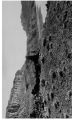
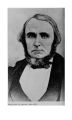
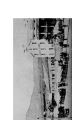
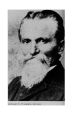
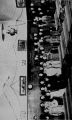
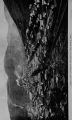
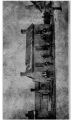
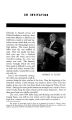
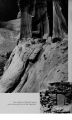
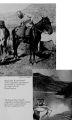
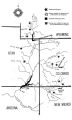
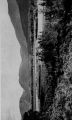
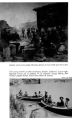
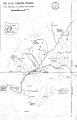
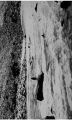
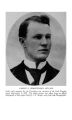
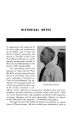
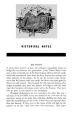
Show Stanton survey crew eating Christmas dinner in front of the Lee's Ferry fort. The survey members at their destination, Needles, California. Left to right, Reginald Travers, H. G. Ballard, W. H. Edwards, George Melick, John Hislop, Langdon Gibson, Elmer Kane, Robert B. Stanton. PHOTO, R. W. HILDRE Starting with three sturdy boats of oak but mding with only two, Stanton and seven members of his party successfully completed the survey to tidewater on the Gulf if California in Mexico, April 26, 1890. THE EHGIHEER AHD THE CAHYON By Dwight L. Smith* It was staggering to the imagination of an average person in 1889-90; seventy years later it is still fantastic. In the heroic annals of the unfolding Southwest in the latter part of the past century is a too little-known chapter of railroad history. In light of the present considerable interest in the Colorado River, the Stanton engineering survey to determine the feasibility and worth of a railroad along the river from Grand Junction, Colorado, to the Gulf of California is of historical importance. The much publicized Powell expedition which navigated the Colorado River in 1869 led even engineers to conjecture the possibility of a low grade railroad line by way of the river from the western base of the Rockies to the Pacific.1 The Powell report certainly removed some of the misconceptions and ignorance concerning the river, but there was still much more that was unknown about it. The Powell report fired the imagination of a college j unior, Robert Brewster Stanton, enrolled in Miami University. He envisioned "a vast * Mr. Smith is professor of history at Miami University, Oxford, Ohio. Acknowledgment is due Mrs. Anne Stanton Burchard, of New York City, and Mr. Robert W. Hill, keeper of manuscripts of the New York Public Library, for access to the Robert Brewster Stanton papers, and to Mr. Ralph H. Phelps, director of Engineering Societies Library, New York, for the use of other Stanton materials. A grant from Miami University defrayed the cost of research. Mr. Leland S. Dutton, director of Miami University Libraries, extended many special courtesies to facilitate the research. 1 Robert B. Stanton, "The River and the Canyon," 2 vols., unpublished manuscript, II, 507. This 1039 page typescript manuscript was prepared for publication. It contains considerable on the geology and history of the Colorado River besides the narrative of his own exploration and engineering survey in 1889-90. Pagination for the second volume is continuous from the first. Hereafter cited as TRTC. 264 UTAH HISTORICAL QUARTERLY plateau . . . through it a winding river that by corrasion had cut its way down into the solid rock, to a depth of a mile and a quarter, forming a canyon with practically vertical walls from the water's edge to the level of the plateau." At the surface the chasm was perhaps a half mile wide. He dreamed of someday throwing "a single span railway bridge across that chasm!" After graduation he went into civil and railroad engineering and established a quite respectable reputation. One of his ventures took him into the Southwest on an instrumental reconnaissance with the Atlantic and Pacific Railroad then projected from Pierce City, Missouri, to San Diego, California; but because of financial stringency of the company, Stanton's party never reached as far as the Colorado.2 S. S. Harper, a lone prospector in north central Arizona, had followed the line of the Atlantic and Pacific survey across the high passes and up and down the mountains of what he called the "saw-tooth route." With a very limited knowledge of the Colorado, not including the Powell report, he conceived the notion of a line from the western slope of the Rockies to the coast with a water grade by way of the Colorado. Harper with his vaguely defined idea and Frank M. Brown, a successful Denver real estate businessman who was looking for a scheme for investment, came together.3 The Denver, Colorado Canyon, and Pacific Railroad Company was organized March 25, 1889, to fulfill the Harper-Brown scheme and to try to interest a syndicate in financing it.4 The actual survey began on March 28, 1889, and continued down the Grand (Colorado) River from Grand Junction to the mouth of the Green River in southeastern Utah, under the supervision of Frank C. Kendrick, the assistant engineer. From this point the main survey party was to take over.5 Arriving by rail from Denver, this party of sixteen embarked, May 25, 1889, on Green River where the Denver and Rio Grande Railway crossed it at Green River Station (present Green River), Utah. It was under the leadership of Brown, president of the company, 2 TRTC, II, 500-3. 3 Stanton, "Exploration and Survey of the Canyons of the Colorado River of the West, 1889 and 1890," 22n. This is Stanton's report to the railroad company. Hereafter cited as Exploration and Survey. See also, TRTC, II, 504-8. 4 Stanton, Field Notes, 4 manuscript vols., Book A, 4: Exploration and Survey, 22-23; and TRTC, II, 482, 508-9, and Appendix C, "History of the Origin of the Denver Colorado Canyon and Pacific Railroad Survey," 828. Field Notes are records made by Stanton on the spot during the expedition, recording miscellaneous matters. They are labeled as A, B, C, and D. Harper was a member of the board of the company. Exploration and Survey, 22n. Brown expected the line to be open by May, 1895. Ethan A. Reynolds, "In the Whirlpools of the Grand Canyon of the Colorado," Cosmopolitan Magazine, VIII (1889), 25. "Field Notes, Book A, 18, 38; and TRTC, II, 511-14, and Appendix C, 829. THE ENGINEER AND THE CANYON 265 and Stanton, chief engineer of the expedition.0 This way was chosen because of the relative ease of navigation down river to the terminal point of the Kendrick survey.7 Outfitted with five clinker-built thin red cedar keel-bottomed hunting and pleasure boats and an ordinary flat-bottomed dory from the Kendrick party, medicine, instruments, and provisions for seventy-five days, the party doggedly pursued its mission. It was planned to replenish their provisions at Lee's Ferry, Arizona (at the end of Glen Canyon), and Peach Springs, Arizona (down river near the end of the Grand Canyon division).8 The expedition was plagued with disaster, and there was serious doubt as to whether the river could be mastered and the survey completed. Most of the cooking utensils and some of the supplies were lost when the cook boat was jammed between two rocks. Other accidents resulted in the loss of nearly all of the provisions. Bedding and clothing were frequently soaked. Two of the boats were totally destroyed and the others badly damaged. After obtaining some relief supplies, they reached Dandy Crossing, Hite, Utah (at the end of the Cataract and Narrow canyons division at the mouth of the Dirty Devil [Fremont] River), June 24.9 Here the party split into two groups with one under W. H. Bush to continue the survey. Brown and Stanton led the other on what was to be a rapid examination by making notes, sketches, and photographs of the lower canyons and as far on down the river as Needles, California. President Brown was anxious to have an "eye survey" to that point where the Atlantic and Pacific Railroad crossed the Colorado because he had an appointment with a group of eastern capitalists who had expressed interest in the project.10 This advance party moved on to Lee's Ferry, and after a delay for supplies plunged into Marble Canyon on July 9.11 "Letter of application for the position as chief engineer, Stanton to Brown, April 15, 1889, Stanton Papers, Box 5, Folder 2. 7 Exploration and Survey, 23-24; and Field Notes, Book A, 20. "Exploration and Survey, 24, 26-27; Field Notes, Book A, 17, 57; and TRTC, II, 511,513-14,516,524-26. "These incidents and others are reported in Field Notes, Book A, 41, 48, 54, 56, 62, 82-84, 86-87, 94-96, 111-14, passim. They are also reported in TRTC, but usually by quotation from the Field Notes. See also TRTC, II, 548-49, 551, 561; and Exploration and Survey, 46-48, 56. 10 Ibid., 56-57. Brown said a fifty-million-dollar syndicate was interested if the engineer's report was favorable. Field Notes, Book A, 33, 94-95, 128; and TRTC, II, 563-65. After the drowning of Brown no further mention is made of this group. A reorganization of the company took place, Stanton was elected to the board, retained as engineer, and instructed to raise the necessary money to continue the survey. Field Notes, Book B, 112-15; and TRTC, II, 592n, 592-93, and Appendix C, 829. 11 Exploration and Survey, 86; and TRTC, II, 568-69. 266 UTAH HISTORICAL QUARTERLY The next morning one of the boats was upset and Brown drowned. A few days later another disaster resulted in the drowning of two more of the party. These accidents probably could have been averted with the safety precaution of a life preserver. The expedition carried none.12 Under the circumstances it was decided to quit the river and to return more adequately prepared. The instruments and supplies were cached in a cave about forty miles south of Lee's Ferry; the party climbed out of the gorge and returned to Denver.13 Three more sturdy boats of oak, with more spacious water-tight storage compartments, capable of carrying heavy loads, difficult to upset, and equipped with other safety features were specially built. Other equipment, which included rubber bags and floatable kegs for storage of such things as rice and coffee, and life preservers were expressly designed for the undertaking.14 The Stanton party of twelve included only three of the previous expedition. Since it was not necessary to go through difficult Cataract Canyon again, the boats were wagoned from Green River Station, Utah, to the mouth of Crescent Creek at Crescent City, a short distance above Dandy Crossing. Here the Stanton expedition embarked on December 10.15 The photographer (F. A. Nims) broke his leg and was carried out at Lee's Ferry. Another man (Harry McDonald) left when the party was in the Grand Canyon. One of the boats was broken into splinters in a rapid in Grand Canyon and so it was necessary to reduce the party by three more (A. B. Twining, L. G. Brown, and James Hogue) at Peach Springs.16 Stanton and the other six and a new cook successfully completed the survey to tidewater on the Gulf of California in Mexico on April 26, 1890." After this Stanton made "field examinations" for a route from Yuma to San Diego.18 "Field Notes, Book B, 16-21, 52-54; Exploration and Survey, 88-93, 96-98; and TRTC, II, 570-75, 582-83. "Field Notes, Book B, 62, 79, 111; Exploration and Survey, 98-100; and TRTC, II, 583, 585-89. "Field Notes, Book A, 235, Book B, 113-15, and Book C, 2-10; and Exploration and Survey, 100-2. 15 Ibid., 102-4, 213-14; Field Notes, Book A, 223-38; and TRTC, II, 593-94, 595-98. 10 Field Notes, Book B, 156-72, Book C, 111-12, 116-19, 138-44, and Book D, 6; Exploration and Survey, 104-5, 123; and TRTC, II, 612-17, 620-23, 664-67, 714. "Exploration and Survey, 216; Field Notes, Book D, 224-26; and TRTC, II, 732. " Field Notes, Book D, 236. The contract under which Stanton had worked was canceled by mutual consent at a board of directors meeting in Denver, April 13, 1891. MS, Stanton Papers, Box 4, Folder 1. See also TRTC, II, Appendix C, 830. THE ENGINEER AND THE CANYON 267 The details of the descent of the Stanton expedition down the Colorado River are a thrilling adventure story of exploration that will be told elsewhere. The matter at hand is a consideration of his findings and their possible application. As this was a railroad survey detailed information of the lower canyon walls, the composition of the river banks, and the alignment and fall of the river was required.19 To this end, a continuous transit line was run for the first 355 miles, levels were taken, contour topography sketched, and photographs made. The shortage of sufficient funds did not permit this detailed a survey below Glen Canyon. During the Stanton led phase of the project only an "instrumental reconnaissance" was made except where excessive fall, sharper grades, or other circumstances made greater detail a necessity.20 A visual record was made by photography, because of the "inaccessibility of the country," and as indisputable evidence to convince skeptics that the statistical and other data was all that it appeared to be. Altogether, over two thousand pictures were taken, most in duplicate and some even in triplicate. Not a single negative was lost, or damaged, or wet, a remarkable record, even with all the precautions that were taken. The eleven hundred views are a valuable part of the records of the expedition.21 The survey revealed that the preparation of a roadbed in the about 650 miles of the upper or canyon division, that is, from Grand Junction, Colorado, to the Grand Wash near the Nevada border, meant: (1) 62x/2 per cent of "comparatively light work" in earth, loose rock, and talus slopes of loose and solid rock; (2) 35% per cent of "heavy" work in solid rock, cliff benches, and sloping granite walls; (3) 2 per cent of tunnel- 19 Since the widths at the tops of the canyon areas are so great, the depths involved have little relevance to the consideration of a water level railroad survey. As was suggested, if the upper mile or so of the depths of some of the canyons were sheared off the problem would seem so much less impressive or mysterious to the layman. And the magnitude of the problems involved here would be no greater than of those encountered on other western lines. Exploration and Survey, 114-15; and TRTC, II, 493-97, 650. See also Arthur M. Wellington, "Canyons and Railway Lines," an editorial in Engineering News and American Railway Journal, XXII (September 21, 1889), 278-79. It is a discussion on Stanton's article which appeared in the same issue. While applying to this specific project, it is also an excellent general discussion on the subject. Wellington, "The Colorado Canyon Survey," an editorial in ibid., XXIV (October 18, 1890), 349-50, discusses a subsequent Stanton article which appears in this issue. There are other comments in this editorial of interest to the conclusions in this study. 20 T R T C > n; 489-90, 610, 610n, 732. 21 Exploration and Survey, 24-26, 28-29; and TRTC, II, 615-16, 680. A convenient summary and discussion of this phase of record taking is made in Stanton's article, "Engineering with a Camera in the Canyons of the Colorado," Cosmopolitan Magazine, XV (August, 1893), 292-303. PHOTO, ROBERT B. STANTON, Up river from Mile 50 in Marble Canyon. Both the "heavy talus slopes" and the "Cliff bench work" are shown in the right of the picture. ing and half tunneling.22 The average fall per mile was smaller in the Glen Canyon portion (from Dandy Crossing to Lee's Ferry) than in any other part of the division. On the other hand the course of the river was so extremely crooked here that, in order to locate a good line, some seventeen to nineteen tunnels from 200 to 6,600 feet would be required.23 In Marble Canyon (from Lee's Ferry to the Little Colorado) was the most difficult ten mile stretch to locate on the entire river, and it would undoubtedly be the most expensive to construct.24 22 TRTC, II, 735, and Appendix B, "Results of the Railroad Survey," 824; Exploration and Survey, 3, 134, 141. See also Stanton, "The Denver, Colorado Canyon and Pacific Railroad Project," Engineering News and American Railway Journal, XXII (September 21, 1889), 269-72. While reorganizing in preparation for a resumption of the survey, Stanton wrote this article in reply to what he regarded as misleading statements in a New York newspaper. His article contains data on the proposed railroad apropos to this study even though it is just a preliminary report. 23 Field Notes, Book A, 128-208, 216; Exploration and Survey, 65, 67, 84; TRTC, II, Appendix B, 822; and Stanton, "The Denver, Colorado Canyon and Pacific Railroad Project," 270. 21 Field Notes, Book B, 22, et seq.; Exploration and Survey, 108; and TRTC, II, 634, 640. Even though "the canyon makes two almost complete right angle turns, a good line can be located by crossing the river - the only time in the whole survey - with a single span bridge, from marble cliff to marble cliff, at an elevation of some 200 or more THE ENGINEER AND THE CANYON 269 The lower or valley division of the river extends some 400 miles from the Grand Wash to the Gulf of California. Generally it is composed of broad fertile valleys and sloping hillsides, but in places on either side are a number of short canyons. On this part of the project, was involved: (1) 75 per cent of earth and gravel work; (2) 24% per cent of solid rock work; (3) % per cent of tunneling.25 Looking at it from the standpoint of the entire river, the same 400 miles of level bottoms with earth and gravel slopes could be handled by fight plows and scrapers like similar work outside the canyon country. The high water line does not ordinarily reach these bottoms, and the roadbed here could be adequately and cheaply protected by a riprap slope wall construction. The nearly 280 miles of hillside and rough talus slopes were mostly side hill cut which involved no waste to be hauled. These hillside slopes are generally not of loose rock slides and the talus slopes are usually horizontal stratifications with but a thin top layer of debris. The tremendous width of the canyon area on top lessens the damage potential of loose rock to a railway constructed in the lower gorge area. The same 320 miles of principally solid rock work in the sloping hills or solid rock benches of sandstone, marble, and granite would entail the least expensive kind of rock work. Excavation itself would almost entirely prepare the roadbed while the waste could be pushed into the river. Tunneling costs would only be increased above the ordinary because of the inaccessibility of the area. But the twenty miles of tunnels were to save about forty-two miles in distance and other difficulties so that the extra cost would thus be partially offset. New innovations, such as electrical drills which could use the river to generate power, would further cut construction expense. The entrance of side streams and canyons into the river present no unusual problem. At their mouths, most of them enter the Colorado through deep and narrow channels of solid marble or granite that would be crossed usually at elevations of fifty to a hundred feet above their beds. Although some of these side canyons are from three to six miles across on top, a hundred foot single span bridge would suffice at the railroad level. In those cases where the mouths of the side streams have washed out into wide flats, ordinary bridge construction could be employed.26 feet above low water, and with a tunnel at either end." TRTC, II, 640-41. See also Stanton, "The Denver, Colorado Canyon and Pacific Railroad Project," 270-71; and Exploration and Survey, 107. 25 TRTC, II, 730-31, 735, and Appendix B, 824; Exploration and Survey, 3. "Ibid. 168, 181-83, 185, 189-90; TRTC, II, 736; and Stanton, "The Denver, Colorado Canyon and Pacific Railroad Project," 271. 270 UTAH HISTORICAL QUARTERLY Adverse winter weather of hard freezing and snow that frequently handicapped the transcontinental lines through the Rockies, especially as demonstrated in the winter of 1889-90 when the Stanton survey was under way, would have little or no effect in the canyon area of the Colorado.27 Stanton calculated that, except for unusual situations, a railway line could be constructed with a grade not in excess of 26.4 feet per mile (one-half of one per cent); and that, except for tunnels to take care of the sharper bends, the curves required in the line would not be more than ten degrees (with about 573.7 foot radius). Where the average fall of the river was no more than twelve feet per mile, the roadbed could nearly parallel the high water mark.28 If construction of a Colorado River line was possible only from botii ends, time and costs would be unnecessarily increased. Stanton figured, however, that in the upper or canyon division, simultaneous construction could be carried on in perhaps as many as forty different locations. By employing railroads (the Denver and Rio Grande, the Colorado Midland, and the Rio Grande Western on the north, and the Atlantic and Pacific on the south), existing and easily constructed wagon roads, jack trails, horse trails, ferries, flatboats, and steam launches, it would be readily accessible. In the lower or valley division, that is from about the Nevada line down, there was no real problem because steamboats were then running on the river and could haul the necessary supplies and equipment needed for construction.29 Stanton was satisfied that the proposed line was "neither impossible or impracticable" and that cost of construction and maintenance would be "'reasonable" especially when compared with other transcontinental railways.30 An added possibility making the whole scheme appear even more 27 Stanton documents this with detailed statistics and tables. See Exploration and Survey, 185-89. 28Ibid., 175-76, 178; and Stanton, "The Denver, Colorado Canyon and Pacific Railroad Project," 270-71. The Field Notes and TRTC frequendy have notations about where and how the line could be constructed. See Books A, B, C, and D, passim. Field notes, Book A, 216-18, for example, contains a summary view for the Cataract Canyon portion. TRTC, II, 640-41, summarizes the Marble Canyon situation. mIbid., II, 542; and Exploration and Survey, 163-67. 20 TRTC, II, 735-36; and Stanton, "The Denver, Colorado Canyon and Pacific Railroad Project," 270-71. Stanton gives a detailed analysis of construction costs, section by section, in Exploration and Survey, 169-72. He estimated that the roadbed "complete with all superstructures, ready for the rolling stock, of single track standard gauge," with stations, sidings, and terminals, to San Diego via Yuma, and with a branch line up the Rio Virgin would cost about $60,000,000. Ibid., 190. THE ENGINEER AND THE CANYON 271 attractive was of operating the whole line from electricity generated by the power of the river itself.31 In themselves, however, these factors probably were not sufficient to convince investment capital in a venture, such as a Denver, Colorado Canyon, and Pacific Railroad which still sounded unrealistic and fanciful no matter what the cold calculations of an engineer revealed. Assuredly from an engineering standpoint it was possible. But what of the possibilities of traffic and profit? Stanton was convinced that this railroad scheme would be a profitable venture. In the first place the principal object of this Colorado River line was to haul coal from Colorado to the Pacific.32 Coal was expensive in California and most of it was imported from other countries. The projected railway seemed to be the answer. Because of navigation difficulties at the head of the Gulf of California, it was decided the road should go as far as Yuma and thence over the mountains to San Diego harbor.33 Assuredly there was much else for which the railway would be used. Counting on this sublime spectacle of nature as a drawing card for tourists, this traffic itself should defray extraordinary construction costs. None of the other western lines had a drawing card of such magnitude. Its passenger traffic, therefore, would be "in excess of all other lines across the continent." 34 Potential freight traffic certainly was an important consideration. Competition in transcontinental transportation was becoming keener; and Stanton was confident that a thousand mile low grade year round line over the mountain area would successfully meet this competition, as well as that of the then much talked about Nicaraguan canal. It would capture more than its proportionate share of the through freight traffic.35 As in other parts of the West where railroads were a boon to exploitation of natural resources and settlement, Stanton fully expected his line to have similar effects on the area through which it would run. The starting point, Grand Junction, was not only a western terminus of railroads diat came into Denver from the East, and with connections to the 31 TRTC, II, 736. 32 The title page to Field Notes, Book A, is "Notes of an Instrumental Examination of the Canyons of the Colorado River of the West, for a Railway Line from the Coal Fields of Colorado to the Pacific Coast." See also Exploration and Survey, 21-22. 33 Ibid., 31. Stanton analyzes this idea and urges board consideration of it in ibid., 159-61. He also suggests possibilities for another line from Las Vegas Wash, across the mountains, to San Francisco. Ibid., 101. See also ibid., 30-31. 3iIbid., 191-93; and Wellington, "Canyons and Railway Lines," 279. 35 TRTC, II, 735-36. 272 UTAH HISTORICAL QUARTERLY West, but it was situated in a prosperous agricultural region and cattle-raising territory and within easy reach of large "inexhaustible" coal fields.36 Although the Cataract Canyon area further downstream seemed to have little to offer except scenery and thrills, at the heads of the side canyons were large tracts of grazing land. Below that into the Glen Canyon, according to Stanton, there were almost continuous gold placer deposits, enough to develop a quite respectable mining industry and to last at least a century. Up some of the side canyons were other deposits of mineral wealth and coal and even petroleum.37 Existing wagon roads connected Lee's Ferry with agricultural and grazing lands in soudiern Utah and northern Arizona whose vast possibilities through irrigation were not yet dreamed of. In Marble Canyon, in fact in most of the canyons, a great variety of building stone awaited a railway to make possible the development of a considerable industry.38 The Grand Canyon portion of the fine was rich in deposits of silver, lead, copper and iron ores, and even roofing slate. Here as elsewhere, besides taking out the ores, the railroad would bring in provisions, machinery, and other supplies for the mining camps. And why not exploit the Kaibab Plateau timber for railroad ties, fuel, lumber, and odier related products. The lower or valley division had much to offer. Flanking die Colorado were rich mineral areas of principally rock salt, gold, and silver. Many already established mines were inoperative because of the high cost of the coal which was needed to develop them. Odiers were waiting for favorable circumstances for establishment. The railroad would correct this situation. Prosperity to the mining industry would be accompanied by the development of agricultural areas with such products as grains and semitropical fruits, especially citrus.39 Coal was by no means limited to that obtainable in the Colorado fields. Probably even greater quantities were available from nearer points. To this end branch lines should be constructed to the various fields, especially one to the "practically unlimited" fields of die southwestern Utah area up the Rio Virgin.40 30 Exploration and Survey, 163-64, 194-95. "Ibid., 195-99. 38 Ibid., 199-200. 30 "I am led to believe that this whole section through the Grand Canyon . . . will some day be developed into one of the most extensive and valuable mining districts of the Western States." Ibid.. 201-7. 40 There were also iron fields that might be developed. Stanton urged survey for such a line to the board. Ibid., 157-59, 208-9. Stanton prepared a paper on a railroad down THE ENGINEER AND THE CANYON 273 The market possibilities for coal were good. Mining and milling operations along the Colorado River would consume their share; the Atlantic and Pacific Railroad which crossed the proposed route at Needles and the Southern Pacific which crossed it at Yuma needed it for their own use and for shipping over their own lines; and their markets would welcome this new source of supply.41 In 1889, Australia and British Columbia accounted for about nine-tenths of the coal received at San Diego; and British Columbia, Australia, and England accounted for nearly two-thirds of the import at San Francisco. Stanton believed his own railroad could deliver coal and coke to southern California at from a half to a third of its market price. A cheap and unlimited supply would tend to make San Diego, with its connections with other roads to the north, the coal depot for the rest of California.42 Ocean steamers using the proposed Nicaraguan canal would create further demand. San Diego would soon become the principal exporting coal station on the Pacific, and ocean traffic would increase considerably. Undoubtedly industry would be attracted to the area to take advantage of cheap ores, coal, coke, and ocean and land transportation facilities. The city would have tremendous advantages over other Pacific ports.43 With the attractive features of not too difficult or unusual or expensive construction, better than usual year-round weather conditions, a constant water supply, the possibilities of use of on the spot generated electricity for both construction and operation, cheaper rates, faster service, low grade line, a permanent roadbed, the potential exploitation of mining, agriculture, and natural resources with plentiful markets, certainly the Denver, Colorado Canyon and Pacific Railroad could successfully meet the competition of already established lines and indeed become a most prosperous venture. But the line was never constructed, so beyond the data and records of the Stanton survey, a not inconsiderable achievement, all else about the projected line is mere conjecture. the Rio Virgin, the Colorado, and to San Diego, in which he treats of the area and its value to the proposed line. "The Far Southwest. Its Possible Development," typescript manuscript, 18 pp., Stanton Papers, Box 4, Folder 4. " Exploration and Survey, 209. 42 Ibid., 209-12. Stanton figured that his line would be from 166 to 713 miles shorter from Denver to San Diego than any of the then operating lines. With existing connections, it would be shorter from 150 to 1,347 miles than all other lines, except one, from Chicago to San Diego. Generally not as much distance would be lost in the windings of the Colorado as was lost by other railways in crossing various mountain ranges. Ibid., 179-80. 43 Ibid., 211-12. For a detailed analysis of "the railroad connections and prospects" of San Diego, see the lengthy newspaper article by a civil engineer, Charles J. Fox, "San Diego's Railways," in the Union (San Diego), March 15, 1891. |