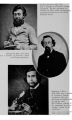
| OCR Text |
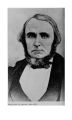
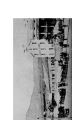
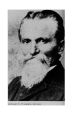
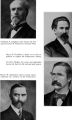
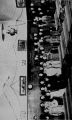
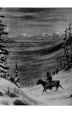
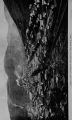
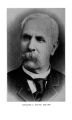
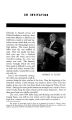
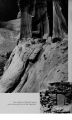
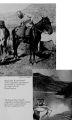
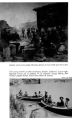
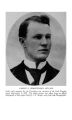
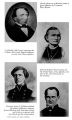
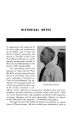
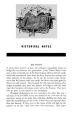
Show CHARLES A. SCOTT, 1830-1907 is photograph of Scott in later life was •en in New Orleans shortly before he wed to Houston, Texas, where he served mditor for the Southern Pacific Railroad. CHARLES A. SCOTT'S DIARY OF THE UTAH EXPEDITION, 1857-1861 Edited by Robert E. Stowers and John M. Ellis * INTRODUCTION Charles A. Scott was a gold miner, soldier, filibuster, journalist, and playwright. He was born in Baltimore in 1830, was a waif who knew nothing of his parents, and was raised by a widow, whose name is unknown. He attended public school briefly and was apprenticed to learn the carpenter's trade. After the death of his foster mother in 1849, he joined the army and sailed for San Diego, California. He left the army in 1851 and joined a cattle drive to make his way to the gold mines near San Francisco. Having little success in the "diggings," he was associated with a collection agency in San Francisco for several years. In 1855, joined by Tom Anderson (who is mentioned in the diary), with promise of a land grant and substantial wages, he went with William Walker as a filibuster to Nicaragua. At the termination of a six-month enlistment, he was unable to obtain the land and spent his entire pay for passage to New Orleans. Here he worked for several months on a river steamboat. Upon reading an advertisement that die Nica-raguan government, of which Walker was president, was offering large amounts of land to settlers, and thinking he would collect his original offer, he returned to Nicaragua, only to be thrust into the army upon arrival. After a useless campaign, and widi numerous other deserters * Dr. Ellis teaches American history and sociology at Lee College, Baytown, Texas. Mr. Stowers is a great-grandson of the diarist. He came into possession of the diary through his mother, Mrs. Edythe Scott Stowers, and brought it to the attention of Dr. Ellis. 156 UTAH HISTORICAL QUARTERLY from Walker's army, he made his way to Colon, Panama, where he sailed on the steamer Illinois for New York where he began his diary. After the Utah Expedition little is known about his experiences in the Civil War except that he remained in the Union Army. When his bride of a few months died in 1867, he went to the Texas frontier as chief clerk for Colonel E. J. Strang. He married Susan DuBois, of New Orleans, in 1869 and returned to duty at Fort Brown, Texas. Between 1873 and 1879, with die rank of major, he was superintendent of the New Jersey Home for Disabled Soldiers. During this time his interest in the theater led to participation in the staging of amateur productions for which he adapted several of Charles Dickens' stories. Still somewhat a soldier of fortune, in 1879 he ventured to Arizona in search of mining opportunities, and later to the Black Hills of the Dakotas, it is believed, as a newspaper correspondent. Afterwards he lived in New Orleans until 1889 when he was appointed auditor for the Soudiern Pacific Railroad in Houston, Texas, where he remained until his death in 1907. Although a number of accounts of the Utah Expedition written by participants have been published, Scott's journal is in some ways unique.1 It presents the viewpoint of a private soldier whose experience provided a keenness of observation and whose abdity produced a vividness of expression seldom found among enlisted men. From this the diary derives its significance. When the territory of Utah was created in the year 1850, Brigham Young, leader of the Mormon people, was appointed governor. Most of the other federally appointed officials were not Mormons, however, and almost immediately a conflict developed between diem and Governor Young, which grew until the non-Mormon officers finally departed for the East. Their report on the situation in Utah, together with complaints from other sources, convinced President James Buchanan that 1 In spite of considerable literature on the subject diis military "invasion" of Utah is little known outside the state and only imperfectly understood locally. Major documentary studies are: The Utah Expedition, 1857-1858; Letters of Capt. Jesse A. Gove 10th Inf., U.S.A. . . . (Concord, N. H., New Hampshire Historical Society, 1928); "The Utah War, Journal of Albert Tracy 1858-1860," Utah Historical Quarterly, XIII (1945); LeRoy R. and Ann W. Hafen, The Utah Expedition 1857-1858 (Glendale, Arthur H. Clark Company, 1958). [Ed. note: Articles on the Utah War which have appeared in the Quarterly are: "Mormon Finance and the Utah War," by Leonard J. Arrington (July, 1952); "The Governor's Lady: A Letter from Camp Scott, 1857," edited by A. R. Mortensen (April, 1954); "A Territorial Militiaman in the Utah War: Journal of Newton Tuttle," edited by Hamilton Gardner (October, 1954); and "A Local Paper Reports on the Utah War," by A. R. Mortensen (October, 1957).] CHARLES A. SCOTT'S DIARY 157 Governor Young should be replaced. Accordingly, he appointed Alfred Cumming the new governor, and in die summer of 1857 sent him and die other federal appointees to Utah. To make sure that diey would be accepted by the Mormons, the new officials were escorted by United States troops. Insisting that the "invading army" would not be allowed to enter the territory, Governor Young declared martial law and called out the local militia, known as the Nauvoo Legion. Militiamen were sent to the vicinity of Echo Canyon, where defenses were set up; smaller units were ordered fartiier east to meet die advancing troops and harass and delay diem; and the "Utah War" was under way. By burning grass and supply trains and capturing horses and cattle, die Mormons succeeded in delaying the advancing troops and forced them to spend a cold winter at Camp Scott in the mountainous country near burned out Fort Bridger. Widi the coming of spring and the arrival of reinforcements of horses, mules, and cattle from New Mexico, the government forces prepared to resume their march toward the Salt Lake Valley. Realizing the futility of furdier forcible resistance, the Mormon leaders began talking of burning their towns and moving to some vague refuge in die southwest desert country. As a first step in this plan the residents of Salt Lake and the settlements to the north moved south, most of them stopping in Utah County. In the meantime, steps were being taken to bring the "war" to an end. In February, Colonel Thomas L. Kane, a long-time friend of die Mormons, had arrived in Utah, by way of California, to act as an unofficial self-appointed mediator. Early in June, L. W. Powell and Ben McCullough, official "peace commissioners," reached Salt Lake. They carried widi them a proclamation from President Buchanan to the people of Utah reminding diem that diey were in open armed rebellion against the United States and therefore guilty of treason, but offering them a full pardon, provided they would submit to "the just authority of the federal government." Following conferences between the peace commissioners and Mormon leaders, the government troops marched unmolested through the deserted city and established a military post near the town of Fairfield, in Cedar Valley, about forty miles to die southwest. The people returned to their homes, and the "war" was ended. Troops were stationed at the post, at first called Camp Floyd and later Fort Crittenden, until 1861, when die remainder left for more urgent duty. 158 UTAH HISTORICAL QUARTERLY DIARY, FROM NEW YORK TO CAMP FLOYD U. T. 1857 & 1858 & 1859 & 1860 & 18612 March 28th 1857 An eventful day; After sixteen mondis campaigning in Central America, to day finds me entering die Harbor of New York on the Steamship Illinois ten days from Aspinwall N. G.3 rather an inglorious termination to my military career under die Grey-eyed Man of Destiny -4 only sixty cents in the treasury (a low sum to commence life anew) and my clodies so nearly worn out, that I fear to pass a rag man lest he should cast an envious look at me, as dio' I were cheating him out of his rights - and diose shoes of mine with the soles tied to the uppers, with thongs of leather, is evidence that my understanding has undergone some experience, and I might as well profit by it, so as we pass Governors Island, my mind is made up. I'll pretend diat I am a returned Californian and thereby rid myself of Newspaper Reporters and not make myself an object of curiosity and useless pity- And now we are near the wharf, and whde the old Steamer is puffing & blowing backing and filling to get into her berth, we have aready been boarded by a host of enterprising Reporters, Runners, Cabmen & etc & etc, so that rising above the cries of the Mates and Engineers is heard the words "Metropolitan" "Astor House" "French's Hotel" "St. Nicholas" "Lovejoys" "Revere" "Irving" &c while a Reporter who has spotted me, with a note book in his hand accosted me with the words (after bidding good morning) "when did you leave Genl. Walker." I instantly assumed die indignant and asked him if he took me for a Fillibuster, to which he replied "dien you are not from Nicaragua" No "then I beg your pardon for my mistake" and he looked at me as dio' he still doubted my assertion. A Runner on hearing that I was not a " An attempt has been made to reproduce the diary as it appears in the manuscript except for the omission of routine entries regarding fuel and water supply at points where the expedition camped en route to and from Utah. Scott made no attempt to make an entry each day, and during times he was in garrison there are periods of several months for which he wrote nothing. Spelling, punctuation, and grammar have been preserved wherever possible. Unlike other diarists who reported on only a portion of the Utah Expedition and its military occupation of Utah Territory, Scott was among the first troops to leave Fort Leavenworth for Utah in July, 1857, and was also among the last troops to leave Fort Crittenden on its abandonment in July, 1861. 3 Now Colon, Panama. 4 William Walker led an American filibuster expedition to Nicaragua in 1855. "Gray-eyed Man of Destiny" stems from the old Aztec legend that a white god would come from the north and free them from slavery. The Indians of Nicaragua added that he would be a gray-eyed man, and when Walker arrived he was acclaimed as their emancipator. Many believe Walker had heard of the legend and used it to his advantage. Laurence Green, The Filibuster (New York, 1937), 156-57. CHARLES A. SCOTT'S DIARY 159 Fillibuster thrust a card of Lovejoys Hotel in to my hand- seeing that it was kept on the restaurant principle, my mind was made up, I asked him if die street facing the pier would lead me into Broadway but he advised me to take the carriage marked Lovejoys Hotel, but fearing there might be fare I replied diat I preferred exercising my limbs a litde "but your baggage sir, shall I look after it" dont trouble yourself I never encumber myself when traveling. The Boat is made fast at die Dock and diere is regular rush of M. P.'s, Porters Runners Apple women &c and while diey are so eager to get aboard, we are just as anxious to get off, and in company with two Comrades follow up the street and soon come to Broadway and to Lovejoy's Hotel, where the obliging clerk hands me die Register and I insert the following in large letters "Charles A Scott San Francisco Cal." After this stroke of penmanship, I was shown into the washroom, where I indulged in die luxury of using castile soap and probably removed some dirt that had not been disturbed since I had left Costa Rica. Now I began to find that my ragged clodies were an advantage to me, for people seemed to think that I had been an economical hard working Miner, and had reaped the reward of industry, and diat having plenty of gold, I could afford to despise dress, for a great many seemed desirous of conversing with me, asking me how times were in California and if I was one of the fortunate ones &c, to all of which I modestly replied, that times were about the same as usual that where one had claims to pay, twenty had to pay claims and diat as for myself I had no reason to complain, after which I received numerous invitations, cards and little books which set forth the excellence and cheapness of many tilings that I stood in need of, to all of which I promised to give my serious consideration. One fellow went so far as to ask me if I wouldn't take somediing, which I declined assuring him that I never - imbibe - another proof to the bystanders that sobriety had as much as industry to do' with my success in the mines- Three of us descended to' Breakfast and the bill of fare soon engrossed all my attention for come what may, my breakfast must not cost more than 60 cents or else I shall be in a fix, so bringing all the arithmetic I was possessed of into play I managed to cipher it out thus, Buckwheat cakes twice 25 cts two cups of coffee 20 cts and a beefsteak 15 cts. Calling one of the young ladies who are employed to wait on die tables we called for what we wanted, and when she brought it she opened a conversation by asking if we intended to remain in the City any length of time. My comrades answered that we would leave to day. what a pity she says, why so I asked, "because diere is so much amuse- 160 UTAH HISTORICAL QUARTERLY ment and you could enjoy yourselves so well," But we are not acquainted with a soul, not even a single lady, I added emphasizing die word single. "Oh thats nodiing, you could soon become acquainted, if you would try" and no doubt I should have tried, if it was not for die pressure on the Money market. Having finished our meal and paid for it we went into the Reading Room. I was just reading the list of die Presidents appointments to make sure that my name was not among them, when I was accosted by a well dressed young gentleman, who kindly volunteered his services to pilot me dirough the intricate maze of streets, and would accompany me in making my purchases to prevent me being swindled. I felt profoundly grateful for the disinterested motives which prompted die young man to offer his services to a Stranger, but having no fear of pickpockets or swindlers, I respectfully declined his kind offer, as this was not the only young man who made so kind an offer to me. I presume there must be many more in the great city, whose only hope of reward is to obtain a medal from some humane society. I diought I would take a stroll, so going up Broadway I soon entered a street called Chatham, here the people became very solicitous about my apparel, advising me to discard it and purchase new, kindly offering to furnish me with the best and most fashionable clodies at a great sacrifice to themselves I could scarcely pass a door without hearing the greatest inducements for me to purchase and finally became so importuned diat I was in doubt whedier I should become offended at their good intentions and knock one down, or walk quietly on- seeing a man widi an M. P. on his cap I deemed die latter course discretion and so pursued the even tenor of my way. Turning into a street called Elizabeth there was a young lady standing on die steps of [a house] asked me if I would not come in and see die pictures, diinking she mistook me for an Artist I modestly declined, After rambling through several streets I met one of my comrades and borrowed eighteen cents from him and continued my way to one of die docks and engaged a passage on the Steamboat "Red Jacket" bound for Elizabethport N. J. at which place I arrived at four oclock and repaired at once to the Residence of Mr. Wm. Anderson, whose Son had been my partner and comrade in California & Nicaragua, at which latter place he died last July Mr. & Mrs. Anderson gave me a kindly welcome, for the sake of poor Tom who had often mentioned me in his letters, after I had told them my story, they said I should stop with [diem] until I dioughrely recruited up, and after that they would do dieir best to obtain me a CHARLES A. SCOTT'S DIARY 161 suitable situation and I could still remain with diem. At supper I was introduced to die balance of the family consisting of a daughter 17 years old and twin sons 11 year[s] old. At Bed time I was shown into a room, the bedstead had two or three feather beds on it and I not being used to diem took the blankets off and made myself a bed on the floor, and soon fell asleep April 7th I stopped widi the Andersons until this date I left diem this morning saying I was going to Newark to look for work and would let them know by dark what success. I did go to Newark and enquired at a Plane Maker's for a job, unfortunately it was dull times and he was not employing. I retraced my steps to Elizabeth-town and without any definite idea continued on to Rahway, On die road I happened to put my hand in my vest pocket and found a dollar note, Mrs. Anderson had probably put [it] there, knowing that I would refuse if she offered it to me, so I went to a Hotel got supper and took lodgings- April 8th Got breakfast and paid my bill (75 cents) traveled on the railroad, and arrived in Brunswick at noon, spent my last two bitts at a Darkey's Cook-shop, after a cruise over the Town widiout finding any tiling to suit me, I resumed my journey, and stopped at a farm house and asked die farmer for a place to sleep, after eyeing me suspiciously and asking me if I had any matches about me, told me I could sleep in the Barn, and adding that I must be careful about fire, and that if I got up and went prowling around, I would find two large Bulldogs; he showed me up to the hay loft and shortly after brought me a big plate of corn-beef and bread and another injunction about fire. April 9th Got up early and left before the farmer was up hurried as fast as I could for fear I should get acquainted with the two bull dogs, ten miles brought me to Princeton stopped no longer than to see the Town, and kept on to Trenton. After traveling over the City, I stopped at the Lafayette Restaurant, told die Landlord I was hard up and must have a nights lodging, he gave me a good bed to sleep in, but never asked me if I was hungry April 10th Got up very early, but met with no encouragement in applications for work, crossed the Toll-bridge and told the woman I would pay her when I came back, stopped at farm house and got some cold victuals, shortly after met a teamster, scraped an acquaintance and got an invitation to ride as far as Philadelphia, accepted, and slept in die wagon nearly all the way, got out at Frankfort, and strayed into die City, brought up at a tavern, it being Saturday night the place was 162 UTAH HISTORICAL QUARTERLY quite full of Mechanics, made myself known, and soon became an object of interest, was asked to drink every time they did and always called for a piece of pie as that was die only thing diey had in the eating line, managed to talk them all home and when the house closed went to bed on some chairs. April 11th Left the house at daybreak and strolled over the City and brought up at a Recruiting office and enlisted. [No entries in diary between April 12 and 17.] April 17th Arrived on Governors Island April 23 Assigned to the permanent Company [No entries in diary between April 23 and July 17.] July 17th Left Governors Island in a detachment of forty Recruits en-route to Fort Leavenworth; Took the Cars at Jersey City and rode all day and night. July 18th Arrived in Dunkirk, changed Cars, arrived in Cleveland at 3 oclock, changed Cars again, and proceeded on to Cincinatti. July 19th Arrived at Cincinatti at 3 oclock this morning and crossed ferry to Newport Barracks, where we remained until 5 oclock this evening, crossed over to the City and marched dirough the streets, to die Railroad depot, and took the Cars again and traveled all night, through Indiana and Illinois July 20th Got to the.Missoura River at noon crossed over to St. Louis and marched through the City to the depot The Recruits proceeded on to Jefferson City. I was detailed to stop behind to look after Captain Neil's5 trunk, he gave me fifty cents to pay expenses, forty of which I had to pay for hauling the trunk to die Planters House, where I slept all night on a chair as the Captain's credit was not good, he being unknown to the proprieters. "Thomas H. Neill, a graduate of West Point. Later, in 1860, he scouted against the Navajo Indians in New Mexico. He served as a brigadier general of the U.S. Volunteers in the Civil War in the Virginia campaign. George W. Cullum, Biographical Register of the Officers and Graduates of the United States Military Academy (7 vols., New York, 1891), II, 334. CHARLES A. SCOTT'S DIARY 163 July 21st Took the Cars at eight and arrived in Jefferson City at twelve oclock strolled through the Town the balance of the day. took passage on the Steamer Tropic and started up die river at eleven oclock. July 22d Managed to get a breakfast from the Deck hands having been without food for forty eight hours I done justice to their hospitality, I had to sponge on the Crew for meals until die Boat [left] July 24th Arrived at Leavenworth at 8 oclock and rejoined die Recruits passed the day in breaking Horses to harness July 25th Preparing for the road July 26th Left Fort Leavenworth for Utah with a heavy Field battery of four 12 pounders, two 32 Howitzers, one Battery wagon and one Forge, together with a train of forty wagons, loaded with Ordinance and Commissary stores, Went 3 miles and camped on Salt Creek [July 27 to August 9, travel and camp data.] August 10th 21 miles Camp on Little Blue. Met a train of Ox-teams coming from Kearny, they had been attacked [by] Indians and lost 75 head of cattle Aug 13th 14 miles. Camped two miles above Fort Kearny No fuel to [be] had without crossing to the Islands and gatiiering the drift. Weather gloomy. Aug 20th 25 miles to best Camp yet, thousands of Buffalo in sight. One or two killed. Aug 27th 20 miles a general run away and smash up at Ash-Hollow, a terrific scene. Horses dashing furiously with the pieces down the hills and precipeces. the noise, dust and confusion, die men shouting hallooing, and women screaming, made an impression on my memory, never to be effaced; two horses were killed and seven disabled and unfit for service, in all about $25,000 damage done. Camped on the north fork of the Platte Aug 31st 28 miles. Camp opposite Court House Rock, were mustered, after getting into Camp Sept 3d 20 miles'. Camped 3 miles beyond Scotts Bluffs Grand and picturesque scenery. A Teamster with his Mules and wagon fell into a ravine 20 feet deep, without doing any injury 164 UTAH HISTORICAL QUARTERLY Sept 6th 18 miles. Arrived at Fort Larimie. Camped on the Platte one mile from the Post, little wood & grass Sept 8th Laid over Received 4 months pay0 Sept 13 th 15 miles, rough road, good indications of a gold country camp on La-Bonte Creek, but little wood and no grass Sept 18th 15 miles, crossed the North Platte, a hilly road Camp in a small valley two miles from Red Banks, very good grass, wood scarce- Sept 22d 15 miles Camp on the Sweetwater above the Devil's Gate good road, but rather sandy, plenty of grass but no wood widiin three miles.7 Sept 29th 22 miles over the Soudi Pass of the Rocky Mountains. Camp at Pacific springs, wood & grass scarce October 1st 15 miles Camp on the Sandy. Grass scarce willows & sage for fuel. Two companies of the 5th Infantry waiting here to escort us, Danger apprehended from die Mormons. Oct 2d 15 miles Camp on Green River, plenty of wood and some grass, whole of the 5th Infantry camped here- Oct 5th 18 miles Our rear followed by a party of mounted Mormons- News received of the burning of a supply train, by mormons on the Big Sandy.8 Camp near the Command on Hams fork, plenty of wood & grass Oct 7th Laid over. The Mormons burning the grass in sight of us.9 The Command is composed of the 5di and lOdi Regiments of Infantry and two Batteries the whole under command of Col. Alexander10 10th Infy. 11 The paymaster would visit the expedition in the spring and fall. Everett Dick, Vanguards of the Frontier (New York, 1941), 75. 7 Unknown to the army, Colonel Robert T. Burton of the Mormon Nauvoo Legion was camped less man a mile away with a scouting party and was informing Brigham Young of the troop movements. Ray B. West, Jr., Kingdom of the Saints (New York, 1957), 258. 8 Altogether two trains, consisting of 75 wagons, were burned by Lot Smith, a major in the Nauvoo Legion. William A. Hickman, Brigham's Destroying Angel (New York, 1872), 120; T. B. H. Stenhouse, The Rocky Mountain Saints (Salt Lake City, 1904), 368; West, op. cit., 261. ° Brigham Young ordered the Nauvoo Legion to use any means short of war to delay the army and ordered fires to be set to the windward to force the army to retreat. Ibid., 260. 10 Edmund B. Alexander, a graduate of West Point and a Mexican War veteran, served as superintendent of Volunteer Recruiting Service during the Civil War. For this service he was awarded brevet brigadier general in 1865. Cullum, op. cit., I, 317. ALFRED CUMMING ALBERT SIDNEY JOHNSTON Governor Cumming and other federal appointees were escorted to Utah by United States troops under the command of Albert Sidney Johnston. An artist's conception of the army train crossing the plains. 166 UTAH HISTORICAL QUARTERLY Oct 8th Laid over. Twenty of us recruits joined Phelp's11 Light Battery to day. Oct 11 The whole command on the march, no road but what we are making ourselves. Camped after traveling 9 miles up the fork. The mormons did not succeed in burning all the grass, as they have threatened to do Oct 13th 8 miles on the fork, weather very cold, slow traveling, some of the horses giving out Oct 14th 5 miles bad road, constant demand for Cannoniers to the front with pickaxes and shovels, a march of a few yards and tiien a halt, until the road is again fixed, very slow traveling, the rear of the command not in Camp till after dark Oct 16th Laid over. Considerable number of Mormons in die vicinity, parties sent out after diem, An Alarm rumors of the approach of 500 Mormons, one section harnessed up, and the whole Battery got ready for action but no Enemy showed themselves. The parties that were sent out, returned with two prisoners and two pack mules. The Mormons did not care about fighting Oct 17th Laying by. A council of officers held to determine our future movements Our Commander seems wanting in decision and energy,12 and it is having its effect on the spirit of the troops, we are said to be within twelve miles of the Oregon road, and that two days march on it would take us into' Brownsville13 the nearest Mormon settlement, and from there forage could be procured for our half starved animals Oct 20th Orders to return,1* the command divided into diree divisions 10 miles back on die fork "The King of France marched up the hill, And then marched down again" "John W; Phelps, a West Point graduate of 1836, was a veteran of several Indian wars in thedate 1830's. He served in the Mexican War at Monterey and Mexico City and on the Texas frontier prior to the Utah Expedition. In the Civil War he became a brigadier general and participated in the Gulf of Mexico Expedition. He resigned in 1862. Ibid., I, 646. 12 General P. F. Smith, who had replaced General Harney, died at Fort Leavenworth. The expedition had already started across the plains when Colonel Alexander assumed command of the forward units, and except for knowing the final destination, he was without instructions. Stenhouse, op. cit., 365-66. a. Brownsville, or Brown's Fort, was the earliest Mormon settlement at the present site of the city of Ogden. 14 A counsel of officers determined that they would be unable to reach Fort Hall, north of the Salt Lake Valley, due to the severe cold and must return to Fort Bridger. West, op. cit., 261. CHARLES A. SCOTT'S DIARY 167 Oct 22d 7 miles back on the fork A Wagon master that went back to the old Camp, to look after stray cattle was taken prisoner Oct 24th Laying by The wagon master was released November 1st The whole command in camp at the junction of Ham and Blacks fork awaiting die arrival of Col. Johnston,15 the new commander- Weather very cold. Nov 4th Col. Johnston and Staff, with two Companies of the,2" Dragoons, and a large train with Sibley Tents and a Sutlers train, arrived last night Nov 6th Whole Command on the march for Fort Bridger, a violent snow storm right in our teeth Horses, Mules and Oxen dying in harness by the dozen, did not get into Camp till dark though we were in the advance, one or two of the pieces did not get in until midnight Distance 15 miles. Camp on Blacks fork- Nov 7th Laying by- during the night, a horse fell on our tent - so we had to crawl out from under it this morning, half froze, to find the Thermometer at 16° below zero, rather a hard show for the poor horses no shelter, and nothing to feed on but sage brush and but few of them with strength enough left, to masticate it a couple of them could not stand the pressure so they gave up the ghost. Wagons constantly arriving but not all in yet. Nov 8th Laying by. The trains not all in yet, the road from here to the last Camp is literaly strewed with die carcasses of dead animals16 Nov. 17th Arrived at Camp Scott three miles above Fort Bridger after a most tedious and harrassing journey of eight days to come 17 miles, being unable to make more than two or three miles a day. the weather was intensely cold and stormy, all the way. the thermometer has been as low as 23 ° below zero, every morning, there would be two or three dead horses at the picket rope- out of one hundred and twenty 15 Albert Sidney Johnston, a Kentuckian and 1826 graduate of West Point, participated in the Black Hawk War, but resigned in 1835 when his wife died. He enlisted in the Army of the Republic of Texas and in 1837 became the senior brigadier general. As colonel in the First Texas Volunteers, he fought in the Battle of Monterey in the Mexican War and afterward was Commander of die Department of Texas. He left Utah in 1860 and became Commander of the Department of the Pacific; however, in 1861 he resigned to return to Richmond, Virginia, where he was appointed general in the Confederate Army, and Commander of the Department of the West. He was mortally wounded at the battle of Shiloh. Cullum, op. cit., I, 368; Dumas Malone (ed.), Dictionary of American Biography (New York, 1933), X, 135. 16 At one camp, later called the "Camp of Death," 30 miles from Fort Bridger, 500 animals died. Stenhouse, op. cit., 370. 168 UTAH HISTORICAL QUARTERLY there is only fifty battery horses alive, to be turned into the Quartermaster department, the team I have drove since I joined the Company, are still alive though they had to pull the piece nearly all the way the mortality amongst draught animals has been so great, that it is the intention to butcher what Cattle they have left, to save them from starving or freezing to deadi. Captain Marcy17 with a detachment of men are going to make their way over the mountains to New Mexico, to purchase a fresh supply of animals for the campaign next spring- The ration allowance is to be reduced, in order if possible to make the supply on hand, hold out until the 1st of June: This Camp is somewhat sheltered by the surrounding hills: Fort Bridger was demolished by the Mormons to prevent our occupation of it; No Mormon marauders have been seen since the two companies of Dragoons have been with us- Nov 25 th Six Companies of the 2d Dragoons under Lt. Col Cooke,18 have joined the command, diey had a terrible march of it, not more than half of them got through with their horses A Battalion of Volunteers, has been organized out of the Teamsters All idlers are ordered to leave Camp No Salt in Camp some that was sent in by Brigham Young was sent back by Col Johnston who does not desire to receive any favor from an enemy19 A little coarse rock salt at the Sutlers brings two dollars and fifty cents a pound.20 [No entries in diary between November 25, 1857 and January 1, 1858.] 11 Randolph B. Marcy, having spent much of his military career in the Black Hawk War, on the Texas frontier in 1845-46, and in the exploration of the Red River, 1852, wrote and published several narratives of his experiences, among them The Prairie Traveler, A Handbook for Overland Expeditions (New York, 1859). He was a Mexican War veteran of Palo Alto and Resaca de la Palma. In the Civil War he served as chief of staff under his son-in-law George B. McClellan and subsequently attained the rank of brigadier general in 1868. Cullum, op. cit., I, 521. 1S Philip St. George Cooke was an 1827 graduate of West Point. He participated in a number of army expeditions prior to the Utah Expedition, including the Black Hawk War, the Indian Territory, the expedition through South Pass in 1845, and escorted traders to the Arkansas River. During the Mexican War he commanded the famous Mormon Battalion in the campaign to California (see Hamilton Gardner, "Report of Lieut. Col. P. St. George Cooke of His March From Santa Fe, New Mexico, to San Diego, Upper California," Utah Historical Quarterly, XXII (January, 1954), 15-40). In 1859-60 he was in Europe as an observer in the Italian War; therefore, he was not with the expedition for part of the period covered by this diary. His experience prior to the Utah Expedition is published in his book, Scenes and Adventures in the Army (1857). He was the father of John R. Cooke, Confederate general, and the father-in-law of J. E. B. Stuart; however, he remained in the Union Army in the Civil War and attained the rank of brevet major general. Cullum, op. cit., I, 397. 10 Brigham Young sent 800 pounds from the salt beds of the lake. West, op. cit., 262. 20 Even the Indians found a way to profit from the army. The first salt they brought to the sutlers sold for $5.00 per pound, but was soon lowered to the $2.50 mentioned in the diary. Stenhouse, op. cit., 377. CHARLES A. SCOTT'S DIARY 169 January 1st 1858 Two lunettes having been finished a detachment of us, with a Howitzer and a 6 pounder moved down to Fort Bridger to day, to garrison the post, with two companies of Infantry; Rather tough times now, not enough to eat and blest with a ravenous appetite: Intensely cold weather, Sentinels have to be relieved every hour to keep from being frost bitten, as it is, when they come off post, they look like venerable patriarchs, their breath being frozen in their beards, eyebrows and even eyelashes. When we are not on guard, six or eight of us have to take a wagon and go out daily to the Cedars about four miles from Camp, and haul in a load of wood by hand [No entries in diary between January 1 and March 18.] March 18th A mysterious person, said to be a brother of Dr. Kane21 of Arctic fame, arrived here not very long ago> evidently worn from the fatigue of travel and so much exhausted that he had to be lifted from his horse, a crowd soon collected around him, but to all inquiries as to who he was and where he came from, he made no answer, after he was housed by the Sutler, various conjectures were surmised by the crowd, some said that he was an Agent sent out by the Government to arrange the Mormon dificulty, while others maintained that he was a Spy, as he came in on the Salt Lake road, and commented on the conduct of the Officer of the day for not arresting him at once; like all such crowds, they lingered around until they had talked the matter threadbare, and finding that they would learn nothing further, dispersed one by one; The next day Mr Kane22 took up his quarters with Gov. Cum-ming; 23 Yesterday morning he was escorted a few miles on the Salt 21 Dr. Elisha Kent Kane, one of the pioneers of the Arctic and the route to the North Pole, was the senior medical officer of an expedition in 1850 that went to the North in search of Sir John Franklin. In 1853 he returned to the polar region on a second expedition, but this too failed to find the lost party. It did, however, have considerable importance in the exploration of the "ice pack." His book, Arctic Exploration: The Second Grinnell Expedition in Search of Sir John Franklin, in the Years 1853, '54, '55 (1856), was widely read and discussed throughout the United States at this time. Dictionary of American Biography, X, 256. '"' Thomas Lieper Kane had become interested in the Mormons earlier and helped them obtain some assistance from the government in their westward movement. He was granted permission from President Buchanan to try to make peace with the Mormons. Under the name of Dr. Osborne, he sailed to San Francisco, and then went overland to Salt Lake City, where he conferred with Brigham Young. President Buchanan, in his message to Congress on December 5, 1858, made mention of Kane going to Utah, but did state he went "without official character." Ibid., X, 258; Stenhouse, op. cit., 381-84. 23 Alfred Cumming was appointed governor of Utah by President Buchanan, and he accompanied die expedition across the plains. He was a sutler in the Mexican War, and afterward an Indian agent on the Missouri River. Much of the ill-feelings that developed between Colonel Johnston and Governor Cumming was accredited to Thomas L. Kane. 170 UTAH HISTORICAL QUARTERLY Lake Road; Last night about seven oclock, five or six shots were fired in rapid succession, the bullets went whistling over the Camp. Bugles instantly sounded the Long Roll. Artillery to the lunettes was our cry and scarcely had the last shot been fired before we were ready for action, soon the Infantry came to our support, all eyes peered anxiously dirough the darkness, to discover die approaching enemy, the Sentinel walked the rampart in a nervous and excited manner, challenging the echo of his own footsteps, one time with his firelock cocked ready to blaze on what his fancy conjured to' be, some person approaching After waiting a half hour the Guard returned with Mr. Kane and we were dismissed. Mr. Kane stated that he had lost his way and fired the shots so as to find it, on the approach of the Guard to him. one of the members of it, belonging to our detachment fired his rifle and the ball grazed Kanes head, who made him a present of five dollars and left money enough to treat the whole guard, he was taken to head quarters March 18th The whole command moved down to the rear of die Fort, a violent snow storm prevailing [No entries in diary between March 18 and June 1.] June 1st For a month or so our ration of flour has been only ten ounces, and the beef is not worth eating. Now all the flour on hand has been issued, and if the trains do not arrive in a few days, we will be with out Capt. Marcy will shortly arrive with a supply of Animals24 Gov Cumming & Col. Kane are going to Salt Lake with the Peace Commissioners. 25 About two hundred Apostate Mormons are here en-route to the States, they give an awful account of Mormonism. June 13th The supplies of provisions and animals having all arrived, The line of march was taken up with the Dragoons in front, our battery next and the Volunteer Battalion bringing up the rear, this command comprising the 1st Division the other division to march to morrow and next day, 12 miles and Camped on the Muddy When Kane came into camp he did not report to Colonel Johnston, and an orderly came to summon him. Governor Cumming intervened and threatened Colonel Johnston. At this point, Chief Justice D. R. Eckels stepped in and brought an end to the affair; but it marked the end of any co-operation between Colonel Johnston and Governor Cumming. Governor Cumming resigned shortly before the Civil War and retired to Augusta, Georgia. Dictionary of American Biography, IV, 592; Stenhouse, op. cit., 381-84. "Captain Marcy returned on the eighth of June with 1500 animals. Stenhouse said, ''The expedition undertaken and accomplished by Captain Marcy is one of the brightest pages of our.military annals." For an account of the journey, see Randolph B. Marcy, Thirty Years of Army Life on the Border (New York, 1866). Stenhouse, op. cit., 396. 25 Governor L. W. Powell of Kentucky and Colonel Ben W. McCulloch of Texas. CHARLES A. SCOTT'S DIARY 171 June 14th Started at five oclock, the road led over a barren broken country for 20 miles when we arrived at Bear River about noon, die Valley presents quite a picturesque appearance at first sight, tall and stately trees, covered with green foliage; is a relief to the eye so long accustomed to gaze on sterility, the river is about twenty yards wide, with a swift current of six or eight miles an hour June 15 th Laid by till evening till the bridge was finished when we crossed the river, and camped; The command comprises 1 company of die 3d two of the 6th the whole of the 5th and 10th Regiments of Infantry, 8 companies of the 2d Dragoons, 2 of the Mounted Rifles, one of the 1st Cavalry, 2 Batteries and a Battalion of Volunteers in all about 2300 men June 16th Laid over. Orders were read in the evening, informing us of peace being made widi the Mormons,26 much to the regret of many June 19th 10 miles, good road. Camped on Yellow Creek. Cold and rainy weather. June 20th Ice in the buckets this morning; started at six, went 12 miles and camped about five miles from the mouth of Echo Canon, very good camp, plenty of wood, water & grass June 21 Started at % Pa s t six- road very good, taken in consideration that the Canon is not more than a hundred yards wide and in some places it is much narrower, the rocks on the right hand side rise in perpendicular cliffs of six or seven hundred feet in height, and an enemy posted on them could soon obstruct the passage by tumbling down the loose rocks; The hills on the south side have some slope, and are pretty even on the top for nearly the whole length of the Canon. The Mormons have constructed what they call breastworks, entrenchments &c. at different points, which resemble Boys playthings more than fortifications. The 10th Infantry I think would have been sufficient for the north side, as there was nothing to' prevent them from gaining the top of the hill at the mouth of the Canon and once on top, they had as good a show as an enemy, while on the south side, the 5th Infantry could have hauled our battery to the top of the hill, by hand, and we could have demolished their works, from secure positions. 20 After conferring with Brigham Young, Governor Cumming sent word to Colonel Johnston recommending that the army delay its entrance into Salt Lake City. Johnston, however, had orders from the Secretary of War to establish a military post, so the army continued the advance, ibid., 392. 172 UTAH HISTORICAL QUARTERLY With no better preparations than they have in Echo Canon, could never stop us or retain it, but give us the Canon and two weeks time, we could defy the whole of Mormondom to drive us from it. Camped on Weber River after a march of 18 miles. The river is a small stream meandering through a narrow valley, poor grass, plenty of wood, weather delightful June 22d Laid over. There is a Breastwork on the right hand side of the road, evidently designed as a ambuscade the mormons seem to have had but one idea in building their defences, and that is, diat we would keep the road without flankers and so march to destruction June 23d The Bridge being completed, we crossed the River at ten oclock and went 6 miles over a good road and Camped, plenty of grass, little water and no wood June 24 Started at six die road led through a sort of Canon and up hill for die first four miles and then descends into another Canon. Camped on a creek plenty of grass, water and wood Distance 8% miles June 25th Started at six, the road good for the first four miles, came to two breastworks of stone dignified with the title of Fort Wells;27 The position commanded about a hundred yards of the road, leaving the point of a hill for an enemy to advance under cover of, and blow them sky high, without risk or danger to themselves- The road turned to the right up Emigration Canon [Little Emigration Canyon], is very stony and up hill for seven miles, near the top we had to double teams, from the summit the view was splendid, all around us, die mountain tops were crowned widi snow, to the north lay the Great Salt Lake, thickly studded widi Islands like so many jewels in a sea of silver, while to the west was a limited view of the great valley. The descent down the big mountain (as it is called) is very steep, a regular jumping off place, worse than Ash Hollow. The lead-teams were taken out, and both wheels locked, all got down safe, except a caisson which they attempted to let down by hand, the lock chains broke and away it went at locomotive speed, fortunately the pole and pintle hook broke, which checked its progress. Camped at four oclock, plenty of grass & water no wood. Distance \6l/2 miles Orders were published to the Command for no man to leave the ranks in passing through the city to morrow and also the Articles of War, about injuring die property of Citizens &c and a proclamation of the Governors congratulating the people on peace being established without bloodshed. 27 Named for Lieutenant General Daniel H. Wells, commander of the Mormon military force, the Nauvoo Legion. Located where Little Emigration Canyon comes into East Canyon from the west. The open meadow at this point is known as Mormon Flat. CHARLES A. SCOTT'S DIARY 173 June 26th Started at six, a long hill to pull up for a commencement, at the top we found Ash Hollow No. 3, to descend, or Little Mountain as it is named- one of the lock chains of the forge (which I was driving) broke and if the other had done die same I would have got to the bottom in less than double quick time as the wheel team I have is not much account- however we all got safely down and a few hours brought us to the City but it was like entering a Graveyard, silence reigned supreme, if a plague had threatened it instead of us, it could not have depopulated it more, what rank fanaticism it is for Mormons to follow a corrupt humbug and desert so much property; Not more than a hundred men witnessed our entrance, while we could not get sight of [a] single woman, so I presume there was none in the City, or else diey would have showed themselves at the windows.28 The City is well laid out widi broad streets intersecting each other at right angles, and clear streams of water running through the most of them. The Houses are built of adobes are mostly one story high with a garden in front or rear, some of them are very pretty, particularly Brighams which comprises three or four houses built together in the Elizabediean style of Architecture and the whole surrounded by a high wall. There is some other fine buildings such as the Tabernacle, Bowery, Social Hall &c- Crossed the river at the bridge and Camped on die odier side of Jordan plenty of water, no grass or wood Distance 18 miles June 27th Laid over, weadier fine and warm, a very dusty Camp. Orders published, appointing a Board of officers to examine the facilities of Rush and Cedar Valleys for establishing a post. June 28th Laid over a very windy day, can hardly see ten feet for dust, all hands as black as Niggers June 29th Received orders after tattoo last night and started this morning at six. the road very level but awful dusty. Camped on West Creek, water & grass scarce, no' wood Distance 17 miles June 30th Laid over. Mustered at nine, various idle rumors afloat, one that Brigham is exercising the functions of Governor, and that our destination is Provo to drive the Mormons out; another is diat Judge Eckels and the U. S. officials have been forced to leave Salt Lake City29 28 Brigham Young had the people evacuated, and a small group of men were to stay behind to burn the city if the army was to occupy it. West, op. cit., 265-68; Hickman, op. cit., 130, reports that Colonel Johnston sent word to Brigham Young that if the Mormons did not come back and occupy the city then the army would. An army correspondent also describes the march through the city in Stenhouse, op. cit., 396. 2B D. R. Eckles was the chief justice. The other U.S. officials were governor, Alfred Cumming; associate justices, John Cradlebaugh and Charles E. Sinclair; seceretary, John Hartnett; and marshal, Peter K. Dotson. *^r7z'- &x£e&*>*'*__ _ '_ Z^44 M' **'*£"" 7M "' "••7\'-C • m. An early photo of Camp Floyd from an original in the National Archives. July 1st Laid over M°r e Rumors one that twelve men who recently left the Quartermasters service for California were found in the Jordan with their throats cut. I do not believe diere is the least foundation for the rumor, nor would I mention it only diat it has caused a considerable excitement in Camp July 2d Laid over The rumors are without a particle of trudi July 4th In honor of the day, we fired die National salute, and as a treat, had Sheepmeat for dinner and a gill of whiskey issued to each man which inspired me widi sufficient partiotism to wait and hear die 10th Infy Band play the Star Spangled Banner and Hail Columbia and the effect on me became so great, that I had to go and take a sleep, to allow my enthusiasm a chance to cool down.30 July 6th Started at five. A good hilly road for 181/2 miles Camped on the Jordan about two miles from Lake Utah plenty of water and grass, wood two miles off. The Road between Provo and Salt Lake is nearly lined with Mormon families returning to their homes in the 30 This appears to be a typical Fourth of July celebration of the time. Captain Howard Stansbury reported a similar celebration. Lloyd McFarling, Exploring the Northern Plains, 1804-1876 (Caldwell, Idaho, 1955), 147. CHARLES A. SCOTT'S DIARY 175 North, they are the most destitute looking set I ever saw, pigs, poultry, whiteheaded children, Mothers and Wives all heaped promiscously together in the wagon, with barely sufficient clothing to cover their nakedness, to judge die men by their appearance, one would diink diat their coats were made from the same pattern, that Joseph wore, from the many colors they contain, or else old bed quilts are a spontaneous production in this section of the country It is said that some of the women were so near naked, they avoided the road, a fact that I deplore very much, having never seen a naked woman in all my life July 7th Laid over Took a bath in one of the Hot Springs there is four or five of them, the water is as clear as chrystal and impregnated with alkali and some other minerals, the mud off the bottom smells like gas tar, there is one hole where the water boils up, is said to have been sounded to the depth of a hundred feet without finding bottom.31 also had a pleasant badi in Lake Utah, it is a very pretty little sea, about sixty miles in length by twenty five in widdi, and is apparently surrounded by bold and precipitous mountains, rising abruptly from its shores like the crater of a volcano July 8th Started at half past six, went 12 miles and Camped at the upper end of Cedar Valley where I believe it is die intention to build a post, the only inducements I can see in selecting this place is diat it is convenient to Salt Lake Valley and probably well sheltered from the severities of winter [No entries in diary between July 8 and September 7.] September 7th Moved Camp 10 miles down the Valley to the settlement of Fairfield, where we will commence building Quarters of adobes. [No entries in diary between September 7 and December 25.] December 25th Had my Christmas Dinner with Mr & Mrs. Ogden, was highly entertained by the lady with discourse on Batter puddings, how to make them, to boil just one hour and a half neither more nor less or else they will be spoiled. I would put down the ingredients it is composed of, but unfortunately my memory is so treacherous that I dare not trust it. I think flour is one but I'll not be certain- I was so awkward at table, that I managed to upset a bottle of pickled beets stain- Probably the springs at the present site of the Saratoga Springs resort on Utah Lake. 176 UTAH HISTORICAL QUARTERLY ing the snow white table cloth with the crimson vinegar which could not have been more crimson than my face, in the attempt I made to apoligise but I made matters worse by my own confusion, so I excused myself at the first opportunity and eloped. Camp Floyd has become a large town is well laid out, with wide streets running paralel with each other, it is divided by a small stream from Fairfield, die population of both places must be over five thousand, in the limits of die Camp is only the Army and its employes but die population of the odier side is composed of Saints, Gentiles Mountaineers Greasers, Loafers Thieves, Black Legs, Rum-sellers Lager Beer Brewers and the Lord knows what else; every house is [a] Grog-shop or a Beer-shanty. On this side a Military Dramatic Association have built a theatre capable of seating six hundred persons, some of their representations are quite creditable, then we have an excellent Band of Negro Minstrels out of the Dragoons who give first rate concerts. Balls & parties are quite numerous, all that is wanting is more money in circulation and we would have a very lively Camp. Divine service is held every sunday in the Theatre by Capt Simpson32 of the Engineers, it is well attended [Journal will be concluded in a subsequent issue of this magazine.] " James H. Simpson was with the Corps of Topographical Engineers. Regarded by many as a competent explorer, he surveyed new roads from Fort Bridger to die Carson Valley that were later used by the Pony Express and the stage lines. A graduate of West Point, he also served as chief engineer of New Mexico and during the Civil War was captured at the Battle of Gaines' Mill. Later as a brigadier general he became chief engineer of the Department of the Interior. Cullum, op. cit., I, 514; Dale L. Morgan, The Great Salt Lake (New York, 1947), 271. |