| OCR Text |
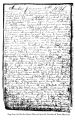
Show TOZIONINPEACE January 1st, 1850-Kanesvillex-I take my pen to record this first day of the present year, and take a retrospective glance of the previous portion of time since my embracing this Latter-day work and being baptized therein, which event took place in Hamilton, C. W. (Canada)2 in the month of July, 1848, while there for the purpose of more fully investigating the subject of Mormonism and deciding thereon. To Mr. Thomas Lewens of that place am I principally indebted for the knowledge of the work, who received his knowledge from Mr. David White, then of Brantford, but essentially aided by John C. Hall who also received his first knowledge from Lewens, but wishing to have his mind decided he journeyed to Philadelphia and there was baptized and on his return baptized Lewens and by him was I baptized. Immediately after I was baptized I conceived the necessity of being where the Church was and at once decided that I would get there as quickly as possible. I tarried in Hamilton a few weeks, not enjoying myself very well in my brother's house in Dundas where I was nominally visiting, I returned to Rochester to the house of Mr. Alvah Strong. 'Kanesville (now Council Bluffs), Iowa, named in honor of the Mormons' friend Thomas L. Kane, was the place where immigrants bound for Salt Lake City, and also California, gathered to form wagon trains for the westward trek. 2 Hamilton, Ontario, Canada, lies northwest of Buffalo, New York, on Lake Ontario. Dundas, mentioned below as the home of Martha's brother, is west of Hamilton. MARTHA SPENCE HEYWOOD Mrs. Strong being aware of my object and its termination in visiting Canada, she was right glad to see me. I acquainted her with my determination of going West as soon as possible. She was very skeptical as to my eventually leaving but promised her individual aid and sympathy should I do so, and as a first step offered a home in her house to save board expenses, and there I stayed, with a few weeks exception when I boarded with a Mrs. Knapp where I had an opportunity of promulgating some principles of Mormonism. But next to Mrs. Strong and family, I felt most interested to present the subject to Mr. and Mrs. J. H. Hayes but almost failed, my feelings and interest for that being very weak, having made my home here for ten years and loving them and their children as though they were my own kindred. Next was Mrs. Hall, sister of Elder Heber C. Kimball and I have hope that she will ere long come into this work, as also all my friends will in due time. I spent a happy winter's season in the society of Mr. and Mrs. Strong and their family doing all that I was capable of to interest Mr. Strong in the work. I formed an acquaintance with three Mormons there, Mr. and Mrs. Sackett and Mr. Freeman Rogus. In the latter part of January, or beginning of February [1849], an Elder C. Dana passed through Rochester on a mission with the lady and with them I made an arrangement to be ready to accompany them on their return and journey in their company as far as St. Louis, looking upon the opportunity as a signal providence of God in my favor.3 During the winter I had many opportunities of contending for the faith once delivered to the Saints, with friends and acquaintances from time to time. On the return of Elder Dana and lady I took my departure from Rochester and from all my friends and acquaintances on the 12th of April, 1849-to the Western World, to a people whom I knew not and who were everywhere spoken evil against but trusting in the God of Israel that knoweth the purity of my intentions and who has ever protected me from all the vicissitudes of my meander-ings during life. I started with a light heart and spirits as buoyant as air. Via Buffalo by railroad and thence to Sandusky by steamboat "Ohio" and thence to Cincinnati by railroad and thence to St. Louis by steamer "Paris" on rivers Ohio and Mississippi and I parted with Mr. and Mrs. Dana, leaving [myself] completely amongst strangers. In that city I stayed eight days waiting for a steamboat bound for 3 Charles R. Dana became a member of the first territorial legislature in 1851 as a councilman representing Weber County. See Edward W. Tullidge History of Salt Lake City (Salt Lake City, 1886), p. 81. 8 TO ZION IN PEACE the Bluffs. I started on the night of the 2nd of May in steamer "Mary" with about 240 Mormons, Capt. Jones' Welsh company being the greater portion, together with several English families.4 Cholera broke out before we got fairly started and nearly all the passengers and boat crew were the subjects of the pestilential influence. We lost 58 by death and the remains were buried on the banks as we came along.5 We arrived at Council Point on the night of the 16th of May, making just 14 days travel. We landed the next day and what an appearance of country presented itself to my view. The first home I entered was [that of] Mr. Sackett (of Rochester) who invited me to his house to stay until I got otherwise provided for, which I accepted but did not remain as I was anxious to get some employment to earn my own living. I spent about two weeks with Elder Benson and enjoyed the society of his lady very much.6 I also spent a few days with Mrs. Joseph Young 7 and while there the chance of a school offered itself which I accepted and in a few days located myself in Springville and found myself presiding over an interesting group of juveniles of all ages and while in the capacity of school teacher I made some interesting acquaintances, especially Brother Houston. The sympathy and hospitality I experienced from them has made an impression not easily effaced. Since the termination of my school I have located myself here in Joseph E. Johnson's family for the purpose of making "Caps" 4 The name of Dan Jones appears in many books on the western migration. Born August 4, 1811, in Flintshire, Wales, he had gained a college education before he came to America. In 1840 he owned a boat on the Mississippi River called The Maid of Iowa. He met Joseph Smith, Jr., and was converted to Mormonism, after which he used his boat for the benefit of the church. Jones was in the Carthage Jail the night before Joseph Smith's martyrdom. The prophet promised Jones that he would live to return to his native iand and be the means of bringing many to Zion. In 1845 Dan Jones returned to Wales where in four years he baptized some two thousand persons and brought many of them to the West. See Andrew Jenson, Latter-day Saint Biographical Encyclopedia, 4 vols. (Salt Lake City: Andrew Jenson History Company, 1901-36), 3:658-60; Joseph Smith, Jr., History of the Church of Jesus Christ of Latter-day Saints, ed Brigham H. Roberts, 7 vols. (Salt Lake City: Deseret News Press, 1902-32), 5:354. 5 The worldwide cholera epidemic of 1840-62 killed millions. 6 Ezra T. Benson had been named as an apostle in 1846. A member of the pioneer company of 1847, Benson left Salt Lake Valley late in 1847 "to preside in Pottawattamie county, Iowa, being associated with President Orson Hyde and George A. Smith." See Jenson, LDS Biographical Encyclopedia, 1:101. 7 This was probably Jane Adeline Bicknell who married Joseph Young in 1834. Jenson, LDS Biographical Encyclopedia, 1:187. MARTHA SPENCE HEYWOOD but was disappointed in not getting materials.8 I had an offer to go over to the Mission School from Mr. McKenna at two dollars a week with good home and would have accepted it but for having previously engaged my services to Mr. Johnson and the result was but little money making, but still I was amply repaid for this disappointment by having an opportunity of becoming well acquainted with Elder Taylor, Lorenzo and Erastus Snow and Franklin Richards going on missions to different nations of the earth and also many other of the brethren, their companions in the work.9 Previous to the brethren's arrival I felt somewhat unhappy in mind as skepticism had crept in and opened the door to cavil at almost anything. July10-Some weeks elapsed after the departure of the brethren before I lost that happy state of feeling, that they in the providence of God helped me to, and during the winter I felt most nervously anxious to go on to the valley in the spring-so much so that I said many times that I would walk there. I had two or three chances presented to me, but they signally failed but when feeling discouraged a hope would spring up in my mind that when Brothers Haywood and Woolley would return from the East,11 that Brother Haywood would make a way for me to go, supposing he felt interested in having me go there for the purpose of making caps and also a faint hope that Mr. White would come along in the spring and make all things right, as also Mr. Lewens who had got as far as St. Louis, having received a letter from him in that place enclosing five dollars sent 8 Joseph Ellis Johnson arrived in Kanesville in 1848 where he campaigned for a U. S. post office, built a home and a general store, and wrote for the Frontier Guardian. Martha may have anticipated selling her caps at Johnson's store. See Rufus David Johnson, J.E.J., Trail to Sundown ([Salt Lake City]: J. E. Johnson Family, 1961), pp. 105-11. 9 At the October 1849 conference in Salt Lake City, John Taylor was called to go to France, Lorenzo Snow to Italy, Erastus Snow to Denmark, and Franklin D. Richards to England. Martha's memory of the men's arrival in Kanesville was probably sharpened by the reception accorded the elders who, according to Taylor, were "saluted with the firing of guns on our arrival, and the greatest manifestations of rejoicing, and parties, musical entertainments, etc. . . ." See Brigham H. Roberts, The Life of John Taylor (Salt Lake City, 1892), pp. 203, 207. " Martha picked up her narrative after a lapse of seven months. She was writing in July 1850 about events of the winter of 1849-50. 11 According to the Frontier Guardian (Kanesville, la.), May 29, 1850, Heywood had been in Washington where he visited President Zachary Taylor who received him cordially. At the conclusion of the interview, Heywood called on the president "to be a father to our people." Taylor reportedly replied, "I will try to do you all the good I can, and as little harm as possible." Taylor, as a major general in the Mexican War, was aware of the support the Mormons had given to that war through the Mormon Battalion. Unfortunately, Taylor died in office on July 9, 1850. 10 TO ZION IN PEACE me in that by Mr. White.12 About the same time I received a remembrance from Mrs. Strong enclosed in a very kind and affectionate letter. But my mind fell into an uncomfortable anxious state partly owing to the conflicting emotion occasioned by my several expectancies giving me an unsettled state of mind and purpose in all my actions. But amidst all this the kindness of Mr. Johnson showed as a bright star over the general opaque of my daily movements. His kindness was that of a beloved brother and [a] more congenial spirit in intellectual taste and refinement I have rarely met with, and my prayers shall be that he may yet be all that is noble and great in the kingdom and have congenial spirits around him. My prospects of going to the Valley grew darker as time wore on. Brother Stevens of Springville gave up the hope of going. Joseph Young failed in the saw-mill [he] operated. I offered my services to a Mrs. Whitesides to do her work on the way, but she had to give up going, but yet other faint hopes raised my spirits at times for it was a hard stint with me to think that I could not go eventually. But time wore on and expectancy grew dimmer. About the middle of I had word from Brother Haywood to prepare for going as he thought it possible he could get me along. This was a very great relief to my mind and lasted till he came up to Kanesville and threw out doubts of my going. About this time Mr. Lewens came along and was so disappointed in his cattle arrangements that he had to dispose of one of his wagons so that it was impossible to think of taking me; nor did I glean anything very satisfactory as to Mr. White excepting that he would certainly start this spring for the West. Well, every chance failed-even Brother Haywood called for the last time to tell me he could not see his way clear enough to say I could go. That call decided me as to my remaining in Kanesville and I determined to locate myself comfortably for the coming year and perhaps for many years, not feeling disposed to make so thorough an exertion again to go to the Valley. I proposed to start me a select school and commenced boarding with Mr. Johnson's mother and went to some labor in preparing to live there, when at the end of another week Brother [Heywood?] called again to tell me I could go. I had my mind so settled as to there being a providence in my not going that I really felt disappointed in his telling me I could go but my own rule of action bound me to as I considered it equally a providence in his asking me to go. 12 This may have been New Yorker Samuel Dennis White, a pioneer of 1850, whom Martha may have met when she was in Rochester. 11 MARTHA SPENCE HEYWOOD At Bethlehem camp " we remained two weeks after I joined the company and on Sunday, June 30th, we crossed the river, having commenced on the Saturday. Monday we did not travel as the cattle had not been got over and there was no crossing that day. Tuesday traveled a mile or two and Wednesday the same. Thursday-Fourth of July-camped all day; washed, cooked and prepared the cattle for a real start on the following day. Friday we took the start, having to leave behind us a splendid ox who became diseased from some cause and could not travel-also a mare belonging to Brother Woolley 14 had a hurt in his leg and could not travel. We traveled twelve miles this day and camped with Brother Hunter's company 1S and made a corral of about 70 wagons, a new and pretty sight to me. Saturday we halted the forenoon during which time Elder Hyde and Brother Johnson overtook us but to our great surprise and disappointment did not take Brother Haywood with them as had been agreed up in Kanesville.16 We have travelled nicely day after day up to this Wednesday-July 10th. This morning the first sound that met our ears was the cry that the cattle were all gone. The mesquitoes were very bad indeed " The travelers were still in Iowa, not having crossed the Missouri into Nebraska. " Edwin Dilworth Woolley was sent east with Edward Hunter in 1849 to aid the emigration and to buy goods for the church. Later, Woolley succeeded Hunter as bishop of the Thirteenth Ward in Salt Lake City. See Jenson, LDS Biographical Encyclopedia, 1:632-33. 15 Edward Hunter was sent by the First Presidency to the Missouri River in the fall of 1849 to supervise the emigration of the Saints. He took $5,000 to "set in motion the vast emigrating enterprise" [Perpetual Emigration Fund]. His was the last company to reach Salt Lake City in 1850. Later, Hunter became presiding bishop of the LDS church. Hunter's company was organized at Council Bluffs, Iowa, on July 4, 1850. It consisted of 261 emigrants. Joseph L. Heywood was named counselor to Hunter and Edwin D. Woolley captain. There were also seven captains of ten. In addition to persons and livestock, this company carried 4,877 pounds of freight from England to Salt Lake. See Jenson, LDS Biographical Encyclopedia, 1:227-32, and William E. Hunter, Edward Hunter: Faithful Steward (Salt Lake City: Mrs. W. E. Hunter, 1970), pp. 108-27. 10 Orson Hyde, apostle and editor of the Frontier Guardian, set out on his first visit to Salt Lake Valley in July 1850. He was accompanied by Joseph E. Johnson, Kanesville merchant and friend of Martha Spence Heywood; Henry W. Miller, the first settler of Kanesville (earlier called Miller's Hollow), and Joseph Kelley. Evidently Joseph L. Heywood had planned to join the four men and make the trip to Salt Lake Valley with them. The four made good time crossing the plains and passed several companies, arriving in Salt Lake in mid-August. Johnson left the valley for Kanesville on September 30, 1850. The return company included Hyde, Miller, and Kelley, plus Capt. John Brown. They were greeted on their return by the citizens of Kanesville with cannon fire, banners, etc., in December 1850. Almost immediately after his return to Kanesville Johnson entered into polygamy, marrying Hannah Maria Goddard. Family members speculate that his hurried trip to Salt Lake was motivated by his desire to get approval for this plural marriage. See Johnson, Trail to Sundown, pp. 112-48. 12 TO ZION IN PEACE which, no doubt, occasioned the cattle to stray, as also brother Haywood's horse. The cattle were found but not the horse. Brother Haywood had spent all day trying to find him but in all probability he has been stolen. I have just had the melancholy intelligence that amongst the many who have died of cholera, Sister Margaret MacDougal and Sister Dana are reckoned among its victims. In those falling a victim I see the pestilence nearer to me than before and the question comes up in my mind, Who am I? that I may not be called upon. But Oh!, may my Heavenly Father avert the blow and spare my life a little longer. My desire is to live and glorify His name in doing the work he assigns me. July 26th-Started this morning from Fort Kearny 17 after a stay of two days during which time we made some changes in our affairs for the better by lightening the wagons and dispensing with one, hereby strengthening some of the other teams and also procuring two additional yokes. Had a sale of crockery ware which seemed a pity as it was brought all the ways from Boston expressly for the benefit of those in the valley who had long been deprived of its convenience. And now we have a prospect of traveling more advantageously and although our traveling heretofore has been safe, comfortable and exempt from death or even sickness of any consequence. We had lost one yoke of cattle by getting into a hole with their yoke on and one or two others by giving out. Col. Reese18 and his train overtook us about one week from this date, bringing with them Brother Woolley's horse and news of Brother Haywood. It was seen, but would not be given, with a man in the United States Service, excusing himself from doing so by saying that he had orders to fetch him to Kanesville. We are daily seeing the mementos of the ravages of cholera. Sometimes three graves side by side. Another familiar name-Brother Sargeant of Kanesville -affected and aware of the severe and protracted sickness he passed through last summer and this spring previous to my leaving and at "Fort Kearny was established in 1846 on the site of present Nebraska City. In 1848 it was relocated on the south bank of the Platte, some six miles southeast of present-day Kearney. 18 The Reese brothers, John and Enoch, worked together closely in freighting and merchandising. In June 1851 the Reese brothers bought out the owner of a trading post in Carson Valley, Nevada. Later, John was excommunicated for refusing to accept the counsel of Apostle Orson Hyde over the matter of trying to collect bad debts from his non-Mormon customers. See Eugene E. Campbell "Brigham Young's Outer Cordon-A Reappraisal," Utah Historical Quarterly 41 (1973): 236-39. 13 MARTHA SPENCE HEYWOOD a time when my prospect for this journey looked rather gloomy he was all life and animation in getting his outfit and providing presents for his daughters in the Valley. It will be a heavy blow to his daughters in Kanesville. Oh, what reason we have to be thankful that we as a company have escaped this scourge, with one exception-Brother Felt's19 teamster had diarrhea for three days without applying for help and when he was helped it proved unavailing. A child of Brother Barney's,20 12 years old, hearing of this man's death took fright and was instantly seized with the cholera. This was at night; and during the night she was very bad and when I heard of it (tho poorly at the time) I felt so keenly that I went at once to render my assistance (if accepted) which was very cheerfully and though the symptoms were dangerous in that stage of the disease, I used the knowledge I gained on my trip from St. Louis to Kanesville and in due time brought about the favorable ones and she recovered rapidly. The prolongation of our noon halt, (occasioned by the breaking of an axletree in the other ten of our division and we wait for them) has given me a chance to take some minutes of our journey up to this time. I have enjoyed myself well on the trip tho my health is poor and feel unequal to do my share of the work, but my mind is singularly easy on such things. I know that I acted to the best of my judgment in undertaking this journey and its consequent obligations. Knowing that my accommodations are as good as they possibly could be, I am content and often think of what Elder Taylor told me last winter in a blessing-"That I should go up to Zion in peace." 10 This may have been Nathaniel Henry Felt who was in Edward Hunter's company. See Kate B. Carter, comp., Heart Throbs of the West 12 vols (Salt Lake City: Daughters of Utah Pioneers, 1939-51), 11:413. 20 Royal Barney is listed as a member of Hunter's company in ibid., 11:398. 14 |