| OCR Text |
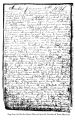
Show INTRODUCTION In the spring of 1933 the depression was at its deepest in southern Utah. For widows with young children and older people who were living alone the outlook was bleak. In St. George the LDS church began some "help each other" programs. Then the federal government's ERA (Emergency Relief Administration) plans were put into action by which people might earn as much as thirty dollars a month-a dollar a day-working on various projects. Among the most significant of the ERA projects was one in which history was collected, written, and filed. Pioneer diaries and journals were copied and indexed; items from family histories and clippings from old newspapers were collected and preserved in suitable large books; the elderly were encouraged to tell their stories to women who would take them down in shorthand and transcribe them. Because I was then stake president of the LDS Relief Society and had done a little writing myself, I was put in charge of the project. At its peak some forty persons were involved in the collection of history. One of the earliest acquisitions under this ERA program came through my friend Fay Ollerton who was gathering stories from ladies who had lived in polygamy. At Panguitch she received a box containing letters and a journal of Martha Spence for the years 1850 to 1856. Reading her journal was one of the most rewarding experiences of my life. Here was something special, something different. INTRODUCTION In the intervening years, typescript copies of the journal at the Utah State Historical Society and other libraries were read by hundreds of students of Utah history, and it gained a reputation as one of the great pioneer Mormon diaries. Many plans were made for its publication, but questions arose concerning the location of the original. Not until the summer of 1975, after attending a Heywood family reunion, was I able to determine its whereabouts. Martha's journal is presently in the possession of Yates Heywood of Holbrook, Arizona, who has given his kind permission for its publication. The typescript transcription has been used in preparing the book, and except for correcting obvious typographical errors (mostly transpositions), the printed journal reflects Martha's sometimes errant spellings and other peculiarities of her style. From her first day on the road to Zion, Martha wrote vividly of many things: of the sick young man she had to tend in the back of the wagon, the teamster's language, the general nature of the terrain, and her joy when her friend Joseph E. Johnson spent more than an hour with her, and much more. Sometimes she worked back in time, sometimes her references are not quite clear. But for the most part it is a straightforward recording of the journey and her own reaction to the circumstances and the people around her. Better still are Martha's accounts of living in Salt Lake City where she helped organize literary clubs, presented parts of Hamlet, called on the wives of the elite, attended church meetings and dances, and became the third wife of Joseph L. Heywood. Almost immediately her husband was called to settle Salt Creek. She went with him to the new town of Nephi on Salt Creek where she and the two children to be born of her marriage would live in a wagon box set off the running gears. Heywood's many duties separated him from Martha and their children for months at a time. The excitement of an official visit by Brigham Young or an occasional trip to Salt Lake City helped to ease her loneliness. Martha's pen recorded many of the major events of the first decade of Utah settlement: the creation of Utah Territory and the naming of the first officials, including her husband as United States marshal; the colonization of many far-flung towns and the opening of Mormon missions in distant India and elsewhere; the public announcement of celestial marriage; the Walker War and the Gunnison Massacre; the building of the Old Tabernacle and the Beehive House and Lion House; and the threat of famine that sent settlers searching from town to town for grain. INTRODUCTION More important perhaps than the recounting of well-known events are Martha's insights into Utah society. A candid diarist, she wrote of dissension in the ranks at Nephi (partly over her husband's leadership) and the loneliness of plural marriage with the same frankness she used to affirm her religious faith. Births, deaths, privation, uncertainty, joy, and hope filled her diary as they filled the lives of all the early settlers. Her story is different and memorable because she chose to tell it as fully and as honestly as her obvious intelligence allowed. Martha included most of the important facts of her own life in the journal, and they need not be repeated here. Rather, for a proper perspective, it is necessary to introduce the leading male character, Joseph Leland Heywood. A son of Benjamin Heywood and Hannah Rawson, he was born August 1, 1815, in Grafton, Massachusetts. In his early years Joseph worked on his father's farm, but he soon decided that he preferred merchandising to farm work. At the age of twenty-four he went into partnership with a brother-in-law, Oliver Kimball, managing a store in Quincy, Illinois. As a part of his work, Joseph traveled by boat on the Mississippi River. On one trip Miss Sarepta Marie Blodgett boarded the boat, and she was so beautiful that Joseph began courting her at once. Family lore says that his written proposal of marriage was a literary gem worthy of publication. The young couple married on June 25, 1841, when he was twenty-six years of age and she not quite twenty. At the time of his marriage Heywood knew nothing of Mor-monism, but in the fall of 1842 he visited Nauvoo and listened to the Prophet Joseph Smith preach. He was quickly converted and asked for baptism, although the stream was frozen along the bank. Orson Hyde performed the ceremony, while the prophet himself helped to cut the ice. Orson Hyde also confirmed him, assisted by the prophet and Jedediah M. Grant. A few years later Heywood managed the prophet's store in Nauvoo. Through all the troubles he remained active in defense of the church and its leaders. When the exodus from Nauvoo began, Joseph Heywood was asked to remain with Almon W. Babbitt and John S. Fullmer to dispose of church property. It was a tense and perilous time during which several persons were killed and others wounded when the Mormons contended with angry mobs. The church agents managed the best they could, selling some properties and trading some for wagons and teams, grain, other supplies, oxen, and horned stock. They completed their work just in time to join the last train of the 1848 emigration from Winter Quarters. INTRODUCTION The strain of this period was very hard on Joseph's young wife Sarepta, a delicate beauty who found frontier life difficult. A son was born who died almost immediately, and the 1850 Census listed one daughter, Alice, age three, at the Heywood home in Salt Lake City just north of the temple block. This remained the Heywood homestead until the death of Sarepta. In the spring of 1849 Heywood was appointed the first postmaster of Salt Lake City and soon after was set apart as bishop of the Seventeenth Ward, which position he would hold for six years. Since merchandismg was Heywood's business, he was sent with Edwin D. Woolley on a purchasing mission for the church to bring out some furniture, carpets, draperies, and other items needed to set up some homes and public buildings. He left Salt Lake City in the fall of 1849 and was not able to return until the fall of 1850 when he agreed to bring Martha Spence to Zion. Martha's last journal entry was dated August 29, 1856. One can guess that her activities would continue much the same through the next few years: attending meetings, writing verses or essays to be read upon occasion, and making hats. Among the advertisements in the Deseret News during summer 1856 were the wares of harness makers, shoemakers, weavers, and tinsmiths, and assorted goods offered for sale, not for cash but for trade. Included was the Heywood advertisement: HAT MANUFACTORY The subscriber has established the above business on his premises in the 17th Ward, one block north of Temple Block, G.S.L. City, where he is prepared to execute orders for such qualities and styles as may be desired. WANTED in exchange for HATS-Otter, Beaver, Wolf, Musket, Fox, and Mink Pelts. ALSO-Firewood, Butter, Eggs, Pork, Lard, Wheat, Lumber, Etc. J. L. H. Martha's skill at making hats and her teaching of it to others were being put to good use for the family. When church authorities decided to plant settlements in the southern part of the territory for the purpose of raising cotton, ten INTRODUCTION families were called in early March 1857, and in April twenty-eight more were called to follow them. Although the mission was to raise cotton, they also had to raise enough wheat and vegetables to sustain themselves. Basic to all was water. This meant that at every spring of water a family or two would settle, plant gardens and small orchards, keep a few cows, pigs, and chickens, and manage to survive. Early in 1861, 303 families were called to establish the city of St. George some five miles south of Washington, between the two red ridges through which the Santa Clara and the Virgin River ran. The families were selected to represent various trades and skills. Even a music leader was included, as were carpenters, bricklayers, tinsmiths, and cabinetmakers. Joseph L. Heywood's name was in its alphabetic place, listed as a hatter from the Seventeenth Ward. Not all of the 303 whose names were called arrived at the campground at St. George. A few had stopped at one or another of the villages through which they had passed. Heywood stopped at Washington where several good adobe homes lay vacant. A. Karl Larson described the one taken over by Heywood as located "on the northwest corner of the Antone Neilson block on Highway 91." Martha would really appreciate this home: its sturdy, thick adobe walls, solid lumber floor, and shingle roof meant that it would be warm in winter and cool in summer-quite different from the wagon box she had occupied for so many years. The living room with the large stone fireplace and its two glass windows were luxuries indeed. Martha had moved in and was ready to start a school before the new year. Her terms were high: three dollars a month, but this could be paid in produce of any kind. Some children hauled or carried fertilizer from their home corrals to spread on her garden; others helped to pull weeds or hoe on Saturdays; no child was denied attendance who really wanted to learn. Her skill as a teacher has become folklore in Dixie. Martha was pleased that the Johnson family had come south also. Joseph E. had holdings at the Middleton Spring, halfway between St. George and Washington. Here Johnson experimented with plants and herbs. A gift from him of a beautiful pink oleander in a bucket became one of Martha's prized possessions. Martha died on February 5, 1873. Her son, Neal, then twenty-two years of age, was still unmarried. Three years later he would marry a daughter of Prime T. Coleman, a long-time resident of Pinto. What of Joseph Heywood and the other wives? Before the first move south, his fourth wife, Mary Bell, had two children, a son and INTRODUCTION Joseph Leland Heywood. Martha Spence Heywood and her children, Sarepta Marie and Joseph Neal. a daughter, in addition to the Indian boy she had adopted earlier. This would have crowded the Salt Lake City home; so Heywood lost no time in moving Mary Bell to New Harmony. There, family genealogical records show, she had five additional children: a set of twins and three single births. Of these only two survived to maturity. During the time Heywood lived in New Harmony, John D. Lee mentioned him several times as speaking at a funeral, reading the Declaration of Independence at a Fourth of July celebration, and serving on a committee for the Washington County Fair. In 1872 he moved his family to Panguitch where he lived out his life to age ninety-five. He died October 16, 1910. Mary Bell outlived him five years until September 5, 1915. In the meantime, Sarepta and Sister Vary (Sarah Symonds) had remained in the home at 45 West 200 North where Sarah died on February 6, 1881. Sarepta followed her on December 4, 1881. Although each group has its own history and memories, the one permanent account is that of Martha Spence. This window into the past grows in value with the passing years. JB |