| OCR Text |
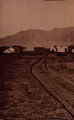
Show ^r^flf-jW^GPa The Liberal Party Cullom Antipolygamy Bill A significant objective of the Corinne lobby in Washington was to aid in the passage of federal legislation that would stamp out forever the doctrine and practice of polygamy and would at the same time deprive the Mormon people of judicial control in Utah Territory. The Congress had enacted in 1862 the Anti-Bigamy Act which prohibited polygamy, annulled a territorial act incorporating the Mormon church, and forbade the church from owning real estate worth more than $50,000.1 Many outside of Utah looked upon the law as unconstitutional, but it became a dead issue anyway because Mormon juries would not indict against their strongly held religious belief.2 Two other pieces of legislation, the Wade and Cragin bills, had been proposed to remedy the deficiencies of the 1862 act, but the first failed to pass while the second was withdrawn in favor of a measure presented by Rep. Shelby M. Cullom of Illinois in 1869-70. The Cullom bill made jury selection the responsibility of the United States marshal and the United States attorney; federal judges were to have sole jurisdiction over polygamy cases; plural wives could be called to testify against their husbands; cohabitation was declared a misdemeanor; the property of Mormons imprisoned or leaving the territory on account of the law was to be used under Gentile authority for the support of Mormon families; and the president was empowered to raise 25,000 93 militiamen in Utah and send the United States Army into the territory to enforce the law.3 The Idaho Statesman thought that Corinne was the only place in Utah where it might be "barely possible" to get a jury to do its duty. Corinnethians were quite pleased with the introduction of the Cullom bill, and the Reporter faithfully printed all available news and correspondence concerning its progress through Congress, at one time facetiously remarking that the legislation was being given prominence in the newspaper's columns for the edification of all Mormons.4 Letters from chief lobbyist J. H. Beadle were, of course, of special interest as he reported his strategy meetings with Utah Gov. J. Wilson Shaffer, the congressional delegation from his home state of Indiana, Vice-president Schuyler Colfax, and various senators and representatives to round up support for the bill. Beadle was told by Shaffer that President Ulysses S. Grant had promised "to fully sustain him; but thought it would take ten thousand men." ' Beadle was one of four leading Gentiles from Utah asked to testify by the House committee considering the Cullom bill, and later he also appeared before a Senate committee. In the two-hour question-and- answer session with the House group, he recited the specific reasons for Gentile support of the Cullom proposal: The bill limited the power of the Mormon-controlled probate courts, provided for a secret ballot to protect non-Mormon voters at the polls, and gave additional powers to the United States marshal. He asserted that most residents of the territory were hostile to the federal government because, first, a large proportion of them were newly arrived immigrants from European countries with little understanding of American democracy, and, second, the Mormon leaders engaged in constant denunciation of the United States government. Further, he doubted that the introduction of American institutions and contacts with the rest of the world via the new Pacific railroad would destroy polygamy. Stronger measures, such as those in the Cullom bill, were necessary. Beadle testified that the Mormon people were openly defying the law of 1862. He expected that with passage of the Cullom bill dedicated polygamists would move to either Arizona or Sonora in northern Mexico. As for any threatened military action on the part of the Mormons, "Give me two regiments, the Fourteenth and Thirty-first Indiana," he declared, "and I will take the contract to whip all the men Brigham Young can 94 Corinne bring into the field." ° The Reporter reflected Corinne's pride in Beadle's activities in support of the pending legislation and thought that its final passage would be due in great part to his appearance in Washington. When the House passed the Cullom bill, as predicted by Beadle, the citizens of Corinne held a mass meeting that adopted resolutions cheering the Gentile success and denouncing polygamy as a barbarous crime against law and morality.7 The New York Tribune's correspondent in Salt Lake City reported, "The Gentiles of Corinne, who fight the Mormons at arm's length, held a public meeting there, denounced their moderate brethren in this city and thanked the House in strong terms for the bill . . . ; undoubtedly thus expressing the feelings of nine-tenths of the Gentiles of Utah." s The excitement in Utah engendered by the congressional debate over the proposed anti-Mormon legislation aroused fear in the people of Corinne that their Mormon neighbors would take forceful action against the Burg on the Bear. In January 1870, therefore, a committee was assigned to meet with the acting governor and ask for arms to protect the town from the Brigham City Saints. If the chief executive could not help them, the committee members intended to apply to the commander of Camp Douglas in Salt Lake City. Meanwhile, the citizens at home were threatening to blow up the bridges across Bear River if refused weapons with which to defend themselves. When Governor Shaffer visited Corinne in April, Mayor W. H. Munro complained to him of the lack of arms and ammunition but had already taken action to call out the minutemen of the town for military drills. The Reporter emphasized the possibility of a Mormon attack by announcing on April 21 that the Saints of Cache and Bear River valleys were buying all the guns and ammunition they could get from merchants in Corinne, including 16,000 cartridges in one week. "What does this mean?" inquired the editor and then announced that the Corinne regiment could stand off all the Mormons of northern Utah if the town could only be supplied with the proper arms.9 The Mormon press and most eastern journals discounted the Corinne fears as only wild talk, although the New York Tribune admitted that the Mormons looked upon the Gentile town of Corinne as the "very stench from the bottomless pit." 10 The occasional Mormon magazine of humor, the Keepapitchinin, devoted to "Cents, The Liberal Party 95 Scents, Sense and Nonsense," ridiculed the warlike preparations at Corinne and the government's supposed threat to send "40,000 trupes what goin tu Utah tu keep people from marying their grandmother. . . ." It asked why the nation's leaders did not send this small army to "Washington, New York, Shekargo, Bosting and Sensenatty" to "stop prostertution." " Mormon citizens vigorously protested the Cullom bill by holding mass meetings in the various settlements and, particularly, by calling "female indignation meetings" during which Mormon women were asked by their own leaders to sign petitions remonstrating against the proposed federal legislation. The Corinne newspaper was especially wrathy with these quaint affairs and noted that "those selected to indignate were mostly of the ancient order, who had little or nothing to do and nothing to live for." The editor was sure that polygamy had very little to offer a girl of seventeen whose secret desire was for a Gentile lover to rescue her from a living death.12 Brigham Young, on the other hand, was especially pleased that "our sisters are in high dudgeon" over the bill and thought that possibly there might be a test case to rid the territory of some of the obnoxious federal officials if the government would only give anti-Mormon Robert N. Baskin "some lick-spittle office here." The prophet was of the opinion that then "our sisters would be very apt to shew him his walking-papers in the shape of a forest of broom-sticks." 13 By late spring, as the Senate plodded through a discussion of the merits of the Cullom bill, Corinne's apprehensions concerning an armed conflict seemed to dissipate as lobbyist Beadle kept sending back encouraging reports about anticipated approval by the upper house. The Reporter frankly admitted that Mormonism did not concern the Gentiles as a religion but as the dominant political and governing power in Utah.11 However, most eastern newspapers opposed the punitive spirit of the legislation and argued that a free ballot, the disruptions of dissident Mormons, and the transcontinental railroad would solve the Mormon problem.15 This point of view finally won out in the Senate which refused to endorse House passage of the bill. The reference to schisms, above, concerned the Godbeite movement that had been disturbing the Mormon leadership for well over a year. The polygamous but anti-Brigham Young Godbeites had split with out-and-out Gentiles in Salt Lake City over the strong measures against polygamy written into the anti-Mormon legislation.16 96 Corinne The Godbeite Schism The Godbeites, so named after their titular leader, William S. Godbe, were British converts to the Mormon church who had been won over by a religion of great spiritual strength. But, at the same time, they had experienced difficulty in accepting corporate Mormonism and the prophet's attempts to direct their secular lives. In addition to Godbe, the membership of the New Movement, as it was also called, included the intellectually talented E. L. T. Harrison, Eli B. Kelsey, William H. Shearman, and Edward W. Tullidge. In the October 1869 issue of their publication, the Utah Magazine, Harrison contended that Utah could not compete with more favored areas in agriculture, stock raising, or manufacturing and that only mining could give the territory a specialty that could create a cash market instead of the primitive trade arrangement then in command. The exploitation of minerals would, of course, introduce outside capital and prying Gentiles into the closed society of Mormondom and would endanger the control of merchandising that the prophet's cooperative system sought to establish. Brigham Young had already expressed his sentiments rather bluntly to Samuel Woolley about trafficking with former Mormon church members like the Walker brothers, owners of a Salt Lake merchant house: "He did not approve of it but said, God, Jesus Christ, Holy Angels, all good men & the Devils in hell all hated Panoramic view of the new town of Corinne. Andrew ]. Russell photograph, courtesy of the Oakland Museum. The Liberal Party 97 apostates & that their place would be a lower apartment in hell etc & that all saints should sustain the Kingdom of God on Earth & not trade with apostates & wicked men." This warning and others like it were clear, but the Godbeite leaders persisted until they were called to account in October 1869 before the appropriate high council. An additional charge against the errant Mormons was their overt espousal of spiritualism and belief in spiritual mediums. The final verdict of the church council was excommunication, whereupon the apostates organized their own Church of Zion and set about winning converts from the parent group.17 Faithful Mormon William Clayton, who was also secretary of Zions Cooperative Mercantile Institution (ZCMI) in Salt Lake City, reported to friends privately the disastrous turn of events as the schism developed. He thought that T. B. H. Stenhouse, a particularly articulate editor, was "all but gone," being led by a wife bitter towards polygamy.18 William Jennings, a merchant, would fall any minute because, according to Clayton, he considered greenbacks more valuable than any interest in the kingdom of God. And he reported that in two Salt Lake wards alone, the thirteenth and fourteenth, there were two hundred fifty apostates. Clayton was happy to have Brigham Young home from a trip to the south and expected that the prophet would "stir up the apostates with a sharp stick" and so bring the disease to the surface. Clayton thought the Lord was applying a "sifting machine" to prepare the pure in heart for Zion's redemption." The non-Mormon press rejoiced over Brigham's troubles with the outspoken Godbeites and their freewheeling Utah Magazine and advised the prophet to move to Turkey where he could live in "peace and plenty (of wives), untrammelled by the barbarous usages of schism or Congress." However, the Corinnethians and other Gentiles in Utah were troubled by the refusal of some of the Godbeite leaders to give up their polygamous wives and to denounce, once and for all, the abhorrent practice.2" The Utah Reporter was dismayed to find that the Church of Zion was just another Mormon church except for the autocratic control of the prophet and concluded that the Godbeite movement was no more than "Brigham Mormonism with spiritualism added to it." 21 The Keepapitchinin provided mild amusement by suggesting that it would devote a regular column to articles written by Daniel Webster, Henry Clay, and other famous spirits who might help 98 Corinne support the spiritualism of the new church.22 But to the people of Corinne who had expected great help from the Godbeites, their continued acceptance of polygamy threatened the new anti-Mormon political alliance that hoped to aid in the destruction of the Utah theocracy. Woman Suffrage in Utah Prior to the coming of the railroad and the influx of a larger Gentile population, the Saints had seen no need for political parties, depending upon the church structure to provide the means for nominating candidates for political office. As early as April 1869 J. H. Beadle had attacked the Mormon system of control over elections, pointing out that the local bishops supervised and controlled how and for whom the people voted. He suggested that one man in each settlement could just as well do all the voting.23 Later, the Reporter continued the polemic by denouncing how these little despots named their candidates, which was equivalent to election, and hoping that such farcical affairs by "this fanatic hoard [sic] of barbarians" would soon be ended.24 Wholly as bad in Gentile eyes was the territorial law, enacted in January 1853, directing that a voter's name and the number of his vote be entered in the election record, a practice Beadle said allowed the agents of Brigham Young to ascertain how any man had voted for fifteen years past.21 William H. Shearman, dissident Mormon, was more specific: "Precautions are taken so it is known how every man votes, & if any vote for other candidates they are spotted as 'on the road to apostasy.' They must change their course or a series of petty persecutions ensue which ultimately drive them from the church "2" Abolishment of this provision and the adoption of a secret ballot came to be a prime objective of the non-Mormon political leaders of Utah. The founders of Corinne were determined to contest for political control with their Mormon neighbors in Box Elder County as a means of getting a foothold for a more general assault upon the entire Mormon hierarchy. In August 1869, therefore, they nominated Dennis J. Toohy for representative and J. H. Beadle for a seat on the council of the territorial assembly. The county clerk announced election totals of 546 votes for Toohy and 622 for Beadle. These results were imme- The Liberal Party 99 diately challenged by the Reporter which said of Toohy's contest that despite a vote of nearly 800, the Mormons had contrived to elect his opponent by allowing unnaturalized foreigners and even boys to cast ballots. The editor asked the governor to investigate the fraud, but he was, nevertheless, pleased that the two Gentile candidates had received approximately 40 percent of the votes cast for the two positions in Box Elder County.27 On October 11, 1869, the Corinnethians took the next step in entering territorial politics by nominating Dr. Oscar D. Cass for delegate to Congress from Utah. Judge C. M. Hawley, one of the territorial justices, showed his friendliness to the Gentile cause of Corinne by appearing at the mass meeting and giving the principal address. A correspondent from Salt Lake City wrote of his pleasure at the "honest audacity of Corinne" in starting such a significant movement approved by all law-abiding citizens threatened by the maelstrom of Mormon insubordination. Further, the writer invited candidate Cass to visit the capital city and expressed hope that the recently excommunicated Godbeites would join politically with the Gentiles of Salt Lake City and Corinne to help "roll away the stone of a monstrous barbarism." 2S With a political movement underway, Utah Gentiles were shocked by the action of the Mormon-dominated territorial legislature in passing a woman suffrage bill in February 1870, thereby doubling the number of voters who could support the Mormon church position. 29 Brigham Young and his associates were confident that the sisters would accept the traditional male leadership and follow their husband's dictation in voting for church candidates.30 In addition to providing a political force in reserve, the new legislation might also discourage further antipolygamy legislation in Congress because the nation's political representatives would be shorn of their notions about the reported slavery of Utah women.31 Under the act even the wives and daughters of recently naturalized citizens could vote, although their husbands and fathers might not be able to meet the suffrage requirements. As one critic of LUah's procedure wrote, ". . . girls under age, and alien women with the odor of the emigrant ship still upon their clothes . . . cast their votes as they are instructed to, in some tongue unknown to ordinary Americans, and go away dazed." Although naturalized male citizens must have lived five years in the 100 Corinne country, the wives, daughters, or widows of naturalized citizens had to have resided in Utah for only six months prior to an election.32 The indignation meetings mentioned earlier were sufficient evidence to most observers that Mormon women would sustain polygamy. That assumption led to predictable and vitriolic attacks by the Utah Reporter against the law and especially against S. A. Mann, acting governor of the territory. The editor accused the chief executive of placing "upon the same plane of equality the noble Christian women of our Territory, and the degraded creatures whose lives are willingly devoted to the most hideous immorality." After apologizing for having to make this odious comparison, the newspaperman then felt sorry for Utah women "who are here the serfs of a lecherous hierarchy." But gathering courage to face this assault upon the sacred preserve of male dominance of the ballot box, by May 1870 he was able to discourse with greater equanimity on the subject, "End of Female Suffrage." He proved to his own satisfaction that the early advocates of the privilege, who "were few and ugly," had failed in their national objective to win the right to vote.33 The first opportunity Utah women had to exercise the voting privilege came in the Salt Lake City municipal election of February 14, 1870. The Gentiles of the city combined with the Godbeites to organize a political party, the Independent ticket, that forced their Mormon opponents to establish the People's party. Many in the nation were delighted that, for the first time in Utah, there would be a real political contest. The Sacramento Union remarked that the change would be as refreshing as the experience of the Kentuckian who, after emerging from a free fight, noted that he had lost only an eye, the tip of his nose, an ear, and part of his scalp.34 The new Independent party made the mistake of advertising their organizational meeting, to be held in the Walker brothers' old store, with the words, "Come One, Come All." This proved at once an open invitation to Mormon leaders to pack the hall, take over the meeting, and ratify their own slate of People's party candidates. The disgruntled Independent party adherents were forced to hold another meeting, and the Utah Reporter attacked the Brighamites for their usurpation and their election success in polling 2,000 votes to only 300 for the Independents. A few women did cast ballots, the first one to do so being Miss Seraph Young, a granddaughter of Brigham.35 The Keepapitchinin was so The Liberal Party 101 amused by the whole spectacle that it published a four-stanza take-off on the "Charge of the Light Brigade." The first verse read: Half a block, half a block, Half a block crowded, All in an awful sweat Onward they blunder'd. Earnest to vote all tried, "Early and often," cried; Into the polls they dived, Noble three hundred.38 Founding the Liberal Party The political action now shifted to Corinne where Dennis Toohy took the lead on May 31, 1870, by issuing an invitation for all Gentiles to meet in convention on July 4 for the purpose of nominating a candidate to run for the office of territorial delegate. Toohy declared that Corinne was the appropriate setting for such a meeting of loyal citizens. He outlined the program of events for the day which would be topped off by a fat man's race. To complete the Corinne arrangements, the editor, on June 17, announced J. H. Beadle as the Gentile nominee for delegate to Congress.37 Despite enthusiastic efforts to drum up support from Salt Lake City and elsewhere, the July 4 meeting turned out to be a Corinne affair. The theme was predominantly anti-Mormon and especially opposed to any compromise on the question of polygamy. Estimating that there were approximately 3,500 Gentiles in Utah, with 1,000 at Corinne, 600 scattered along the Pacific railroad at smaller stations, and 500 in Salt Lake City, Toohy editorialized that there were probably only 1,500 legal voters on the Mormon side. He based his estimate on the 15,068 votes cast for William H. Hooper in the previous delegate contest and listed as illegal Mormon voters those under age, proxy voters, illegally naturalized Mormons, those disqualified by the Anti-Bigamy Act of 1862, all double voters, and those casting false ballots. He reasoned that the Gentiles, with the help of the Godbeites, might have a chance to overturn Mormon control if all illegal voters were barred from the polls.3S Although hoping for Godbeite support because the apostates were willing to allow others an honest difference of opinion and because 102 Corinne they did not aim at despotism as did the Brighamites,39 the Corinnethians destroyed a possible opportunity for a united front by attacking Godbe and Harrison as former Saints who insisted on retaining the practice of polygamy. Toohy declared that all polygamists were traitors to the nation, a condemnation that certainly included those Godbeite leaders still practicing the doctrine of the plurality of wives. The July 4 convention at Corinne was contemptuously dismissed by the Salt Lake Herald which wrote that the proceedings "broke up in a general row." The Reporter later substantiated the report of the Herald by bitterly attacking the Salt Lake City delegation to the July 4 meeting for trying to take over the meeting that then ended in a "drama of disintegration." "° The Salt Lake City Gentiles, on June 24, 1870, had already called for a second convention to be held on July 16 at Corinne, a move Toohy and other Corinnethians denounced as unauthorized because the two leaders of the capital city faction, J. M. Orr and S. Kahn, had no political authority in Utah. Toohy also disputed the allocation of delegates from the various counties.41 It seems clear that because of the growing split in Gentile ranks, the Salt Lake sponsors decided to hold the second convention at Corinne in an attempt to heal the breach between the two groups. Later, the people of Corinne were further mollified by being granted fifteen votes instead of the ten allotted them in the original call.42 It is possible that the adoption of the name, the Liberal party, was also a move to placate the northern Gentiles. Beadle had referred to a possible "liberal party here" as early as April 1869 while Toohy nearly always spoke of the Gentile political movement as a "liberality" or a "Liberal" convention.43 The platform adopted by the meeting included a strong denunciation of polygamy as well as the expected condemnation of a theocratic union of church and state, a statement of reverence for the Constitution, and an appeal for the development of the mineral resources of the territory. Gen. Patrick E. Connor, elected temporary chairman, nominated Gen. George R. Maxwell, register of the Utah land office, as the nominee for delegate to Congress.44 The convention failed to bring together the northern and southern wings of the new Liberal party because the antipolygamy plank drove the Godbeites away, and the selection of Maxwell displeased the Corinnethians. The following day the Reporter solidified the split by The Liberal Party 103 announcing that two conventions had been held: the radical Gentile convention, devoted to the abolition of polygamy, no compromise with either Mormonism or its apostates, and support of Beadle for delegate; and the liberal or compromise convention that had chosen Maxwell. The Reporter was careful to praise the general as the " 'bravest of the brave,' as his shattered person bears ample proof" and reserved its censure for the Salt Lake rivals who were contesting control of the party. Beadle was out of the territory and unable to react to the embarrassing situation of being one of two candidates for delegate nominated by the same party. In addition to the rivalry between Corinne and Salt Lake City and the division over the polygamy issue, there was also the difficulty of fusing long-time Democrats and Republicans into a workable team under the aegis of an entirely new political organization. E. L. T. Harrison used the new Salt Lake Tribune to explain why the Godbeites were opposed to the platform adopted when he wrote that "rushing to Congress to tear down a falling house" was the wrong tactic. He thought the Mormon theocracy would eventually disintegrate as a result of its own weaknesses.45 The Godbeite polygamists were caught between loyalty to their families and the desire to break Brigham Young's economic and political hold over their lives. During the month of July the leaders of Corinne busily engaged in politicking. First, a Liberal county convention was called for July 20 at which the general platform of the Liberal party was reaffirmed and a slate of candidates chosen to run for county and territorial offices, including Toohy for representative. The Reporter was pleased with the work of the meeting, calling it one of the most distinguished conventions ever held in Utah. Second, as the result of calls that Beadle withdraw in favor of Maxwell as the nominee for delegate and because Beadle had insisted that he would be the candidate of a united party only, he withdrew from the race on July 29. Finally, to whip up enthusiasm and to get out the vote, Corinne held a mass meeting on July 30 to listen to O. J. Hollister, General Maxwell, and four other speakers hold forth for three hours, at the end of which there were shouts for even more speechifying. While Hollister emphasized that the Pacific railroad and the surge of Gentile newcomers had subjected Utah to an "electric shock," Maxwell acknowledged that he was leading a hopeless cause against an entrenched church "or, as 104 Corinne many claim, [against] God Himself." 4G And Brigham Young agreed with his opponent, writing to his brother Joseph that Mormonism's enemies were losing strength from their foolishness and evil designs.47 The first contested election in Utah Territory created much excitement in both camps. The Deseret News contrasted the quiet and dignified approach of the People's party in choosing candidates with the "bummers, speculators and political adventurers" who sought office under the banner of the Liberal party. The Saints' party made strenuous efforts to ensure that their women voters turned out at the polls by providing carriages to the polling places and separate entrances to the booths. The results were gratifying to the Mormon leaders, as about one-third of the votes cast in Salt Lake City for Delegate William Hooper came from the newly commissioned voters. On the other hand, at Corinne, the Reporter rejoiced that no ladies approached the local polls in recognition that the law establishing woman suffrage for Utah was faulty.48 The returns indicated an overwhelming victory for the People's candidates. In Salt Lake County less than 4 percent of the ballots were cast for Liberal nominees because the Mormon probate judges refused to locate polling places at convenient spots for the Gentile miners, many being as far as fifty miles away;49 non-Mormon merchants were warned by the Salt Lake Herald that supporting the Liberal ticket would not make them any friends; and a number of young Mormons were afraid to vote Liberal because the marked ballots would reveal their identities and subject them to harsh discipline or excommunication by their church. The Deseret News crowed that "after all their fuss, feathers and braying the poor creatures' efforts ended in a miserable fizzle." 50 Corinne's showing was much better for the Liberal party with 860 votes for Maxwell and not a single vote for William Hooper, the Mormon candidate. The Reporter expressed satisfaction that it had refused to solicit any Mormon apostate votes, an effort that would not have been effective anyway.51 But Brigham Young had even greater reason to be pleased as Mormon women went to the polls in great numbers to exercise their "first opportunity . . . of proving their faith by their works in political matters. . . . But now • . . the ladies have come forth in force and voted for the only man [Hooper] who raised his voice in the Halls of Congress in defense of a plurality of wives. . . ." 52 The Liberal Party 105 In the aftermath of the election, a newspaper controversy developed over the large number of votes cast in Corinne, the Salt Lake Herald being especially indignant: Corinne, as told, has a population of less than a thousand. . . . Men who deal in taxes say it has about two hundred and twenty-five tax-payers. . . . What we want to know is, How this population and these tax-payers polled 837 votes? And why Wasatch with about a hundred of a population could only poll 180 votes? There must have been something radically wrong about Wasatch! They may have voted early, but they evidently didn't vote much oftener than twice each. . . . Everybody . . . looked for some pretty tall ballot-box stuffing, but these figures indicate a plethoric result, which must astonish even the ones engaged in it. . . . Mighty poor pay !53 The following day the Herald noted, "It's so handy to have a railroad running between precincts during election times; say between Ogden and Corinne!" The newspaper informed its readers that some of the residents of Corinne were frankly admitting that frauds were perpetrated there on election day,54 and a citizen wrote the Deseret News confirming the charges. The correspondent said that a former editor of the paper published on the banks of the Bear had related how railroad hands from along the track, men getting out timber from the mountains, teamsters from Idaho and Montana, miners from Snake River, and all the passengers on the trains who could be so induced, voted the Gentile ticket. The writer concluded that the fraudulent voters expected absolution for their wickedness, having contributed some $8,000 to the various non-Mormon churches in Corinne. A final charge came late in December from an eastern journal that inquired how 866 votes could be cast for the delegate to Congress when there were only 700 inhabitants in the whole town. The Reporter answered that Corinnethians knew how to mind their own business while, apparently, the easterners did not. The editor ended by informing the impudent eastern journalist that if he really wanted to know the voting practices used in Corinne "a limited consideration in coin or 'tankable dust' may induce us to divulge the secret of the system." 55 Despite these minor recriminations and the Mormon electoral victory, the 1870 election year had been an exciting one for Corinne and had thrust it into a leadership position by helping to organize the Liberal party and by rallying Utah Gentiles to challenge the prophet at the polls. 106 Corinne View of Corinne, ca. 1870, showing line-up of wagons and the storefronts of such important merchants as the Auerbach brothers. Utah State Historical Society collections. Liberal vs. People's Party The developing conflict between the Godbeite wing of the Liberal party, supported by the Salt Lake Tribune, and the Corinne faction, vociferously championed by Dennis Toohy of the Corinne Reporter, represented two widely divergent views about what strategy would best succeed in winning political control of the territory. The Tribune announced its stand to sustain the traditional governmental institutions of the United States, to oppose any religious interference in legislative and civil matters, and to work for a secret ballot by abolishing numbered tickets. A very careful silence was maintained about the practice of polygamy.50 The Gentiles of Corinne, on the other hand, rejected the support of apostate Mormons, appealed to all dissatisfied Saints to help in the reformation of Utah, and vehemently attacked the doctrine of polygamy.57 Which was the more realistic approach to a solution of the so-called Mormon problem in 1871 is subject to conjecture, although history certainly records that Utah did not attain statehood nor begin to join the mainstream of American life until a The Liberal Party 107 series of punitive legislative measures by the federal government forced a renunciation of polygamy and with that the disappearance of overt Mormon control over the civil and political affairs of Utah. The party war of 1871 started with the announcement of a meeting of the territorial central committee of the Liberal party to be held in Salt Lake City on May 20. Corinne was represented by E. P. Johnson and Col. W. M. Johns with the latter being chosen as chairman of a committee to prepare an address to the people of Utah. After this obvious move to win the support of the Corinne adherents, the meeting recommended that all former political affiliations in the Democratic and Republican parties be forgotten as one and all joined in the fight against the Utah oligarchy.5'" The central committee outlined a platform concerned with economic conditions, rights of the individual, the abolition of church control, and opposition to the priesthood espionage system of voter control. Any mention of polygamy was carefully eliminated, a very different approach from the platform of the previous year. Both the Tribune and the newly launched Corinne Journal exuded optimism over the conciliatory tone of the meeting, the Journal noting, "Liberalism is catching." 59 But the recalcitrant Reporter would have none of this flirting with the devil incarnate, polygamy, nor any Godbeites who paid homage at the satanic throne. The Tribune did its best to placate the incorrigible Toohy by writing of his Fourth of July speech in the capital city, "Our friend Judge Toohy . . . was as brilliant as a comet in his address . . ." However, the Corinne editor destroyed any attempt to resolve Liberal party differences with a stinging editorial published July 7. Judge Toohy would brook no compromise, saying of the party that it could not keep silent while a single member upheld the barbarous practice of polygamy. To those who believed in the "practice of systematized harlotry" and who pled "delicacy of domestic relations in order to avoid an honest repudiation of wrong," he advised an immediate cessation of the practice of plurality of wives if such men (Godbeites) wished to remain in the Liberal party. He thought that the party should take heed that there was not a beam in its own eye. Only by a straightforward, out-and-out rejection of polygamy would the party succeed.00 The disagreement came to a head at a ratification meeting held in Salt Lake City on July 22 to approve the Liberal platform and 108 Corinne ticket. Party supporters, some liberal Mormons, and prominent federal officials of the territory, including Gov. George L. Woods, crowded into the Liberal Institute to hear speeches of optimism and unity.01 Unity? After a nice little nonpartisan speech by the governor, Gen. George R. Maxwell, in a few moments of rhetoric, undid several months of careful work by the moderates of the party. Maxwell proceeded with a recital of the platform of 1870, adding that not only should the Liberal party oppose polygamy but that the leaders of the church that practiced the doctrine should be brought to punishment before the federal authorities interfered with "their dupes." °2 Maxwell wholeheartedly believed that a non-Mormon political party had no chance of success until the government intervened by adopting severe measures to destroy polygamy and, in the process, to demolish the theocracy headed by Brigham Young. With important federal officials a captive audience on the stand with him, it was an opportunity he could not forgo. With a launching platform readied by Maxwell, Judge Toohy, as the next speaker, soared off in a flight of such extravagant multilo-quence that even he was astounded at his own verbosity, although in reporting his own speech later he modestly noted only that he had made a few remarks at the request of some friends. The few remarks included such barbed expressions as sensuality, crime, immorality, licentious horde, and trickery - any one of which would have alienated the Godbeite liberals. Tullidge later thought that although the Maxwell "thunderbolt" would have caused some problems, it was the Toohy speech that "splintered the brittle Liberal coalition." 0i The reaction from all sides was immediate. The Salt Lake Herald felt sorry for Governor Woods who was forced to sit through the harangue, perceptibly ill at ease as he listened to the "odorous specimen from up country" and his "vile and insulting language." The Herald also disapproved of that part of Toohy's speech praising the Catholic church, and the editor commended Edward Tullidge who later arose to say he could not see any difference between the pope and Brigham Young. Finally, the Herald dismissed Toohy as the "howling Corinthian" whose talk was "all bosh and buncomb." ';l Dennis J. Toohy, as editor of the Reporter, was staunch in his defense of Toohy, the orator, and denounced the treachery of the Godbeite leaders. Although apologizing for the rough way Toohy had manhandled his The Liberal Party 109 opponents, the Corinne Journal supported the attack on polygamy and the Godbeites. The Journal chided the Salt Lake Tribune for finally showing its true colors in refusing to accept an antipolygamy stance for the party and in defending Godbe and the other much-married leaders of the moderate group: "It is a bad egg and won't hatch our style of chicken." 05 The Tribune fought back with an editorial titled, "Our Style of Chicken," asking if the Journal wished to see "family relations . . broken up" and attacking the brainless demagogues whose only object was to obtain positions of power and financial advantage for themselves. It is interesting, in light of the history of slavery in the United States, that the Tribune argued that the Godbeites were opposed only to the spread of polygamy and not to those who already practiced it. The Tribune also opined that the Journal was merely trying to advertise its position so as to gain a readership when it completed its move to Salt Lake City after only a few months' residence at Corinne.00 To make more emphatic their stand against polygamy and the Godbeites, the Gentiles of Corinne at their Box Elder County Convention of August 1, 1871, resolved that recent experience had only strengthened their determination to oppose the practice of plural marriage. They labeled the devotees of the New Movement as "moral lepers" who would be forever exiled from the Liberal and all other legitimate parties. And when the Tribune began to ridicule its former ally, the Reporter, by poking fun at Toohy's penchant for mixed metaphors, the Corinnethian responded that the Mormon church papers no longer held a "monopoly of hate for the Gentiles of Utah."GT As for Godbe, he was compared to the horse thief who, after stealing all the stock he wanted, began to preach honesty to his neighbors without, of course, surrendering any of his purloined property.GS The August territorial election returns did show a Liberal party gain of about 2 percent over the figures for 1870, although the 22,459 People's party votes as against 1,750 ballots for the Liberal ticket did not reveal any significant change in political control. Corinne cast votes only for county officers, with 80 ballots being counted, a number that caused the Salt Lake Herald to wonder what had happened to "Falstaff's ragged regiment" of train passengers and others who had contributed 800 votes the year before. The Herald was impressed with the potential for the development of Corinne if it continued to grow 110 Corinne at the rate indicated by its balloting.09 The Reporter merely editorialized with an "I told you so" comment that if the Liberal party should ever again ally itself with the Godbeite reformation, the Gentile party would lose once more.70 Eastern newspapers tended to support the stand taken by the Corinnethians and to oppose the Godbeite espousal of polygamy within the tenets of the Liberal party. The New York Tribune correspondent wrote that the New Movement leaders had betrayed the anti-Mormon cause and had gone over to the enemy. And when one Godbeite, Henry W. Lawrence, was arrested in October 1871 for lascivious cohabitation, the eastern Tribune applauded the action.71 A New York Herald reporter who had the good fortune to interview W. S. Godbe while the latter was in New York City on a business trip came away feeling that if Congress would leave the question of polygamy alone, the practice would eventually die out because the younger Mormons would not have anything to do with it. But the New York newspaper would not give up the titillation of speculating about what would become of the exwives of Utah polygamists after the courts freed them, a possibility that seemed imminent. In one editorial the newspaper suggested that the miner in Utah had better beware lest "some desperate Mormon widow with six children" should capture him. Not only would the prospectors need protection but also the freed Mormon elders who might have to undergo a "refinement of cruelty" in having to pay alimony to sixteen wives. The editor's solution to all of these highly controversial and ludicrous possibilities was to let the women of Utah vote on the subject.72 The question of woman suffrage was a recurrent theme in the Gentile papers of Utah during 1871, with condemnations of the practice by the Corinne Reporter but praise by the same paper for the discourse Elizabeth Cady Stanton gave to the interested citizens of Corinne in July. The Corinne Journal seized on the occasion to challenge the opinion of Mrs. Stanton and other suffrage leaders at the meeting that the granting of the ballot to Utah women was "the first gun on Sumter" to polygamy. Instead of introducing a moral element into politics, the Journal noted, all that equal voting rights had done for Utah was to allow Mormon women to uphold polygamy, the most cruel form of female slavery. And when hundreds of Saintesses dispatched a fifty-foot long remonstrance to President Grant in October The Liberal Party 111 seeking to stop any interference with the institution of plural marriage, Judge Toohy could only agree with his contemporary that Gentile men were completely frustrated in dealing with the question of votes for women in Mormon Utah.72 The Reporter continued its attacks on female suffrage and ridiculed another feminist who held a meeting in Corinne in January 1872: Miss Emma Garrison, a strong-minded female of the Wood-hull- Claflin stripe, with a peaked nose, blue stockings, and on the shady side of forty, lectured last evening in the Josephite Hall. Subject, Woman - her work and mission - does it interfere with that of man's? The audience rather thought it did. A collection, after the lecture, netted thirty-five cents in mutilated currency.74 Two months later, editor Toohy was objecting to the proposed state constitution and its provision for female suffrage when even the men of the area were not intelligent enough to exercise the privilege.75 As the municipal election approached, Toohy spoke directly to the women voters of his town: Female Suffrage. - This modern political heresy is said to have many adherents in Corinne, who would under the influence of an unnatural excitement attempt to exercise the privilege in the election of next Thursday. We trust the good and lovely women of our city will never be inconsiderate enough to forget that for them the arena of politics, instead of adding charms, can only result in a coarseness (if nothing worse) of their sex. Ladies, keep away from the polls, for neither your husbands, brothers or other friends believe it to be right or proper that you should unsex yourselves like the female slaves of Mormonism, for whom the illegal and indecent practice was established. Remain at home, queens regnant of your own peaceful dominion, and the ballot box will take care of itself without the sacrifice of woman's dignity - the grandeur and the glory of Christian society.70 As in many other ways, the Salt Lake Tribune differed with its northern contemporary and, in the next territorial election, advised Gentile women to vote and to line up with the men at polling places, noting that the Mormon custom of arranging separate entrances for the ladies was illegal.7. 112 Corinne Republicans and Democrats in Utah To counter the growing threat of political competition by non- Mormons in Utah, the Saints now proposed to divide and conquer the Gentile partisans by introducing the national parties into the territory. The reasons were obvious: to win support in the nation's capital for statehood and to widen even further the developing split between the radicals of Corinne and the moderates of Salt Lake City. Leading Mormons at Salt Lake, therefore, issued calls on March 15, 1872, for a convention to organize a Republican party and on April 3, 1872, to organize a Democratic party for Utah.78 The Reporter reacted immediately, accusing the organizers of a "hereditary weakness - a total want of intellect in the heads" and calling upon all non- Mormons to join in the one Liberal party struggle against the backwardness of the Utah Saints.79 The Salt Lakers went ahead with what the Reporter called the Mormon Republican Convention held on April 5, 1872, in the Salt Lake City Hall and chose two delegates to the National Republican Convention to be convened at Philadelphia."" Meanwhile, the Utah Gentiles planned to wreck the Mormon strategy by holding a Territorial National Union Republican Convention at Corinne on May 16, 1872, to choose a rival delegation for the Philadelphia meeting, believing that the national party would not seat the "tabernacle selections" but would accept the Gentile delegates. The Salt Lake Herald was indignant at carpetbaggers such as George L. Woods, governor of Utah and an appointee of President Grant, and Dennis J. Toohy, interested mostly in retaining the government advertising, participating at Corinne."1 The meeting was called to order by General Maxwell who paid deference to his hosts by suggesting that Maj. William Hyndman of Box Elder County be the presiding officer. The eighty-four members named O. J. Hollister of Box Elder County and A. S. Gould of Salt Lake County as their choice to travel to Philadelphia, with Dennis J. Toohy and A. G. Sawyer as alternates. The delegates were instructed to vote "first, last and all the time" for Ulysses S. Grant and Schuyler Colfax for president and vice-president. They were also charged to remind the national convention that the Republican party of 1860 had denounced polygamy as the twin relic of barbarism and to ask that the party go on record as determined to extirpate this "social and political evil of the age." In The Liberal Party 113 the evening a ratification celebration was held at the Corinne Opera House, replete with patriotic music, bonfires along the streets, and speeches by Gould, Toohy, and Maxwell, the latter giving the principal oration of the occasion. The general attacked the "Jack Mormons," those Gentiles who hoped for financial reward in return for their support of Mormon policy, and praised President Grant who was insisting that he did not want mere figureheads for federal officials in Utah but wanted the law enforced.82 When the rival delegates reached Philadelphia the national convention was forced to choose between them and to recognize that the twin relic still existed as an irritant to the body politic of America. The Salt Lake Herald put the matter bluntly - if the Mormon delegation was seated, all the Saints and Utah Territory would be won over to the Republican party. If not, the Mormons would return to a support of their own People's party.83 The Salt Lake delegates argued that they should be recognized because their convention had been called first, but the Corinne representatives were able to present a circular signed by the federal officials of Utah attesting to their legal qualifications, certified copies of the call for the meeting at Corinne, and copies of the Corinne Reporter recording the election of delegates to the May 16 convention. Also, Hollister and Gould presented their claim in writing, concluding that they did not see how the national party could recognize polygamy by seating the two Mormon delegates without, at the same time, approving the disloyalty and near rebellion of the Saints and offending the sense of decency of the entire nation. Hollister and Gould were seated by a vote of 43 to 2. The Reporter exulted on how the "Utah Church Delegates were throttled." Si A series of meetings to organize a Democratic party for Utah were held on April 8 and May 21 in Salt Lake City, with the Territorial Democratic Convention finally scheduled for June 15, 1872. Two delegations from Corinne attended, eleven men with credentials certified by telegraph and five others having regular letters of credentials. All sixteen were eventually allowed to participate. Mormon leader George Q. Cannon was selected as the delegate to represent Utah Democrats at the national convention to be held at Baltimore on July 9, 1872.8' There is no indication of how the Corinne delegates felt about the election of Cannon. One can only surmise that they were probably somewhat dismayed. 114 Corinne Most Corinnethians were committed to support of the Grant ticket, anyway, and expected that the reelection of the hero of Appomattox would constitute their best hope of destroying Mormon theocracy. As for the Mormons, not many rallied to the cause of trying to establish the Republican and Democratic parties in Utah. They were much too accustomed to a system directed by church leaders. George Q. Cannon later referred to his initial plunge into politics as his "first political mission," indicating that he looked upon officeholding as a religious call.8" The Democratic convention was apparently perceived as a de facto territorial convention for the People's party because Cannon became the Mormon candidate for delegate. Brigham Young merely sent a letter to all the bishops and stake presidents in the church directing that Cannon be elected and that the Mormon people use every effort to obtain a unanimous vote with not a single ballot cast for non-Mormon candidates.8' Decline of Corinne's Liberal Party Despite participation in the Republican and Democratic conventions, Utah Gentiles still considered the Liberal party to be their main vehicle for gaining political advantage in Utah. The Corinnethians met on July 20 to select delegates to the Territorial Liberal Convention scheduled to be held at Corinne on July 25, 1872, and the Reporter called for a decisive campaign to overthrow the "tabernacle" ring. The Salt Lake Herald called the Salt Lake representatives "Mormon-eaters." ss Of the seventy-seven delegates authorized to attend the territorial meeting, only nineteen showed up, most of them from Salt Lake County. When the platform committee proposed changing the name of the party to the Union party, all was serene until a Salt Lake man objected and wanted the word Liberal retained in the title. Thereupon, many of the Box Elder delegation arose and threatened to leave the meeting. The motion was reconsidered, and the Union party designation was retained, "whereat the remaining delegates joined hands across the bloody chasm and all went merry as a marriage bell from that point." George R. Maxwell was again chosen as the delegate nominee and the antipolygamy plank of 1870 was readopted.89 Maxwell was evidently the only individual around whom the divergent The Liberal Party 115 Gentile elements could rally. As the Utah Mining Journal said, "In these times when honest politicians are scarce as angel visits," the Mormon opponents were called upon to unite and try to elect him to the position of delegate.90 The campaign was limited to the race for delegate with the expected slurs on Cannon as a "pagan priest" and similar diatribes directed against the Liberals as "a drunken, rowdy, fighting, woman-elbowing crowd."91 Cannon received 20,970 votes and Maxwell 1,942 or 8.5 percent of the total. Box Elder County cast 100 ballots for Maxwell out of a total of 1,461, the very small number rather indicative of the sliding interest of Liberals throughout Utah in any real possibility of gaining control of territorial politics. Maxwell announced his determination to contest the seating of Cannon, and the Reporter attacked the governor for having certified the election to the Mormon elder.92 In a final and impromptu meeting of about one thousand Liberals in front of the Walker House in Salt Lake City during October, several speakers lauded President Grant while Toohy was praised for one of his vehement speeches, "perforating the Mormon priesthood with hundreds of logical bullets, and leaving the vast humbug as riddled as an old tin sieve." 93 The judge and his rhetoric were about the only political assets left to the Corinnethians after nearly four years of battle in the Liberal trenches. In July 1873 Corinne lost Dennis J. Toohy, who sold out his interest in the Reporter and moved to Salt Lake City where he finally accepted the position of U.S. commissioner for Utah and dreamed of starting another newspaper, the Salt Lake Times.0* The Liberals were so badly disorganized and disconsolate by 1873 that no Gentile opposition appeared at all during the year. The Salt Lake Tribune complained of being caught in a crossfire between the church journals and the radical press, the latter being mainly represented by the Corinne Reporter. The Tribune considered the radical wing of the Liberal party to consist of "carpet-baggers in search of government pap" and army followers waiting for the spoils.95 During 1874 the Independent-Liberal party of Box Elder County met and elected delegates to the territorial convention to be held in the Salt Lake City Liberal Institute on July 20. Robert N. Baskin, candidate for delegate, received 4,518 votes, or 16.3 percent of the ballots 116 Corinne cast, a surprising showing. Of that number, only 287 votes came from Box Elder County. A Salt Lake Herald correspondent from Corinne complained of the refusal of Box Elder authorities to establish election precincts at Terrace and other Gentile towns, forcing Liberal voters to travel long distances to the polls.90 A more serious case concerned the Mormon bishop at Franklin, Idaho, who in October 1874 stated in one of the church meetings that he would cut off all members who joined the Liberal party. The Corinne Mail recited the story of Alex Stalker who joined the Liberal party and was called to account by the bishop for trading with outsiders, boarding outsiders at his hotel, and joining the Liberals. In his defense, Stalker said that as the keeper of a public lodging house he was obliged to deal with non-Mormons and, as for his membership in the Liberal party, he looked upon any interference with his right of political preference as being contrary to the principles of American democracy. When the bishop's court asked him to confess his wrongs, he replied, "You can cut me off and be damned." The bishop gave him until the next Sunday to confess, whereupon he asked that he be excommunicated at once because "I will go to hell before I will go back on my friends." At the expiration of the allotted time, the bishop informed Stalker that the church authorities, under the direction of Brigham Young, Jr., had decided to drop the matter. The Daily Mail thought it possible that other Mormons might be excommunicated for supporting the Liberal party but, at the same time, wondered how the church could take such action after backing down in the Stalker case.97 The incident served only to fortify the resolve of the Liberal party leaders of Salt Lake City. Corinne by this time had lost its former position in the party and served only as backwater support. In fact, in the 1875 election Box Elder County was not even listed as having cast any ballots for the Liberal candidates.98 A resurgence of activity came with 1876 when a district meeting was held at Corinne which cast 239 of the 263 Box Elder County votes for the Liberal candidate, R. N. Baskin. The total did not live up to the boast of the Salt Lake Tribune that it would "nearly equal" the Mormon vote in the county. Corinnethians could have agreed with Shakespeare that "the evil that men do lives after them" because the Salt Lake Herald hearkened back to the early fraudulent vote of Corinne in 1870 by noting, "Knowing ones estimate Corinne's vote The Liberal Party 117 next Tuesday at double the number of inhabitants of the town including Chinese wash houses, telegraph poles and beef cattle." 99 In 1878 the Liberal vote in Box Elder County slipped to 121 ballots cast at Corinne, Terrace, and Kelton.100 Corinne by then was very rapidly shifting to a population more friendly to the People's party and less inimical to Mormon control. The efforts of Corinne in lobbying for the Cullom bill and in laboring for a Liberal party to challenge Mormon control in Utah had won national attention and had wrung recognition from Brigham Young and his colleagues that a real threat to church dominance of Utah existed in the Gentile town on Bear River. The coalition of the Corinnethians and the Godbeite adherents of Salt Lake City represented the first real challenge to the prophet's power over territorial politics and, combined with the influence of President Grant and his federal appointees, began to worry and harass the Saints in Utah. Despite overwhelming victories at the polls, the Mormon leaders were never sure that unexpected federal legislation might not tip the balance by declaring thousands of immigrant Mormons to be ineligible to vote. Passage of the act granting the suffrage to Mormon women was a hedge against just such an occurrence and understandably aroused the ire of the citizens of Corinne. The temporary salvation of the political dilemma facing the Mormon hierarchy came when the adamant position of Corinne in opposition to polygamy and Corinne's rivalry with Salt Lake City and the Godbeites split the Liberal party into two camps and resulted in an unquiet and uncertain combination of anti- Mormon protest. Corinne tended more and more to look hopefully to Washington for help in the destruction of the twin relic and the theocracy of the Great Basin Saints. 118 Corinne NOTES FOR CHAPTER 4 i Andrew Love Neff, History of Utah, 1847 to 1869 (Salt Lake City: Deseret News Press, 1940), p. 866; Leonard J. Arrington, Great Basin Kingdom: An Economic History of the Latter-day Saints, 1830-1900 (Cambridge, Mass.: Harvard University Press, 1958), p. 356. 2 U.S., Congress, House, Execution of the Laws in Utah, p. 11, House Report no. 21, parts 1-3, Serial no. 1436, 41st Cong., 2d sess., 1870. 3 Arrington, Great Basin Kingdom, p. 357; Idaho Statesman, 27 January 1870. * Utah Reporter, 11 January 1870. 5 Utah Reporter, 22, 24 February 1870. G Execution of the Laws in Utah, pp. 7-15. " Utah Reporter, 24 February, 2 April 1870. 8 New York Tribune, 23 April 1870. 9 Utah Reporter, 27 January, 8 February, 21 April 1870; Council Chamber Corinne City Minute Book, 20, 21 April 1870, Utah State Archives, Salt Lake City. 10 New York Tribune, 24 March 1870. 11 Keepapitchinin, 15 March 1870. "Deseret News, 13 April 1870; Utah Reporter, 27 January, 1 February 1870. 13 Brigham Young to W. H. Hooper, 11 January 1870, Brigham Young Letter Books, microfilm, reel 17, 951, Archives Division, Historical Department, Church of Jesus Christ of Latter-day Saints, Salt Lake City. 14 Utah Reporter, 28 April; 2, 7 June; 8 July 1870. ™New York Tribune, 24 March 1870; New York Herald, 24 March 1870; Sacramento Union, 5 February 1870; Springfield Republican as quoted in Utah Reporter, 5 February 1870. 1G Deseret News, 6 April 1870. 17 Arrington, Great Basin Kingdom, pp. 245-46; Leonard J. Arrington. From Quaker to Latter-day Saint: Bishop Edwin D. Woolley (Salt Lake City: Deseret Book Co., 1976), pp. 426-44; see especially Ronald W. Walker, "The Godbeite Protest in the Making of Modern Utah" (Ph.D. diss., University of Utah, 1977). 48 New York Herald, 30 October 1869. 19 William Clayton to Brother Jesse, 28 November 1869; to Brother Marion, 12 December 1869; to Brother Jesse, 27 October 1869; to W. W. Cluff, 11 September 1869; to Brother Jesse, 6 November 1869; to W. W. Cluff, 11 September 1869, William Clayton Letter Books, vol. 4, Bancroft Library, University of California, Berkeley. =° New York Herald, 10 December 1869; 11, 14 January; 7 February 1870. 21 Utah Reporter, 1 February 1870. 22 Keepapitchinin, 15 June 1870. 23 Cincinnati Commercial, 29 April 1869. 24 Utah Reporter, 19 February 1870. 25 Cincinnati Commercial, 29 April 1869. 20 William H. Shearman, "Tendencies of Our System to Despotism," Utah Magazine, 18 December 1869, pp. 523-24, as quoted in Helen M. Cortez, "The Rise of the Liberal Party in Utah" (A.B., University of California, 1921), p. 28. 27 Utah Reporter, 16 October 1869; Ronald C. Jack, "Utah Territorial Politics: 1847-1876" (Ph.D. diss., University of Utah, 1970), p. 116. 28 Utah Reporter, 16, 27 October 1869. 20 Jack, "Utah Territorial Politics," pp. 125, 131. 30 But the Ogden Junction, 9 February 1870, pointed out, " . . man must be at the head; he must lead, govern and execute, or the same confusion . . . will vex the whole community as creates distress and misery in families which are bound by the hoops of petticoat government." The Liberal Party 119 31 Ogden Junction, 2 February 1870. 32 Alan P. Grimes, The Puritan Ethic and Woman Suffrage (New York: Oxford, 1967), p. 24, as quoted in Jack, "Utah Territorial Politics," p. 131. 33 Sacramento Union, 8 February 1870; Utah Reporter, 17 February, 3 March, 28 May 1870. 34 Jack, "Utah Territorial Politics," pp. 137-39; Sacramento Union, 16 February 1870. 3^ Jack, "Utah Territorial Politics," pp. 139-42; Utah Reporter, 15, 17 Feb-ruary 1870; Deseret News, 15 February 1870. 30 Keepapitchinin, 1 March 1870. 37 Jack, "Utah Territorial Politics," p. 149; Utah Reporter, 31 May; 3, 17 June 1870. 38 Utah Reporter, 1 February 1870; Jack, "Utah Territorial Politics," pp. 150-52. 39 Utah Reporter, 26 April 1870. Editor Toohy in the issue of 1 February 1870 hoped the Godbeites might destroy the Mormon theocracy and told of "an old Texan who had been in every Indian and Mexican war . . . . scalped and left for dead; . . . shot three times; . . . kicked almost to death by a mule; . . . fought a number oj duels, . . . freckled with small shot and pock-marked with bullet holes. And when long past middle age . . . a little red ant run up his breeches leg and stung him in a tender gland which mortified him and caused his death! Thus (somewhat) with Brigham. Thus (perhaps) with Godbe." 40 Utah Reporter, 1 February, 29 June 1870; Salt Lake Herald, 7 July 1870; Utah Reporter, 16 July 1870. 41 Utah Reporter, 26 June, 19 July 1870; Jack, "Utah Territorial Politics," p. 157. *- Jack, "Utah Territorial Politics," pp. 158-59. 43 Cincinnati Commercial, 29 April 1869; Utah Reporter, 26 June 1870. 44 Edward W. Tullidge, Tullidge's Histories . . ., 2 vols. (Salt Lake City, 1889), 2:311. 45 Utah Reporter, 17 July 1870; Corinne Journal, 16 June 1871; Tullidge, Tullidge's Histories, 2:313-14. 40 Utah Reporter, 21, 22, 27, 29 July; 1 August; 5 September 1870. 47 Brigham Young to Joseph Young, Sen., 30 July 1870, BY Letter Books, reel 18,263. •is Deseret News, 21 July 1870; Salt Lake Herald, 31 July, 2 August 1870; Utah Reporter, 2 August 1870. 49 Jack, "Utah Territorial Politics," pp. 189-90; Robert Joseph Dwyer, The Gentile Comes to Utah: A Study in Religious and Social Conflict, 1862-1890 (Washington, D.C.: Catholic University of America Press, 1941), p. 63. In Bingham Canyon the miners set up their own polling place only to discover that half their votes were ruled out anyway. See Utah Reporter, 11 August 1870. ™ Salt Lake Herald, 29 July 1870; Robert N. Baskin, Reminiscences of Early Utah (Salt Lake City: Author, 1914), p. 73; Deseret News, 2 August 1870. si Utah Reporter, 2, 10 August 1870. •>- Brigham Young to Horace S. Eldredge, 4 August 1870, BY Letter Books, reel 18,275. •'3 Salt Lake Herald, 3 August 1870. 54 Salt Lake Herald, 4, 5 August 1870. •>•> Ogden Junction, 6 August 1870; Utah Reporter, 13 December 1870. r-o Salt Lake Tribune, 15, 30 April 1871. r'7 Corinne Reporter, 23 January, 2 May 1871. •™ Corinne Reporter, 22, 27 May 1871; Corinne Journal, 23 May 1871; Jack, "Utah Territorial Politics," pp. 205-6. •"'"Jack, "Utah Territorial Politics," pp. 207-10; Corinne Reporter, 17 June 1871; Corinne Journal, 16 June 1871; Salt Lake Tribune, 13 June 1871. 120 Corinne 00 Corinne Reporter, 7 July 1871. oi Jack, "Utah Territorial Politics," pp. 216-20. 62 Salt Lake Herald, 23 July 1871; Edward W. Tullidge, History of Salt Lake City and Its Founders (Salt Lake City, 1886), pp. 506-7. is Corinne Reporter, 29 July 1871; Tullidge, History of Salt Lake City, p. 507. " Salt Lake Herald, 25 July 1871. 05 Corinne Reporter, 29 July 1871; Corinne Journal, 28, 31 July 1871. oo Salt Lake Tribune, 29 July, 2 August 1871. 87 Corinne Reporter, 2 August 1871; Salt Lake Tribune, 3 August 1871. 68 Corinne Reporter, 5 August 1871. 09 Jack, "Utah Territorial Politics," p. 242; Salt Lake Herald, 6, 8, 9, 11 August 1871. 70 Corinne Reporter, 9 August 1871. 71 New York Tribune, 19 September, 9 October 1871. 72 New York Herald, 6 October 1871. 73 Corinne Reporter, 7 July, 12 August, 27 October 1871; Corinne Journal, 8 July 1871. 74 Corinne Reporter, 27 January, 4 March 1871. 75 Corinne Reporter, 4 March 1871. 76 Corinne Reporter, 5 March 1871. 77 Salt Lake Tribune, 1 August 1871. 78 Jack, "Utah Territorial Politics," pp. 274-75. 79 Corinne Reporter, 11 March 1872. 80 Corinne Reporter, 6 April 1872; Jack, "Utah Territorial Politics," pp. 282-88. 81 Jack, "Utah Territorial Politics," pp. 289-90; Corinne Reporter, 25 April 1872; Salt Lake Herald, 7 May 1872. 82 Corinne Reporter, 16, 17 May 1872. S3 Salt Lake Herald, 30 May 1872. s-tSalt Lake Tribune, 14 June 1872; Corinne Reporter, 7, 16 June 1872; Jack, "Utah Territorial Politics," pp. 295-301. s° Jack, "Utah Territorial Politics," pp. 302-18. 86 Salt Lake Tribune, 17 January 1897. S7 Jack, "Utah Territorial Politics," pp. 323-24. 88 Ibid., pp. 324-28; Corinne Reporter, 22 July 1872; Salt Lake Herald, 20 July 1872. *••> Corinne Reporter, 26 July 1872; Utah Mining Journal, 25, 26 July 1872; Salt Lake Tribune, 26 July 1872; Jack, "Utah Territorial Politics," pp. 327-31. 00 Salt Lake Tribune, 26 July 1872; Utah Mining Journal, 26 July 1872. 91 Corinne Reporter, 30 July 1872; Deseret News, 2 August 1872. 92 Jack, "Utah Territorial Politics," pp. 336-45; Corinne Reporter, 19 September 1872. 93 Utah Mining Journal, 14 October 1872. 94 J. Cecil Alter, Early Utah Journalism: A Half Century of Forensic Warfare, Waged by the West's Most Militant Press (Salt Lake City: Utah State Historical Society, 1938), p. 55; Utah Mining Gazette, 18 July 1874. 95 Salt Lake Tribune, 13 February 1873. 90 Jack, "Utah Territorial Politics," pp. 409-30; Salt Lake Tribune, 29 July 1874. 07 Corinne Mail, 2 October 1874; Salt Lake Tribune, 3 October 1874. 98 Jack, "Utah Territorial Politics," p. 441. "Jack, "Utah Territorial Politics," pp. 508, 516; Salt Lake Herald, 5, 9, 10 November 1876; Salt Lake Tribune, 5 November 1876. 100 Salt Lake Herald, 14 August 1878. The Liberal Party 121 |