| OCR Text |
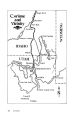
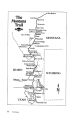
Show Preface Until the driving of the Golden Spike on May 10, 1869, the Mormon people had been able to establish their Great Basin empire mostly undisturbed by any influence from the rest of the nation. All at once their isolated silence was broken by the steam whistles that inaugurated an influx of outsiders coming by train from east and west. The construction crews building the railroads were the first to meet the Saints of Utah, and some of the entrepreneurs accompanying the railroad penetration immediately saw the possibility of founding a railroad town that could capture the lucrative wagon trade to the Montana mines, heretofore controlled from Salt Lake City. Corinne, the first large Gentile town in Utah, was the product of that dream. Located about six miles west of Brigham City on the west bank of Bear River where it flows into Great Salt Lake, Corinne became the freight transfer point for goods from the Central Pacific Railroad to Idaho and Montana. The town also became a center of anti-Mormon activity and, until 1878 when the narrow-gauge Utah and Northern Railroad gained control of the Montana traffic, Corinne existed as a burr under the Saints' saddle, annoying and threatening Mormon political and economic control of the territory. The competition with Mormon Utah of the small Gentile town with a population of perhaps fifteen hundred people would have been laughable if its assault on Mormondom had not coincided with national attempts to break Brigham Young's con- IX trol of Utah and to eradicate the practice of polygamy. President Ulysses S. Grant, his federal appointees, and the Congress were determined to destroy the remaining "relic of barbarism" in the nation and, at the same time, to bring the Mormon prophet to heel. Corinne, therefore, became a symbol of resistance to the Mormons and gained much support in Washington, D.C., to further its aims to establish itself as a permanent and progressive city and as a leader in the attack on the Mormon stronghold. The history of Corinne is also interesting and significant for the scene it presented of a Gentile culture of Protestant religions, a free public school, and an atmosphere of fun, frolic, and freedom a frontier end-of-the-trail town offered in contrast to the more orderly and conservative culture of the Utah Saints. Situated on the transcontinental railroad, Corinne was an excellent midpoint stopping place for tourists and visiting easterners making a short visit in Mormondom, and the town benefited from these contacts. Corinne conceived many wondrous projects that failed to materialize, but not through lack of some tremendous effort on the part of her citizens. To Corinnethians their failures seemed attributable, in almost every instance, to the machinations and evil workings of their Mormon neighbors who continually derided and discounted the town's prospects. The rivalry was intense despite the David-Goliath aspects of the relationship. I first became interested in Corinne as the result of doing research on the Montana Trail. As the freight transfer point from railroad cars to wagons, Corinne was the terminus of the trail. Everett L. Cooley, curator of Western Americana, Marriott Library, and professor of history at the University of Utah, encouraged me to undertake the project, and I hope he will find the effort worthwhile. I am also grateful to the staff members of the following libraries and repositories for their assistance and interest: Montana State Historical Society; Idaho State Historical Society; Utah State Historical Society; University of Utah, Marriott Library; Utah State University, Merrill Library; Brigham Young University, Lee Library; Historical Department of the Church of Jesus Christ of Latter-day Saints; University of California, Bancroft Library; Huntington Library; Library of Congress; and the U.S. National Archives. A grant from the University of Utah Research Committee was very helpful in defraying travel and typing expenses, and I should like to express my appreciation to the Corinne members of that committee. I am particularly indebted to LaVon West for her interpretation of my far-from-perfect handwriting and her typing of the manuscript. For any errors of fact or interpretation, I am solely responsible. BDM Preface |