| OCR Text |
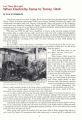
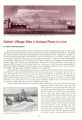
Show - Koyal crystal Salt company plant near Saltall; March 1Y3U. USHS collectzons. Saltair Village Was a Unique Place to Live BY BECKY BARTHOLOMEW At the turn of the century a dozen companies mined salt on Great Salt Lake's south shore. The Royal Crystal plant stood a mile east and a little south of Saltair Beach Resort. The plant, previously owned by both the Intermountain Salt and Inland Crystal companies, was later ac-quired by Morton Salt. Before automobiles came into general use, it was quite a trip by wagon or train from Salt Lake City out to the salt works, especially in winter. So some 200 employ-ees and their families lived in Garfield, several miles south, or in company housing known as Saltair village. The village was cosmopolitan- about half of its forty families were recent im-migrants from Europe- but life there moved at a slow pace. Only the plant superintendent's home had indoor plumbing, central heating, and a telephone. However, since most everyone lived alike, villagers did not think of themselves as deprived. Periodically, the village negotiated with various school boards to determine who would assume re-sponsibility for educating Saltair children. In the early decades, grades 1- 3 attended school in the vil-lage, after which they were bused to a large yellow- brick schoolhouse in Garfield. Later still, all ele-mentary students were bused to Garfield, as were students in grades 7- 10 who went to Garfield Junior High with the Yugoslavian, Greek, and other Eastern European children of workers at Utah Copper Company's new smelter. Most 1 lth and 12th graders boarded in Salt Lake City or took the train, later bus and auto, to West High School. A few attended Cyprus High. Village children enjoyed the miles of salt flats they could explore. They played Tarzan around the evaporation ponds where greasewood and sage-brush sometimes grew eight feet high. Boys and girls both hunted jackrabbits, ducks, and mudhens with bows and arrows and BB guns, rowed on the lake in crafts they had salvaged from beach wrecks, swam in the freshwater fire reservoir, and rode horseback on nearby ranches. Still, they were normal youngsters: Once several boys crept to the railroad tracks near the plant and borrowed Moving salt at the Royal Crystal facility near Saltair: USHS collections. the company's handcar. They took turns pumping it to the junction of the company line with Western Pacific's through tracks. Then they start-ed toward town. Along came a 100- car freight train loaded for bear. The boys pumped furiously and barely reached a turnaround before the loco- Teens felt lucky working long days at Saltair! motive screamed past, its engineer shaking his fist. In the summer they enjoyed the Saltair Resort with its funhouse, ferris wheel, and roller coaster. Village teens got jobs selling popcorn and operating rides. They worked six 16- hour days a week for $ 80 a month and felt lucky. A few worked at the KSL tower nearer town. In the late 1920s the plant burned down. Many workers went temporarily to Morton's Burmeister plant on the southwest shore near Grantsville. When the Saltair works reopened under Morton ownership they were located three miles closer to town just off Highway 40 ( now I- 80). The new village had only twelve houses, plus an office building, bunkhouses and garages, a brick home for the superintendent, and a small post office. Residents installed a children's play-ground. But many families never returned be-cause workers chose to commute instead. Many employees spent their entire careers there, and five generations of the Thomas Coslea Thomas family have been Morton employees. Thomas, along with a Mr. Jeremy, started Intermountain Salt ( later InlandIRoy al/ Morton) . During the Great Depression the miners earned 50 cents an hour or $ 4.00 a day. Rather than lay off, some employees, the company put Colo? fi4l, bustling Saltair war them on four- and then three- day weeks. To help out, Art Foster's wife ran a store out of their home stocked with homemade sandwiches, pies, cakes, and ice cream. It closed in 1940 when food rationing made business more complex than the slim profits justified. Over the years mining technology evolved, and the workers themselves suggested many im-provements. For instance, the Burmeister plant initially mined potash, not salt, using farm trac-tors. Someone modified the tractor so it would not sink into the clay mud that underlay the salt ponds. Soon machines did most of the harvesting. In 1949 the plant burned down again and was again rebuilt. Village population continued to dwindle until the 1970s when the last of the hous-es was tom down or moved. In 1991 the plant itself was dismantled. The only way to tell where it stood is by the KSL station three- fourths of a mile due north of the village's once- main road. Ms. Bartholomew, a writer and historian, lives in Castleford, Idaho. This account, first issued as part of The History Blazer ( February 1996), is primarily based on histo-ries of former village residents Arthur Henry Foster, Owen Daniel Thomas, John Philips, Mamie Thomas, Arthur G. Foster, and Wanda Foster Frederick, in possession of the au-thor. |