| OCR Text |
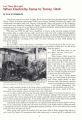
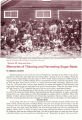
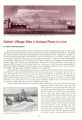
Show Children posed for photographer Alma Compton before beginning a day in theJie1d. v thinning beets, c- 1905- Special Collections, Merrill Library, Utah St~ teU niversity " Smack lift, chop and toss. .. " Memories of Thinning and Harvesting Sugar Beets BY MIRIAM B. MURPHY Sugar has played a sweet and sour role in Utah history. Attempts in the 1850s to raise beets and process them into sugar had only one lasting effect- giving an area of southeast Salt Lake City its name: Sugar House. Decades later, in 1879, Arthur Stayner produced 7,000 pounds of sugar and received a $ 5,000 premium for his experiment from the temtorial legislature. Then in 1891 the first sugar factory in the U. S. using American- made machinery opened in Lehi, Utah. By 1920 more than a dozen sugar factories in central and northern Utah hummed, and sugar beets had become an important cash crop for local farmers. When the last sugar factory in Utah closed in 1979 it signaled the end of an era in the state's agricultural history. Those who lived through part of that era have sweet and sour memories of what it was like to work in the sugar beet fields. Before mechanization and the development of single- seed plants, raising beets was a labor- intensive effort that depended to a large extent on children. Those who thinned, weeded, and harvested beets never forgot the experience. Dozens of them, some now in their 80s, recently put their memories on paper or told their stories to the author over the telephone. Thinning Beets In late spring, when the rows of beet seed planted by farmers had fully sprouted, children took to the fields to block and thin the plants. For Marie Hunter, who grew up in Joseph, Sevier County, it was the " worst job" she ever had. She began thinning beets at about age seven for her uncle and recalled earning about 50 cents. Like most young beet thinners, she wore knee pads made from old Levis and filled with padding. Alfred (" Fred") E. Young of Logan, Cache County, said that beet thinners cut the hoe handle to the length they liked and then sharpened the blade. They had to furnish their own lunch and water and get to the field on their own. On a good day he could thin an acre. " Remember," he noted, " these were not8- hour days! ... Days were long, the sun was hot, and your water was always at the other end of the row! Pay was low, very low! But it was a job that need-ed to be done." Some children, like Vergia Scott, who grew up in Sevier County, found ways to make the work seem less tedious. She thinned beets with her two brothers, a sister, and three cousins. The oldest child in the group " herded us down the rows, tell-ing us stories." For Devon Doney, raised in Cache Valley, thinning beets was almost a competitive sport, and he prided himself on being the fastest thinner. He could bend down and do a whole row I without stopping. In 1929, when she was nine years old, Bertha Byington of Logan, and her brother Shirley, " con-tracted a sugar beet crop for the next four surn- 1 mers, and four or five of my mother's six children i did the work- thinning, hoeing, and topping the : beets. Shirley was paid a percentage of the harvest I I in the fall. Of course the money was to be used for I our family expenses. None of us received any ' spending money,' or expected any." Although it was back- breaking work, Bertha has fond memo-ries of those times. " One year, while thinning the beets, we camped on the top floor of the owner's granary from Monday till Saturday night. We slept on the hay and prepared our own meals." Another time they " slept in a tent on the bank of a large irri-gation ditch .... During the noon hour we would put on different old clothes and go ' swimming' or play in the tall, thick sweet clover," ignoring all the bees. During the tedious summer hoeing season, Bertha and her older sister Wilda walked down the rows singing songs, reciting poems, or playing guessing games. That was the " most fun" of all she said, and added, " We also hoed a few weeds." The children became well acquainted with the bird life of the area- meadowlarks, blackbirds, curlews, snipes, and killdeers. There were only " two things we all got plenty tired of+ old hard- boiled eggs and artesian well drinking water." Sometimes children made mistakes. Della Foster Moser grew up on a farm near the Whitney, Idaho, sugar factory. Her family spent many hours working together in the fields. She remembered that " One day my Dad was busy in another field watering ... and sent my brother and myself to thin the beets .... the rows in that big patch of beets nev-er seemed to end. I didn't want to be there anyway, so I just decided to thin the beets fast and get out of that hot field. I didn't measure like I was told and just cut, cut, cut .... When I finished I could see not many beets were left in the row. I began [ relplanting those I had cut out.. . . My surprise came that evening when Dad took me back to the field and showed me the beets I had [ relplanted were dead. Not a happy day for me!" The long rows of beets frustrated more than one child. Belle H. Wilson, who lived on a farm south of Payson, Utah County, remembered that about the time school let out in May " the beets were tall enough to block and thin. The blocking was done by using a hoe with a wide sharp blade which with one chop left a twelve- inch gap be-tween small clumps of beets. Children ages ten to fourteen with heavy pads tied over their knees would straddle a row and crawl along thinning out all little plants in said clump except the largest .... My younger brother said that the rows were so long you couldn't see the end because of the curvature of the earth." When Brigham D. Madsen was about 12 years old in Pocatello, Idaho, he and his friend Clarice Johnson took a contract with a farmer in the area to thin four acres of beets for four dollars I 1 nznnzng oeets, c. IYUJ. nlma Lompron pnorograpn, apeczal Louecrzons, ruernll Lzurary, uran mare unzverszry. an acre and to hoe the beets twice during the sum-mer for two dollars an acre. The boys rode their bikes out to the farm on Monday morning and spent the week there, living in a tent. Their moth-ers sent them food, he said, but one summer day a pot of homemade soup turned sour in the heat. On Saturday the boys biked home to spend the week-end. When Madsen's grandmother from Santaquin came for a visit she asked his mother, " Are you so poor that you have to send your 12- year- old son out to live in a tent and work?' At that time, about 1926, Madsen recalled, his father earned only a dollar an hour as a carpenter. For many families the income brought in by children up through the depression w s was im-portant to their economic survival. When Lilith Morton's father died in the flu epidemic of 1918, her mother was left with five children to raise in a two- room cabin in Vineyard, Utah County. The work of the Morton children was vital to the fami-ly. Lilith and her sister thinned beets for 10 cents a row and kept the greens after thinning to take home and cook. LeRoy Wilcox, who spent the first ten years of his life in Sutherland, Millard County, before the family moved to Sandy, said that " Beets were part of my life until I graduated from high school." Harvesting Beets Reva Whittle Wilson grew up in the Cache Valley, just across the border in Fairview, Idaho. In October " the sugar content in the beets was high enough for the. .. harvest to begin. Schools.. . were let out for the beet vacation as we called it, for two weeks ...." After a team of horses went down the rows with a beet plow to loosen the beets from the ground, hand topping the beets began. Reva remembered it vividly: " We had long sharp knives with a pick on the end. We would pick up the beet ... with the pick, hold the beet in our left hand and cut off the top, not too much or that would be wasteful ... . Some beets were too large for our small hands so we placed them on the ground, turned them around with each whack, and made two or three cuts with our knife before all the top Beet knife in the Sandy City Museum collection. was off. We threw the beets in small piles between the rows where they were later loaded on the wagon. .. by my brothers or hired men .... Usually we would finish topping beets by Halloween. I remember going out in the morning in heavy Mrs. Nephz Nzelsen and two oJ her seven children, Joyce and Wendell, were shown harvesting beets in a 1942 Salt Lake Tribune article on home front workers during World War II. frost ... and in just a short time our hands were freez-ing cold through our gloves and our feet were tingly in our rubber boo ts.... Sometimes it even snowed. Those were the times we wished we were back in the school room with our friends.. . . The last fall I topped beets was in 1932 and I was married the next spring." Kenneth Godfrey, whose family had a farm in Cornish, Cache County, started working in the beet fields when he was able to lift one of the heavy beets. " It was a great family project," he said. His mother topped beets, too, and his young-er sister cooked their main meal. He remembers having an apple for a snack in midmorning and eating it with cold, muddy hands. " I have never re-ally liked apples since," he said. Like many chil-dren, he had ambivalent feelings about the experi-ence. He looked forward to getting out of school for two weeks to harvest beets, but once out in the fields he often wished he were back in school. Still, in addition to providing a good cash crop, the work created a feeling of community: " When you work with others you can't con each other." Dan Elmer Roberts of Provo said that wheth-er you were out in the fields or in the U and I Sugar Company factory, it was " work, work, WORK, WOR&" He appreciated having sugar for his mush and sugar for cookies and cakes and bottled h i t but still wondered, ' Was it worth it?' He said the " good, rich dia by Utah Lake made the sugar beets grow too big! You had to wrestle them to top them .... You nearly broke your back throwing the big things into the beet wagons. Oh, how you wished you were back in school." Patricia Newson, who attended Jordan High School ( home of the Beetdiggers), walked three miles from her home in Bluffdale to Riverton to There was a strip of old overall material tied to the handle. The idea was to put the strip around your top beets all day and then walked home, bathed, wrist and take hold of the handle. This became ... a and went to bed. She had her own beet knife and sling to keep the hand and our tool together; it also more than once caught the hook in her knee or leg. seemed to give you a little more swing in the arm." Many students used the money they e ung worker took a row and began to ping beets to buy school clothes or Chris turned up by the plow. Hansen de-ents. She used her earnings to hically: " Smack goes the and buy glasses. She was the , pull the beet up across a ily who topped beets. She leafy green top ( careful, it was kind of neat to h and toss the beet into e rhythm and move tions. Bingham High S mack, lift, chop and said, and bus loads of s ss, smack,---." Mean-it would be time for row was in sight yet. ok where it had hit her were instructed on the use of . One harvest time it had it was potentially dangerous cold and muddy. At his shins and felt " totally bus 10- hour days, he " thoroughly enjoyed the e .. ence." He liked seeing what others had earn a living. Before he turned 18 and was the work made him " feel useful" in the w Until she turned 14 and could join the bee harvest, Karen B. Hansen of Preston, Idaho, of those who shared thought it sounded " kind of exciting." With her mories of working in the beet fields, lunch sack and " a new pair of fuzzy white canvas thinks most children today " miss the satis-gloves" provided by her father, she joined other ' that comes with hard work well done. children at the employment office and was taken nding money and feeling good about by car to an outlying farm. " There before us were tough job were not the only motives rows and rows of large green leaves, and some- beet workers. Douglas E. Stringham where out of view was the other end of the field. chfield, Sevier County, recalled that during Would we ever see that end? Tiventy- five cents a or and senior high school years the school row seemed to be the average pay. We were hand- usually released students for two weeks to ed a long butcher knife with a vicious looking hook " assist the farmers to harvest the beets and potatoes at the end of the blade where a point should be. which we raised in great numbers. This ... usually -.. .. , coincided with Utah's deer sencnn lr ha I collld at leait have 3 or 4 dav~ tn Other Jobs with the Beets Sometimes those toppim the 1 beets tossed them into a wagon as they went. More frequently, though, they threw the topped beets & to piles and later hand- loaded them into the wagons. Sometimes older boys and men used a specially made beet fork to load the beets. Using a beet fork required greater muscular stren- gt h thad thim& p; or toppine. r -- 0 Brothers Bumus, foreground, and Nathan Butterworth topping beets Other, less phys& illy challeng-c. 1937 in West Jordan. Courtesy of Nathan Butterworth. 25 ing jobs were prized by those lucky enough to get them. When Belle H. Wilson of American Fork was 16, her father told a sugar company official that she was " capable of doing whatever is needed for weighing and recording" the wagons that came to the beet dump. After a two- day trial, she got the job: " I sat in the little office of the weigh station, on a high stool. Through the large window before me I could see the horses pulling the loaded beet wag-on onto the platform. As soon as the wagon stopped I weighed the load by adjusting the move-able gauges to acquire a balance. This weight in pounds had to be recorded as tons of beets and any extra poundage. This information was recorded on a printed form after first identifying the farmer." While the farmer unloaded his beets a worker re-moved the dirt from a half bushel of beets, weighed the dirt and the beets separately, and calculated the percentage of dirt in each pound. " After I had weighed the returning empty wagon, I subtracted its weight from the original load weight. Then I figured the percentage of dirt on the beets and sub-tracted that ... and came up with the net weight ...." At season's end, the information Wilson recorded was used to pay each farmer. She spent her eam-ings on " a lovely dress and coat which were need-ed for a winter wardrobe for high school." Cleone Fox Ferguson remembered her senior year in high school when she drove a team and wagon to the beet dump about three- quarters of a mile away. She had red hair and freckles and was subjected to catcalls from the men, apparently for her looks and for doing a typically male job. She enjoyed it anyway because it was easier than top-ping beets. After graduation she got a job, but she still took time off in the fall to help with the harvest. Most of those who worked hard as children in the sugar beet fields are glad they had that expe-rience. It shaped their lives in many positive ways. For most, the sour memories of long days, heat in summer and cold and mud in fall, sore muscles and aching backs, nicked legs, and seemingly endless rows of beets were outweighed by the sweetness of work well done, earning spending money, con-tributing to their family's survival, companion-ship, and occasionally fun on the job. Equally important, these workers remain proud of what they accomplished. Mrs. Murphy wishes to thank the more than 60 indi-viduals who shared their memories of the beet fields with her. Their stories will be archived at the Utah State Historical Society. This article has focused on school children who worked in the beet fields. As Utah's sugar industry grew it depended heavily on migrant workers, especially Mexican Americans, Native Americans, and Mexican nationals. That is a different story and one that also needs to be told. BY LINDA THATCHER Visitors to Memory Grove in Salt Lake City wonder about a forlorn looking railroad boxcar tucked into the southeast corner of the park. Why is it there? What is it used for-- an office or a stor-age unit? It seems misplaced, but in reality it is not. It is one of 49 boxcars that arrived in the United States from France on February 3, 1949, crammed with presents for American citizens. The Merci or Gratitude Train, as it was called, was an expression of thanks from the citizens of France to ~ mericafo r aid rendered during and after World War 11. The Merci Train was organized partly in re-sponse to another well- publicized train. In 1947 newspaper columnist Drew Pearson had come up with the idea of an American Friendship Train to collect needed items for European nations that were still struggling to recover from the war. The idea caught fire, and within a few months the Friendship Train had traveled across the country and collected more than 700 carloads of donated food, fuel, and clothing that were sent to Europe. A French rail worker and war veteran named Andre Picard suggested that France reciprocate. He originally suggested that France present the United States with one boxcar filled with gifts representative of his country- wines, lace, per-fumes, clothing, etc. A French veteran's organiza-tion adopted the proposal, and a committee was formed to solicit gifts. The response from French citizens was overwhelming. Despite years of eco-nomic hardship, thousands of French people do-nated items to send to America. As news coverage spread, the project gained national momentum, with hundreds of organizations participating. It soon became apparent that one boxcar would not be enough. Gifts to Fill 49 Boxcars Eventually, the French War Veterans Associ-ation took overihe project and calcu1: cted that they had enough gifts to fill 49 boxcars- one for each of the then 48 states and the one to be split between the District of Columbia and the Territo-ry of Hawaii. ( The District of Columbia got the gifts, and Hawaii, which had donated two carloads of sugar to the American Friendship Train in 1947, received the boxcar, by then containing only straw.) After the French decided to send 49 boxcars instead of one, they began to scour the railroad yards for them. The boxcars were called " Forty and Eights" because during World War I, one box-car was used to carry 40 men or 8 horses. For |