| OCR Text |
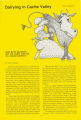
Show EARLY STEAM- DRIVEN MACHINE M RT HRESHING A - ~ ~ A - S E D O- NH ~ JOHN C. WEBB FARM AT HINCKW, MIUARD WVNTT, IN 1901. . I Alfalfa, Lucerne, or Just Plain Hay Mare than # percent of all the cultivated land in Utah is planted in alfalfa. Why is this mop SO important ta farmers and ranchers? What pari did Utah pIay in the history of this forage plant in the western United States T The stmy of alfalfa begins in ancient Far-sia ( now Iran) where if grows wild. From there the cultivation of alfalfa spread to Greece, Rome. North Africa, Spain, and northern Europe where it fed cattle and the war horses of m a t empires. Spaniards brought aLfalfa to South America in the six-taernth century, and it was eventually carried northward into the American Southwest. Utah's pioneer settlers brought alfalfa seed to U& h from the Bristish Isles, Switzer-land. and Califurnia Pioneer john Parry from . Wales planted the first known alfalfa mop in Salt Lake City in 1850. The pioneers called b the mop lucerne, the Engli* and French name for it. Later the Spanish n ~- ae lfal fa I , - became commonly used. not suitable for other mops, To produe more forage on the same amount of land most al-falfa is now irrigated. A peremid plant, alfa'sfia produces sev-eral crags each year. When alfalfa is cut, dried out in he fields, and babd it is usually called hay. Many bales of hay are needed to feed horses, dairy CQWS, and even some range snimals during the winter months. As a member of the legume family, alfalfa is high in the pmtein needed by all animals. It is aIso rich in minerah a d vitamins. Once Utah farmers started growing lage alfalfa crops, they began to process and ship ahlfa seed throughout ths West: to Colorado in 14365, Kansas In 9869, Montana in 1890, Iowa and Missouri in 1900. Many states now surpass Utah in alfalfa produ~ tionb ecause d longer pouring seasons, better landsd and more farm workers and machinmy. Neverthe-less, no one can deny the historic importance of Utah to the spread of dfatfa in the west. Alfalfa is especidy suitedto the climate and inU tah' f'he plant mots BmSu- aghm, mso fe i mnfoarmbaitcio, nD fiofirli Mth is arOtfi clAe lafmd fRa C( laybtonw. : deeply and blnrate drg weathm, heat* B~-~ young Univmity ~ sprrtmsnt d ~ p p h j , cold, and soils with high minerd conbnt. At 29~ 3). Encycloyaedio Brifpnnka . and Utah Science first alfalfa was ' dry- farmed on land that was magazine, 3 |