| OCR Text |
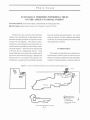
Show Lewis- Williams, D. J. 1986 Cognitive and Optical Illusions in San Rock Art Research. Current Anthropology 27: 171- 178. Lewis- Williams, D. J. and T. A. Dowson 1988 The Signs of All Times: Entoptic Phenomena and Upper Palaeolithic Art. Current Anthropology 29: 201- 245. 1 989 Images of Power: Understanding Bushman Rock Art. Southern Book Publishers, Johannesburg, South Africa. Lorblanchet, M. and P. G. Bahn 1993 Rock Art Studies: The Post- stylistic Era or Where Do We Go From Here? Oxbow Monograph 35, Oxford University Press. Quinlan, A. R. 2000 The Ventriloquist's Dummy: A Critical Review of Shamanism and Rock Art in Far Western North America. Journal of California and Great Basin Anthropology 22: 92- 108. Tacon, P. S. C. and C. Chippindale 1998 An Archaeology of Rock- Art Through Informed Methods and Formal Methods. In The Archaeology ofRock- Art, edited by C. Chippindale and P. S. C. Tacon, pp. 1 - 1 0. Cambridge University Press. Whitley, D. S. 1982 The Study of North American Rock Art. Ph. D. dissertation, University of California, Los Angeles. University Microfilms, Ann Arbor, Michigan. 1988 Bears and Baskets: Shamanism in California Rock Art. In The State of the Art: Advances in World Rock Art Research, edited by T. Dowson. University of Witwatersrand, Johannesburg, South Africa. 1994 Ethnography and Rock Art in Far Western North America: Some Archaeological Implications. In New Light on Old Art: Recent Advances in Hunter- Gatherer RockArt Research, edited by D. S. Whitley and L. L. Loendorf, pp. 81- 94. Monograph 36, Institute of Archaeology, University of California, Los Angeles. 1996 A Guide to Rock Art Sites: Southern California and Southern Nevada. Mountain Press Publishing, Missoula, Montana. 1998 Cognitive Neuroscience, Shamanism and the Rock Art of Native California. Anthropology of Consciousne.~ 9:~ 2 2- 3 7. Prehistory of the Carson Desert and Stillwater Mountains: Environment, Mobility, and Subsistence in a Great Basin Wetland, by Robert L. Kelly, with contributions by Virginia L. Butler, Linda Scott Cummings, Steven D. Grantham, Richard E. Hughes, Keith K. Katzer, Stephanie Livingston, David Rhode, Nancy D. Sharp, and Peter Wigand. University of Utah Anthropological Papers Number 123. University of Utah Press, Salt Lake City, 2001.325 pages, 147 figures, 106 tables. $ 45.00 paper Reviewed by: David W. Zeanab, Department of Anthropology, California State University, Sacramento, 6000 J Street, Sacramento, California 95819- 6106. Archaeologists are at their best when they grapple with thorny research issues. Confronting evidence that obstinately conflicts with theoretical expectations de-mands areconsideration of the archaeological signatures of behavior, incorporation of new constraints into mod-els, and testing predictions against new sets of data. Robert L. Kelly's investigation of Carson Desert pre-history is an excellent example of how such a research program can yield insights about the past that other-wise may never have been gained. Kelly's goal was to evaluate the presumption that hunter- gatherers become sedentary whenever resources are sufficiently plentiful. He argued that foragers should remain mobile, even amidst a Garden of Eden of nearby foods, if scarce foods are energetically more profitable to procure than abundant foods. In the Carson Desert of western Nevada, he suspected that hard- to- come- by upland resources offered higher foraging returns than prolific wetland foods, and predicted that prehistoric hunter- gatherers should have remained mobile unless forced to settle near marshes by population or climatic pressure. Kelly tested his hypothesis by surveying a sample of the Carson Desert in 1980 and 1981. Inter-preting his findings based on an impressive arsenal of theoretical models about hunter- gatherer mobility and lithic technological organization, Kelly ( 1 985: 293) saw little evidence for sedentism despite the abundance of marsh resources. The shoe fell between 1982 and 1986 when cata-strophic floods in Stillwater Marsh washed away the mantle of sand that had hdden large, complex archaeo-logical sites from Kelly's survey team. These sites bore evidence of prolonged residential occupation ( middens, structures, storage pits, burials, and diverse artifact as-semblages) and intensive exploitation of wetland re-sources. Faced with unexpected evidence, Kelly can-didly acknowledged that his earlier conclusions were wrong, but rather than abandoning his research program, he refined his theoretical models and returned to the field. Supplementing an earlier bioarchaeological analysis of human skeletal remains from Stillwater Marsh ( Larsen and Kelly 1995), the volume reviewed here reconsiders the 198011981 survey findings, and reports results of the 1987 excavation of site 26CH1062 in Stillwater Marsh. A forthcoming monograph will summarize ex-cavations of Mustang Rockshelter in the Stillwater Mountains. Chapters 1, 2, and 3 provide the archaeological, ethnographic, and environmental background for the study. The Carson Desert is well suited for investigat-ing hunter- gatherer sedentism because some archaeolo-gists have proposed that prehistoric occupants of the region followed a " limnosedentary" adaptive strategy allowed by the bounty of lacustrine resources ( Heizer and Napton 1970). Although a case for limnosedentism can be made from the large occupation sites exposed by flooding, much of the evidence for the original argu-ment was drawn from excavations of Hidden, Lovelock, and Humboldt Caves, which appear to have been used primarily for caching wetland foods and foraging gear. Kelly points out the inherent contradiction of this inter-pretation with the lirnnosedentary model by asking why sedentary foragers living in marsh- edge villages would need to stash essential food and equipment in inacces-sible caves; caching implies that they periodically moved away from local wetlands. Ethnohistoric accounts of the nineteenth century Toedokado Paiute suggest that Carson Desert hunter- gatherers intensively used wet-land resources, but were not particularly sedentary. The environmental description discusses the short-termvolatility of marsh productivity: annual variability in precipitation, runoff, and temperature affect water depth, salinity, and emergent vegetation that, in turn, cause dramatic fluctuations in fish, mammal, and avian populations. Paleoenvironrnental evidence reveals longer- term climatic trends; an arid period between 7,000 and 4,500 years ago, effectively wetter climate from 4,500 to 2,000 years ago, greater aridity from about 2,000 to 600 B. P., and a return to wetter conhtions punctuated by drought between 600 and 50 B. P. Pro-jecting how these trends affected the foraging ecology of the Carson Desert is complicated by the uncertain histories of the Walker River, which may have flown into the Carson Desert between 2,700 and 2,000 years ago, and the Holocene expansion of pifion into the Great Basin, which may not have reached the Stillwater Moun-tains until after 1,250 B. P. Kelly's theoretical approach, as laid out in Chap-ters 1 and 3, is grounded in behavioral ecology, and relies on the assumption that hunter- gatherers maximize foraging efficiency over time. Developing a simple model that tracks how searclung for food from a base camp depletes nearby resources and forces longer distance for-ays from home, Kelly shows that local foraging returns may diminish sufficiently to make it worthwhile for hunter- gatherers to move to a new foraging territory even in a rich environment. Thus, the key to predicting whether foragers settle down or pull up stakes lies in understanding the energetic tradeoffs between logistic and residential mobility. Kelly models four such tradeoffs pertaining spe-cifically to the Carson Desert: foraging in Stillwater Marsh from a nearby base, moving from the marsh to forage in the Stillwater Mountains, collecting in the mountains from amarsh residence, and collecting in the marsh from a mountain camp. Each scenario compares the effective return rates for procuring various resources in good and bad years, considering sexual division of labor and appropriate search, transport, and moving costs. The simulations assess wetland foraging to have been most efficient for women, even after the arrival of piiionin nearby mountains. Men would often have found hunting bighorn their most profitable option, but the returns offered by fishing and trapping were usually too high to make moving camp to the mountains worth the effort. Therefore, Kelly predicts that Carson Desert hunter- gatherers normally resided in wetlands while hunting logistically in the uplands. Wetland habitation may have intensified during the warmldry period be-tween 2,000 and 600 B. P. because the productivity of upland resources would have diminished relative to wetland alternatives. In contrast, cool/ inoist episodes, such as those between4,500 and 2,000 B. P., would have enhanced the attractiveness of foraging in the uplands and neighboring wetlands, and drawn Carson Desert hunter- gatherers away from Stillwater Marsh more of-ten. Chapter 4 models the effects of mobility strategy on lithic technological organization so that the foraging predictions may be tested against Carson Desert chipped stone assemblages. Kelly contrasts bifacial reduction strategies, whch he associates with relatively high lo-gistic and residential mobility, with bipolar and core re-duction strategies associated with infrequent residential moves under circumstances of raw material shortage and abundance, respectively. Noting that toolstone sources accessible from the Carson Desert lowlands are mre and poor quality, Kelly expects that transient hunter-gatherers who briefly visited the valley floor would have left lithc assemblages dominated by bifaces and flake cores of imported toolstones. In contrast, foragers who resided on the valley floor for prolonged periods would have practiced bipolar and flake core reduction strate-gies, and made greater use of nearby sources. Chapters 5 and 6 describe the results of the 19801 198 1 survey, and reconsider findings in light of the up-datedtheoretical context. The 1,600 km2 study area was devised to sample piiion- juniper woodland and upper sagebrush communities in the Stillwater Mountains, Stillwater Marsh, an area of unstabilized sand dunes west of the marsh, and the valley floor south of the marsh. The sample drawnfrom portions ofthe Stillwater Moun-tains above 1,341 m ( 4400 feet) in elevation was inven-toried as 57 500 in by 500 m quadrats, and circular catchments extending 500 m from ten springs. Lower elevations were sampled by 15 100 m wide transects extending across the valley floor. Together the survey inventoried 2.7 percent of the study area, discovering 106 sites on the valley floor and 54 sites in the Stillwater Mountains. Diachronic inferences drawn from projectile points retrieved from the survey are limited by small sample size, and potentially biasing effects of amateur point collection. Nevertheless, there are some statistically supportable trends associating Rosegate points with the marsh, Desert series points with the dune region, and Elko series points with the upper sagebrush community and south valley region. Obsidian projectile points origi-nate from various remote sources north ( predominately Majuba Mountains) and south ( mostly Mt. Hicks and Bodie Hills) of the Carson Desert. Evidence of biface reduction is statistically preva-lent in the mountains, whereas valley and marsh sites are characterized by core reduction, and dune sites by bipolar happing. Both imported obsidians and local toolstone are common in the marsh. Groundstone tools are most prevalent on the valley floor and isolated pro-jectile points most common in unwooded portions of the mountains. Chapters 7,8, and 9 report the 1987 excavation of 26CH1062, and include technical analysis sections by Steven D. Grantham, Richard E. Hughes, Linda Scott Curnmings, Pete Wigand, David Rhode, Nancy D. Sharp, Virginia L. Butler, and Stephanie Livingston. The site lies on a lunette dune adjacent to a fluctuating marsh. Recent flooding removed at least 1 Ocm of sediment from the site surface, exposing numerous pit features and a possible secondary trash dump. Kelly's team excavated sixty- two pits, focusing their effort on three large fea-ture complexes. Kelly interprets two of the complexes as house-holds associated with living floors ( Features 4 and 7), but Rhode suggests that the floors may in fact be seed roasting surfaces based on the quantities of charred cat-tail seeds they contain. If they are houses, thenthey prob-ably represent unroofed windbreaks rather than pithouses, because both are shallow and lack substan-tial posts or hearths. Smaller adjacent pits may have served for cachng equipment, whereas larger pits are probably food storage facilities. All the pits are rela-tively shallow and lack conclusive evidence of prepared caps or linings, suggesting that they held stores for only short periods. Small flakes, biface fragmentation, tool to debitage ratios, and bipolar core reduction show that the resi-dents of 26CH1062 intensively utilized their inventory of chipped stone tools, as would be expected of long-term, marsh residents. But comparison with other sites from the western Great Basin suggests that the 26CH1062 assemblage is not so exhausted as the as-semblages of other long- duration residential camps. Poor quality nearby toolstones are not as well represented as imported chert and obsidian in the assemblage of site 26CH1062, suggesting that occupants were sufficiently mobile to replenish non- local materials, making exhaus-tive tool reduction unnecessary. Subsistence residues from site 26CH1062 were mostly obtained from marshes, and nearby alkali flats. Predominant plant macrofossils are cattail and seepweed seeds, and the taxa best represented in the faunal as-semblage are tui chub, muskrat, jackrabbit and water-fowl. Conclusive evidence of upland resource use is lim-ited to a handful of artiodactyl bones; notably no evi-dence of piiion use was found. Plant macrofossils point to a late summer to early winter occupation, tui chub bones and avian egg shell suggest spring and early sum-mer use, but the lack of investment in substantial hearths and structures argues against winter residence. Kelly interprets site 26CH1062 as a long- term, but not sed-entary, residential base. There are intriguing differences between the assem-blages of the two living floors. Three radiocarbon dates indicate that they represent two discrete components dating between 830 and 1,100 B. P. ( Feature 4) and around 1,390 B. P. ( Feature 7). The Feature 7 cluster contains higher percentages of aquatic macrobotanical remains, whereas the Feature 4 cluster contains more taxa from the fringe of the marsh and adjacent alkali flats. This implies that the older feature complex was associated with a deeper, wetter marsh than the younger cluster; the greater representation of muskrat bones in the Feature 7 complex, and small rodents in the Feature 4 complex support this inference. The Feature 7 assem-blage contains more chert, obsidian, and bifaces, whereas more local toolstones and evidence of core reduction are found in the Feature 4 cluster. The Feature 4 com-plex includes two of the more substantial food storage pits, whereas no comparable facilities occur near the Feature 7 complex. Kelly cautiously proposes that these divergences are consistent with his expectations about sedentism; the component associated with drier ecologi-cal context bears more evidence of prolonged residence than the occupation that occurred under wetter circum-stances, In Chapter 10, Kelly integrates his findings with the regional archaeological database and evaluates his theoretical expectations. The cache caves suggest that although prehistoric foragers were committed to using wetland resources, they periodcally abandoned local marshes. Notably, most of the cave deposits seem to predate the dry climatic period between 2,000 and 600 B. P. The open habitation sites tend to date within the xeric interval, and may represent a different land- use pattern of intensive, prolonged, although not sedentary, occupation of wetland environments. The survey data are consistent with the predicted patterns of prolonged ( although not sedentary) residence on the valley floor, logistic usage of the mountains, and intensified occupa-tion of wetlands during the xeric 2,000 to 600 B. P. pe-riod. Bioarchaeological analysis of the osteological sample shows that prehistoric populations lived a healthy but physically demanding, mobile lifestyle that empha-sized wetland resource procurement. Notably, incidences of osteoarthritis and femur cross- sectional geometry suggest greater mobility for men than women. Kelly finds these data consistent with his theoretical expectations, concluding that resource abundance is a necessary but insufficient requirement for sedentism. Kelly goes on to consider the traveler- processor model of the Numic Spread ( Bettinger and Baurnhoff 1982) as an alternative explanation for the temporal shift in land- use patterns observed in the Carson Desert. Evaluating whether independent lines of evidence sup-port the arrival of Numic speakers at the time that in-tensive occupation of Stillwater Marsh began, Kelly concludes that linguistic, material culture, and genetic evidence can neither support nor falsify the traveler- pro-cessor alternative. He suggests several directions whereby future research will help resolve the issue. I have a few minor quibbles with Kelly's assess-ment of how well his theoretical approach accounts for the archaeological record. First, Kelly acknowledges that his evidence for a settlement pattern change after 2,000 B. P. may be biased by site formation and preservation factors. At this point we simply cannot be sure that ear-lier and later long- term habitation sites, comparable to 26CH1062, do not remain undiscovered in other an-cient marsh locations in the Carson Desert. Kelly rec-ommends a strong program of geoarchaeological inves-tigations within the region to assess this possibility. Second, I am bothered by the rarity of upland re-sources recovered from the Stillwater sites given the osteological evidence of mobility among men, and the theoretical predictions of Kelly ( and myself?) that Carson Desert men should have been logistically mobile to ac-cess bighorn. Yet only a smattering of artiodactyl bone has been recovered from the lowland sites. Perhaps the rarity of upland faunal remains merely reflects the ef-fects of field processing on the transport of residues that preserve in the archaeological record; the forth-coming Mustang Rockshelter monograph may reassure us that this is so. Kelly rightly interprets the absence of pifion mac-rofossils from lowland sites, the rarity of groundstone in pifion groves, and the lack of carbon and nitrogen isotope signatures of pifion consumption in bioarchaeological samples to be consistent with his pre-diction that pifion had little influence on subsistence-settlement systems in the Carson Desert. But it is im-portant to point out that his foraging simulations rank logistic procurement of pilion from marsh camps as more profitable than foraging for nearby seeds and waterfowl, particularly during bad years. Since evidence for use of both wetland seeds and waterfowl are ubiquitous on the Stillwater Marsh sites, the absence of pifion from those contexts seems inconsistent with expectations. As Kelly recognizes, pifion simply may not have been available in sufficient quantity in the nearby Stillwater Mountains to make the effort worthwhile. He proposes additional work to pin down the history ofpiiion in the Stillwaters. Finally, I suspect that Kelly's foraging models un-der- emphasize the effects that boom and bust cycles of wetland productivity on prehistoric mobility strategies. Kelly acknowledges that resource abundance in wet-lands varies, and that occasional droughts, floods, and epidemics may cause marsh ecosystems to collapse al-together, but his foraging simulations suggest that wet-land resources would tend to have been more produc-tive than upland resources in most bad years. This plays out in his expectations about how long- term climatic variability affected land- use patterns. During wet peri-ods, enhanced hunting and fishing ( in non- local fisher-ies) opportunities were often productive enough to draw bands out of Stillwater Marsh. During dry periods, such foraging bonanzas were harder to come by, and Carson Desert foragers intensified their occupation of Stillwater Marsh. They residentially moved from Stillwater Marsh only during rare occasions when catastrophic collapses caused them to abandon the wetland for long periods of time. This scenario seems inconsistent with cases of dental hypoplasia and cortical bone loss in the Stillwater os-teological sample that indicate occasional periods of food shortages and nutritional stress ( Larsen and Kelly 1992:- 133). This suggests to me that collapses of marsh productivity may have been more than rare events, and played a larger role in shaping Carson Desert prehstory than Kelly recognizes. It is interesting in this regard to consider the survey findings of Intermountain Research in nearby Fairview Valley ( Zeanah 1996), the basin 30 km southeast of Stillwater Marsh. Fairview Valley lies within the annual foraging ter- ritory of the Toedokado Paiute, so there seems no rea-son to doubt that the prehistoric occupants of Stillwater Marsh also visited Fairview Valley. The arid basin floods too sporadically and briefly to have fostered a wetland community, and is notable only for the richness of its Indian ricegrass stands. But under normal circumstances Stillwater Marsh offered far more profitable springtime foraging opportunities than such xeric seed stands ( in fact, Indian ricegrass seeds are rarely retrieved from archaeological contexts in Stillwater Marsh). Harvest-ing ricegrass in Fairview Valley should only have been profitable when wetland resources were unavailable in Stillwater Marsh, causing brief spring moves to Fairview Valley. Large occupation sites with abundant ground stone tools and fire- cracked rock, but lacking exposed pit fea-tures, fringe the playa in Fairview Valley. Figure 1 com-pares the number of groundstone tools and projectile points found in Fairview Valley, with Kelly's survey find-ings in Stillwater Marsh and the Stillwater Mountains. Points and groundstone are equally well represented in Stillwater Marsh; points dominate in the Stillwater Mountains whereas groundstone tools are more com-mon in Fairview Valley. The representation of groundstone in Fairview Valley suggests the presence of women and residential base camps. If so, failures of marsh resources must have drawn Carson Desert for-agers into neighboring valleys for relatively short peri-ods. Since Fairview Valley would have offered few for-aging opportunities for men, it may have been during these stressful events that men practiced their most ex-treme logistic mobility, accounting for the signatures of both sexually dimorphic mobility and nutritional stress in the skeletal sample. Minor issues aside, this book is an outstanding ex-ample ofthe use of behavioral ecology models as a strat-egy for investigating stubborn research issues. Kelly's tenacity in investigating the causes of sedentism in the Carson Desert has paid- off handsomely. He has devel-oped robust models that track the cost- benefits of vari-ous mobility options in the Carson Desert, and the ar-chaeological signatures of mobility behavior. He has marshaled an impressive body of data that speak directly to predictions of the models. He builds a persuasive case that he has accurately pegged the causes of mobility and sedentism in the Carson Desert. REFERENCES CITED Bettinger, R. L. and M. A. Baumhoff 1982 The Numic Spread: Great Basin Cultures in Competition. American Antiquity 47: 486- 503. Heizer, R. F., and L. K. Napton 1 970 Archaeology and the Prehistoric Great Basin Lacustrine Subsistence Regime as Seen $= omL ovelock Cave, Nevada. Contributions of the University of California Archaeological Research Facility 10. Kelly, R. L. 1985 Hunter- Gatherer Mobility and Sedentism: A Great Basin Study. Ph. D. dissertation, Department of Anthropology, University of Michigan, Ann Arbor. Larsen, C. S. and R. L. Kelly 1992 Bioarchaeology of the Stillwater Marsh: Prehistoric Human Adaptation in the Western Great Barin, Anthropological Papers of the American Museum of Natural History 7. New York. Zeanah, D. W. 1996 Predicting Settlement Patterns and Mobility Strategies: An Optimal Foraging Analysis of Hunter- Gatherer Use of Mountain, Desert, and Wetland Habitats in the Carson Desert. Ph. D. dissertation, Department of Anthropology, University of Utah, Salt Lake City |