| OCR Text |
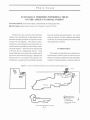
Show CULTURAL AFFILIATION OF KACHINA BRIDGE RUIN Nancy J. Coulam, United States Bureau of Reclamation, Upper Colorado Region, 125 South State St., Salt Lake City, UT 841 11 Kachina Bridge Ruin, a storage site in southeastern Utah, has been called a San Rafael Fremont site based on the presence ofadobe turtlebacksmctures and triangular anthropomorphspainted on the inside wall ofone of the turtleback structures. Based on new radiocarbon dates, the construction of the adobe structures at the site and the painting of the triangular anthropomorphs are now known to have occurred on or after A. D. 600- 655, a time when upper White Canyon was occupied by Mesa Verde Anasmi, not Fremont. A literature review of turtlebackstructures and triangular anthropomorphs indicates that these traits cannot be considered diagnostic of the Fremont, and that Kachinn Bridge Ruin is a typical Anasazi site for the region. Kachina Bridge Ruin, also known as 42SA6801 or V: 8: 27, is in upper White Canyon, on the edge of the Red Rock Plateau archaeological district defined by Lipe ( 1970) for southeastern Utah. The archeology of the Red Rock Plateau, the areanorth of the San Juan River, east of the Colorado River, and south of Dark Canyon and the Abajo Mountains, is well known ( Hobler and Hobler 1978; Lipe 1970; Matson, et al. 1988; Matson 1991; McVickar 2000) with one of its claims to fame being a long tree- ring chronology. This chronology ( Ahlstrom 1985; Berry 1982) documents the interrnit-tent presence of small horticultural- based households and communities in the area from about A. D. 200 through A. D. 1270. These Formative period sites are assigned to one or another archaeological culture or tra-dition based primarily on the relative percentages of ceramic wares and types that are present and second-arily on other material culture traits ( cf., Geib 1996: 98; Sharrock et al. 1961 : 14). Changes in ceramic assem-blages across the Red Rock Plateau reflect variable and shifting interaction with areas to the east and south, or between the Mesa Verde ( northern San Juan) Anasazi and Kayenta Anasazi traditions. Two sites in the Red Rock Plateau district, Horsecollar Ruin and Kachina Bridge Ruin, have been assigned Fremont cultural affiliation rather than Anasazi, based not on ceramics, but on other traits. Horsecollar Ruin and Kachina Bridge Ruin are both structural sites located in upper White Canyon. These two sites were first recorded in the early part of the twentieth century. Marie Wormington ( 1955) suggested these sites might be Fremont because of their adobe architecture, but Hobler and Hobler ( 1 97 8) effectively dismissed the no-tion that Horsecollar Ruin was Fremont whenthey noted that despite its architecture being " Fremont- like," the site lacked any other evidence for a Fremont occupa-tion. Neither ceramics, portable artifacts such as figu-rines, rock art, textiles, nor other Fremont material cul-ture diagnostic traits were present in Horsecollar Ruin. Today, archaeologists generally agree that Horsecollar Ruin is an Anasazi site, leaving Kachina Bridge Ruin a classificatory anomaly. UTAH ARCHAEOLOGY 14 ( 1) 2001 pp. 27- 38 Figure 1. The large, low walls of Feature 1, looking south over broken turtleback structures. Because Kachina Bridge Ruin had two putatively rines on the interior wall of the mud and boulder stmc- Fremont diagnostic traits, adobe turtleback architecture ture at site 42SA6801 ( V: 8: 27). [ Hobler and Hobler and Fremont pictographs, the Hoblers did not dismiss 1978: 21- 221. the possible Fremont classification. Phillip Hobler and With all the evidence that the Red Rock Plateau Audrey Hobler ( 1978) summarized the adobe architec- was part of the Anasazi culture area, how did Kachina ture and " Fremont" images in Kachina Bridge Ruin as Bridge Ruin become identified as a site whose Anasazi follows: occupants borrowed Fremont design motifs or whose " One style of storage structure, possibly a survival occupants were Fremont in an area otherwise occupied from Basketmaker 111- Pueblo I times, ismade up of by Anasazi? This question is answered here in conjunc-mud walls based on thick vertical slabs. The mud is built up in coils. Each coil contains small river tion with reporting four new radiocarbon dates from cobbles or pieces of angular rock enclosed within it Kachina Bridge Ruin. in such a way that they are not visible on the exposed surfaces of the wall. Sometimes the mud is also reinforced with grass or shredded juniper bark. This construction technique is a little like that adobe turtle- back technique used at some Fremont sites." THE SITE Surveyor Earl Douglas first described Kachina Wormington mentioned the mud and boulder struc- Bridge Ruin in 1908. Since then it has been mapped and tures at 42SA68 19 ( V: 8: 45) ( Horsecollar Ruin) in re-recorded several times. Kramer's ( 1987) feature desig-viewing evidence for Fremont- like architecture in south-nations are used here as a basis for further description eastern Utah ( 1 955). In ths context it is interesting to and discussion of the site. note the presence of six white- painted Fremont figu- Figure 2. The high walls of Feature 2 are painted with six white triangular anthropomorphs. Feature 1 Based on diameter, Feature 1 ( Figure 1) is the larg-est adobe turtleback structure in Kachina Bridge Ruin. It is roughly circular in plan view and its maximum iilte-rior diameter measures 2.4 m. It incorporates a large boulder into its wall. The wall is made of one to two courses of adobe turtlebacks reaching a maximum height of 30 cm. The width of the turtleback's wall is 25 cm. Feature 2 Feature 2 ( Figure 2) is the highest adobe structure at the site. The topmost turtleback is currently 90 cm high from the interior ground surface, but when Dou-glas first described the feature in 1908 it was almost completely covered by sand. Looters have dug around the structure since Douglas's visit. Feature 2 is circular in plan view and its interior diameter is 2.3 m. As de-scribed by Hobler and Hobler in the quotation above, the walls are built up of concentric rings of adobe turtlebacks, plastered over with a smooth mud coating on both inside and outside surfaces. Six white triangular anthropomorphs are painted on the inside plastered wall of Feature 2. Schaafsma ( 1 978: 69) called them " Fremont ghost figures" because they resembled triangular anthropomorphs in her south-ern San Rafael Fremont rock art zone. With Schaafsma's classification of the anthropomorphs as Fremont and Wormington's ( 1955) listing of adobe turtlebacks as a trait shared by Fremont and Anasazi, Kachina Bridge Ruin became known as a Fremont site located within an Anasazi culture area. Other Features and Rock Art Feature 3 of Kachina Bridge Ruin is described by Hobler and Hobler ( 1978: 21) as atypical Basketmaker bell- or beehive- shaped cist ( Figure 3 j. It is an above Figure 3. Feature 3, a bell- shaped cist. ground storage structure built with adobe and sealed with a coating of mud plaster. It is located between Fea-tures I and 2. Feature 4 is an arc of adobe clinging to the cliff wall at the south end of the site. The arc undoubtedly represents the presence of a former bell- shaped cist ( cf., Guernsey and Kidder 192 I : Plate 9e) that was dismantled prehistorically. In addition to the six white anthropomorphs already described inside Feature 2, the cliff wall and boulders at Kachina Bridge Ruin are covered by hundreds of rock art elements, including mud daubs, handprints, anthropomorphs, zoomorphs, and geometric designs ( Castleton 1987: 206). Notable rock art elements include several greenish- white figures in San Juan Anthropo-morphic Style, stylized handprints typical of heblo II- 111 Mesa Verde Anasazi ( cf., Tipps and Hewitt 19893, spirals representative of Puebloan clan migration sym-bols, and red and white butterflies ( Figure 4). Rock art elements classified as Glen Canyon Style 4 are also found on the cliff walls and boulders in the site. While Glen Canyon Style 4 is highly variable { Turner 1963: 6- 7), it is associated with Pueblo 11- 111 pottery in both the Kayenta and Mesa Verde Anasazi traditions. Glen Canyon Style 4 motifs at Kachina Bridge Ruin in-clude geometric designs, lizards, snakes, and watch-spring scrolls. Triangular anthropomorphs are also di-agnostic of Glen Canyon Style 4 and anthropomorphs that Turner depicted as representative of Style 4 fall within the range of variation of the six triangular anthropomorphs painted inside the wall of Feature 2 in Kachna Bridge Ruin. Of course, the solid triangular fig-ures in Kachina Bridge Ruin also resemble anthropomorphs found on Basketmaker 111 sites such Figure 4. Solid and stylized handprints typical of Pueblo 11- 111 Anasazi, and two butterfly motifs possibly representing a Puebloan clan symbol. as those illustrated by Guernsey and Kidder ( 1 92 1 : Plate 13 c, d). Ceramics The Hoblers collected 20 sherds from Kachina Bridge Ruin including 16 Basketmaker gray ware sherds, 3 Pueblo 11- 111 corrugated sherds, and 1 Basketmaker white ware sherd. Hurst ( 1989) reexamined these and other sherds collected from Natural Bridges National Monument and concluded that the Basketmaker I11 ce-ramic assemblage consisted almost entirely of imported Chapin Black- on- white manufactured with typical Mesa Verde andesite porphyry temper along with a generic sand tempered Lino- style gray ware. The sand tempered sherds might represent Kayenta Anasazi potters or they might reflect local production by potters who otherwise followed the Mesa Verde ceramic tradition. The latter seems to be the most reasonable explanation for the sand tempered gray wares in light of current understanding of local ceramic production processes ( cf., Geib 1996: 98- 113). While the gray wares from Kachina Bridge Ruin and other sites on the Red Rock Plateau reflect local production, imported white, red, and orange wares coupled with other material culture traits document in-termittent, alternating occupations by northern San Juan Anasazi and Kayenta Anasazi; at no time in prehistory does the ceramic evidence from Kachina Bridge Ruin or any other Red Rock Plateau site indicate a Fremont occupation. RADIOCARBON RESULTS Whlle working for the National Park Service, I had the opportunity to radiocarbon date four organic samples from Kachina Bridge Ruin. Table 1 and the following discussion present the dates in chronological order be-ginning with the most recent. Table 1. Radiocarbon Results from Kachina Bridge Ruin. Cahbrated Calibrated umber Material I4C Age ' 3C/' 2C ratio 2 Sigma Range 1 Sigma Range Beta- 71960 yucca sandal 1,030* 70 - 25.0 A. D. 880-- 1170 A. D. 970- 1040 Eleta- 8 1036 juniper beny 1,440* 50 - 23.5 A. D. 550- 675 AD. 600- 655 Beta- 81035 deer bone collagen 1,450* 40 - 19.8 A. D. 555- 665 AD. 600- 650 Beta- 75860 grass 1,630* 60 - 9.7 A. D. 265- 575 A. D. 390- 530 Beta- 71960 Few artifacts remain at Kachina Bridge Ruin, but occasionally corncobs, yucca knots, cordage, sherds, and chipped stone artifacts rise through the sand to the sur-face. Several years ago, a patrolling park ranger col-lected a six by nine cm fragment of a twined cord sandal from the surface of the sand near Feature 1. The edge of the sandal was made of three- ply yucca fiber in a11 S-twist cord. Sixteen wefts were made of two- ply yucca in S- twist cordage. The sandal resembled one cataloged as No. 740 by Kankainen and Casjens ( 1995: 124). It was completely destroyed during standard radiocarbon dating. The resulting one- sigma tree- ring calibrated date was A. D. 970- 1040 ( Beta- 71 960). This date falls within the A. D. 900- 1 100 time span traditionally assigned to Pueblo 11. Beta- 81036 Broken turtlebacks from Feature 2 ( Figure 2) lie around the high- walled circular structure. Comparison of Figure 2 here with Figure 13 in Hobler and Hobler ( 1 978: 22) shows that turtlebacks have fallen out of the wall of the adobe structure over the last 20 years. Two adobe turtlebacks lying between the structure and the cliff were broken open and searched for datable organic material. A single juniper berry was picked out of one and AMS radiocarbon dated. The resulting tree- ring calibrated one- sigma date was A. D. 600- 655 ( Beta- 81036), a period that Geib ( 1996: 117) calls the Early Formative. Archaeologists traditionally date Basketmaker I11 to A. D. 500- 700 ( cf. Reed 2000: 7), although Berry ( 1 982) favors a more restricted time range of A. D. 600 to 700, and Matson, Lipe and Haase ( 1988) split the Basketmaker 111 occupation of the Red Rock Plateau into early and late periods with the dividing line at A. D. 650. Hurt's ( 2001: 99) cross- dating of the ceramic as-semblage from Natural Bridges National Monument led her to place the dividing line between early and late Basketmaker 111 at A. D. 600. Whatever temporal cor-relation of the Pecos stage classification is used, A. D. 600- 655 falls within the Basketmaker I11 periodtstage, but whether we call it early or late Basketmaker I11 de-pends on whose chronology is used. Beta- 81035 Adobe turtlebacks liave also fallen from the north side of Feature 1 ( Figure 1). Examination of a fresh break in a newly fallen turtleback revealed aprotmding frag-ment of an artiodactyl hoof. The hoof fragment was pulled out of the mortar and submitted for a standard radiocarbon date. The resulting one sigma tree- ring cali-brated date was A. D. 600- 650 ( Beta- 81035). This date range falls within the trachtional Basketmaker I11 time period or within Matson, Lipe, and Haase's ( 1 988) early Basketmaker 111, or Hurt's ( 2001 : 99) late Basketmaker I11 for Natural Bridges National Monument. Beta- 75860 A second fallen turtleback froin the high walled structure with the white ghost figures ( Feature 2, Fig-ure 2) was broken open to reveal pine needles, grass stems, charcoal flecks, and juniper bark mixed into the adobe. Several of the grass stems were extracted and radiocarbon dated. The resulting one sigma tree- ring calibrated date was AD 390- 530 ( Beta- 75860), a date range classified as Basketmaker 11. Evaluating the Adobe Turtleback Dates Three radiocarbon dates were obtained from or-ganic matter inside three adobe turtlebacks from two structures at Kachina Bridge Ruin. The earliest date of A. D. 390- 530 ( Table 1) came from grass inside Feature 2. Radocarbon results are statistical estimates so this date means there is a 68 percent chance the grasses died sometime between A. D. 390 and A. D. 530, or Basketmaker 11. A juniper berry from inside another turtleback from the same structure, Feature 2, dated to A. D. 600- 655. The hoof inside Feature 1 returned the same date as the juniper berry in Feature 2: A. D. 600- 650, a time span classified as Basketmaker 111. The Basketmaker I1 date in Feature 2 may repre-sent a phenomenon rarely discussed in the archaeologi-cal literature: old grass. There are seemingly endless discussions about old wood and how charcoal dates must be interpreted cautiously because people pick up and use wood that has been lying around for hundreds of years. Archaeologists are cautioned to only date annu-als or short- lived organic matter to increase the quality of their radiocarbon results. But the grass date from Kachina Bridge Ruin indcates that grass, like wood, may be available for human use or reuse hundreds of years after the death of the organism. Given evidence for the dismantling of the Feature 4 adobe structure in the site, it is possible that Basketmaker I11 masons re-used an earlier Basketmaker I1 turtleback from this dis-mantled feature. The Basketmaker I1 date could also reflect old grass present on the surface of the site or in the deposits usedto mix the adobe during Basketmaker I11 times. Thus, the grass date does not provide a date for construction of the adobe structure, but it does pro-vide a terminus post quem date. Stratigraphers often apply the principle of termi-nuspost quem, meaning that objects in a stratigraphic sequence provide dates on or after which the stratum containing them were deposited. Application ofthis prin-ciple to the grass date from Kachina Bridge Ruin estab-lishes that this turtleback was made sometime on or af-ter A. D. 390- 530 ( Table 1). If we only had this date available, we would conclude the structure was built during the Basketmaker I1 period. The availability of two more recent Basketmaker I11 dates of A. D. 600- 655 demonstrate that construction of both structures and the painting of the white triangular anthropomorphs in Feature 2 occurred on or after these dates. Evaluating the Sandal Date The A. D. 970- 1 040 radiocarbon date on the twined cord sandal falls within the Pueblo I1 period. This might help date some of the rock art elements in the site such as the butterfly motifs or handprints, or it could merely represent when someone passed through White Can-yon and lost a sandal. The archaeological record for the Red Rock Plateau indicates an occupational hiatus from A. D. 890- 1029, but the Anasazi occupation of the area increased from A. D. 1030- 1 109 ( Ahlstrom 1985). CULTURAL CLASSIFICATION OF KACHINA BRIDGE RUIN Some archaeologists classified Kachina Bridge Ruin as Fremont because of its adobe turtleback architecture and because six of the hundreds of rock art motifs in the site resembled Fremont ghost figures. In the following sections, I show that this classification is erroneous be-cause neither adobe turtleback construction nor trian-gular anthropomorphs are diagnostic of the Fremont. This necessitates a brief review of some archaeological history. Turtlebacks Are Not Culturally Diagnostic Not long after Douglas ( 1 908) documented Kachina Bridge Ruin, Judd ( 1 91 9) described adobe turtleback structures at Paragonah in southwestern Utah, an area eventually designated as Fremont. Kidder and Guern-sey ( 1 91 9) described adobe turtleback structures in Fluteplayer House near Kayenta, Arizona, well within the Anasazi culture area. Kidder and Guernsey ( 1 9 19: 45) concluded that the adobe turtleback struc-tures were used, partly filled with rubbish, and aban- Table 2. Measurements of Six White Anthropomorphs, Feature 2, Kachina Bridge Ruin ( in cm). Figure No. ( South to North) Shoulder width Torso length Head length Comment 3 14.5 22 - Head eroded 4 - - - Too eroded 6 - - - Too eroded doned before the erection of masonry- built rooms by the Puebloan people who made Kayenta ( Tusayan) pot-tery. By 1921 enough stratigraphic work had been done in northern Arizona that adobe cists and granaries be-came diagnostic traits of the Basketmaker ( Guernsey and Kidder 192 1 ). In 193 1, Noel Morss described an adobe turtleback granary in Site 3 on Little Tantalus Creek in the Fre-mont River drainage ( Morss 193 1 : 4,34) in south- cen-tral Utah. He pointed out that this Fremont adobe struc-ture bore a closer resemblance to some of the adobe turtleback structures described by Judd than to the hebloan wattle- and- daub construction of the Kayenta Anasazi. By including this one adobe turtleback gra-nary in his type descriptions of Fremont sites, Morss was the first to associate adobe turtleback construction with the Fremont . In 1948, Burgh and Scoggin ( 1 948: 34,82- 83) re-ported that while adobe turtleback structures were found in Basketmaker sites described by Kidder and Guern-sey in the Kayenta area, they were also present in Big Bin Cave in Yampa Canyon. Although they could not directly date these structures, ceramic cross- dating led them to suggest a date of A. D. 650 ( Burgh and Scoggin 194835). By 1955, the presence of an adobe wall ap-pended to a masonry structure at the Turner- Look site in east- central Utah led Wormington ( 1 955: 178) to list construction with adobe turtlebacks as one of the traits shared by Anasazi and Fremont. This brief history shows that although adobe turtleback construction might be temporally diagnostic, it is not a culturally diagnostic trait. Burgh, Scoggin, and Worrnington recognized this, but with the post- 1950s emphasis on defining regonal variants of the Fre-mont ( e. g., Lohse 1980), some Utah archaeologists have treated adobe turtleback construction as a Fremont di-agnostic trait and ignored its presence in Anasazi sites. Triangular Anthropomorphs May Be Culturally Diagnostic Castleton and Madsen ( 1 98 1) argued that triangu-lar anthropomorphs are nondiagnostic traits because they are widely distributed in both Fremont and Anasazi cul-ture areas. Obviously triangular anthropomorphs are foundvirtually everywhere. Even a cursory review dem-onstrates that triangular- bodied anthropomorphs are depicted in Basketmaker caves ( Kidder and Guernsey 192 1 : Plate 13), in Glen Canyon Style 4 rock art panels ( Turner 1963), in Chinle Representational Style, and in Fremont rock art. In refuting the argument for a Fre-mont presence in Canyonlands, however, Sharrock ( 1 966: 66- 67) depicted the typical Fremont ghost figure as having a triangular body with pointed shoulders and a square or trapezoidal- shaped head. The shoulders and heads of the figures in Kachina Bridge Ruin are rounded, leading to the conclusion that the triangular anthropomorphs present in Kachina Bridge Ruin are not Fremont ghost figures. I propose that if detailed morphometric analyses were made of the full range of triangular anthropomorphs found throughout the Southwest, styles with chrono-logical, regional, and possible sociocultural significance could be statistically identified ( cf., Geib 1996: 109- 1 11). To encourage rock art researchers to statistically assess stylistic variability, Table 2 provides measurements of the relative shoulder width, torso length, and head length of the six anthropomorphs inside Feature 2 of Kachina Bridge Ruin ( only some of the figures could be mea-sured because the pigment is too deteriorated to pro-vide accurate measurements for all). In providing these measurements, I hypothesize that the ratio of the shoulders to the torsos of these figures, coupled with their rounded heads and shoul-ders, falls within the statistical range of Mesa Verde Anasazi triangular anthropomorphs dating to the sev-enth to eighth centuries A. D. Furthermore, I hypoth-esize that if measurements were made of the heads and shoulders of rock art figures located west of the Colo-rado River in areas unequivocally classified as Fremont, these would fall outside the range of Anasazi figures such as those at Kachina Bridge Ruin. I suspect that morphometrics have simply not been compiled to enable statistical differentiation of regional rock art styles within Southwestern archaeological cul-ture units. But, even without metrics, the rounded heads and shoulders of the anthropomorphs in KachinaBridge Ruin are apparently outside the range of the square or bucket- headed anthropomorphs with sharply pointed shoulders that seem to occur on ghost figures in the Fremont area. CONCLUSIONS This paper began by posing the question that if the Red Rock Plateau was part of the Anasazi culture area, how did Kachina Bridge Ruin become identified as a Fremont site? The site was called Fremont because of the presence of triangular anthropomorphs in an adobe turtleback structure. Comparison of the Kachina Bridge anthropomorphs with Fremont ghost figures ( e. g. Sharrock 1966: 66- 67) demonstrates that the heads and shoulders of the KachinaBridge figures are too rounded to meet the definition of a Fremont ghost figure. Even if we ignored the details of head and shoulder shape and only look at the torsos, however, the figures would still not be Fremont diagnostics because triangular torsos are found in both Fremont and Anasazi rock art ( Castletonand Madsen 1981). Triangular torsos in and of themselves are nondiagnostic. The other trait that led to the identification of the site as Fremont was adobe architecture. Although adobe turtlebacks are found in Fremont sites, they are also found in Anasazi sites, and in fact, throughout the South-west. Like triangular anthropornorphs, adobe turtleback construction is not a culturally diagnostic trait, although it might be a temporal marker. Radiocarbon dates on organic matter within turtlebacks from Kachina Bridge Ruin document that these structures were built no ear-lier than A. D. 600- 655. Before radiocarbon dates were available, Kidder, Burgh, Scoggin, and other Southwest-em archaeologists hypothesized that adobe turtleback construction might serve as a temporal marker for the early Formative or Basketmaker periodslstages. The availability of these new radiocarbon dates confirms the Hoblers' assignment ofthe site to Basketmaker 111, when horticultural populations expanded across the Red Rock Plateau coincident with increased annual precipitation, increased summer rainfall, and above- average tempera-tures. Most archaeologists attribute this population to actual migration of northern San Juan Anasazi from the Mesa Verde district, or at least migration of Mesa Verde women ( Lipe 1970). Evidence for this migration comes from a low population density in previous periods and the presence of artifact types such as Chapin Black- on-white and Abajo Red- on- orange pottery, Style A arrow points, and two- rod- and- bundle basketry. Under a paradigm of culture history, Southwestern archaeologists used artifact types such as these, along with architecture and settlement patterns, to divide and classify the continuurns of space and time into the Anasazi, Fremont, Mogollon, or Hohokam archaeologi-cal cultures or traditions. Under newer paradigms, dif-ferent research interests have led some archaeologists to question the utility, validity, or distinctiveness of these classificatory units ( cf., Madsen 1982; Speth 1988; Tainter and Plog 1994; Dongoske et al. 1997; Madsen and Simms 1998). Obviously, this paper was written to correct what I perceive as a minor classificatory error in southern Utah culture history; namely, Kachna Bridge Ruin is a Basketmaker 111 Anasazi site, not Fremont. Until we refine the basics of space- time systematics, we cannot begin to work on the larger, more interesting problems of Utah archaeology. Acknowledgments. I gratefully acknowledge the Canyonlands Natural History Association which paid for the dates from sales of educational materials in thevisitor centers of the Southeast Utah Group and the Multiagency Visitor Center in Moab. I thank Alan Schroedl for talung the photographs and digitally enhancing them, and Kathy Kankainen for examining the san-dal fragment. REFERENCES CITED Ahlstrom, R. V. N. 1985 The Inteyoretation ofArclaaeologica1 Tree-ring Dates. Unpublished Ph. D. dissertation, University of Arizona, Tucson. Berry, M. S. 1982 Time, Space, and Transition in Anasazi Prehistory. University of Utah Press, Salt Lake City, Utah. Burgh, R. F. and C. R. Scoggin 1948 The Archaeology of Castle Park, Dinosaur National Monument. Studies Series in Anthropology No. 2. University of Colorado, Boulder. Castleton, K. B. 1987 Petroglyphs and Pictographs of Utah. Vol. 2: The South, Central, West and Northwest. Utah Museum of Natural History, Salt Lake City. Castleton, K. B. and D. B. Madsen 198 1 The Distribution of Rock Art Elements and Styles in Utah. Journal of California and Great Basin Anthropology 3( 2): 163- 175. Dongoske, K. E., M. Yeatts, R. Anyon, and T. J. Ferguson 1997 Archaeological Cultures and Cultural Affiliation: Hopi and Zuni Perspectives in the American Southwest. American Antiquity 62( 4): 600- 608. Douglass, W. B. 1908 Field Notes of Survey of Reservation Embracing Natural Bridges National Monument: Sept. 12- Oct. 3,1908. Ms. on file, Southeast Utah Group, National Park Service, Moab, Utah. Geib, P. R. 1996 Glen Canyon Revisited. University of Utah Anthropological Papers 11 9. Salt Lake City. Guernsey, S. J. and A. V. Kidder 1 92 1 Basket- maker Caves of Northeastern Arizona: Report of the Explorations, 191 6- 1 7. Peabody Museum of American Archaeology and Ethnology Vol. 8( 2). Harvard University, Cambridge. Hobler, P. M. and A. E. Hobler 1978 An Archaeological Survey of the Upper White Canyon Area, Southeastern Utah. Antiquities Section Selected Papers No. 13. Utah Division of State History, Salt Lake City. Hurst, W. B. 1989 Analysis of Cei6amicsfrom Natural Bridges National Monument, Utah. Ms. on file, Southeast Utah Group, National Park Service, Moab, Utah. Hurt, T. D. 2001 Ceramic Studies. In An Archeological Survey of Natural Bridges National Monument, Southeastern Utah, edited by J. L. McVickar, pp. 89- 132. National Park Service, Intermountain Cultural Resources Management Professional Paper No. 64, Santa Fe. Judd, N. M. 191 9 Archeological Investigations at Paragonah, Utah. Smithsonian Miscellaneous Collections 20( 3). Washington, D. C. Kankainen, K. and L. Casjens 1995 Treading in the Past: Sandals of the Anasazi. Utah Museum of Natural History and University of Utah Press, Salt Lake City. Kidder, A. V. and S. J. Guernsey 1 9 1 9 Archeological Explorations in Northeastern Arizona. Bureau of American Ethnology Bulletin No. 65. Srnithsonian Institution, Washington D. C. Kramer, K. 1987 42SA6801 Site Form. Ms. on file, Southeast Utah Group, National Park Service, Moab, Utah. Lipe, W. D. 1970 Anasazi Communities in the Red Rock Plateau, Southeastern Utah. In Reconstructing Prehistoric Pueblo Societies, edited by W. A. Longacre, pp. 84- 1 39. University of New Mexico Press, Albuquerque. Lohse, E. S. 1980 Fremont Settlement Pattern and Architectural Variation. In Fremont Perspectives, edited by D. B. Madsen, pp. 41- 54. Antiquities Section Selected Papers, Utah State Division of History, No. 16, Salt Lake City. Madsen, D. B. 1982 Salvage Excavations at Ticaboo Town Ruin ( 42Ga2295). In Archaeological Investigations in Utah, edited by D. B. Madsen and R. E. Fike, pp. 1- 41. Bureau of Land Management Cultural Resource Series 12, Salt Lake City. Madsen, D. B. and S. R. Simms 1998 The Fremont Complex: A Behavioral Perspective. Journal of World Prehistory 121255- 336. Matson, R. G. 199 1 Origins of Southwest Agriculture. University of Arizona Press, Tucson. Matson, R. G., W. D. Lipe, and W. R. Haase, IV 1988 Adaptational Continuities and Occupational Discontinuities: The Cedar Mesa Anasazi. Journal of Field Archaeology 15( 3): 245- 264. McVickar, J. L. ( editor) 2000 An Archeological Survey of Natural Bridges National Monument, Southeastern Utah. National Park Service, Intermountain Cultural Resources Management Professional Paper No. 64, Santa Fe. Morss, N. 193 1 The Ancient Culture of the Fremont River in Utah. Papers of the Peabody Museum of American Archaeology and Ethnology 12 ( 3). Harvard University, Cambridge. Reed, P. F. 2000 Fundamental Issues in Basketmaker Archaeology. In Foundations ofAnasazi Culture: The Basketmaker- Pueblo Transition, edited by P. F. Reed, pp. 3- 16. University of Utah Press, Salt Lake City. Schaafsma, P. 1978 Rock Art in the White Canyon Basin. In An Archaeological Survey of the Upper White Canyon Area, Southeastern Utah, edited by P. M, and A. E. Hobler, pp. 67- 72. Antiquities Section Selected Papers No. 13. Utah Division of State History, Salt Lake City. Sharrock, F. W. 1966 An Archeological Survey of Canyonlands National Park. Miscellaneous Paper No. 12, University of Utah Anthropological Papers 83. University of Utah Press, Salt Lake City. Sharrock, F. W., K. M. Andersoq D. D. Fowler, and D. S. Dibble 196 1 I960 Excavations, Glen Canyon Area. University of Utah Anthropological Papers 52. University of Utah Press, Salt Lake City. Speth, J. D. 1988 Do We Need Concepts like " Mogollon," " Anasazi," and " Hohokam" Today? A Cultural Anthropological Perspective. The Kiva 53: 201- 204. Tainter, J. A., and F. Plog 1994 Strong and Weak Patterning in Southwestern Prehistory: the Formation of Puebloan Archaeology. In Themes in Southwest Prehistory, edited by G. J. Gummerman, pp. 165- 1 8 1. School of American Research Press, Santa Fe. Tipps, B. L, and N. J. Hewitt 1989 Cu1Qml Resource Inventory and Testing in the Salt Ceek Pocket and Devils Lane Areas, Needles District, Canyonlands National Park, Utah. Selections from the Division of Cultural Resources No. 1, Rocky Mountain Region, National Park Service, Denver. Turner, C. G., I1 1963 Petrographs of the Glen Canyon Region: Styles, Chronology, Distribution, and Relationships from Basketmaker to Navajo. Bulletin No. 38. Glen Canyon Series No. 4. Museum of Northern Arizona, Flagstaff, AZ. Wormington, H. M. 1955 A Reappraisal of the Fremont Culture with a Summav ofthe Archaeology of the Northern PerQhery. Proceedings No. 1. Denver Museum of Natwal History, Denver. |