| OCR Text |
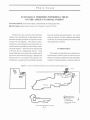
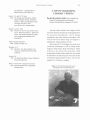
Show and Northwest. Utah Museum of Natural History, Salt Lake City. Harris, J. R., and D. W. Hone 2002 The Origins and Emergence of West Semitic Alphabet Scripts. Retrieved January 3,2002, from Brigham Young University Web Site: http:// www. lib. byu. edu/- imaging/ negev/. Kurnit, S., and A. Pena 2002 Where Does the Yin Yang Spbol Come From? Retrieved January 3,2002, from About, The Human Internet Site: http: l/ www. chinesefortunecalendar. com/ ynyang. htm. Ogden Standard Examiner 1980 Article, 29 April: 11 A. Rhoades, G. R. 1982 Waybill to Lost Spanish Mines and Treasures. Dream Garden Press, Salt Lake City. Sawatzki, B. 1996 The Wordfiom Weber County, Publisher's Press, Salt Lake City. Webster : Y Ninth New Collegiate Dictiona~ 1 985 Merriam- Webster Inc., Springfield, Massachusetts. A TIP ON STABILIZING CERAMIC VESSELS Barb Jolly and Roy Jolly, Dixie- Jennifer Jack Chapter Utah Statewide Archaeological Society, 508 Old Mill Rd., Mesquite, NV 89027 Jim Starr ( Dixie- Jennifer Jack Chapter USAS) knows that patience and ingenuity are the prerequisites for ancient pot reconstruction. The St. George octogenarian has drawn attention throughout Utah with his innovative method using coat hangers to stabilize pots, instead of plaster of Paris. Starr retired in 1977 and began his career as an avocational archaeologist in 1990 by taking classes taught by Diana Hawks, BLM archaeologist. While working on the South Gate excavation, BLM archaeologist Gardner Dalley asked Starr if he would be interested in reconstructing pots. Since then, he has reconstructed approximately 40 pots, and each pot requires 40 to 50 hours to complete. Figure 1. Jim Starr demonstrates the use of coat hanger wire in reconstructing pots. Figure 2. Coat hanger wire used to support reconstructed pots Through many hours of trial and error, Starr devised missing, leaving gaps in the pot. Plaster of Paris is the following steps for reconstructing pots: often recommended for use in filling the gaps, but it 1. Wash sherds with warm water and asoft brush. can be messy. The plaster can also appear intrusive, detracting from the display ofthe original vessel. Coat 2. Sort by rim pieces, thickness, color, and bottom hanger wire can be shaped to provide tension to support pieces if discernable. Rim pieces often indicate the vessel type. gaps in the pot as shown in Figures 1 and 2. The wire often can be shaped to fit inside the pot without 3. If the pot is small, start with the rim and work down. For large vessels, start with the rim and additional support or attachment by carefully adjusting the bottom andwork toward the center. the wire tension. For pots with a large area left unsupported, use a system of bracing with coat hanger 4. When finding two sherds that mate, apply a thiu coat of Duco cement to each surface. hold wire, along with glue and duct tape to help hold the in place a minute or two, then place in sand to wire in place. Starr encourages using ingenuity. Notice maintain the contour while the glue dries. the various sizes, shapes, and arrangements of wire in 5. When the glue is ahnost dry, check to be sure the Figure 2. the fit is correct. If running a fingernail across With a minimum of alteration, the finishedproduct a seam causes the nail to catch, the alignment is off andneeds adjustment. Maintaining the accurately portrays the vessel, provides information contour is critical so that the top and bo& portions of the vessel match. about prehistoric life, and offers a striking reminder that pottery is one of Utah's most ancient arts. Coat hangers come in handy as the vessel is reconstructed because more often than not pieces are |