| OCR Text |
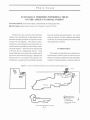
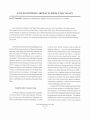
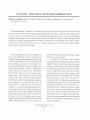
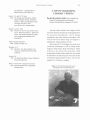
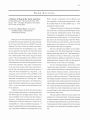
Show P h o t o E s s a y CULTURALLY MODIFIED PONDEROSA TREES ON THE ASHLEY NATIONAL FOREST Lawrence DeVed, Uinta Basin Chapter, Utah Statewide Archaeological Society. Byron Loosle, Ashley National Forest, 355 N. Vernal St., Vernal, UT 84078 For the last few years, members of the Uinta Basin Chapter of the Utah Statewide Archaeological Society have been recording an unusual site type that will soon be gone from the landscape. This article provides a description of culturally peeled trees on the Ashley Na-tional Forest that are probably the work of Native Ameri-can people ( Figure 1). These trees are an important link to the past, but are a disappeasing resource. These ancient inhabitants will eventually die a natural death if they are not removed through logging, or damaged and killed by fire first. Club members Tim Sweeney, Leon Chamberlain, Lawrence DeVed, and Darlene Koerner have been studying these graceful giants. In a country where the evidence of former inhabitants rests lightly on the land, the culturally modified trees remind us that others passed this way before. SCARRED TREES We thought we had stumbled onto a relatively un-explored aspect of Native American culture with iden-tification of culturally modified trees in the Uinta Basin. Literature on this phenomenon is relatively sparse for Figure 1. Location of culturally modified trees surveyed in the Ashley National Forest. UTAH ARCHAEOLOGY 14( 1) 2001 pp. 1- 13 1 the Rocky Mountains and Great Basin areas. But a recent search on the internet revealed that the Pacific Northwest has a plethora of information on culturally modified trees ( CMTs). Articles appear in environ-mental and government periodicals; archaeologists, Native Americans, andvolunteer groups have conducted research projects; and numerous tours advertise these trees on their itineraries ( Stryd 1998; Neary 2000; North Island Kayak 1999; Walz 1998). These trees are consid-ered so important that the British Columbia Ministry of Forests has written a 127 page handbook for identify-ing and recording CMTs ( Stryd 1998) and offers a for-mal eight- day Resource Inventory Standards course to learn to identify and record them. In the Pacific North-west, red and yellow cedar were vital to life, wood planks were used for buildings, containers, and canoes, while bark and roots were used for basketry, clothing, medicines, ceremonial headgear, and art. In Utah, much less is known about aboriginal tree use. There are fewer trees here, and tree products appear to have been less important. Trees in the Great Basin were used for fewer products than in the Northwest. The Uinta Basin does not have huge cedar trees, but ponderosa was selec-tively stripped of bark to obtain cambium. Ponderosa pine was also scarredin Montana and Colorado in simi-lar ways so comparisons can be made with these areas. Scarred trees can result from natural processes such as lightning strikes, fire, and damage caused by animals. When lightning hits a tree it can literally blow the bark off the trunk. Lightning struck trees generally have a narrow scar that spirals most of the length of the tree. Many trees exhibit lightning strikes, but few show signs of the bark exploding. When the bark does explode, the scar outline is irregular and occurs at varying heights. Scars also result from fire. Ponderosa is a fire- tolerant species and most trees have survived numerous fires. Ponderosa or yellow pine usually lives from 300 to 600 years ( Fowells 1965423). Before Forest Service fire suppression efforts, ponderosa groves experienced a fire every 10 to 20 years ( Sherel Goodrich, personal communication 2000). These fires were usually low intensity, just burning the underbrush. Fires rarely burn hot or high enough to jump into tree limbs and create crown fires. Fire suppression efforts over the last 100 years caused the brushy undergrowth to build to dangerous levels. The chances of a catastrophic fire killing these giants is now much greater. For this reason, the Forest Service has been more aggressive the last five to ten years in conducting prescribed burns in an attempt to mimic natural fire patterns and return the ecosystem to a more natural balance. Fire scars, sometimes called " cat faces," tend to be triangular- shaped. The scar begins at ground level and rises to a sharp point two to three feet above the ground, although some scars are considerably larger. There is often some sign of blackening or charring of the interior wood. These scars tend to be on the upslope side of the tree, usually as a result of burning debris rolling downhill and becoming trapped against the uphill side of the tree. Animals such as elk, bear, and porcupine scrape bark off with claws or teeth to obtain nutrients or insects from inside the bark. Deer and elk also rub their antlers on trees to remove spring velvet. Bark removal by animals tends to be irregular in depth and shape. Teeth, claw, or antler marks tend to be visible. Courtesy Tami Merkley, photographer. Trail blazes and survey trees are human- created scars. Trail blazes are associated with a trail or road and have a consistent pattern, usually small strips or patches, often on both sides of the tree or trail. Survey trees or witness trees usually have a date, number, or other information carved into a scarred area ( Martorano 1989: lO). CULTURALLY MODIFIED TREES Unlike the Pacific Northwest where a variety of scar types have been documented ( e. g., Hollenbeck et al. 1984, Styrd 1998), in the Uinta Basin scars tend to be fairly uniform, indicating cambium use. The scar usually begins at least one to two feet above the ground. The bottom of the scar is often flat but the top tends to have at least one or more points, occasionally eight or more feet above the ground. Cultural scars on trees in the Uintah Basin tend to be rectangular or oval. " A CMT is a tree that has been altered by native people as part of their traditional use of the forest" ( Stryd 1998: l). Trees that have been peeled for cultural use of the bark may have been struck by lightning and burned, but they also have characteristics that show removal of their bark in another way. Note evidence of burning in scar of tree. WHY PEEL THE BARK? Native American groups from Montana and Oregon to Arizona and New Mexico consumed the inner bark of ponderosa pine trees ( Alldredge 1995: 20- 2 1). The inner bark is very nutritious. " During the spring the three tissues that make up the cambium contain large amounts of carbohydrates and proteins" ( Alldredge 1995: 24). Martorano ( 1 989: 1 1- 1 2) indicates that the Ute of southern Colorado stripped the bark of pine trees, usu-ally to use the sap- laden inner bark for food. When peeled from the tree in the spring, it is fluid and sweet. Scraped from the outer bark and rolled into balls, it was Martorano ( 1989: 9) notes, " the inner bark consists of the phloem ( flo- um) a layer of cells just beneath the outer bark that transports the food reserves manufactured by the tree." One pound of phloem has as much calcium as nine glasses of milk. It also contains iron, magnesium, zinc, and other nutritional substances. Considerable sap seeped out of the scar of this recently scarred lodgepole pine. chewed as a sweet treat. Mixed with corn and meat, it gave a pitch flavor to stew. It could also be used me-dicinally as atonic to " cleanthem out." Smith ( 1974: 65) noted, " small strips of the inner bark of the pine were tied into bundles and later eaten with salt" by the North-em Ute. Leo Thorne ( the father- in- law of Lawrence DeVed) owned a photographic studio in Vernal and asked mem-bers of the Ute tribe about the peeled trees. He was told trees were peeled to get the inner bark and pine gum for healing purposes. As a result, h s family re-ferred to the trees as " medicine trees," and the term is still often heard in Vernal. In some areas, a medicine man placed the person needing help against the scarred portion of a tree as part of a healing or exorcism ritual ( Clifford Duncan, personal communication 2000). Bertha Cuch ( personal communication to Rhoda DeVed) remembers that her grandmother peeled trees and rolled the inner bark into balls that she gave the children as treats. This is similar to an account from a woman who remembers her grandmother collecting sap to use as a sweetener ( Clifford Duncan, personal com-munication, 1998). Jonas Grant ( personal communica-tion, 1997) says the sap was used to waterproof moc-casins. Other possiblities include using the sap as a glue to repair moccasin soles, as a waterproof basket lining ( although we think pifion was the preferred " pine" for this use), and in healing. Clifford Duncan ( personal communication 2001 j recently suggested another pos-sible use. In this rocky, mountainous area, unprotected horse hooves could easily be injured. When a person was going to a steep rocky spot, they took a piece of rawhide and glued it to the bottom of the horse's hoof with pine sap. Then they wrapped the edges of the raw-hide around the horse's foot and tied it off with another strip of rawhide. This helped protect the horse in rocky terrain. THE DATA We located 26 trees that meet the descriptions of trees peeled by Native Americans. They range from south of Duchesne to north of Vernal in the Flaming Gorge National Recreation Area. Since the conclusion of this project, additional trees have been noted on Pipe Creek, Ashley Creek, the North Fork of the Duchesne River, and in the Yellowstone drainage. We measured each tree and scar, and recorded on a form the mea-surements, a photograph, and a short description. If we had use of a Forest Service coring tool, cores were taken and tree rings counted. Table 1 summarizes the information gathered. All of the reported scars were on ponderosa pine ( Pinus ponderosa), similar to what is observed in the Kootenai National Forest in Montana where 76 percent were ponderosa and the Wallowa- Whitman Forest in Oregon where 98 percent were pon-derosa ( Alldredge 1995: 60). Other species such as black cottonwood ( Populus trichocarpa), quaking aspen ( Populus tremuloides), englemann spruce ( Picea englemannii), and douglas fir ( Pseudotsuga menzesii) were also peeled for cambium ( Alldredge 1995: 3 I), but no examples of these species with cultural scarring have been noted in the Ashley National Forest. Table 1. Data from Culturally Modified Trees in the Ashley National Forest. Direction Age when Scar Width Scar He@ Tree ( degrees) Peeled Date of Scar in cm in cm Brownie Canyon # 1 Brownie Canyon # 2 Brownie Canyon # 3 Timber Canyon # 1 Timber Canyon # 2 Timber Canyon # 3 Tnnber Canyon # 4 Sowers Canyon # 1 Sowers Canyon # 2 Sowers Canyon # 3 Sowers Canyon # 4 Sowers Canyon # 5 Sowers Canyon # 6 Sowers Canyon # 7 u 44 Canyon Rim Honshger Creek # 1 Honshnger Creek # 2 Honslinger Creek # 3 Eagle Creek # 1 Eagle Creek # 2 Eagle Creek # 3 Eagle Creek # 4 Eagle Creek # 5 Eagle Creek # 6 F~ gleC reek # 7 White ( 1954) summarized the methods used to gather bark by Kutenai Indians who remember how the inner bark was harvested. According to his informants, tree- peeling took place as follows: 1) a tree was selected for peeling; 2) bark from a vertical notch six to eight inches ( 15 to 20 cm) long was removed from the tree and the inner bark sampled; 3) if the sample was considered " good," an area was selected for removing a larger section of bark; 4) a horizontal cut was made through the outer bark with an ax; 5) a sharpened branch or pole called a " debarking stick was inserted under the cut and used to loosen and pry the outer bark from the tree with an upward motion. At times the strips of outer bark were pulled downward from the trunk as well as upward. Scar widths on trees we studied were between 25 cm and 138 cm with an average of 48 cm, while those from Colorado ranged from 1.3 cm to 152 cm ( Martorano 1989: 10). The length of the scar was between 10 cm and 274 cm in Colorado, but between 89cm and 224 cm ( approximately 1 to 2 meters) on trees in the Ashley National Forest, with an average of 137 cm ( 1.4 meters). The Ashley National Forest tree scars tend to be slightly more uniform in size, and although they are apt to be about as large as those documented in Colorado, small scars are lacking in the Ashley National Forest examples. Martorano ( 1989: ll) reported finding cut marks along the bottom scars from trees in southern Colorado. No similar cuts were found on the Utah trees. At least three Ashley National Forest trees had saw or ax cuts, but they appear to have been made long after the original bark peeling. These ax cuts were probably made by recent campers or hunters. Martorano also noted smaller, possible test scars on several trees in Colorado, but none were noted during this study. We also did not see more than one scar on any tree. " The peeling process was undertaken primarily by women and usually done near a campsite. The trees were peeled in the spring usually in May, when the sap in the tree was running and the bark was easiest to remove" ( Martorano 1989: lO). Clifford Duncan ( personal communication 1998) was told that Uinta Basin residents collected sap in May or early June. Turner ( 1978: 60) states the best cambium from ponderosa trees is " obtained from young trees, before they began to bear cones. It could also be taken from the twigs and branches of older trees." DATING WHEN THE TREES WERE SCARRED For this project scarring dates were established by taking two cores from each tree, one from the area of the scar and another from an area with intact bark. Tree rings were counted for each core and the difference between the two ring counts was considered the age of the tree at which the scar was created. Randy Kaufman, a Forest Service employee with extensive tree ring counting experience, counted several of the cores. USAS chapter members counted the others. The Eagle Creek cores were the most difficult to recover and count, and accordingly should be considered estimates. Alldredge ( 199557) noted a majority of the scars on the Kootenai National Forest were from the nineteenth century. Martorano ( 1989: Il) states the " analysis of 40 culturally peeled trees in three parts of Colorado indicates that the majority of the trees were peeled between 1815 and 1875. One scar dated to 1793 and a few dated to post- 1890." Ferris ( 1 940: 269) observed Utes near the Great Salt Lake collecting the inner bark of pine in the latter half of the nineteenth century. In contrast to all of the just- mentioned examples, none of the trees from the Ashley National Forest were scarred before 1900 ( Table 1). This date roughly coincides with the removal of Colorado Utes to the Ouray Reservation in the Uinta Basin. We suspect the best explanation for this is that the Ute in southern Colorado commonly stripped bark from ponderosa trees. When the Ute were forced from Colorado in 1882 the practice ceased there, but began on trees near the reservation in Utah. Martorano ( 1989: ll) noted 84 culturally scarred trees in her study area. She feels the trees were an important starvation food, although admitting they were probably part of routine subsistence and their use may have varied geographically. Alldredge I ( 1 995: 22) notes considerable differences among ethnographers, so 1 " whether cambium was used as a steady source of food or whether it was used solely during times of dietary stress has yet to be determined." We noted a more limited number of trees ( approximately 35) on the Ashley National Forest, over a much larger area. Most areas contain only one or two scarred trees. Only on Eagle Creek and in Sowers Canyon were small clusters of seven trees found. - =. C:. L . ---- 1**. 7 - - ' '. f4,$ f~ *, *-% - ..- A*;; * @& 4b@*: 5; Martorano's assertion that ponderosa was a starvation food does not seem valid in Utah. We would expect many more trees with larger haphazard scars if peeling was done for survival. Instead, the peeling seems more consistent with occasional use as a sweetener, sealant, glue, or for medicinal purposes, as local informants have reported. SUMMARY The Uinta Basin has numerous culturally modified trees scarred between 1900 and 1960. The bark was peeled from these trees by local Utes probably to obtain a sweetener, sealant, or medicine. If you know the story behind the trees they become another recreational expe-rience on the forest. As new trees are added to our database we hope to gain a clearer understanding of how important this resource was to local groups. If this re-port causes someone to look closer at that " burned tree," we are pleased. REFERENCES CITED Alldredge, K. 1995 The Phenomenon of Cambium Peeled Scarring on the Kootenai National Forest, Northwest Montana: Mitigation Effort of 24LN1444. Ms. on file, Kootenai National Forest, Libby, Montana. Ferris, W. A. 1940 Life in the Rocky Mountains. The Old West Publishing Co., Denver. Fowells, H. A. 1965 Silvics of Forest Trees of the United States. Agriculture Handbook No. 27 1. United States Department of Agriculture, Forest Service, Washington D. C. Hollenback, B. J., C. Mack, and R. H. McClure, Jr. 1985 Stripped Cedar Trees: South- Central Cascades, Washington. Paper presented at the 49h Annual Meeting of the Society for American Archaeology, Portland, Oregon. Martorano, M. A. 1989 So Hungry They Ate The Bark Off a Tree. Canyon Legacy 9: 9- 12. 1997 Recording Culturally Modified Trees. http:// www. arch. gov. bc. ca/ policy/ cmt. htm Neary, K. ca. 2000 Huu- ay- aht Researcher Juanita Johnson Next to a Culturally Modified Tree ( photographs). http:// www. huuayaht. ca/ healing/ graphics/ ritatrees. html North Island Kayak 1999 Areas. http:// www. island. netl- nikayakl areas. htm1 ( see Johnstone Strait listing) Smith, A. M. 1974 Ethnology of the Northern Utes. Papers in Anthropology No. 17. University of New Mexico Press, Albuquerque. Stryd, A. 1998 Culturally Mod@ ed Trees of British Columbia. http:// www. for. gov. bc, ca~ hfd~ pubs/ docs/ mr/ mr09 1 . htm 1998 Culturally Modzped Trees of British Columbia: A Handbook for the Zdentijcation and Recording of Culturally Mod@ ed Trees. British Columbia, Ministry of Forests. Turner, N. 1978 Food PlantLvo f British Colt~ mbiaIn dians. Part 11: Interior Peoples. British Columbia Provincial Museum, Handbook No. 36, Victoria, British Columbia. Walz, L. 1998 Twin Island Caretakers Leave. In Powell River Peak, January 22. http:// www. annmortifee. com/ dwaynePeak. htm White, T. 1954 Scarwd Trees in Western Montana. Bulletin No. 8. Flathead Lake Lookout Museum, Lakeside, Montana. |