| OCR Text |
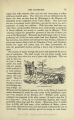
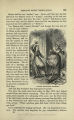
Show THE MISSOURI VALLEY. 131 gent city in the Far West. Ten churches, two daily, two semi-weekly and four weekly papers, all well supported by a population of 15,000, attest this statement. It is one of the very few places I visit in ' the West at which I always want to stop and pitch my tent for a life- time. Thence by way of the Leavenworth, Lawrence & Galveston Railroad, we journey up the valley of the Wakarusa, and through a dense grove of elm, walnut, ash, and hackberry. But a few miles bring us out upon the high and rolling prairies, covered with a variety of bright flowers and native grasses, where we find a strange mingling of Northern and Southern scenery. The year 1871, that of our journey, was the wettest Kansas had ever known; but it is never too wet, and farm products of all kinds were abundant. Three years later came drought, with it chintz- bugs and grass-hoppers, and after it destitution. Experience has shown that these dry seasons must be looked for at least once in seven years. At Ottawa, in the rich valley of the Marais des Cygnes, we find a more Southern population than that of Lawrence, but no less active in their own interests. A Southern " Yankee" is the most crafty of the class, as witness this little incident : In the early days a popular clergyman of Ottawa sold what he averred to be a " blooded mare " to one of his deacons.' Shortly after, the deacon observed some motions in his purchase he did not like, and sought the minister's study with " Brother K , that mare I bought of you seems a little stiff in the shoulders." Drawing a fine Partaga from " between his lips, the reverend pleasantly rejoined, " Better not mention that, deacon; it might injure the sale of her." New light broke into the deacon's mind. He " farewelled," and took his leave. South of the Marais des Cygnes we rise to the Ozark Ridge, " divide " between the waters flowing North and those draining into the Neosho, a high and rocky tract which for ten miles or more in width is of little value except for grazing. The rock lies in thin layers but a few inches below the surface, which is largely dotted with " buffalo stamps." These are said to have been caused by buf-faloes crowding together, stamping and licking the ground, led thereto by a saline element in the soil. Our domestic cattle, naturalized in Kansas, sometimes acquire the same habit. Thence we run down |