| OCR Text |
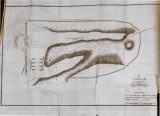
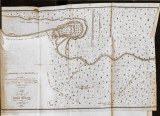
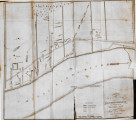
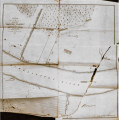
Show 372 LIFE OF GEN. JACKSON. CHAP. stood the fort, garrisoned with three hundred and sixty ~men. Having made ihe necessary atTangements, on 1815• the 8th, an attack was commenced, both' from the land and water. The fleet was formed into two divisions; and approached within one and two miles, bearing south and south-west from it. But the principal attack, and that which compelled a surrender, was from the shore, where colonel Nicholls, and Woodbine had cmTiecl on their operations, in September. Five thousand troops, aided by pieces of heavy ordnance, m1d secured from the fire of our guns, by large embankments, urged the assault. Under cover of the two succeeding nights, redoubts were thrown up, and trenches cut through the sm1d, which enabled them to approach gradually, and without being exposed to the fire of our guns. Twice, on the 8th, were detachments sent out, to effect, by stonn, the accomplish· ment of their purpose ; but the fire from the fort compelled an abandonment of their course, and drove them to the necessity of approaching by trenches, protected by strong redoubts. To demolish these from the fort was impracticable, from their strength ; and to attempt to prevedt their erection, by any sortie, with so weak a force, would have been rash a11d imprudent. Thus situated, and every thing being ready, to attack and carry the fort, if opposition were still intended, about ten o'clock, on the 11th, the enemy hoisted a flag : major Lawrence raised another. Hostilities ceased, and general Lambert required a surrender. The officers being convoked, with one consent agreed Reduction that further resistance would be ineffectual, atld could of Foct h 1 f luable Bowyer. only lead to t e unnecessary oss o ma11y va , LIFE OF GEN. JACKSON. lives. A capitulation was agreed on, and the fort sur- .CHAP. rendered. XI. General Winchester, who commanded at Mobile ~ '1--uw.m g recei. ved .m teI I1' gence o f wh a t was passm. g at the, 1815' point, ordered a detachment of a thousand men, under major Blue, to proceed down the bay, and aid in its defence. This auxiliary force was too late : having surprised m1d captured one of the enem)"s out piquets, consisting of seventeen men, and ascertained that a surrender had already taken place, they returned. Had this detachment reached its destination, our loss would have been more severe. The enemy's forces were too numerous, and their memis of attack too effectual, for any different result to have• taken place, even had major Blue arrived. It had early been the wish of general Jackson, for the large frigate, lying at Tchifonte, to be completed, and placed in defence of Fort Bowyer. We have before remarked the confidence entertained by him, that, with the aid of this vossel, no force brought against the place would be competent to its reduction. Near it is the only channel a vessel of any size can pass. This frigate, occupying the passage, wou14 present as strong a battery as could be brought against her, and, with the aid of the fort, defy a11y assault from the water ; while, from her position, she woul(j be able to throw her bombs and shot across the nmTow neck of la11d, in th~ rear of the point, m1d atTest the advance of ro1y number of troops, which, in this way, should attempt an approach. Yet every necessary precaution, to defend this important pass, had be~n a!- ' |