| OCR Text |
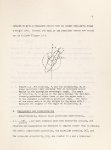
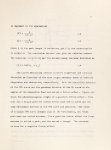
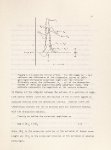
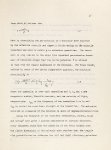
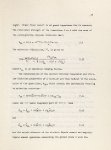
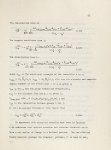
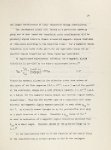
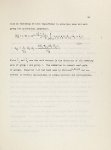
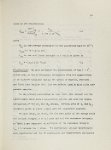
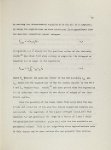
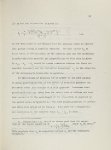
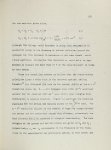
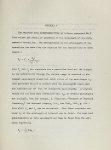
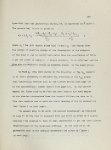
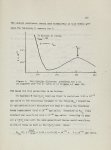
Show 17 from which it follows tha <P Next = g by determining the perturbation of-'a--molecular wave' function by the-e£fective' electric Rosenfeld mant- is ment was and magnetic fields" acting ,on' the"molecule able to relate g' to" molecular very similar to the usual time of radiation excep't that the to vary over the quantit'ie-so' dependent perturbation treat vector"p,otentiai t. is' allowed finite dimensions of' the"molecule 0 written in terms of the useful The treat- ' The final result, comparative-quantity, the'molecular rotation,lM is where the summation is over each transition"and'N, h. 'and care Avogadro's number, Planck's constant, and ,the 'velocitY"of light, respectively 3 vOA is the frequncy of the' transition 0 to ROA is called the rotational strength of the transition. ,rotation is a of the rotation in units 'of measure and Ai The molecl,Jlar dgres/cm-moles/litero Usdng the framework. of the Rosenfeld formu:lation t Condon t Altar and Eyring6 have given a quantum e,xpnation"of' circular dichroism T.heir treatment shows that the variation of the' fif!ld vectors over .. the finite dimensions·, of the molecule II also'requires that the transi= ' • tion 1 probabilities be different for left and right· circularly polari2;ed |