| OCR Text |
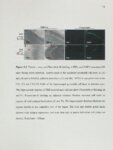
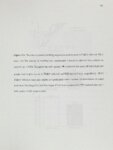
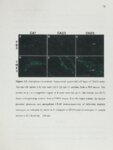
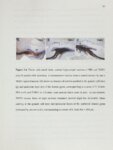
Show 79 Absence of mossy fiber sprouting The presence of Timm stain reaction molecular product in the supragranular and/or layer of the dentate gyrus is used as a marker for mossy fiber sprouting (Hellier et al., 1999). Timm staining is a histochemical marker of zinc and other heavy transition metals, and reaction product is restricted to the dentate hilar region in naive tissue. The amount of mossy fiber reorganization was assessed throughout the hippocampus of TMEV (n=13) and PBS-injected mice (n=9) at 4-7 months p.i. Timm staining in the molecular layer was analyzed using the scale of Tauck and Nadler (Tauck and Nadler, 1985) (see Methods). A total of 102 sections from PBS mice and 149 sections from TMEV mice (ipsilateral and contralateral) injected mice exhibited intense staining extending were blindly analyzed. PBS from the hilus to the proximal dendrites of CA3 pyramidal cells (Fig. 3.6A). No dark reaction product was detected in the molecular layer of the dentate gyrus, for a mean Timm score of O. Timm staining in TMEV mice was similar to that observed in PBS concentrated in the hilus and projecting to the CA3 mouse mice, with reaction product region (Fig. 3.6B). One TMEV showed reaction product projecting through the granule cell layer and into the molecular layer in three of eight ipsilateral hippocampal sections examined (Fig. 3.6C) .. The mean Timm score for TMEV mice was 0.2 ± 0.2 (mean ± SEM). Thus, we did not observe any significant mossy fiber reorganization in TMEV mice. Discussion Fundamental issues remain unresolved regarding the role of CNS infections in the pathogenesis of epilepsy syndromes. Here we describe the results of various experiments establishing Theiler's virus infection of B6 mice as a novel model of epilepsy that may |