| OCR Text |
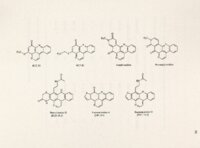
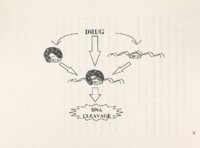
Show 21 Research objectives This is the first study to report on the ability of ascididemin (BC-1-51), a Didemnum sp. marine pyridoacridine alkaloid, and two semisyntheic analogs (BC-109-1 and BCMH- 1-48) to generate ROS and to damage macromolecules without the aid of an enzymatic anticancer agents, it was important to elucidate, or at least narrow, the potential mechanism(s) of their action. The catalyst. Because of the interest in these compounds as hypothesis of this dissertation research was that ascididemin and two of its semisynthetic analogs produce their in vitro cytotoxic effects by cleaving DNA through the production of reactive oxygen species. This hypothesis 'Was tested by the following specific aims: Specific Aim 1: Determine the in vitro DNA cleavage ability of ascididemin (BC-151), BC-109-1 and BCMH-1-48. The ability of asci did emin, BC-109-1 and BCMH-1-48 (individually) to cleave supercoiled, double-strand plasmid DNA was measured in a quantitative cleavage assay. Similarly, the same procedure was used to determine whether DNA cleavage ability was time- and/or concentration-dependent and if the addition of metal ions, chelators, antioxidants and radical scavengers to the system altered cleavage potential. Structure-activity relationship (SAR) studies were performed on 15 additional analogs of ascididemin to highlight important structural features for DNA cleavage and reduction-oxidation potentials measured. Additionally, reactions were tested under anoxic conditions to determine whether the depletion of O2 from the reaction would effect drug induced cleavage. Specific Aim 2: Determine the chemical characteristics of ascididemin that modulate its DNA cleavage in vitro. Ascididemin (BC-1-51), BC-109-1 and BCMH-1-48 |