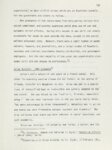
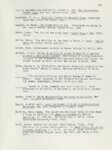
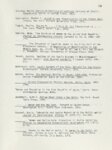
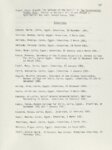
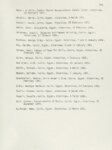
| OCR Text |
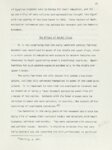
Show 14 many view his ization tion, of as reign as the first great stride towards he altered the agricultural system, began industrializa- and increased trade and change and new vitality to the exchange with Europe. country.11 in the that his ambitious industrial structures and families. modern- Egypt's Nada This era an was Tomiche argues development projects disrupted social Because he turned to the female population solve the male labor shortage, the state replaced the husband authority state over women, often as them to forced labor and subjecting monopolies.12 This brief participation of women after Muhammed Ali's reign, returning in public life women to the harem and the traditional customs. domains to her was a transition formally excluded was to stop seclusion of the Yet, perhaps this rapid jump into factor which some 1962). 'Awad writes about four Egyptian writers who brought atten tion to women's education and other issues in the nineteenth and early twentieth centuries. 11For a detailed historical account of French occupation and and Mohammed Ali's rise to power see: Shafik Ghorbal, The expulsion Beginnings of the Egyptian Question and the Rise of Mehemet Ali-- (London: George Routledge & Sons, Ltd, 1928). For historical detail the entire nineteenth century see: M. Rifaat, The Awakening of Modern Egypt (New York: Longmans, Green and Co., 1947). For cultural and social history of the early 1800s see: Edward William Lane, An Account of the Manners and Customs of the Modern Egy tians (London: First published in two volumes in 1836, this is Aldine Press, 1908 considered the classic detailed description of domestic life in urban Egypt during Mohammed Ali's reign. Lane's sister, Sophia Poole, also lived in Egypt. She gained access to harem households and wrote The Englishwoman in Egypt (London: 1844 and 1846). on • --- 12Nada Tomiche, "The Situation of Egyptian Women in the First Hal f of the Ni neteenth Centu ry ." in Beg; nn i ngs of Mode rn; zat ion in the Middle East, eds. William R. Polk and Richard L. Chambers (Chicago: University of Chicago Press, 1968), p. 172. See also Judith Tucker's study: "Decline of the Family Economy f n Mid-Nine teenth Century Egypt," Arab Studies Quarterly I (1979): 245-271. |