| OCR Text |
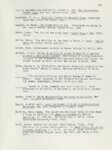
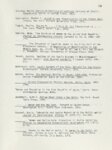
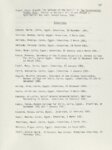
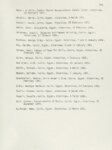
Show 11 There has also been much much Islam speculation and really changed women's position. purpose of this dissertation to Islam1s position on women. of freedom for women. explore the disagreement about not the Again, it is arguments surrounding Many scholars view the Quran Others, however, point out that while the it has not meant any dramatic or even upward change Quranic rules favorable replaced by customary the effect of classic a as Quran by and large probably improved the position of Arabian argues that how laws.4 Islam into two to for them. This women often were women, position ignored Soha Abdel Kader divides studies 1) the defensive posture categories: which maintains that Islam sustains women's rights, and 2) on the ed., 1970) and John Langdon-Davies, A Short History of Women (New York: Blue Ribbon Books, 1927) are most often quoted in discussions about women in ancient Egypt. Likewise, some contemporary studies give general overviews of women1s position in ancient times. These views are expressed by Saneya Saleh, "The Changing Political and II Soci a 1 Status of Women in Egypt, paper presented at NGO Forum/UN Mi d-Decade Conference for Women, Copenhagen, Denmark, 14-24 Ju 1 Y 1980; Soha Abdel Kader, Report on the Status of Egyptian Women, 19001973 (Cairo: The American University in Cairo Social Research Center, 1973); Audrey Chapman Smock and Nadi a Haggag Youssef, "Egypt: From Seclusion to Limited Participation," in Women: Roles and Status in Eight Countries, eds. Janet Zollinger Giele and Audrey Chapman Smock (New York: John Wiley & Sons, 1977). See also: James Michael Flaherty, "Women in Pre-Islamic Arabia" (Master's thesis, University of Utah, 1973) and Ali Izadparast, "Position of Women in Muslim Arab Societies" (Ph.D. dissertation, University of Utah, 1974). 4See the following: Lois Beck and Nikki Keddie, eds., "Intro in Women in the Muslim World (Cambridge: Harvard University duction," The Reuben Press, 1978); Levy, Social. Structure of Islam (Cambridge: University Press, 1957). Chapter II discusses various interpreta tions of the Quran that affected the status of women; E. I. J. Rosenthal's Political Thou ht in Medieval Islam (Cambridge: Cambridge University Press, 1962 attributes much of the theory of female infe riority to the commentators who cemented patriarchal custom into the religion; Nabia Abbott's "Woman," in Mid-East: World Center, ed. Ruth N. Anshen (New York: Harper and Bros., Inc., 1956) emphasizes that Mohammed formalized his concept of woman and her role from the Jewish and Christian precepts of his day. |