| OCR Text |
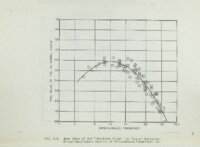
Show 104 points parameters the (1) considered in were the on thermal (3) made correlate to of relaxation was found that no data. One must meters in the the basis H: the AP the sharp flame for to curve fitting This An effort dynamics. frequencies rin processes. was terms However, it correlate the to determine the para done, but might not was the AP phase correlation a schemes to form studies. COMPARISON WITH L*-BURNER AND T-BURNER DATA Although in this no data study could be directly comparable found, some low L*-burner and T-burner data between the and the tests resonance can be ratio curves m'/m, do not the presence and the determined function Although be made. general for the nature be correspondence the PU-AP the results propellants of the from these radiation the response resonance experimentally here, (see Chapter III) could The from T-burner and L*-burner directly yield of the results obtained to interesting comparisons with points determined considered. propellant, can func t Lor.s measured response augmentation studies the front as could be used to response function. for future size resonance process points included: relationship single, uncoupled simple resort in particle the observed times These penetration depth particle diameter; (2) the effect of various to oscillatory burning. wave parameter; and, relationship function of point, containing burning rate the response suggests that the response computed from these results. |