| OCR Text |
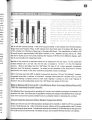
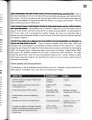
Show Transit/Land Use and Highway II produces the highest average highway speed, 22.6 mph, and the least congested roadway system, with only 21.8 percent of the lane-miles congested. More importantly, due to the construction of SR 92 and the Millstone Bypass, the screenline between US 1 and US 130 will be operating within capacity (0.96 V/C ratio), a major improvement over "Do Nothing" conditions with a 1.40 V/C ratio. The Forum defined east-west access across this screenline as the number one issue. Two other screenlines, located at the border between Princeton and Montgomery and at the border with Lawrence Township, will experience modest improvements in their V/C ratios from "Do Nothing" conditions. The Transit/Land Use and Highway II scenario was slightly less successful than the Transit/Land Use scenario in reducing vehicle trips and VMT, a 2.3 percent and 1.5 percent decrease, respectively, from the "Do Nothing" scenario. Combining Highway II with Transit/Land Use will reduce LRT ridership by approximately 700 trips per day, with off-peak being slightly less effected than peak period ridership. Total daily transit trips would be reduced by 800 trips per day. Transit's peak mode share would slip from 5.9 percent under Transit/Land Use to 5.6 percent for Transit/Land Use and Highway II. There Is an Inherent Conflict Between Goods Movement and Local Community Goals Since 1991, six truck studies were conducted in and around Central Jersey by NJDOT. Three focused on the US 130/New Jersey Turnpike corridor, the others on the US 206/NJ 31 area. In general, these studies have documented that the vast majority of trucks have a purpose, at least one local stop, in passing through the area. NJDOT has found that some of the increase in truck traffic is attributable to economic growth in Hunterdon, Morris, and Warren counties; changes in retail industry shipping needs, due to box stores and on-time delivery, are also generating many more trips. From a statewide perspective, and maybe even from a regional perspective, if a truck has a "local" stop, it's a local trip. However, from a community perspective, if a truck passes through it to discharge goods in an adjoining community, it is a problem. As Central Jersey is becoming more developed, there is a growing need for additional commuter services. New rail passenger service is being considered on the West Trenton Line and the Middlesex Ocean Monmouth (MOM) Line. At the same time these lines are being considered for conversion to passenger service, others are advocating increased shipment of goods via rail as a way to reduce truck traffic. Intact rail right-of-ways are at a premium. Central Jersey and NJDOT must jointly decide what is the optimum use for these lines. There Is a Need for an Ongoing Comprehensive Planning and Advocacy Process in the Central Jersey Study Area Over the last three years, the Central Jersey Transportation Forum has addressed many of the key issues identified at its initial meeting. Most participants would agree that the municipal presentations laid the foundation for cooperative planning. The modeling of alternate future vision scenarios was a detailed process that required considerable interaction among Forum members and extensive technical work. As a result, a long-term vision is emerging. However, many key issues still remain. Is BRT a viable option and how should it be implemented? How can Central Jersey implement "Smart Growth" and other land use strategies supportive of transit? What can Central Jersey do to advance Highway II improvements? Can the region develop a capital improvement program for the |