| OCR Text |
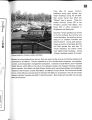
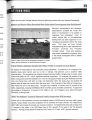
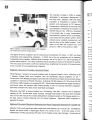
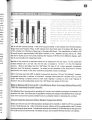
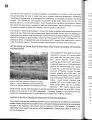
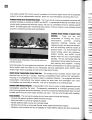
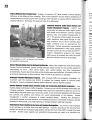
Show FINDINGS Below are the major findings learned during the planning process and travel demand forecasting: Reports on Master Plans Revealed More Substantial Development than Anticipated Municipal representative and developer presentations revealed the scope and extent of development is far greater in magnitude than anticipated. Over 17 million square feet of non-residential development has been approved or is in conceptual development within the study area. This does not even include anticipated long-term major expansions to Princeton University and Princeton Forrestal Center. Even with extensive open space preservation programs, there is still ample developable land to sustain growth levels. Over 17 million square feet of development expected in Central Jersey, like this warehouse in South Brunswick Township Travel Pattern Analysis Showed East-West Traffic Is Largely Local in Nature An analysis of travel patterns was conducted using screenlines. A screenline is an imaginary line, typically along some barrier such as a river or railroad, that planners use to examine traffic characteristics. The screenline line analysis showed east-west traffic is largely local in nature, while north-south traffic on US 1 has a significant external component. For example, 46 percent of the traffic crossing the screenline between US 1 and US 130 (approximately along the Northeast Corridor Line) are internal trips, with both an origin and destination within the study area; and another 49 percent have at least one trip end within the study area. Only 5 percent of the traffic is through trips, with neither trip end in the study area. Through trips constitute 12 percent and 15 percent of the traffic, respectively, crossing the Millstone River and New Jersey Turnpike screenlines. To place this percentage in perspective, 37 percent of the traffic on US 1 at Finnegans Lane, South Brunswick Township, is through trips. 2020 "Do Nothing" Scenario Showed Traffic Congestion Will Increase If there are no new highways or transit, the analysis shows in 2020 there will be more traffic, slower speeds, longer delays, and peak congestion will be extended for longer periods. As measured by VMT, traffic will increase 55 percent over existing conditions. Congested lane-miles will increase from 7.3 percent of the roads in the 1997 Base Case to 30.1 percent of the roads in the "Do Nothing" scenario. Average travel speed will drop from 29.6 mph to 21.0 mph, a 29.1 percent reduction. |