| OCR Text |
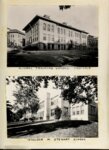
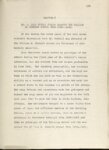
Show 111 activity school has some very defi earmarks. It differs from either the traditional school or the transitional school. The traditional school is subject-centered, almost completely devoid of activities, ex The cept for an occasional device-activity. transitional school introduces activities, but centers them in the subject matter fields; usually in isolated subjects, but occasionally involving several subjects as in the modern In contradistinction platoon-school program. to tha traditional and transitional schools, the activity school centers its attention upon the actual first-hand experience of the children, and selects subject-matter perttnent to the on-going experiences.· An nite In descri'b-ing At (1936) the school he says: the iilliam H. Stewart the child's envi-ronment School today is the starting education is the for his education. If "reconstruction of the individual's we cannot begin with books, nor can point experience", we use books they are related to his progressive exper iences. Consequently, the core of the school pro gram is the child's environment, which may be best described as Nature Study, which describes the phy sical world the youngster is experiencing, and the except as which describe the man-made and ideas to which he is institutions world these subjects are not However, adjusting. On the isolated tram other school experiences. involve art, music, lan contrary, history may the and and pursuit of the guages, literature, involve of writing, history reading, may study even and and English usage, spelling, grammar That is to say, if the child is arithmetic. to react to the environment, he cannot be pasHe must see and sive to much book-learning. attempt the art productions of the stage of civilization under consideration; he must hear Bocial Studies, of I Wahlquist, Dr. John T., t'The Activity School", p. 32 |