| OCR Text |
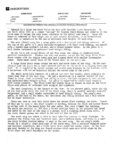
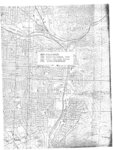
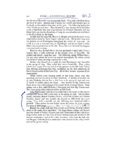
Show 5 12 UTAH - A CENTENNIAL HISTORY the site where Bountiful 'was subsequently built. They had with them about 300 head of cattle. Sessions built a shanty for himself and brought part of his family to Bountiful in December of that year. The follo\ving spring fi\·c other families joined them. Thus Bountiful, a city situated about ten miles north of Salt Lake City and lying between the \Vasatch Mountains and thc Great Salt Lake, has the distinction of being the second settlement cstablished in the Great Basin by the Saints. A little later the same fall, Hector C. Haight arrived on the creek se\'Cn miles farther north in Davis County with his cattle. He herded them ncar the present site of Farmington th;oughout the winter of 184]-18.;.8. He dwelt in a tent at first but early in 1848 Haight and his son built a cahin. Other settlers joined them in the fall. From that time forward Farmington was considered a colony. Early in 1849, Samuel Oliver Holmes purchased a small cabin from :l trapper about a mile south\vest of the present town of Kaysville. Hc planted and raised a crop that year. The following spring 'William Kaythe man after whom the town was named-accompanied by others settled near Holmes' claim, forming a nucleus for a city. Settlers also located on a creek between Farmington and Bountiful in the spring of 1849. They called their town Centerville. Thus within a little over a year after the arrival of the pioneers in the Salt Lake Valley' four thriving settlements had been established on the rich table-lands of Davis County north of Salt Lake City. All of them became important Utah communities. 'Vhile settlers were locating north of Salt Lake, others were also spreading out into the valley in other directions. A number of families led by John Holladay left the fort at Salt Lake in the spring of 18-1-8 and went in search of suitable places for farms. They located on Big Cottonwood Creek about nine miles southeast of the center of the Mormon Mecca. Their colony was at first called Holladay's Settlement and later Big Cottonwood. That same spring other colonists settled at i\lill Creek. John Neff located a mill about two miles below the mouth of the canyon subsequently named Mill Creek early in the spring of r 8-1-8. The Gardner family, including Robert Gardner, Senior, Archibald Gardner and Robert Gardner, Junior, and their families also located on i\lill Creek that same spring. They built a sawmill, and the following year Archibald built a gristmill. Other settlers located farther down the stream in .! 848,_ cr~t~l1g the t~w!l~f 1\1 ill. ~l"~~~-::'='::~;':~~;~· _\.'~~~':· ::t,:C~'-=~~t~:~:i<~~E~!?~, ~~-~ ~+;.: Durlni ~ihe ye'ats 't.848 :and ' T849"sevenil othe~' ~o\\>ns,. formii1gc":r~eini= circle to the south; ,(ere established:, The Sugar House colony was loc:lted near the mouth of Parley's Canyon, east and a little south of Salt L:lke City; lying farther south was the town of South Cottonwood; and located in the extreme southeastern end of the valley seventeen miles from the hub city was Draper; while the Jordan settlements were situated in the "alley southwest of the parent colony. =:, |