| OCR Text |
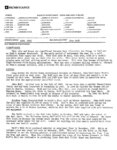
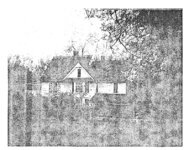
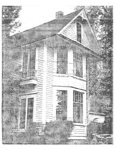
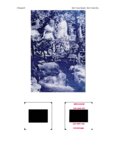
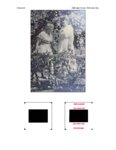
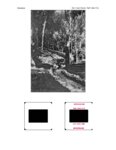
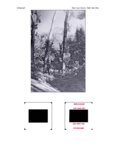
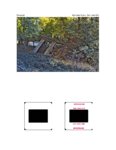
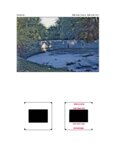
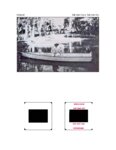
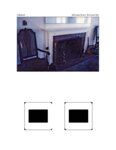
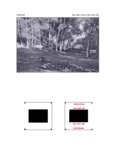
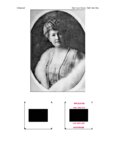
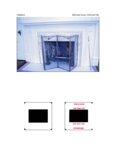
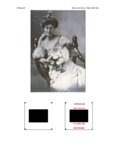
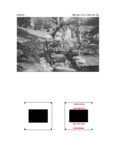
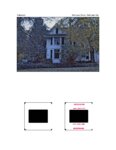
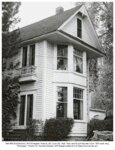
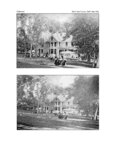
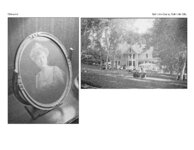
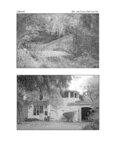
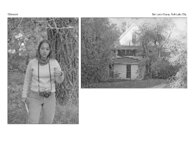
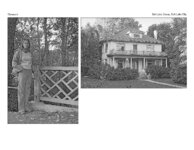
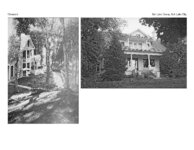
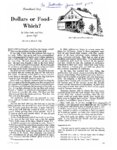
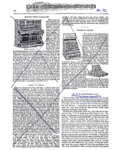
Show Flannelboard Story Dollars or F ood- Which? By Lilian Slokes and J.Vina Spencer lVel/* 10hll ;VefJ's grist milllcas diUerent. (AI lold 10 M.lr;e F. Fell) for himself or food for his friends, which? DOLLARS That was the problem that faced John Neff. In 1849, gold-seekers began to swarm across the plains for California. Many of these emigrants were well off and loaded their wagons with fine, quality goods of all types including: cloth, clothing, boots, shoes, hardware and tools. They had no idea of the - l1ardships and journey before them. They believed that in California, gold could be "picked off the bushes" and they wished to take the comforts of civilization with them to their new home. Creat Salt Lake Vallev thus became a_ trading post and half-way place for this overland migration to California. By the time they reached Salt Lake Valley, the gold-hunters had learned much concerning the wilderness and its hardships. They had become aware that they had to travel as lightly as poss.ible with only bare necessities. On stopping in Salt Lake Valley to rest, they repaired their wagons and recruited their strength for the hardest part of the journey across the Nevada deserts and the Sierra-Nevada Mountains. By then they were eager to trade their goods for food and for repair work by Mormon mechanics. Mormons became able to obtain the best manufactured goods from the East cheaper than they were in New York City. Indeed, sometimes when the emigrants could not trade their goods, they would gi"e them away to lighten their wagons. Brother Kimball's prophecy \vas fulfilled. [End of Sccne IV.] _ _ _ ' J h ~ ff - t - f II tl . -- . ~ h - -~~ - --, ~ ,,-, ..-. It was only a year since the pioneers had come to S;llt Lake Valley, but much had been accomplished. Johll had commenced to build a grist (wheat grinding) mill on Mill Creek, just a few miles south and east of Salt Lake City. He had planned this mill for a long lime. He had even bought a mill in the East before rorning to Utah and had it dismantled. He had brought Ihe machinery and millstones with him to his new home in the tops of the Rock,. Mountains by wagon. But John had not worked alone. His pioneer friends !JaJ helped him by cutting the logs for the mill from 'till Creek, sometimes called Neff's Canyon and had h:llIlcd these to the mill site. There the logs had been ,h;lpcd as John directed. [End of Scene I.] john's mill was different. Instead of just crushing the wheat as some mills did the grain was first screened and then passed into a hopper. From there it passed between the millstones and then into the basement of the mill, as ~ltlllr. It was then elevated to the top floor and passed through a "bolter," a cylindrical arrangement covered \\ ith layers of very fine silk cloth. The flour was first 'ifkd out and then the shorts and bran_ The flour was whilt' and of a fine grade. The ll~achinery of this mill was. operated by water :lV\\er. With an overshot wheel which had a hewn log ,In a shaft. Be~a~ls~_ ~p~ __Neff ·MgL ~,'a~)l~_~ ·_ first <:ne_t o.~~~;~i{::~:\~,~iliC: ~'Fi;;'::~~nJ±\\~el:·=~.:;~i~ -bfl:;r~:;B. :.tJ1~ng:~ocess~: Jhedemll~d· w~s : great _Jor-.I~~s~--wli'~~:=- anVp~icE;- :niM offered : h-Un---:'ls-5)~~I~-as $100 a sack-" -' . .:-~ - - 11\ or. Farmers came. from 40 1!1I1es or !Bore With theH or Sl.OO a pound for it. He refused to speculate in any ~rall\ to the Neff M!ll and ~vaIted at hmes, as long as way. Instead he sold it in small lots to star"iw' settlers :. week before gettmg their wh~at ground. None of for 6 cents per pound. To manv \vho could n~t afford ;01.' bran or shorts .was wasted elther. It was all used to pay e\-en the 6 cents. he ga\-e' flour and provisions . .or bread by the pIOneers. .. _ Brother Neff charged a toll of one-tenth for grinding. . John had made IllS c~OIce~ and he knew he was h ont' part of the mill there was a bin for storing nght. It was food for }lIS friends and not personal Brother Neff's share of the flour. [End of Scene II_] wealth. [End of Scene \.] _. In 1848 the people were suffering severely. Heber C. ~mlhal1 then made the astonishing prophecy that within Suggestions for Use : l short time "states goods" (those made in the States This story may be uscd in connection with the Pioneer Day t";Ht of the Rock,. Mountains) would be sold on the (July 24) program in all departments and with the following ltr('f-tsof Creat Salt Lake cheaper than in New York lessons : 'lr Boston or St. Louis. This prophecy was recei\-ed COURSE :\0. 1: July 17, "We Are Happy when We Share." \\ith astonishment by all and with disbelief by many. h was. however, literally fulfilled. [End of Scene III.] COURSE :\0. :3: July Ii, "We Are J.:ind." ' :;- 0 - ---- 'C,r.lt-grnnddaughters of John Neff. at COUHSE :\0. 19: July 10, "Love." Aug. 7, "Service." 177 |