| OCR Text |
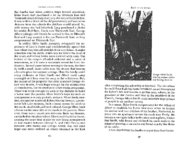
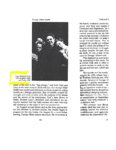
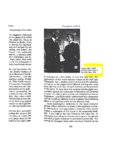
Show 1328 ~ SMITH, GEORGE ALBERT friendly relations with governments and visited missionaries and Saints in Ireland, Scotland, France, Switzerland, Norway, Denmark, Sweden, and Germany. Between January and July 1938, he and Rufus K. Hardy of the First Council of the Seventy visited the missions of the Pacific Ocean area: Hawaii, the Fiji Islands, New Zealand, Australia, Tonga, and the Samoa Islands. Throughout his life George Albert Smith maintained intense personal interests rooted in his pioneer family and Church heritage. He carried on his father's interest in irrigation, dry farming, and reclamation. Between 1913 and 1918 he attended the meetings of the International Irrigation Congress, the International Dry-farm Congress, and their successor, the International Farm Congress. At each of these congresses he was elected either a vice-president or president, increasing his friendships throughout the United States and Canada. He had a keen interest in identifying and marking HISTORIC SITES . He was at Sharon, Vermont, for the 1905 dedication of the monument noting the centennial anniversary of the birth of the Prophet Joseph SMITH . In June 1907 he and others negotiated for the purchase of the Joseph Smith, Sr., farm in Manchester, New York. In 1937 he took the initiative in organizing the Utah Pioneer Trails and Landmarks Association, whose first purpose was to erect a monument at the mouth of Emigration Canyon to honor the arrival of the pioneers of 1847, a project realized in July 1947 with the " THIS IS THE PLACE" MONUMENT. More than a hundred historic monuments and markers were erected by the association, from Nauvoo to Utah and throughout the West. Proud of his American patriot ancestry, President Smith affiliated with the Sons of the American Revolution. He was active in the Utah chapter and was elected a trustee of the national society. His appreciation for his Smith family heritage included cordial relations with his cousins, the descendants ofJoseph Smith III, and with other leaders of the REORGANIZED CHURCH OF JESUS CHRIST "men cannot approach the likeness of God except by the practice oflove to their fellow men. Only b\' love can peace and joy be made to cover th~ earth." Other recurring themes and aphorisms in his teachings include: 'This is our Father's work." "Keep on the Lord's side of the line." "Seek ye first the Kingdom of God and his righteousness." "There is only one aristocracy that God recognizes, and that is the aristocracy of righteousness" (Papers, Box 96). He preached of honest work, thrift, self-reliance, good homes, education, and progress. He gave comfort and cheer, praise and encouragement, without offense and without guile. He was the apostle of kindness and love. There was no room in his heart for hatred, anger, envy, resentment, or fear. "To him have been given many of the qualities which can only be described as being Christlike" Gohn D . Giles, IE 48 [July 1945]:388). President Smith exemplified these qualities in all aspects of his personal life. He measured his life by the yardstick of service and was happiest when OF LATTER DAY SAINTS. President George Albert Smith both taught and lived the two great commandments to "love the Lord thy God" and to "love thy neighbour as thyself" (Matt. 22:37-39). To him, all people were the children of God, and he could in no way hurt a child of God. "All the people of the earth are our Father's children, . . . regardless of race, creed, or color, all men are our brothers." He taught that George Albert Smith was a strong supporter of Boy Scouting. He was awarded the silver beaver and silver buffalo, two of scouting's highest honors. Courtesy the Utah State Historical Society. |