| OCR Text |
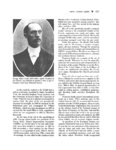
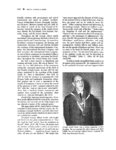
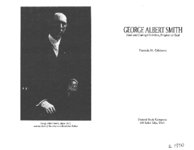
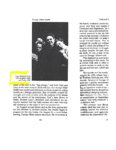
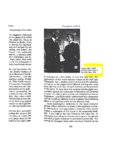
Show SMITH, GEORGE ALBERT George Albert Smith (18i0-1951), eighth President of the Church, was ordained an apostle in 1903, at age 33. Courtesy lJtah State Historical Society. In his youth he worked in the ZCMI factory and as a salesman, traveling by wagon throughout Utah. He attended Brigham Young Academy and the University of Deseret (later the University of Utah). When he was on a railroad surveying job in eastern Utah, the glare of the sun permanently impaired his eyesight. In 1896 he declared for the Republican party and campaigned for William McKinley, which won him appointment in 1897 as receiver for the Land Office in Utah, a position to which he was reappointed in 1902 by Theodore Roosevelt. At the time of his call to the apostleship in 1903, George Albert Smith was president of the Young Men's Mutual Improvement Association (YMMIA; see YOUNG MEN) in the Salt Lake Stake, with some forty WARDS to supervise. In 1891 he had undertaken a short mission for the Church lmong the young people in Juab, Millard, Beaver, md Parowan stakes, and in June 1892, a week after lis marriage, he was called to the Southern States ~ 1327 Mission under President J. Golden Kimball. Elder Smith was soon appointed mission secretary. His wife joined him, and they served in the mission office until June 1894. His call to the apostleship entailed continual weekly visiting to the established STAKES of the Church, organizing new wards and stakes. and supervising the missions of the Church. His travels averaged 30,000 miles yearly, and his attendance at meetings averaged more than ten per week. Under this pressure, his already frail health broke, and his life became a constant struggle against physical weakness. Through his remaining years he guarded his energies and rationed them to fulfill his responsibilities. His illness was diagnosed only at end of life as lupus erythematosus, a disease that produces chronic weakness. President Smith was a master of the art of making friends . Wherever he went he especially cultivated the acquaintance and companionship of the leaders of the people. Whether it was the President of the United States or the Lord Mayor of London, he established a friendship . His friends were legion, throughout the Church and around the globe. Some of his finest work was done with youth. Over a lifetime he served in every capacity in the YM~HA, and shortly after becoming an apostle, he was called to the Y:\-lMIA General Board, serving from 1904 to 1921. As general superintendent of that organization from 1921 to 1935, he was influential in setting policies, establishing programs, and directing youth activities throughout the Church. President Smith gained international prominence as a scout. 'When scouting came to the United States in 1910, he recommended its incorporation into the YMMIA program, where it came under his leadership. Beginning in 1931, he served on the advisory board of the National Council of Boy Scouts of America. At this time Utah and the Church came to lead the world in the percentage of boys registered as scouts and explorers. In 1932 he was awarded the Silver Beaver, and in 1934, the Silver Buffalo, two of scouting's highest awards. As president of the European Mission (see MISSION PRESIDENT) from June 1919 to July 1921, he won the love and admiration of the missionaries and the Saints and made many fnends for the Church. As World War I had just ended, a major task was to reestablish missionary work and help the Saints adjust. President Smith inaugurated |