| OCR Text |
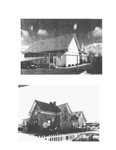
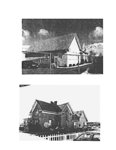
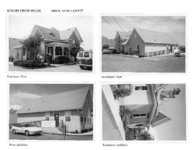
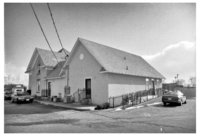
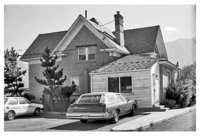
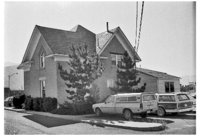
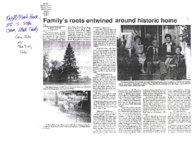
Show Ore m, but they w~re not able to. The Finch' family bought the home in June of 1926. Lylene, the fifth child and lhen younl.",sl in lhe family, was lhree years old when lhey moved from Eureka. There Joseph had been a miner, and had begun to suiTer adverse health effecla from breathing coal dust. Joseph returned in May of e .~ that year from serving a second mission for lhe LDS Church, and lhe family moved to Orem when he got back. Lylene wrote that it was the desire of her paren t& "to live in the valley, to breathe the pure fresh air and raise their family in the open spaces, to work with nature in planting and harvesting their fruita and vegetables: ' FarmUfe Along with the home came a 22-acre farm on the site, called the "Pioneer Farm" . Apple., pears, peaches, cherries, tomatoes, plums, apricots, straw .. berries. raspberries, and melons were all produced, requiring a great deal of work from the family ( !n planting, picking, 80rting, ~liShing, arranging, and pack- ... .... . .~ ' '.~' . ' .' ..... ...... ~ 1 had to be cut down in the late 1950s when it grew 00 tall that it swayed and threatened power Jines 8S wen as the house. In addition to the fruit farming, lhe Finches kept a vegeteble garden where they grew com, potatoes, carrota, onions, and peas. Of course , this required preparation of the ground, planting, and weeding. Animals --horses, cows, pigs, chickens, and "Bud", the family dog - were also kept on the farm and added to the work. Lylene .aid she did not mind gathering egg., but ahe didn't really enjoy being around the pigs, cows, and horae •. Lylene remembera times when her hard-working father was so exhausted from all-night irrigation turns that he ~o)lld lie on the floor, afflicted by lumbago and almost overcome wi th pain in hi. back. . ~ "My mother knew what hard work was also; Lylene wrote, "a. she worked as hard 81 my father in the fielda. Many times I would see her with her .traw hat on and the sweat running off her face, exhausted with ,the duties of the farm. She gave birth to two babie. while living on the farm in the midat of all her adveraiti.....Ro.a Mae, born in July 1927, and Afton, April 1929: The babie. were born in the home. Lite'.lesSons Despite the rigora of farm work and farm life, Lylene said the family was fortunate to have the farm during the lean depres, sion years when -the farm .\' produce was our salvation" . , Money was scarce and very few item. were bought from the .tore. om-out . hoe. were lined with rdboard, ,and hand·me-down thes were the norm. Butter king, the canning of fruit (a re complex proc:e.. that it i. en today), ..wing, cleaning the use, preparing chickens for ting, threshing wheat, and 1 uling hay all proved to be rice Ie •• experience.- which J ~u.iht lessons oflife -industry, - !mft, and endurance. Although neighbon were inolved in the same type. of work ,ctivities, Lylene said time W81 -ound "to socialize and mingle vith one another in the .pirit of nendlineaa: ' .J RecreatioD aDd fUD . i LiCe was not all work and no ay for the FiDchea. "There were ' • good timea we looked forward with much excitement and leaaure; Lylene wrote. Plcnica ~t Geneva Resort provided oppor-lunitiea for .wimminlf. ""me" "'! ~ L ' mUBle, ~) U l UU " ' >.H.U .... ... ~ ... UI~ WIP.U "'Uuel~\.U"" Ol .:o . . . . . . .,:0 ....... . . . products like mHk. eggs. and b~~ ter were traded 80 the girls could fined t.o the Mulros8 Sanatarium. in Duarte , Californ ia . Respon- take piano lessons. Rosa Mae has been a piano teacher, Allon is an accomplished organist and piani.t, and Lylene laid she has alway. enjoyed playing the piano as well. The musi cal studies and training "disciplined us", Lylene said. Instruments in lhe home in· cluded the violin and saxophone as well as the piano . The phonograph and radio brought music and entertainment into the home, where there was dancing and singing. The children were encouraged to perform at family reunion. by singing, dancing, or playing the piano. School days , The children in the Finch family mainly attended the old SharimSchoolataboutS50North State Street and walked there, although Rosa Mae attended the Spencer School at 800 South at one time. Lylene iaid education wu notstressed Sf much then as iti.today,withfarmworkcoming firat.Aftercompletingtheirwork and chorea, the 'Children ' were on.en too tired to do mw:h studying in the eveninp. Lylene rememben going to Bill Kofford', confectionery, aero.. the .treet from the school, to purch8le two' cinnamon rolls for a nickel. "'l'hat wu considered our lunch: . he .aid. She did not sibilily for the farm and family fell to Ethel, who was assisted by her older aon •. Ethel visited her huaband during hi. confinement, but in June ofl938, he died at the age of 48. Lylene was only about 14 years old at the time. This blow was followed by another when Elizabeth, or Beth, as she wa. called, died auddenly in 1939, just nine month. an.er her father. Lylene said the tragedies were difficult to handle, but steeled family members for later difficulties and challenge. in their lives. Viewin,. for both Joseph and Elizabeth took place in the home. AtThanksgivingtimein 1937, Joseph Finch was profiled in a column in The Voice of Sharon, the predecesaor to the Orcmaeneva Ti""'8. Part of the column read: "If you feel a little ahort on blessin,. this year and wonder just what YOU have to be thankful for, share with us "paragraph or two from a letter written recently by Bishop Finch : 'Selfpity doesn't get me anywhere. An.er all, we all must face our life as it comes to us and make the best of it. Ithink, and in fact, I am .ure, if I do, and must spend the remainder of my days in bed, I shall be happy., Yes, I allll have many, many thing. to be gratefUl ' for. I can have the very fine.t remember .choo] lunch being programs over the air. science. served. "If they had school lunch, religion, philosophy, poetry, and we never bought it: even tho study of the stars. I have Junior and senior high school about eoven California station. were at Lincoln; Lylen. rememben participating in Glee Club and the Posture Parade. She look an intereat in clerical and office work, atudied .horthand and typing, and enjoyed office . ,machines; Lylene later worked in a small arms plan( at the steel plant, and did c1e\"ical work in various placea. '' Church and civic duties Joseph H. and , Ethel Finch were active in church and civic a:ffain. Joeeph servod on the Sunday School board, .. a counselor to several bishops, and as bishop of the Sharon Ward: In addition, he served as the Orem City judge andjustice ofthe peace from 1928 through 1931, .. tt1ing business transactions in the tOrem home . The ehildren were taught not to SO inlD the room arid not to c1i .. turb thole who cam. to pay It.... or transact other buainea•. )Ira; Finch 'w.' busy' with ReJlefSociety and Primary, holdin, positions or reaponsibili ty in '-'" a. well as the national hook-up. I also have books, three daily papers, one weekly paper, TJut Voice of Sharon, and all type. of magazinea . One who need. knowledge as badly as I need it, should be able to keep happy all the day' long with such fine facilities to learn.~ Following Joseph's death, the column W81 ' repeated in the paper. The Finch home was sold to a finance company following Ethel's death, and a series ofbusinesses were housed there, "Thru the Grapevine" being the latest. ( ;;,;:.,../ • |