| OCR Text |
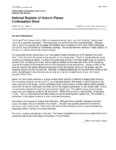
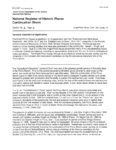
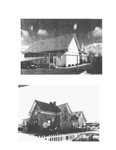
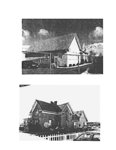
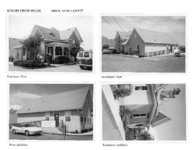
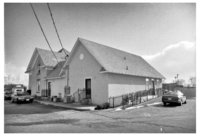
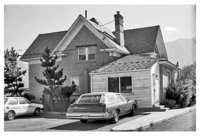
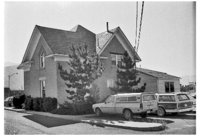
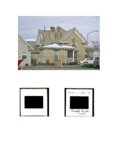
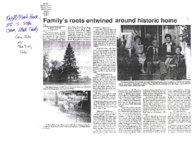
Show NPS Form 10-900-a Utah WordPeriea5.1 Format (Revised Feb. 1993) OMS No. 10024-0018 United States Department of the Interior National Park Service National Register of Historic Places Continuation Sheet Section No. JL Page.£ Knight/Finch , House, Orem, Utah County, UT Narrative Statement of Significance The Knight/Finch House is significant for its association with the "Settlement and Agricultural Expansion: Mid-1870s-1913" and the "Establishment of Orem: 1914-1941" categories of the Historic and Architectural Resources of Orem, Utah, Multiple Property Submission. The house was the residence of two farming families who were also prominent in the community: Newell J. Knight and Joseph H. Finch. Built in c.1909 the Knight/Finch house personifies many of the characteristics found in Victorian Eclectic architecture, including an asymmetrical facade and the use of various architectural styles and details. The Knight-Finch house, through its architectural detailing and size, symbolizes the prosperity of fruit growers and associated businesses during the agricultural expansion era of the Provo Bench. The "Agricultural Expansion" period of Orem was one of the greatest growth periods in the early days of the Provo Bench. Prior to this period seasonal landholders would attempt to raise crops on the bench, but could not live there because there was little water. After the construction of the Provo Bench Canal in 1864 more people settled on the bench and subsequent irrigation ditches and canals allowed for greater farm production and the ability to sustain the landowners year 'round. Fruit trees were found to be the best cash producing crops, and by the turn of the century those who had become involved in raising fruit started to realize great success which , in turn, encouraged others to move here and raise fruit orchards. During the "Establishment of Orem" period, the Provo Bench saw more changes associated with growth than in the previous periods. After the first decade of the 20th century, fru it growers on the bench realized that if their prosperity was to continue they must market their produce outside of the area and outside of Utah. With the establishment of a rail line in Orem, the "Orem Line," plus the increasing popularity of the automobile, the fruit and produce industries were able to market their products all over the western United States. With the increased prosperity, the Provo Bench soon became Orem Town in 1919 (in honor of Walter Orem who brought the railroad to the area), and eventually, in 1941, Orem City. The property on which the house sits was purchased by Newell J. and Eliza Knight in November 1909 from Charles E. Millhallin, and the house was immediately constructed . Newell James was born to Newell and Carolina Loveless Knight on October 20, 1863 in Provo. On September 22, 1884 he married Eliza Stratton Knight in Provo, Utah. Eliza was born to James and Eliza Briggs Stratton, February 3, 1865. Newell Knight and his father homesteaded 160 acres of land on the Provo Bench, and were one of the first of four families to settle in that district. Newell was involved in many areas of the newly-formed community including the construction of the Provo Bench canal , serving as a trustee for the Provo Bench School District, and serving as chairman of the finance committee for the construction of the Sharon L.D.8. Ward. His chief accomplishment was the establishment of the Garden City Canning Co. , one of the major canning companies in the area, where he served as |