| OCR Text |
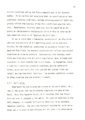
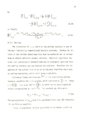
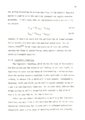
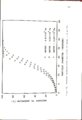
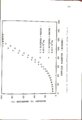
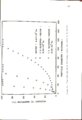
Show 15 the departed significantly from Ke l the conical at The tangential-velocity component. wall. equilibrium, classification ity function has the locus of curve therefore, are useful Boysan, Ayers which for was overcome by means Grade-efficiency try. curves data determined by Stairmand.(37) applicable only to gas model can particle motion to Pericleous(38-41) cyclones. by a the Navier-Stokes an a modelled in a and the of axial at the are an air symme- particle and the cannot which be handled by necessary before this performance of hydrocyclones. implicit iterative equations describing way that takes core gas/liquid interface scheme(42) to solve the mixture velocities and the transport equations for air and particle concentrations. was occur semi-implicit stochastic The formation of the predict used by assumption hydrocyclone operation, for example, applied model However, this modelling work is Consequently, modifications be work, good agreement with the experimental abrupt change of physical properties the model. of his mathematical a solved were obtained were and showed in the proposed with the tracking technique occur Since Brayshaw curve. algebraic turbulence model, an Patankar(36) developed by the problem of modelling highly swirling time-averaged Navier-Stokes equations scheme develop gamma-type flow-field vortic flow and gas The of to velocity, practical applications. SWithenbank(35) cyclone separator. a a and at core single particle a equations, the results provided all the details of ring in flow and at the air sharper efficiency a the fluid-flow not vertical zero and claimed that rise to oversimplified data(10) l l Is used the concept of Brayshaw then on gave sa predicted velocity profiles Turbulence into account the effects of swirl and |