| OCR Text |
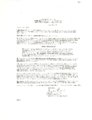
Show 53 of Masland.47 Lyons and Pope concludes: The basic thesis of this study is that military officers members of a distinct professional group, and that they require a prolonged period of highly specialized intellectual preparation in institutions of higher learning. The adoption of the educational model for officer education would meet that need, strengthen the relationship between the military services and the academic community, insure the achievement of academic responsibility, and ultimately lead to a better qualified officer corps to serve the nation. are The dissertations and the service college studies reviewed similar in several (1) respects: the past of ROTC and current total mosaic The majority of the studies examined problems; (2) constituting the overall A particular aspect problem field a need existed for necessary; played a and of action in The The rationale resolving problems was Nearly all studies .concluded that, whereas viable ROTC a (4) course (3) not clear; generally a of the usually was isolated and pursued to conclusions and recommendations. for the selection of were system,' internal expenditure of additional changes were resources invariably key role in recommendations made. United States Military Academy Conference, In June of 1974, nearly 60 recognized civilian educators, sociologists, administrators, political scientists with military officers in educational system.48 a More 1974 and others joined conference whose focus was the specifically, changing demands military on the military educational system along with requirements for and management of the system 47 were examined by the conferees over a three-day period. Lyons and Mas 1 and, Educat i on and ti1 i tary Leadershi p, pp. 1-271. 48U. S. Army Fi na 1 Report of USt'1A Seni or Conference: Educati n the Professional Soldier (West Point, N. Y.: u.S. Military Academy, 1974 . |