| OCR Text |
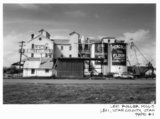
Show United States Department of the Interior National Park Service National Register of Historic Places Continuation Sheet Section No. .8... Page 4 .ehi Roller Mills, Lehi, Utah County, LEHI ROLLER MILLS HISTORY: Obtaining flour was difficult for those early settlers living outside of the Salt Lake valley. It was necessary for fanners to either travel to Salt Lake mills with their wheat, return with flour, or have it ground in varying ways from horse-powered mills to crude, make-shift mills with limited equipment. Regardless, the process was costly, inconvenient and inefficient. The first mills built to remedy this deficiency were frequently erected quickly and were, therefore, roughly Grafted, Few of these earliest mills remain. Utah County's first mill was built in Springville in 1851. This mill had two sets of burrs and a mill wheel. By 1885, the mill had been remodeled and the mill stones were replaced with the more up to date roller technology. Known as the "New Process" when it was first introduced into Utah in the 1860, this new method of flour milling used metal rollers to grind wheat. Instead of working the wheat berry into a powder in one or two grindings, the wheat was broken up gradually by passing it in between rollers several times. The surfaces of the steel rollers were incised with parallel, equally spaced grooves with sharp edges for cutting the grain. Each set of rollers had a different pattern of grooves. With usually two pair of rollers to a cabinet, each pair achieved a finer grade of grinding as the wheat, passing from one set to the next, was gradually reduced to flour. Using currents of air and sittings between grindings, the flour was separated from the bran and middlings. The flour produced was called "Patent" flour, a name still applied to the highest grade of refined flour. Roller milling dominated the flour industry after 1880 and impacted the design of both old and new buildings. Some existing mills were abandoned altogether, but others were adapted to fit the requirements of the new technology. These changes came at the same time that another significant advancement in milling technology became popular the Leffel turbines. The Lehi Roller Mill was not the on the southwest end of the Mill demolished and the site used for years, local farmers transported town's first mill. The Pond was built in 1856, the Lehi Sugar Factory. their grain to American Mulliner grist mill located In 1890, the building was For the next fifteen Fork for processing, Lehi's boosters the Lehi Commercial Club promoted the idea of building a now mi in town in 1905. Stockholders in the new venture, organized as the Lehi Mill arid Elevator Company, included the People's Co-op, Lehi Mercantile, Racker Mercantile Thomas R. Cutler, G.N. Child, John Y. Smith, James H. Gardner, Henry Lewis, John 1 Roberts, Alien. "The History of Flour Milling in Utah", Daughters of the Utah Pioneers, 198?, p. |