| OCR Text |
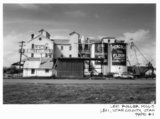
Show NP8 Form 10-900-a Utah WordPerfect 5,1 Format (Revised Feb. 1993) United States Department of the Interior National Park Service National Register of Historic Places Continuation Sheet Section No. JJ_ Page JL Lehi Roller Mills, l.eh1, Utah County, UT Narrative Statement of Significance The Lehi Roller Mills is locally significant as Lehi's first and only modern rollerprocess commercial flour mill. Built at the behest of the Lehi Commercial Club, a group of local boosters, and financed by the Lehi Mill and Elevator Company, the mill was the first of its type in the city and satisfied a need for grain processing in a growing community without a flour mill. Continuing today in its original use, the mill is also significant architecturally as one of the earliest and most intact food processing plants of its type in Utah. Utilizing new technology such as electric rather than water power, and steel rollers rather than mill stones for grinding, the Lehi Roller Mills continues to use the same process and some of the same equipment it began with originally when it opened in 1906. Expanded over the years as operations grew and modernized, the mill also shows the organic visual expression typical in the architecture of this building type. LEHI'S HISTORY: In March 1849 the first group of settlers camped along the Provo River, a few miles east of the present site of Provo, Utah. It was another year before settlers headed for the site of Lehi, a place early passed over because of the limited availability of water, a problem that would plague the community for the first several years. Nevertheless, within the year wheat, corn, potatoes, squash and other vegetables were planted and plans were made to divert water out of American Fork Canyon for an irrigation system. Regardless of early opinions to the contrary, Lehi's advantageous location on the road toward Provo and the east of the Tintic mining district made it a perfect spot for settlement. The settlers lived in makeshift was deemed judicious to build a local Native Americans. By the South and second West to form a cabins scattered along "Dry Creek." Eventually, it fort to secure the group against conflicts with fall of 1853, sixty cabins had been moved to First seventy-five-rod square fort. During the early 1850s, Lehi's residents, like most of for survival and made do with what they had until they production of goods. Transportation costs made states therefore, the people had to depend on what they could Utah's pioneers, struggled could plant crops and set up goods particularly expensive, produce locally. Most townspeople lived in the fort or area immediately surrounding it until the late 1860s. Eventually, however, they moved out of the fort and constructed new homes, first of adobe because they were easily built without specialized skills and tools and, after the 1870s, of kiln-baked brick, stone, and logs. Soon, like many otherrural Mormon towns, Lehi had wide dusty streets lined by ditches on both sides, These ditches functioned as irrigation canals and as well as the source of culinary water. |