| OCR Text |
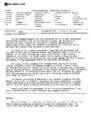
Show Form No. 1£)-300a (Aev. 10-74) UNITEDSTATtS DEPARTMENT OF THE INTERIOR NATIONAL PARK SERVICE FOR NPS USE ONLY o RECEIVED NATIONAL REGISTER OF HISTORIC PLACES INVENTORY -- NOMINATION FORM CONTINUATION SHEET ITEM NUMBER DATE ENTERED 8 PAGE 3 Elk Mountain experiment, the Limhi mission, the settlement of Las Vegas s the establishment of Fort Supply and the purchase of Fort Bridger. These key positions constituted, a nucleus for a chain of settlements to bridge the intervening wilderness, to provide a haven for incoming caravans of Saints, and to keep down Indian uprisings. "Clearly it was the hope and expectation of the empire building genius of the Church to strive at the occupation of the entire Intermountain region. These movements, then, were not born of the spontaneous and unrelated action of individuals, seeking their personal fortune and exercising individual perrogative, but rather were the carefully thought-out designs of the astute leaders. Efforts to colonize in these remote localities occasioned serious inconvenience and discomfort, and called for a high sense of duty and allegiance to secure the necessary membership for the execution of the project. "Especially does this out-lying cordon of settlements and posts, strategically placed, admirably reflect the plan and design to dominate and control the destiny of the empire between the Sierras and the Rockies."1 Although this thesis has been challenged by one historian, Dr. Eugene E. Campbell, other historians still favor the traditional interpretation.^ Whether or not the Elk Mountain Mission Settlement was part of a master plan to control access to the Mormon kingdom, Southeastern Utah was an area where Church leaders hoped their members would find good land and resources for making a living. The failure of the mission postponed permanent settlement of Southeastern Utah for more than two decades. Those called to the mission met President Alfred Billings at Manti and began the journey of over two hundred miles on May 21, 1855. Following south approximately twenty-five miles to the mouth of Salina Canyon, the expedition turned east up Salt Creek along the Old Spanish Trail across Wasatch Pass, the divide between the Great Basin and Colorado Plateau^ through present day Emery County to the crossing of the Green River which they reached on June 2nd. Alfred Billings brought a boat along as a wagon box. After it was calked and pitched it was used to ferry equipment and supplies across the river. Perhaps the most difficult part of the crossing was the cattle. Oliver Huntington wrote in the official journal Wednesday, June 6th: "... towards evening we undertook to swim the cattle over but could get only eighteen head across. They would not swim but ran into a huddle and would then swim around and round, in spite of clubs and whips they would run right over the men, shut their eyes and push for shore. |