| OCR Text |
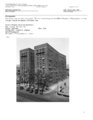
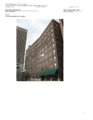
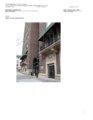
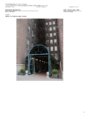
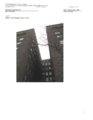
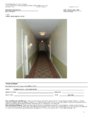
Show United States Department of the Interior National Park Service / National Register of Historic Places Registration Form NPS Form 10-900 OMB No. 1024-0018 (Expires 5/31/2012) Belvedere Apartments Salt Lake County, Utah Name of Property County and State The second analysis from the Polk Directory listing is the calculation of a transience rate. Again, this rate remained relatively constant throughout this period, notable for pre-dating and continuing through much of the Great Depression when increased move-outs would be expected. During this sampled period, the transience rate was approximately 27%, indicating occupants of the Belvedere Apartments remained on average nearly four years. Many individuals were noted in multiple five-year samplings, hence living in the Belvedere for more than 10 or 15 years. This rate indicates notable stability as compared to the 50% move-out rate listed for other local apartment dwellers in 1910 and compares favorably with the analysis of "wealthy" apartment dwellers in another 1910 sampling that remained an average of 8.1 years before moving. By 1960, Belvedere research listed numerous tenants that had occupied their apartments for up to thirty years. 1 The LDS Church owned the Belvedere until late 1951 when it exchanged its ownership for other buildings and properties then owned by the Joseph William Taylor Inc. located immediately north of historic Temple Square. Personal narratives starting about this same time describe Belvedere managers, staff, supporting commercial facilities (e.g., grocery store, coffee shop, pharmacy, beauty salon, cleaners, barbershop, etc.) and some memorable tenants during the next two decades. Several early radio broadcasting companies had their offices in the building, later relocating into nearby buildings on Social Hall Avenue which earlier had held several new car dealerships but evolved into a center of radio and television broadcasting for several decades. The tax appraisal reference card for the Belvedere (with entries from 1939 through 1957) lists six small remodeling projects, typically less than $3,000 in cost. In 1955 an abbreviated entry for "103 Motor Avenue" (a limited-period renaming of Social Hall Avenue) states "Rem Front CWL" likely modifications to the curtain wall entry of one or more commercial storefronts on the south ground level elevation. The Belvedere Apartments & City Development The Belvedere was designed by the local architectural firm of Miller Woolley & Evans. Miles Miller (1886-1956), Taylor Woolley (1884-1965) and Clifford Evans (1889-1973) had long, notable architectural careers as apprentices (both Woolley and Evans with Frank Lloyd Wright), sole practitioners and in various architectural partnerships. Evans was the architect for several car showrooms on Social Hall Avenue prior to construction of the Belvedere. Miller Woolley & Evans was formed in 1917 but Evans was soon drafted for service in World War I. The Belvedere was designed the following year and construction was well underway by late 1918. A few years after completion of the Belvedere in 1919, Woolley and Evans formed a separate firm while Miller continued as an independent practitioner. Original ownership of the Belvedere Apartments is somewhat atypical as most urban apartments in Utah were built by private, non-institutional investors. However, in operation the Belvedere appears to have functioned as a larger version of the fairly common three- or four-story, double-loaded corridor apartment buildings built in Salt Lake City during this period. In its local context, the Belvedere is an important example of an Urban Apartment as a "… unique symbol of the physical and sociological changes that took place in Salt Lake City as it developed into an urban center during the early twentieth century." 2 The Belvedere fully meets the developed registration requirements from the Urban Apartment context of the Multiple Property Listing, specifically: The principal entrances to individual living units come off ‘double-loaded' interior hallways accessed from common stairs and a pair of elevators. 2. The building is definitely "at least" three stories tall with eight residential floors above the ground level entry/common/support/commercial level. 1. 1 Roper, Roger V., His toric Re s ource s of S a lt La ke City, Urba n Expa ns ion into the Ea rly Twe ntie th Ce ntury, 1890s -1930s , [Salt Lake City Urban Apartments] Multiple P rope rty Docume nta tion Form, page F-3, 1989. 2 Ibid, page F-7. 8 |