| OCR Text |
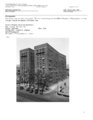
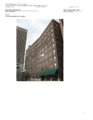
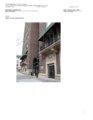
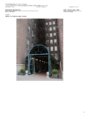
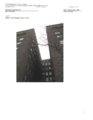
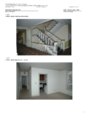
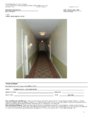
Show United States Department of the Interior National Park Service / National Register of Historic Places Registration Form NPS Form 10-900 OMB No. 1024-0018 (Expires 5/31/2012) Belvedere Apartments Salt Lake County, Utah Name of Property County and State Statement of Significance Summary Paragraph (Provide a summary paragraph that includes level of significance and applicable criteria.) The Belvedere Apartments, completed in 1919, are locally significant both architecturally and historically (National Register Criteria A and C) as important "Urban Apartments" within the developed context from the Historic Resources of Salt Lake City, Multiple Property Submission, "Urban Expansion into the Early Twentieth Century, 1890s-1930s." Originally advertised as an ‘apartment hotel' the Belvedere functioned almost exclusively as apartments with several inhouse commercial support services and storefronts for access by other downtown residents and workers. Now converted to individually-owned condominiums with the ground level commercial potions now professional offices, the historic building clearly retains its original appearance and character, has suffered no major architectural changes and its historic/architectural integrity is well maintained., With a slightly different development model and history (a private development through the LDS Church, later traded to a private owner) the Belvedere is admittedly the tallest and probably largest example of historic urban apartments in Salt Lake City. With a period of significance dating 1919-1962, the Belvedere Apartments fully complies with all six specific registration requirements detailed in the Multiple Property Submittal including building layout, scale, historic period, street orientation and historic architectural integrity, and is a contributing historic resource in Salt Lake City, Utah. ________________________________________________________________________________________________________________________ Na rra tive S ta te m e n t o f S ig n ific a n c e (Provide at least o n e paragraph for each area of significance.) History & Occupancy of the Belvedere Apartments The Belvedere was built as a real estate investment by the Church of Jesus Christ of Latter-day Saints (LDS or Mormon Church) and opened in late 1919. At this time, nearly three-quarters of a century after the founding of Salt Lake City by Mormon pioneers, the LDS Church was in the midst of an economic transformation from the previous early-settlement era cooperative and self-sufficiency focus to becoming a major, active partner in the integrated commercial market economy and general economic growth of the city and state. Owned by Zions Securities Corporation (the real estate management entity of the LDS Church) the building was leased for about four years to James T. Keith (?-1954), a retired local dentist heavily involved in real estate. Keith also owned, developed or managed several other apartment buildings and other real estate projects. Advertised prior to opening as an ‘Apartment Hotel' the Belvedere offered many upscale ‘hotel' amenities such as a doorman, elevator operators, switchboard operators, and even in-unit meal deliveries (i.e., room service). Other features or services included a billiards room, a ball room, an "entertainment" room, service department and maids' rooms on the main level. Some historical narratives note the unique presence of the occasional short-term guest (e.g., "fly-boys" during the post-World War I era) but it appears the ‘hotel' component or function was very minor relative the standard apartment use. The historic floor plan (copy attached) shows 18 units on a "typical" floor with the units arranged in the double-loaded corridor configuration with vertical circulation located at the cross-stem of the ‘H'-shaped plan. From the fenestration pattern it appears the floor plan is the same on all residential levels. With this assumption, there were 144 units originally present, reportedly with some additional First Floor quarters for staff. Since that time, approximately 14 units have been combined with adjacent units resulting in 128 units at the present. The Polk Directory listings indicate a fairly constant occupancy from 1926 through 1940, averaging 155 entries per year. The entries are not numbered by unit so the apparent joint-occupancy cannot be determined. What is evident, however, is the ‘hotel' use or component was a negligible percentage of the overall building based on the total entries and their stability. 7 |