| OCR Text |
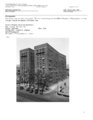
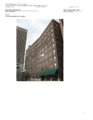
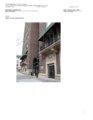
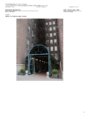
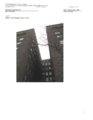
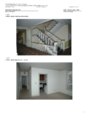
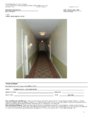
Show United States Department of the Interior National Park Service / National Register of Historic Places Registration Form NPS Form 10-900 OMB No. 1024-0018 (Expires 5/31/2012) Belvedere Apartments Salt Lake County, Utah Name of Property County and State The Belvedere Apartments exhibit some identifiable stylistic details and features, but is so restrained it does not simply fit any recognized architectural style. The smooth ashlar stonework on the raised/expressed basement story; uninterrupted (but minimalist) cornice and parapet; terra cotta panels and details on the lower balconies, ground level window surrounds and throughout the entry courtyard and the tall, blank attic story are characteristic of the Classical Revival style, popular in Utah from about 1900 to 1925. The level of terra cotta and stone detailing near the ground level on the two primary elevations (see architects' original rendering attached) show significant attention to the pedestrian scale, decorative interest and public interaction for an otherwise large and almost looming building. The concrete frame building, originally advertised as "fire proof," is clad in a dark reddish-brown, almost purplish brick. Laid in a Common or American bond with regular header courses, the brick masonry forms a tight, planar skin to the building and is devoid of any decorative treatment. The half-height foundation cladding is cool gray granite, smooth ashlar with simple continuous profile as it transitions to the brick. At this juncture is the first use of decorative terra cotta, one course of tall, ‘cubic' units followed by a continuous half-round molded water table band that encircles and frames the various window and door openings at the First Level. Because of the slope across the site, these windows decrease in height toward the north and appear nearly as basement windows at the northwest corner of the building. On the primary (west) elevation, on both the second and ninth levels, small projecting balconies break the tight plane of this elevation. The balconies are of cantilevered steel and concrete construction but have robustly detailed polychrome terra cotta scroll brackets and soffit cladding. Below the lower balconies are large panels of polychrome terra cotta depicting urns and vegetation. Decorative iron railings surround the balconies which are accessed by multi-light French doors, unique to these few west elevation units. All window openings, arranged in a rigorous layout repeated on each level, have simply-detailed terra cotta sills. A slightly projecting terra cotta band connects all Ninth Level openings in a continuous lintel or implied cornice line. A tall blank brick-clad ‘attic' level above is terminated by a continuous terra cotta parapet cap with a slightly molded profile. The roof is low-slope and fully concealed by the full-perimeter parapet. The First Level openings are the historic exterior feature most changed over time. Several historic window and/or door openings on the side facing Social Hall Avenue have been changed through removal of historic storefronts or windows to create new entries and maximize glazing. Only one masonry opening, with the terra cotta surrounds, has been enlarged, cutting down through the granite-clad foundation to create a new storefront. Entries and windows are for the various businesses and offices that have been located along this side elevation since the original construction. These modified openings are all glazed with wood- or aluminum-framed storefront systems, detailed in a simple but robust manner, and compatible with the historic building. Modern canvas awnings shade these business entries. The six First Level windows facing State Street have not been altered in size but have been replaced with aluminum-framed single fixed-light sash, a change from the apparent multi-light sash visible in an architectural rendering by the original architects. The majority of the windows on the second through ninth floors are simply-detailed four- or six-over-one double-hung windows of wood construction painted a creamy yellow. Most of these windows appear to be original; many are protected by a single-light exterior storm sash. The occasional modern replacement windows have typically matched the historic window form and type and do not detract from the simple repetitive detailing of the other windows. The Belvedere has also recently adopted prescriptive requirements for all future window replacements to maintain the historic character and integrity the windows provide. Historic photos show several different schemes over the past 90 years for canvas awnings at the apartment windows. Currently, only the Second Level west balcony openings have awnings. Building signage has changed greatly over the decades. While none is visible in c.1925 photos, by the mid 1950s two tall vertical blade signs were mounted at the prominent southwest corner, most advertising KUTA (an early NBC-affiliated television station) and the "Belvedere Apt. Hotel." Some signage may have been present above the west sidewalk entry. By the mid-1970s the TV station blade sign had been removed and the Belvedere sign remounted on the south elevation wall. Today, only modest signage remains for the Belvedere at the primary entry. The Belvedere's H-shaped plan creates two deep recesses between the north and south wings. The west courtyard serves as the primary entry to the building at the ‘cross bar' of the H. The recess between the east wings forms a light well for the east units on levels Two through Nine. The First Floor which continues to the east edge of the overall building 4 |