| OCR Text |
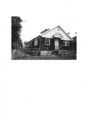
Show NPS Form 10 900-a Utah MS Word Formal (Expires 5/31/2012) MB No. 1024-0018 United States Department of the Interior National Park Service National Register of Historic Places Continuation Sheet Section No. z Page 12 Wells Historic District, Salt Lake City, Salt Lake County, UT Wells; land merchants, carpenters, and architects also played a large role. Several prominent local land merchants were responsible for the promotion and development of subdivisions between 1900 and 1929. These merchants include J.A. Fritsch, developer of the East Capitol and Kensington Subdivisions; Philip A. Finegan, developer of the Grand Haven Subdivision; F.A. Virtue, developer of the Avondale Park Subdivision; Edward Hackett, developer of the Hackett's Addition Subdivisions and; William Hubbard, developer of the Thorndyke, North Waterloo, and Waterloo Subdivisions. Archelaus (Archie) Fillingan, a builder/contractor, was also active in the Wells area during the late 1910s and early 1920s, primarily in the construction of Bungalows and Clipped Gable Cottages in the eastern part of the district. Hyrum J. Jensen, a prominent local construction contractor was responsible for several Bungalow subdivisions. The Kenwood Subdivisions located along between Milton A venue and 1700 South, along 300 to 400 East; the Thorndyke Subdivisions located between Westminster Avenue and 2100 South, along 300 to 400 East (which Jensen helped to co-develop); and the collection located along the north side of Redondo Avenue, between 300 and 400 East. Thomas Campbell was a local carpenter who was responsible for many residences in the Wells area. Examples .of Campbell's work are present along 1700 South and 408 East and 412 East and along Blaine Avenue at 425 East. Philip A. Finegan, a land broker, developed the Grand Haven Subdivision, which encompasses the area from Browning Avenue to Emerson Avenue, between 600 and 700 East. One prominent local architect, John A. Haedlund, an immigrant from Sweden, designed may local, private and public residences in the Salt Lake Valley, including the Immanuel Baptist Church building (401 East 200 South). Haedlund also contributed to the architectural history of the Wells area. Haedlund designed the ca. 1904 foursquare residence at 1538 South 400 East [Photograph 44] with a gambrel roof and Colonial Revival stylistic elements. Educated in Sweden and the U.S. (Chicago), Haedlund ventured west to Kansas City and then to Colorado Springs in the late 1800s, ultimately settling in Salt Lake City around 1889. 7 The George M. Cannon House at 720 East Ashton Avenue in the Forest Dale Historic District southeast of Wells was among the fi rst, if not the very first, house designed by Headlund upon his arri val in Salt Lake City. 8 During his time in Salt Lake City, Headlund designed ·more than 500 buildings in Utah Idaho, Nebraska, and W yoming. 9 So exceptional was Headlund's work, that three of his buildings in the Salt Lake Valley are individually listed on the National Register for their architectural merit. These buildings include the 1911 Immanuel Baptist Church at 401 East 200 South (NRIS No. 78002668), the 1906 Woodruff-Riter-Stewart House at 225 North State Street (NRIS No. 79002507), and the 1890 George M. Cannon House (NRIS No. 83004419). Summary The Wells Historic District comprises one of the better and more comprehensive collections of Early 20th Century American residential architecture in Salt Lake City. The array of architectural types and styles present 7 8 9 Sargent, Arthur T. Utah - The Inland Empire. Salt Lake City, UT: Deseret Books , 1902. Temme, Deborah R. and Roger V. Roper. National Register of Historic Places Inventory Nomination Form for the George M. Cannon House, 720 East Ashton Avenue, Salt Lake City, Utah. Utah State Historical Society. 1983. Ibid. |