| OCR Text |
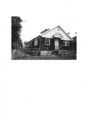
Show NPS Form 1o 900-a Ulsh MS Word Format (Expires 5/3112012) MB No. 1024·00 18 United States Department of the Interior National Park Service National Register of Historic Places Continuation Sheet Section No. z Page §. Wells Historic District, Salt Lake City, Salt Lake County, UT siding, is considered acceptable if the new treatment replicates historically appropriate treatments for the given building type and style represented by the property. Architectural Styles, Types, and Materials by Period Farms and Fields (184 7 to 1870)4 Prior to the platting of the Wells area beginning in the 1880s, the area, which was part of the Big Field, was only sparsely settled and primarily contained agricultural fields and communal livestock grazing areas. Extant buildings from this period in the district's history are exceptionally rare. Only one known permanent residence from this time period, built between 1859 and 1860, remains standing in the Wells area today. This building is known as the Woodruff Farm House (1604 South 500 East) [Photograph 5] and belonged to Wilford Woodruff, who later became president <?f the LDS Church. The farmhouse, which exhibits simple Classical styling, was constructed of logs and is of the double-pen plan with a rear extension that results in an overall saltbox profile. The building was later clad in stucco siding. Very few buildings were constructed in the Wells area during this time period, and all but the Woodruff Farm House were demolished to make room for later construction projects or have been so heavily modified over time that they are no longer recognizable as representatives of this period. With rare exceptions, buildings constructed during this period were single cell or hall and parlor structures built from logs, adobe brick, and/or stone. During the earliest part of the period, semi-subterranean dugouts were common along foothills and terraces but less so in the flat lands of the Salt Lake Valley bottoms. The Wells Historic District includes one contributing site, First Encampment Park [Photograph 6]. The park, developed in 1997, is located on the corner of 1700 South and 500 East and commemorates the approximate location of the first campsite used by Mormon pioneers when they first arrived in the Salt Lake Valley in July 184 7 and determined to settle the area. Initial Settlement Cl 871 to 1899) The development of the streetcar system in the Salt Lake Valley in the early 1870s and the platting of the Big Field ca. 1890 spurred speculation by land developers. These developers purchased large tracts of land, platted subdivisions, and began promoting the establishment of the first real suburbs in Salt Lake City. At least 31 subdivisions, the majority of subdivisions in the Wells District, were platted during the late 1880s and 1890s. Actual development of the subdivisions was slow at first, but as the streetcar system expanded and reliable service was established in the area, more residents eschewed urban living for the still semi-rural atmosphere of the Wells area. Housing and commercial development in Wells during this period was most intense along the northern periphery of the area, the nearest area to the services of downtown Salt Lake City, during the early part of the period and closest to new streetcar lines along the margins of the neighborhood during the latter part of the period. 4 This era is included for contextual information only and is not within the period of significance. |