| OCR Text |
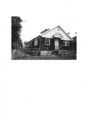
Show NPS Form 10 900..a ~ah MS Word Fonnat (Expires 5131/2012) MB No. 1024-0018 United States Department of the Interior National Park Service National Register of Historic Places Continuation Sheet Section No. z Page ~ Wells Historic District, Salt Lake City, Salt Lake County, UT locations. In general, the Wells bungalows from this period conformed to the generic, mass production version of the form, which exhibited very little in the way of exterior adornment and maintained only the basic characteristics of the prototypical bungalow. Of the 1,479 contributing properties in the district from this period, nearly 32 percent (614) are bungalow variations. Myriad styles were applied to the bungalow form, though most commonly they were unadorned and simply exhibited the basic bungalow characteristics of a low-slung roof, heavy porch, and deep eaves as represented by the 1918 and 1924 residences at 628 East Wilson Avenue [Photograph 16] and 156 East 1700 South [Photograph 17]. Others received greater stylistic treatment with details from the Arts and Crafts style, as seen in the 1916 residence at 305 East 1700 South [Photograph 18] and the Prairie School style, as seen in the 1923 residence at 1883 South 300 East [Photograph 19]. Many bungalows built during the latter part of the period and overlapping into the early part of the next period incorporated Colonial Revival elements and clipped gables, resulting in a distinct form referred to locally as the Clipped Gable Cottage. The 1924 residence at 1948 South 300 East [Photograph 20] and the ca. 1925 residence at 535 East Browning Avenue [Photograph 21] are good examples of such architecture. Toward the latter part of this period, a small number of period cottages were constructed within Wells (105 contributing properties). The vast majority were constructed after 1923 . Such cottages were another very popular architectural form constructed by developers within the streetcar suburbs. Nearly all of the cottages were constructed of brick, mostly striated brick, and many exhibited designs that were conducive to "mass production" within subdivisions. These designs frequently incorporated only the very basic period revival elements such as multiple steeply pitched gables. Others incorporated elements of English Tudor and English Cottage design. Examples of such buildings include the 1928 residence at 5 62 East Browning Avenue [Photograph 22] and the 1929 residence at 428 East Cleveland Avenue [Photograph 23]. Variations on the period cottage plan also appeared in large numbers in Wells during this period, though more were constructed during the subsequent period. This variation blended the rectangular plan and heavy porches of bungalows with moderately steep gables and Period Revival decoration. The 1923 residence at 563 East Cleveland Avenue [Photograph 24] is typical of such structures. Buildings of this nature are most prevalent in the west-central portion of the district. In addition to the many single-family dwellings that are associated with this period district's history are several double houses (duplexes). These double houses are somewhat unique within streetcar suburbs such as Wells, as they represent higher density housing that was typically found in more urban settings. However, several streetcar suburbs around downtown Salt Lake City are known to have included a surprising number of such multi-family residences, including Wells and nearby Forest Dale. Roughly two dozen contributing double houses representing this period are present in the district. Most, such as the ca. 1912 property at 661 East Downington Avenue [Photograph 25] and the 1928 property at 604 East Kensington Avenue [Photograph 26], exhibit elements of Period Revival style. Others, such as the 1924 residences at 665 East Downington Avenue [Photograph 27], incorporated the highly popular Bungalow style. |